The Disappearance of Bryce LaSpisa: The Last Phone Call That Explains Nothing
The Bryce LaSpisa disappearance: hours of confused phone calls in 2013, a burned car near Lake Hughes, and no body ever found. California's most baffling cold case.
Read Wikipedia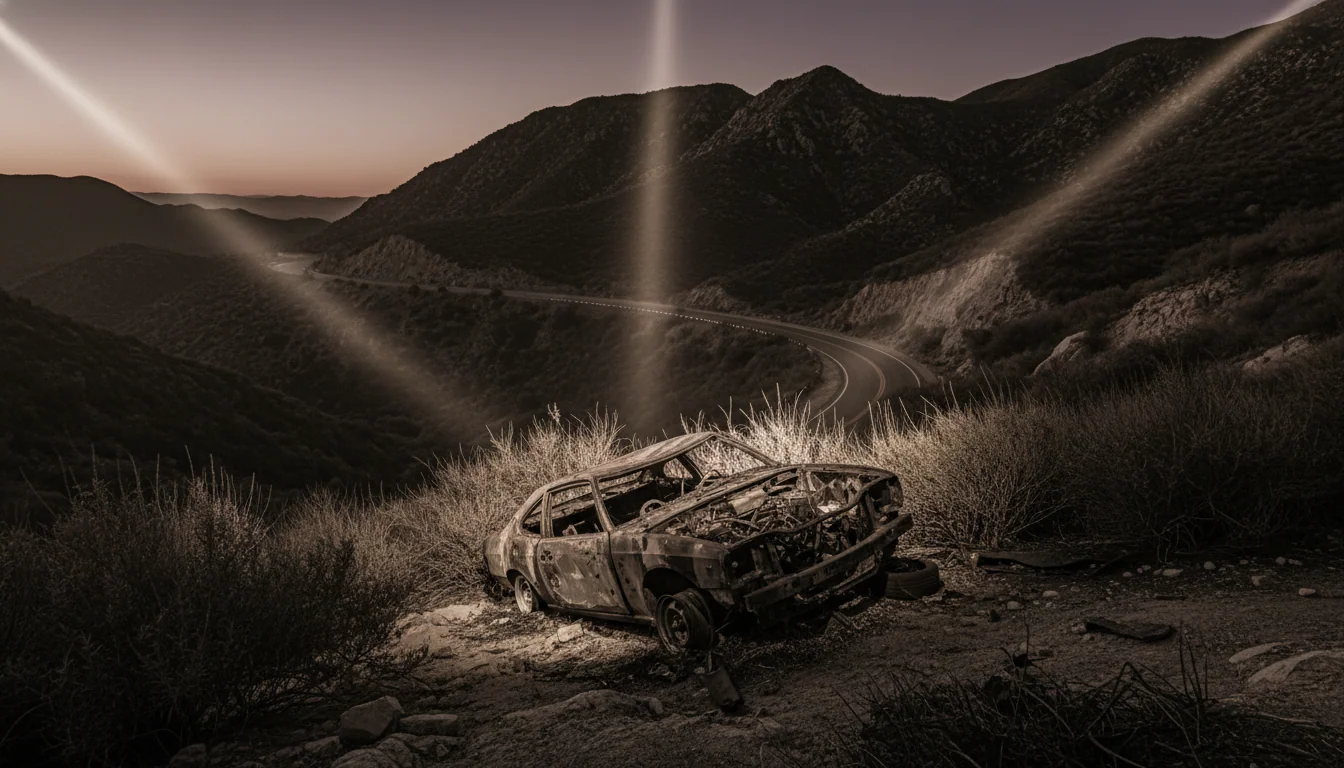
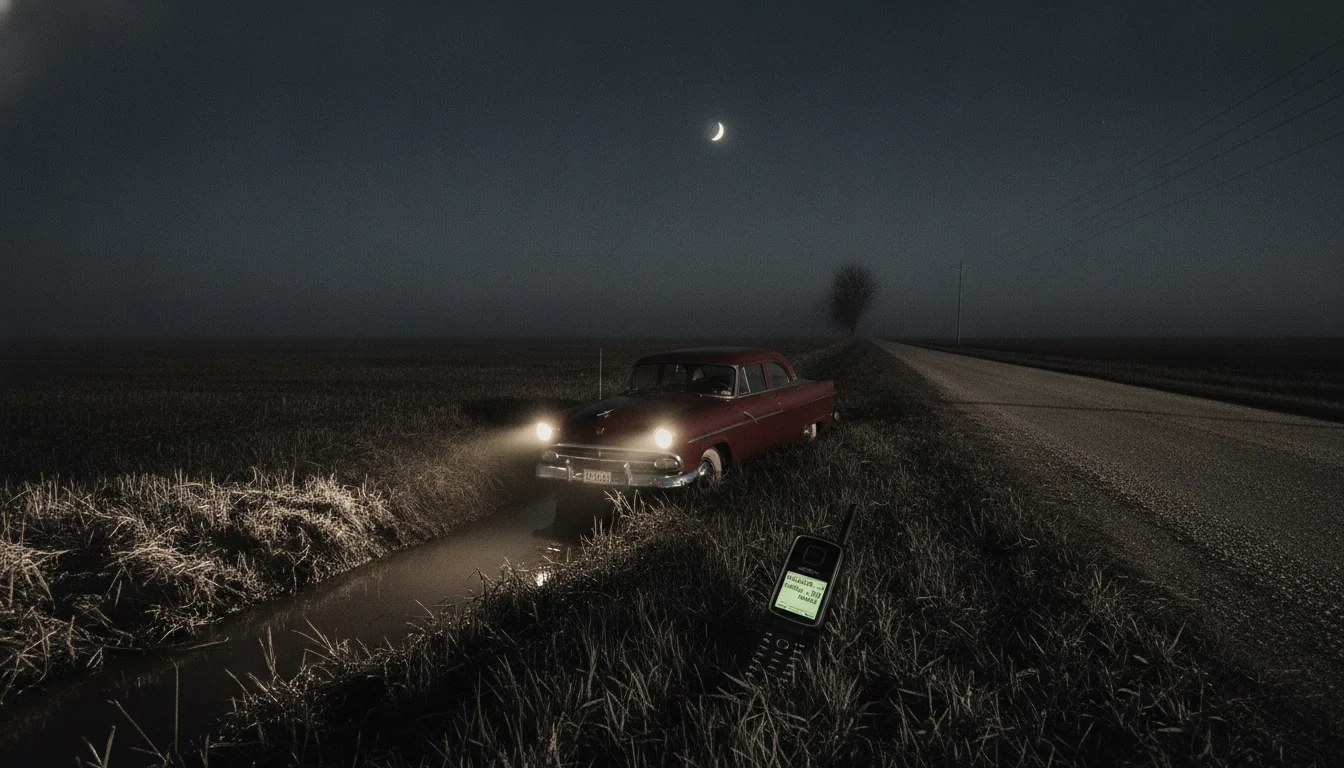
On the evening of August 30, 2013, a teenager named Bryce LaSpisa called his mother from the side of a California highway and told her he felt strange. The calls lasted hours. He sounded confused, disoriented, unlike himself. When his phone finally died, he was parked somewhere in the mountains north of Los Angeles. His car was found days later crashed and burned at the bottom of an embankment near Lake Hughes. Bryce was not in it.
He has not been found since.
What makes the LaSpisa case so disturbing is not simply that a young man vanished. It is that the evidence that exists does not add up. The calls suggest a medical crisis or worse. The crash suggests a conclusion. The missing body refuses to confirm either.
The drive that never arrived
Bryce LaSpisa was 19 years old and had just finished his freshman year at California State University Sacramento. By most accounts he was a healthy, active young man who played soccer and got along well with his family. His parents, Mike and Karen LaSpisa, lived in Laguna Niguel in Orange County, a roughly six-hour drive south of Sacramento.
On August 30, 2013, Bryce was supposed to drive home. It was not an unusual trip. He had made the drive before. His parents expected him to arrive that evening.
Instead, he called Karen from the road. Something was wrong.
The calls began that evening and continued late into the night, lasting in total more than two hours. During these conversations, Bryce told his mother he felt weird, that his vision was blurry, and that he had pulled over near the Castaic area. He said he thought he might need help but resisted when Karen urged him to call 911 or find a place to stop. The calls were fragmentary, looping, strange. He seemed unable to explain clearly what was wrong with him or why he had not simply driven the rest of the way home.
Karen, increasingly alarmed, called 911 herself. Deputies were dispatched. Bryce was located near the Castaic rest stop area and was spoken to briefly by officers, who found him alert enough at that moment that no medical hold was placed. It was a decision that would be scrutinized for years afterward. He was allowed to continue driving.
His phone died shortly after.
The car
On September 3, 2013, three days after Bryce was last heard from, a hiker discovered a vehicle at the bottom of an embankment off Lake Hughes Road, a remote two-lane highway in the mountains of northern Los Angeles County. The car matched Bryce's vehicle. It had crashed and burned.
Bryce was not inside.
The crash was not a gentle skid off a curve. The car had gone down a significant drop onto rough terrain. The fire had burned it substantially. Investigators could not determine from the wreck alone what had caused the crash, whether it was an accident, whether Bryce was in the car when it went over, or whether someone had pushed the car.
The search that followed was extensive. K9 teams, helicopters, and hundreds of volunteers covered the terrain around Lake Hughes Road. The Los Angeles County Sheriff's Department coordinated search efforts over multiple days. The brush and canyon terrain is dense and steep, the kind of landscape where a person could lie hidden within yards of a search line. Nothing was found.
What the evidence suggests and refuses to confirm
A medical explanation has always been one of the leading theories. Some investigators and armchair analysts have speculated about a seizure, a drug reaction, a sudden psychiatric episode, or a condition that might explain the disoriented behavior during the calls. Bryce had no documented history of any of these conditions, but absence of documented history is not the same as confirmed health.
His parents have consistently maintained that Bryce was not someone who used drugs recreationally and that the behavior on the calls was entirely unlike him. They have never accepted the idea that their son simply drove off a road and walked away. The absence of a body in terrain where searches were extensive is, they have argued, evidence of something more complicated.
The alternative theories are darker. Some suggest Bryce was the victim of foul play at some point along the drive, either before or after the crash. Others have noted that the crash site is far from the main route between Sacramento and Laguna Niguel, suggesting he may have taken a significant detour or been directed somewhere. Why he was on Lake Hughes Road at all, a route not on the direct path home, has never been satisfactorily explained.
A third theory, one that Bryce's family has vigorously rejected, is that he deliberately orchestrated a disappearance. The argument runs that the behavior during the calls, the confusion, the refusal of help, could have been performed, and that a young man who wished to vanish might choose a remote area and simply walk away from a staged crash. There is no physical evidence supporting this theory. The family's long and documented grief contradicts it in human terms. But investigators have never publicly ruled it out.
The terrain and the search limits
Lake Hughes Road and the surrounding landscape are part of the Angeles National Forest, a nearly 700,000-acre stretch of mountains, canyons, and chaparral that separates the Los Angeles Basin from the high desert. The elevation changes are sharp. The vegetation is thick. Seasonal heat in August regularly exceeds 100 degrees Fahrenheit in the canyons.
In such terrain, search efforts face hard physical limits. A body concealed by dense brush, dropped into a canyon, or carried by scavenging animals can escape detection even with dogs and helicopters. The searches in 2013 were genuine and sustained, but the area was large and the access points limited. It is not impossible that remains exist somewhere within the search perimeter and have simply not been found.
The LaSpisa family established a Facebook presence early in the search and has maintained pressure on investigators for over a decade. They have distributed flyers, organized searches, and pushed back publicly against narratives that minimize the strangeness of the evidence.
The questions that remain
Why did Bryce leave Sacramento when he did, and in what state? The hours before his first call to Karen remain unaccounted for. Friends who knew him in the days before his disappearance gave varying accounts of his demeanor, some describing him as normal, others noting he seemed off. No one has offered a clear picture of what was happening in the days before the drive.
Why was he on Lake Hughes Road? The most direct route from Sacramento to Laguna Niguel does not pass through that area. He had taken a detour of significant distance from any obvious path. The reason for that detour has never been established.
What caused the behavior during the calls? His words were fragmented and alarming but not entirely without coherence. He was distressed but able to maintain conversation for extended periods. The pattern does not fit cleanly into any documented medical profile, though it has been compared to episodes of dissociation, severe anxiety, or impaired driving from causes unknown.
What happened after the car went over? The crash, the fire, the missing body. Three facts that do not resolve into a single explanation.
Where it stands
The Los Angeles County Sheriff's Department has not closed the case. The LaSpisa family has not stopped searching. Every few years a tip comes in, a hiker reports something in the canyon, a new search is organized, and the area is swept again. Nothing conclusive has emerged.
Bryce LaSpisa was 19 years old when he disappeared in August 2013. He would be 32 today. His parents have spent more than a decade living with the particular cruelty of a case that is neither resolved nor entirely cold, a case where the evidence is real, strange, and stubbornly insufficient.
The last thing Karen LaSpisa heard from her son was his voice on a phone call somewhere in the California mountains, telling her he felt weird. Then the line went dead. Twelve years later, no one knows what he was trying to say.
For other disappearances where the evidence exists but refuses to resolve, see the Elisa Lam Cecil Hotel Mystery and the Maura Murray Disappearance.
Quick Answers
Common questions about this topic
What happened to Bryce LaSpisa?
Bryce LaSpisa, a 19-year-old student at California State University Sacramento, disappeared on August 30-31, 2013 while driving home to Laguna Niguel. His car was found crashed and burned near Lake Hughes in Los Angeles County, but his body was never recovered despite extensive ground and aerial searches.
Was Bryce LaSpisa ever found?
No. As of 2026, Bryce LaSpisa has never been found. His car was discovered in a remote embankment area, and the surrounding terrain was searched repeatedly by volunteer teams, K9 units, and helicopters, but no human remains were located.
What was strange about the phone calls before Bryce disappeared?
During the drive home, Bryce called his mother Karen and spoke with her for hours in an increasingly confused and distressed state. He told her he felt 'weird,' that his vision was blurry, and that he had pulled over. The calls lasted until his phone battery died. None of his statements explained why he had left school or where he was going.
Where did Bryce LaSpisa disappear?
He disappeared somewhere in the mountainous terrain between the Tejon Pass area and Lake Hughes in northern Los Angeles County, along a remote stretch of highway in the Angeles National Forest region. His car was found at the bottom of an embankment near Lake Hughes Road.

Want to Interrogate the Suspects?
Chat with historical figures and uncover the truth behind history's greatest mysteries.
Create your free account →No card required. Talk to anyone in history with 8 free credits a day. Some features require a paid plan.
Join the HistorIQly Club
Get smarter about the past.
Weekly stories, deep dives, and exclusive content straight to your inbox.