Declassified: Robert Hanssen, the FBI's Most Damaging Mole
For over two decades, FBI agent Robert Hanssen sold American secrets to Moscow from inside the Bureau's own counterintelligence division. Here is what the case file reveals.
Read Wikipedia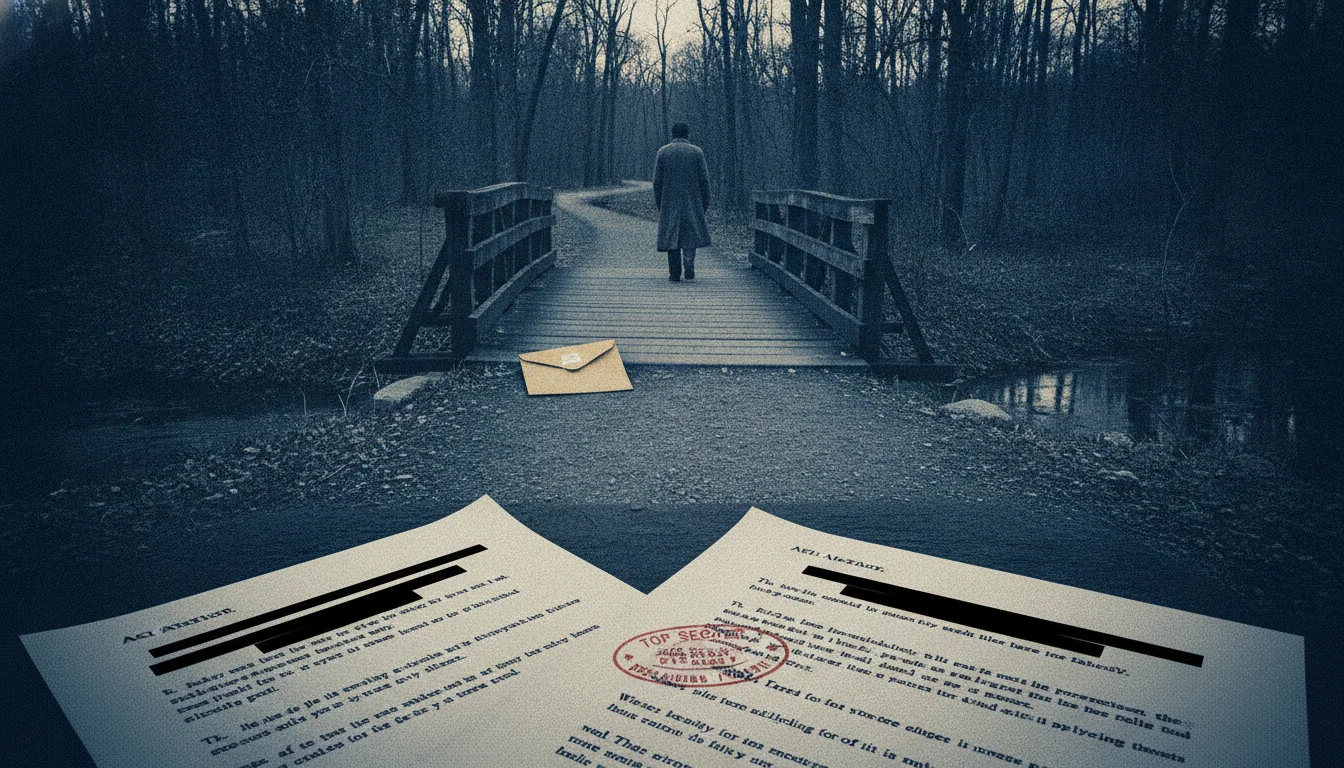
Robert Hanssen spent 27 years as an FBI agent, much of it working directly in the Bureau's counterintelligence division, the unit charged with catching foreign spies. For more than two decades of that career, according to the case the Justice Department built against him, he was one himself, selling secrets to Soviet and later Russian intelligence from inside the agency whose job was to stop exactly that.
The secret
Hanssen's espionage, according to his own later guilty plea and the government's damage assessment, ran in two main stretches: an initial period beginning around 1979, and a longer, more damaging run resuming in the early 1980s that continued, according to the record, until his arrest in February 2001. Unlike the more famous CIA case of Aldrich Ames, which ran roughly the same era, Hanssen operated with almost no personal contact with his handlers, communicating instead through dead drops, encrypted disks, and coded signals, a tradecraft discipline that investigators later credited with helping him evade detection for so long.
Origins
Hanssen joined the FBI in 1976 after a period in Chicago law enforcement and accounting. His placement within counterintelligence gave him access to precisely the kind of information most valuable to a foreign intelligence service: the identities of American assets inside Soviet institutions, details of technical surveillance operations, and internal FBI and CIA files on ongoing investigations. According to the criminal complaint filed against him, his motivations combined financial pressure with what investigators characterized as a personal need to feel intellectually superior to colleagues who, in his view, underestimated him.
The operation
According to the government's account, Hanssen's disclosures over the years were extensive. He reportedly identified at least three Soviet officials who were secretly working for American intelligence, disclosures that, according to public reporting on the case, contributed to the exposure and execution of at least some of those assets, though the precise causal chain in individual cases remains genuinely difficult to establish given how many sources were compromised across multiple spy cases in the same period, including that of CIA officer Aldrich Ames. Hanssen also disclosed details of a secret tunnel that American intelligence had built beneath the Soviet embassy in Washington for eavesdropping purposes, and reportedly provided material on US nuclear war contingency planning, referred to in reporting on the case as the Continuity of Government program.
Hanssen operated dead drops in parks around Northern Virginia, most notably at Foxstone Park near his own home, leaving packages of documents under a footbridge and receiving cash and instructions in return, all without, according to his own later statements, ever meeting his Soviet or Russian handlers face to face during the operational relationship. Investigators later noted that this discipline, a near-total refusal of in-person contact, was a significant reason his activity went undetected for so long even as counterintelligence officials grew increasingly certain, through the 1990s, that a mole was operating somewhere inside American intelligence.
Exposure
For years, FBI and CIA counterintelligence teams worked on the theory that an unidentified mole, sometimes discussed under the label later associated with the case, was responsible for a pattern of compromised operations that neither the Ames case nor other known breaches fully explained. According to public accounts of the investigation, the breakthrough came when the FBI obtained, through payment to a former Soviet intelligence officer, a file from Moscow's own archives containing material connected to the mole's identity, reportedly including an audio recording, that ultimately pointed to Hanssen specifically rather than to other long-suspected candidates within the intelligence community.
The FBI arrested Hanssen on February 18, 2001, at Foxstone Park, moments after he had left a package of classified material at a dead drop site he had used for years. A young FBI operative named Eric O'Neill, assigned to work closely with Hanssen in a newly created unit under the cover of assisting with information security, had spent months gathering evidence, including material from Hanssen's Palm Pilot device, that helped investigators finalize their case before the arrest. The case later became the basis for the 2007 film Breach.
What the files say
Hanssen pleaded guilty in 2001 to multiple counts of espionage and conspiracy, avoiding a possible death sentence in exchange for full cooperation with a subsequent damage assessment conducted jointly by the FBI, CIA, and Justice Department. That assessment, portions of which have been made public, described his activity as among the most damaging cases of espionage in American history, citing both the volume and the sensitivity of what he disclosed over more than two decades of intermittent access. He was sentenced to life in prison without the possibility of parole and held at the federal supermax facility in Florence, Colorado, reportedly dying in federal custody in 2023.
What remains only partially resolved, according to the public record, is the precise scope of harm attributable to Hanssen specifically as opposed to other compromised sources operating in the same period. Because his espionage overlapped in time with Aldrich Ames's separate CIA-based spying, some of the intelligence losses attributed to one case in early reporting were later reassessed as more likely tied to the other, or to both in combination, a reflection of how difficult it is to fully untangle parallel betrayals occurring inside the same intelligence community during the same years. The government's own damage assessment, while extensive, notes that some specific operational consequences of Hanssen's disclosures remain classified or could not be conclusively tied to his activity alone.
A file built on discipline, not glamour
Unlike the popular image of Cold War espionage built around dramatic meetings and secret rendezvous, the declassified record of the Hanssen case describes something closer to a quiet, methodical betrayal conducted almost entirely through written communication and carefully chosen drop sites within a few miles of his own suburban home. He continued attending church, raising his family, and working his normal FBI assignments throughout most of the period the government says he was actively spying, a detail investigators and journalists covering the case have repeatedly highlighted as one of the most unsettling aspects of how long the operation went undetected. The file that ultimately identified him did not come from a breakthrough inside FBI counterintelligence itself, according to public accounts, but from a purchased document originating from the very foreign intelligence service he had spent decades secretly serving, a fact that remains one of the case's more pointed ironies.
The man behind the desk
Colleagues who worked alongside Hanssen over the years reportedly described him as devoutly religious, a member of a conservative Catholic organization, and, by several accounts given after his arrest, socially awkward and often condescending toward coworkers he considered less capable. That personal profile complicated the FBI's own institutional embarrassment once the case became public: Hanssen was not an outsider who had infiltrated the Bureau under false pretenses, but a two-decade veteran whose personnel file, according to later reporting on internal FBI reviews, contained warning signs, including a period in which he was investigated over an unrelated matter involving a family member's tip to the Bureau, that were not connected to his espionage at the time and were only reexamined in hindsight after his arrest.
The Eric O'Neill operation
The final months of the investigation, according to public accounts including O'Neill's own later book on the case, involved a carefully constructed pretext: Hanssen was moved into a newly created position focused on information security, ostensibly a promotion recognizing his technical expertise, but the unit itself had been established by the FBI specifically to place him under close, continuous observation by an operative who did not initially know the full purpose of the assignment. O'Neill has described the work as psychologically demanding, spending months in close daily proximity to a man he did not yet know was suspected of espionage, tasked with subtly gathering evidence, including copying data from Hanssen's personal electronic organizer, that ultimately helped investigators build a case solid enough to support an arrest at the moment he was physically caught making a dead drop.
What the case changed
The Hanssen case, alongside the roughly contemporaneous exposure of CIA officer Aldrich Ames, prompted a significant internal review of how the FBI and CIA managed personnel with access to sensitive counterintelligence information, including tighter polygraph requirements, closer scrutiny of financial disclosures, and, in the FBI's case specifically, a broader restructuring of how counterintelligence assignments were compartmentalized so that a single agent would have a harder time accumulating the kind of broad access Hanssen held for so long. Congressional oversight committees held hearings examining why detection had taken so long despite years of internal suspicion that a mole existed somewhere in American intelligence, and the case remains a standard reference point in discussions of insider-threat policy across the US intelligence community.
Quick Answers
Common questions about this topic
Was Robert Hanssen a real spy?
Yes. Hanssen was a career FBI agent who, according to court records and the Justice Department's own review, sold classified information to Soviet and later Russian intelligence over more than two decades, with breaks, beginning in 1979 and continuing until his arrest in 2001.
What secrets did Hanssen give away?
According to the criminal complaint and subsequent damage assessment, Hanssen disclosed the identities of Soviet officials working secretly for the United States, details of a US intelligence tunnel built beneath the Soviet embassy in Washington, and sensitive material on nuclear war contingency planning and technical collection methods.
How was Hanssen caught?
According to public accounts of the case, the FBI ultimately identified Hanssen after paying a former Soviet intelligence officer for a file containing material, reportedly including a voice recording, that led investigators back to him specifically, after years of counterintelligence efforts had failed to identify the mole.
What happened to Robert Hanssen?
Hanssen pleaded guilty in 2001 to espionage charges and was sentenced to life in prison without the possibility of parole, avoiding the death penalty as part of a plea agreement that required his cooperation with investigators. He was held at the federal supermax facility in Florence, Colorado, and reportedly died in federal custody in 2023.

Interrogate the Spymasters
Chat with the agents and analysts the files were about.
Create your free account →No card required. Talk to anyone in history with 8 free credits a day. Some features require a paid plan.
Join the HistorIQly Club
Get smarter about the past.
Weekly stories, deep dives, and exclusive content straight to your inbox.