Declassified: Project Stargate, the CIA's Twenty-Year Remote Viewing Program
For two decades the US government funded psychic spies to remote view Soviet targets. The declassified files on Project Stargate explain why, and what it actually produced.
Read Wikipedia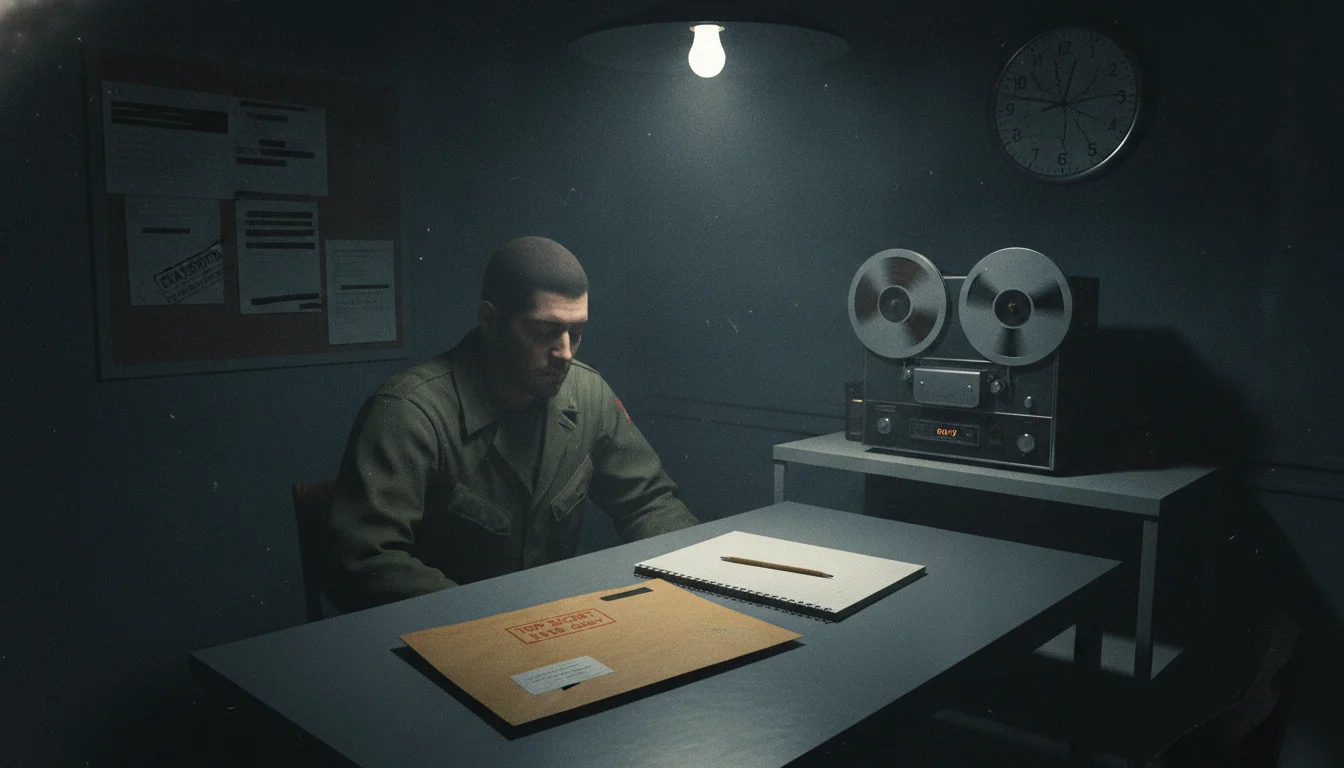
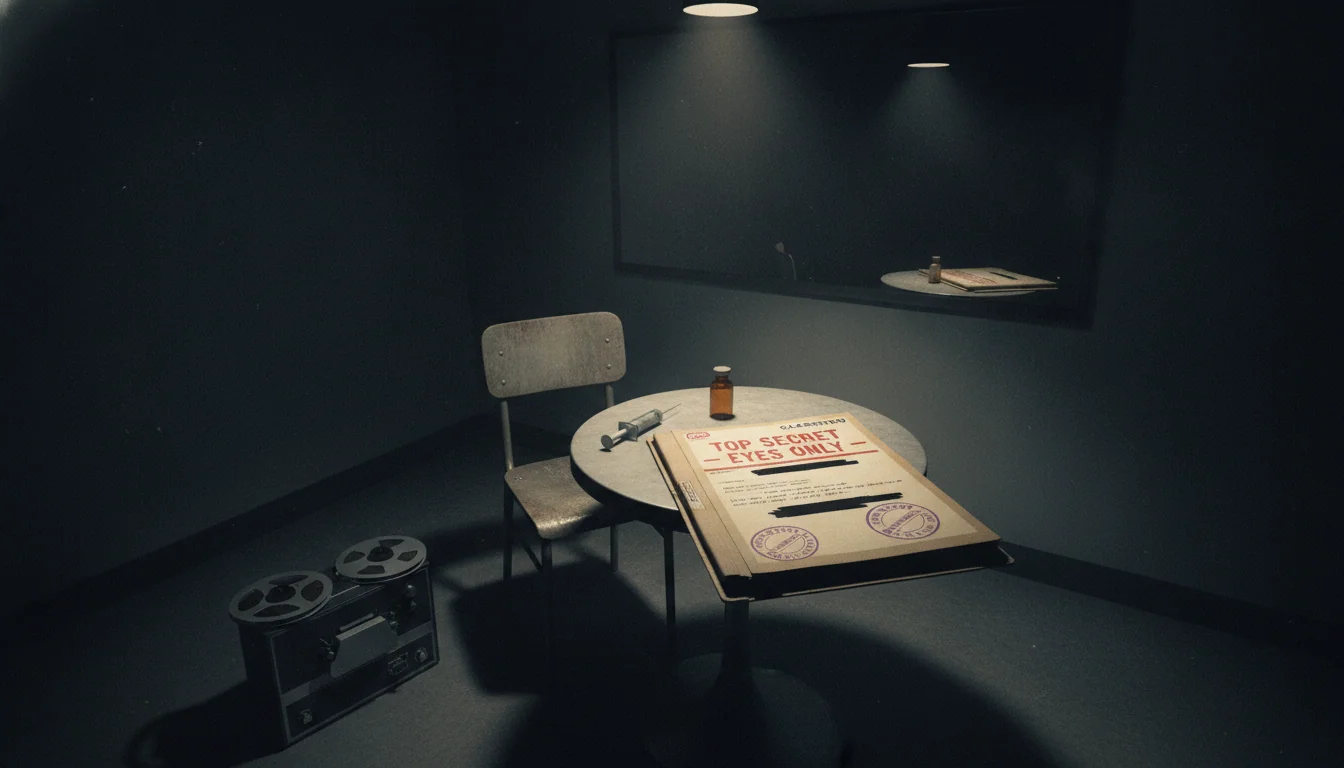
For roughly two decades, the United States government paid people to sit in a quiet room, close their eyes, and try to psychically describe a location or object they had never seen, sometimes on the other side of the world, sometimes on the other side of the Iron Curtain. The program eventually known as Stargate was real, funded, and taken seriously enough at various points by the CIA, the Defense Intelligence Agency, and the Army to run for roughly twenty years before its existence was declassified in 1995.
The secret
What made the program sensitive was not that a "psychic spying" project sounds strange, though it does. It was that the United States believed, based on its own intelligence, that the Soviet Union was investing heavily in parapsychology research for military and intelligence purposes, and American planners worried about a potential "psychic gap" the way earlier generations worried about missile gaps. Admitting the program existed risked both embarrassment, since remote viewing sat well outside mainstream science, and the exposure of a genuine, if unconventional, intelligence-collection method. The result was decades of classification under a rotating set of codenames, including SCANATE, Gondola Wish, Grill Flame, Center Lane, and Sun Streak, before the effort was consolidated and eventually named Stargate.
Origins
The program's roots trace to the early 1970s, when the CIA began funding research into remote viewing at the Stanford Research Institute, a private research organization in California. Physicists Russell Targ and Harold Puthoff led the SRI research effort, working with self-described psychics including Ingo Swann and, later, Pat Price, a retired police officer who reportedly produced some of the program's most discussed results.
According to the declassified record, the CIA's early interest was driven partly by concern that the Soviet Union was pursuing similar research, and partly by a broader Cold War willingness to investigate unconventional intelligence methods that might provide even a marginal edge. Oversight and funding shifted over the years between the CIA, the Defense Intelligence Agency, and Army intelligence, reflecting both bureaucratic reorganization and periodic skepticism from officials who questioned whether the program was worth continuing.
The operation
By the program's later years, a small unit of trained remote viewers operated out of Fort Meade, Maryland, under Army intelligence oversight before management passed primarily to the Defense Intelligence Agency. Sessions typically involved a viewer attempting to describe a target identified only by a coordinate or a sealed envelope held by a monitor who did not know the target's identity either, a protocol intended to guard against the viewer picking up cues from someone in the room who already knew the answer.
Joseph McMoneagle, one of the program's most publicly discussed participants, has spoken openly since the program's declassification about sessions reportedly involving Soviet military targets, including claims about describing construction at a Soviet submarine facility. Pat Price, in earlier SRI-era sessions, reportedly produced descriptions of a Soviet research facility at Semipalatinsk that some in the intelligence community found strikingly specific. These claims remain contested. Supporters point to instances where a viewer's description reportedly matched details later confirmed through conventional intelligence. Skeptics note that assessments of a "match" were often made after the fact, by evaluators who could unconsciously read confirming details into vague or general descriptions, a well known problem in evaluating any ambiguous prediction.
Training for viewers reportedly emphasized a structured methodology intended to filter out imagination and analytical guessing, with viewers instructed to report raw impressions, shapes, textures, colors, and emotional tone, before attempting to interpret what those impressions might mean. Sessions were typically transcribed and later scored by independent judges who compared the viewer's raw description against the actual target, a process meant to reduce the risk that an evaluator already familiar with the target would unconsciously grade a vague description more generously. According to the declassified record, this scoring process itself became one of the program's most persistent internal debates, since judges disagreed regularly about how closely a given transcript actually matched its target.
Exposure
Stargate's existence became public in 1995, when the CIA, having taken over final management of the program, commissioned an outside scientific review through the American Institutes for Research and then declassified the review's conclusions along with a substantial portion of the program's history. The decision to go public followed years of internal debate about whether the program justified its cost and whether continued secrecy served any purpose once Cold War tensions had eased following the Soviet collapse.
The declassification prompted a wave of media coverage, much of it treating the story as a novelty, "the CIA's psychic spies," rather than examining the more mundane bureaucratic reality of a decades-long unconventional research program managed through the ordinary machinery of intelligence budgeting and internal review.
What the files say
The 1995 American Institutes for Research review, which forms the core of what the declassified record actually establishes, reached a carefully qualified conclusion. Statistician Jessica Utts, one of the review's consultants, argued that the program's data showed a statistically significant anomalous effect, meaning viewers performed better than chance across a large number of trials by a margin she considered worth further scientific investigation. Psychologist Ray Hyman, another consultant on the same review and a longtime skeptic of parapsychology claims, agreed the statistical pattern was difficult to dismiss outright but argued that the effect, even if real, was never reliable or specific enough to support actual intelligence operations, and that methodological weaknesses in how sessions were evaluated could account for much of the apparent signal.
The review's operational conclusion, and the one that ultimately ended the program, was that no remote viewing session had ever provided information specific, accurate, and actionable enough on its own to have changed the outcome of a real intelligence assessment or military decision. Based on that finding, the CIA terminated funding and declassified the program's history in 1995.
What remains genuinely unresolved is not a hidden document but a scientific disagreement embedded in the declassified review itself: whether the statistical anomaly Utts identified reflects a real, if poorly understood, human perceptual ability, or whether it is better explained by the ordinary methodological noise Hyman described. No declassified file claims remote viewing produced a single piece of intelligence that stood on its own, uncorroborated by conventional sources, as the deciding factor in an operation. The program's true legacy is not a psychic breakthrough or a debunked hoax, but a rare public record of how seriously a Cold War intelligence bureaucracy was willing to test an idea it could not quite bring itself to fully believe or fully dismiss.
The pop-culture afterlife
Since declassification, Stargate has become one of the more durable pieces of Cold War trivia, referenced in documentaries, books, and the occasional Hollywood treatment that leans hard into the "psychic spy" framing the declassified files themselves do not fully support. Several former participants, including McMoneagle, have written memoirs and given interviews describing their experiences in more dramatic terms than the underlying AIR review's cautious conclusions would justify on their own. That gap between the program's own final assessment and its subsequent public mythology is itself part of the story: a government program that ended not with a dramatic reveal of psychic proof or fraud, but with a shrug from a review panel that could not fully agree with itself, followed by decades of pop culture filling in a more satisfying ending than the declassified record actually provides.
For another Cold War program with public exposure decades after it began, see Declassified: Operation Paperclip. For a case where the government's official explanation still leaves genuine gaps in the paper trail, see Declassified: The Air Force File Behind the Roswell Incident.
Quick Answers
Common questions about this topic
Was Project Stargate real?
Yes. It was a genuine, funded United States government program that studied and used remote viewing, the claimed ability to psychically perceive distant or hidden locations, running under several names from the 1970s until its declassification and termination in 1995.
What was the goal of Project Stargate?
The program aimed to determine whether remote viewing could reliably provide useful intelligence on targets such as Soviet military installations, and if so, to use trained viewers operationally alongside conventional intelligence collection.
Who ran Project Stargate?
The program moved between agencies over its life, beginning with Central Intelligence Agency funding for research at the Stanford Research Institute in the 1970s, later run primarily by the Defense Intelligence Agency, with a viewing unit based at Fort Meade, Maryland, under Army intelligence.
Did Project Stargate actually produce useful intelligence?
According to the declassified 1995 review commissioned by the CIA, no viewing session ever provided data specific, accurate, and useful enough on its own to guide an actual intelligence or military operation, though the review's own statistical consultant argued the raw data showed a genuine anomalous effect worth further study.

Interrogate the Spymasters
Chat with the agents and analysts the files were about.
Create your free account →No card required. Talk to anyone in history with 8 free credits a day. Some features require a paid plan.
Join the HistorIQly Club
Get smarter about the past.
Weekly stories, deep dives, and exclusive content straight to your inbox.