The Chernobyl Disaster: The Night Reactor 4 Exploded
The Chernobyl disaster began when a flawed safety test met a reactor design flaw operators were never told about, causing the worst nuclear accident in history.
Read Wikipedia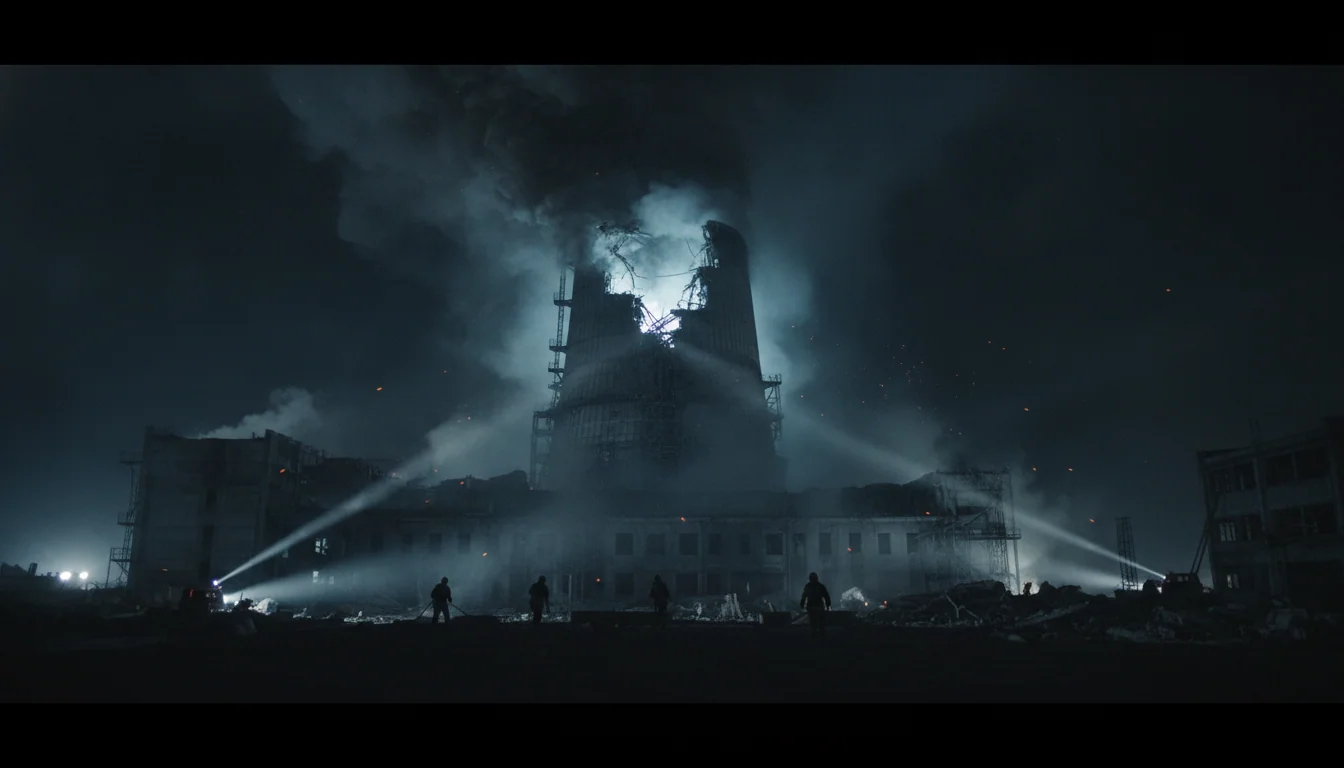
The control room of Chernobyl's Unit 4 was, on the night of April 25 to April 26, 1986, running an experiment that had already failed three times before. Nobody expected it to end the way it did.
A power station like any other
The Chernobyl Nuclear Power Plant sat on the Pripyat River in the Ukrainian SSR, a few kilometers from the purpose-built city of Pripyat, home to about 50,000 people, most of them plant workers and their families. Four RBMK-1000 reactors were already running by 1986, with two more under construction. It was a young, modern city by Soviet standards, and the plant was a point of pride, one of the largest nuclear stations in the world.
The RBMK design used graphite to moderate the nuclear reaction and ordinary water to cool the fuel channels, a combination found in Soviet reactors but not in most Western ones. It had a quirk that mattered enormously that night: at low power, if the cooling water in the core turned to steam, the reaction did not calm down the way most reactor designs would. It sped up. Engineers called this a positive void coefficient. It was a known property of the reactor, but its danger at low power was not fully appreciated, or communicated, by everyone who needed to know it.
The test that kept getting delayed
Unit 4 was scheduled for a routine shutdown, and engineers planned to use the opportunity to run a safety test on the turbines. The question was simple: if the plant lost outside electrical power, could the spinning turbine, coasting down after the steam was cut off, generate enough residual electricity to keep the cooling pumps running until diesel generators kicked in? It was the kind of gap that mattered in a nuclear plant, where losing cooling water even briefly can be catastrophic.
The test had been tried before at Chernobyl and had failed to produce useful results each time. This attempt was meant to be different, with adjustments to the electrical system. But a grid controller in Kyiv asked the plant to delay the planned shutdown to meet evening power demand, and the test that should have run in the afternoon, with a fully briefed day shift, ended up running well after midnight, handled by a night shift that had not prepared for it and had less experience with the reactor's temperamental behavior at low power.
The reactor drops, then falls too far
Bringing a reactor down to the low power level needed for the test is a delicate operation, and it went wrong. Power fell much further than planned, likely due to a mix of operator error and a phenomenon called xenon poisoning, in which a byproduct of the nuclear reaction builds up and suppresses the chain reaction. Rather than abandon the test, as procedure arguably required, the operators worked to bring power back up, pulling out control rods to compensate.
By the time they stabilized the reactor, it was operating at a small fraction of the power level the test called for, and the number of control rods still inserted in the core was far below what plant rules set as a safety minimum. Shift supervisor Alexander Akimov and senior reactor engineer Leonid Toptunov were at the controls. Deputy chief engineer Anatoly Dyatlov, overseeing the test, pushed to continue rather than scrub it and try again another day.
1:23 a.m.
At 1:23 a.m. on April 26, the test began. Steam to the turbine was shut off, and the turbine began coasting down, its dwindling momentum now the only thing driving the cooling pumps. As water flow through the reactor slowed, more of it turned to steam inside the core. At low power, with too few control rods inserted, this was exactly the wrong condition for an RBMK reactor to be in. Reactivity began climbing.
Seconds later, Akimov ordered the AZ-5 button pressed, the reactor's emergency shutdown control, designed to drive all remaining control rods fully into the core and end the reaction. Toptunov pushed it. What happened next has been reconstructed largely from instrument traces and later analysis, because nobody who watched it happen up close survived to describe it in detail. The control rods, tipped with graphite rather than solely the neutron-absorbing material used in the rest of the rod, briefly displaced water as they entered the lower part of the fuel channels before their absorbing sections could take effect. For a few seconds, inserting the rods increased reactivity instead of killing it.
In a reactor already primed by too little cooling water and too few rods, that few seconds was enough. Power spiked to many times the reactor's rated output within moments. Fuel began to shatter, and the resulting pressure surge, likely a steam explosion followed almost immediately by a second, more violent blast, tore through the reactor building. A massive steel and concrete lid sitting atop the reactor, reported to weigh well over a thousand tons, was thrown aside, and Unit 4's core was open to the sky. The graphite moderator caught fire and would burn for roughly the next ten days, lofting radioactive material high into the atmosphere.
The response
Valery Khodemchuk, an operator working near the reactor's circulation pumps, was killed instantly and his body was never recovered from the wreckage. Vladimir Shashenok, another plant worker, was pulled from the debris with severe injuries and died in hospital hours later.
Firefighters arrived within minutes, climbing onto rubble and rooftops still burning with radioactive graphite, wearing ordinary firefighting gear with no idea of the radiation levels around them. Plant staff and emergency crews spent the rest of the night fighting fires and trying to understand what had actually happened, hampered by instruments that could not read radiation levels as high as the ones now pouring out of the open reactor. Several of the firefighters and control room staff, including Akimov and Toptunov, absorbed lethal doses within hours and died of acute radiation sickness over the following weeks in a specialist Moscow hospital.
Pripyat's residents were not evacuated until the afternoon of April 27, some 36 hours after the explosion, and were told at the time it would be temporary. Buses lined up along the main roads and carried tens of thousands of people away from a city most of them would never live in again. A 30-kilometer exclusion zone was established around the plant in the days that followed and remains restricted.
The Soviet government did not publicly acknowledge the accident until April 28, after Swedish monitoring stations at the Forsmark nuclear plant detected abnormal radiation on workers' clothing and traced it back toward the Soviet Union. Even then, the initial state announcement was a few brief sentences.
The toll, reported plainly
The immediate death toll from the explosion and acute radiation sickness in the weeks that followed came to roughly two to three dozen people, nearly all plant workers and firefighters. The longer-term toll is genuinely disputed. International health agencies have estimated several thousand eventual deaths from radiation-linked cancers among the most exposed populations, while some environmental organizations have argued the true figure is far higher. The honest answer is that the full long-term toll cannot be measured with precision, and estimates vary by an order of magnitude depending on methodology and which populations are counted.
By the end of 1986, workers, many of them soldiers and volunteers later known as liquidators, had built a hastily constructed concrete and steel shelter over the ruined reactor, working in short shifts to limit radiation exposure. Decades later, a vast arch-shaped steel structure, built alongside the site and slid into place over the aging shelter, was completed to contain the ruins for roughly a century.
What the inquiry found
The first major international report, issued in 1986 with heavy Soviet input, placed the blame almost entirely on the operators: they had violated procedure, disabled safety systems, and run an unauthorized test in unsafe conditions. That was true as far as it went.
A revised report issued in 1992 told a more complicated story. It confirmed the operators had broken plant rules, but it also concluded the reactor itself was dangerously unstable at low power in ways its designers understood better than its operators did, and that the control rod design carried a flaw, the brief reactivity spike on insertion, that some Soviet nuclear specialists had reportedly known about before 1986 without it being fixed or clearly disclosed to reactor crews across the RBMK fleet. Three senior plant officials, including Dyatlov, were tried in 1987 and sentenced to labor camp terms for their role in the disaster.
The final, more balanced verdict on the Chernobyl disaster is uncomfortable precisely because it will not let anyone off the hook cleanly. A tired, under-briefed crew broke the rules and pressed on with a test they should have abandoned. And the reactor they were operating had a defect its own designers knew about, and the men in the control room that night did not. It's a pattern that shows up in other industrial catastrophes too, like the Bhopal gas leak, where warning signs were known well before disaster struck.
Public trust in nuclear power collapsed across much of the world after Chernobyl, much as it had for hydrogen airships after the Hindenburg disaster decades earlier.
Quick Answers
Common questions about this topic
What caused the Chernobyl disaster?
A late-night safety test went wrong when operators, working with too few control rods inserted, triggered a sudden power surge. The RBMK reactor's design meant that surge grew instead of shrinking, and the emergency shutdown button, meant to stop the reactor, briefly made things worse because of a flaw in the control rod design that operators had never been told about.
How many people died at Chernobyl?
Two plant workers died within hours of the explosion, and roughly two dozen more, mostly firefighters and operators, died of acute radiation sickness within weeks. Long-term deaths from radiation-linked illness are heavily disputed, with estimates from international health bodies and environmental groups ranging from a few thousand to tens of thousands.
Could the Chernobyl disaster have been prevented?
Yes, on more than one level. The test could have been called off when it fell far behind schedule and landed with an unprepared night shift, and the reactor's known design instabilities at low power should have made the test itself unacceptable. Soviet engineers reportedly knew about the control rod flaw years earlier but did not update plant procedures.
What did the official inquiry find about Chernobyl?
The first Soviet-backed international report in 1986 blamed operator error almost entirely. A revised 1992 report shifted much of the blame to the RBMK reactor's design itself, including its behavior at low power and a defect in the control rods, concluding operators had been set up to fail without knowing it.

Talk to the Survivors
Hear firsthand accounts from people who lived through history's darkest days.
Create your free account →No card required. Some figures and features require a paid plan.
Join the HistorIQly Club
Get smarter about the past.
Weekly stories, deep dives, and exclusive content straight to your inbox.