The Galveston Hurricane of 1900: America's Deadliest Natural Disaster
On September 8, 1900, a Category 4 hurricane overwhelmed Galveston, Texas, killing thousands in America's deadliest natural disaster.
Read Wikipedia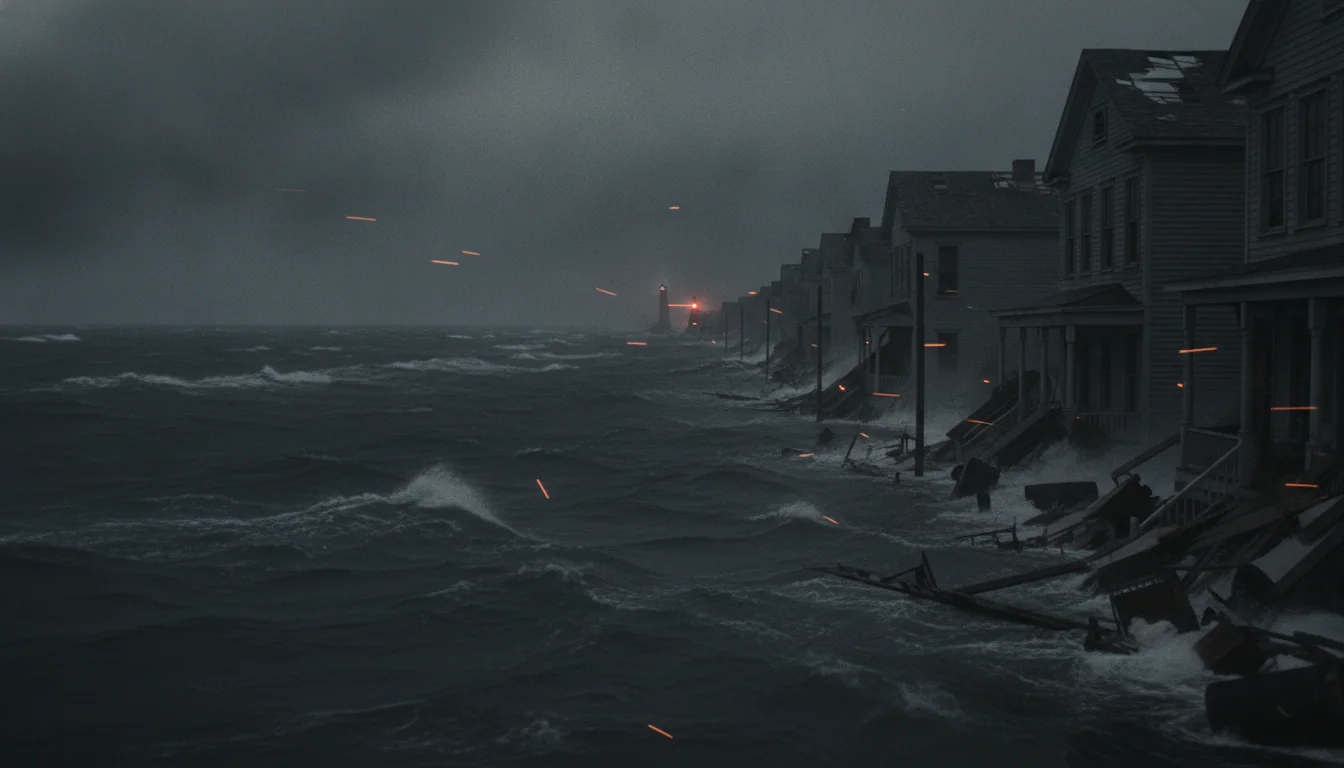
On the morning of September 8, 1900, Galveston, Texas, was a city of roughly 37,000 people, streetcars, telephone lines, and a Gulf breeze that felt, to most residents, like nothing worse than a passing squall. By the following morning, an estimated 6,000 to 12,000 of them were dead, and much of the city no longer existed. It remains the deadliest natural disaster in United States history, and historians still cannot agree on an exact death toll, only that it was catastrophic.
The setting
Galveston sat on a low, narrow barrier island off the Texas coast, and by 1900 it had become one of the wealthiest cities in the American South. Its deep-water port handled more cotton exports than any harbor in the country except New York, and the money that flowed through it built an opera house, ornate Victorian mansions along Broadway, and a business district so prosperous that locals called it the "Wall Street of the South." The city had electric streetlights, a streetcar system, and telephone service. What it did not have was a seawall, or any real defense against the Gulf of Mexico beyond the sand itself. The island's highest natural point stood roughly 8.7 feet above sea level, and most of the city sat lower than that.
September 7 was warm and mostly clear, though a long, unusual swell had begun rolling in from the southeast the day before, arriving with a rhythm that had nothing to do with the local wind. Isaac Cline, the meteorologist in charge of the US Weather Bureau's Galveston station, noticed the swells and the slow drop of his barometer and grew uneasy, though the sky above him stayed largely blue. Crowds still gathered on the beach that Friday evening to watch the unusually high surf, treating it as a spectacle rather than a warning.
The timeline
By the morning of September 8, the swells had grown into a steady pounding surf, and rain bands began moving through in squalls. The Weather Bureau's Washington office had already tracked a tropical storm moving through the Caribbean and across Cuba, and on September 7 it wired warnings to Gulf coast stations, including Galveston, to expect high water and gales. Storm warning flags went up over the city that morning. But nothing in the bulletins used the word "hurricane," and nothing conveyed how severe the storm had already become or how directly it was aimed at the Texas coast.
Isaac Cline spent the morning of September 8 on the beach, watching the surf climb over the low dunes and begin flooding low-lying streets even before the worst winds arrived. Water was in the streets by midday, rising through the afternoon as the storm's outer bands reached the island. Winds built through the day, and by evening they were almost certainly hurricane force, with a slow-moving eye passing near or over the city, though no one can say the exact wind speed with certainty. The Weather Bureau's own anemometer measured gusts near 100 miles per hour before the wind tore it away; modern reconstructions place the storm at Category 4 strength, likely well above 130 miles per hour at its peak.
Galveston's only links to the mainland were a set of railroad bridges and a wagon bridge across the bay, and by mid-afternoon storm surge and debris had begun washing them out, trapping residents on the island as the water kept rising. Surge estimates for the storm range from roughly eight to fifteen feet across the island, enough on its own to submerge nearly the entire city, on top of hurricane winds that peeled roofs off buildings and drove rain sideways through broken windows.
The worst of the destruction came after dark. As the surge and wind tore homes from their foundations along the beachfront, the wreckage did not simply wash away. It piled up and moved inland as a wall of debris, timber, roofing, and furniture pushed by wind and water, and that wall struck the next row of houses, tearing them loose in turn and adding their wreckage to the pile. Block by block, this rolling mass of debris acted like a battering ram moving through the city, flattening entire streets that might otherwise have withstood the storm on their own. Survivors clung to floating rooftops and pieces of wall through the night, with no way to know how far the water still had to rise or how long the wind would last.
The decisions
The most consequential decision behind the disaster was not made in Galveston at all. In the years after the Spanish-American War, the US Weather Bureau viewed Cuban meteorologists, some of them Jesuit priests trained at Havana's Belen Observatory, as rivals rather than colleagues, and it restricted the transmission of independent Cuban storm warnings into the United States, insisting that official forecasts flow through American channels first. Cuban forecasters had tracked the storm accurately as it crossed the island and warned that it was likely to curve into the Gulf of Mexico and threaten the Texas coast. The Weather Bureau's own forecasters in Washington believed, incorrectly, that the storm would recurve northeastward up the Atlantic seaboard, and that assessment, not Havana's, was the one that shaped official warnings sent to Galveston.
Isaac Cline's own role has become one of the most disputed threads in the story. In an 1891 newspaper article, he had argued that it was unlikely a hurricane could ever seriously damage Galveston, reasoning that the shallow Gulf waters offshore would blunt any storm surge before it reached the city, a view that reflected and likely reinforced the broader civic complacency that had kept the city from ever building a seawall. Decades later, in his own memoirs, Cline claimed that on the morning of September 8 he rode along the beach in a horse-drawn cart personally warning residents to evacuate to higher ground, and that his warning saved many lives. Historians have questioned how much of that account is reliable, noting inconsistencies with his brother Joseph Cline's competing recollections and the absence of contemporary documentation for a coordinated, citywide warning effort. What is well established is that no mandatory evacuation was ordered, that many residents underestimated the danger because previous storms had spared the city, and that by the time the bridges to the mainland failed, leaving was no longer possible for those who had waited.
The survivors and the toll
Estimates of the dead range from about 6,000 to 12,000, with most historians settling on a figure near 8,000, though the true number was never established and likely never can be, since entire households and their records were destroyed along with the homes. It stands as the deadliest natural disaster in US history by a wide margin.
Among the losses that came to define the disaster's memory was St. Mary's Orphanage, west of the city along the beach, where ten Sisters of Charity cared for about ninety children. As the storm intensified, the sisters reportedly tied groups of children to themselves with clothesline, trying to keep them together if the building failed. The dormitory collapsed that night; nearly all the children and every sister died. Three older boys survived by clinging to a floating tree.
In the storm's immediate aftermath, the scale of death overwhelmed any conventional response. Bodies were gathered for burial at sea, weighted and taken out on barges, but Gulf currents returned many of them to the beaches within days. Faced with the risk of disease in the heat and the sheer number of the dead, authorities turned to mass cremation, burning remains in pyres across the wrecked city for weeks. Survivors searched the debris for missing relatives and neighbors, often without ever finding an answer.
The inquiry
Galveston's recovery reshaped both the city and how the country thought about coastal disaster. In 1902, engineers began building a concrete seawall along the Gulf-facing side of the island, seventeen feet high in its first stretches, a project that would eventually extend for miles and be raised further in later decades. Alongside it came an equally ambitious undertaking: raising the grade of the entire city, in places by more than ten feet, by pumping dredged sand beneath buildings that had been jacked up to make way for the fill, a process that took years to complete across the island.
The disaster also reshaped how Galveston governed itself. In the recovery's early months, the city adopted a commission form of government, a small group of appointed and elected administrators overseeing city departments directly rather than the traditional mayor-and-council system, on the argument that recovery required faster, more accountable decisions than the existing structure allowed. The "Galveston Plan," as it became known, was adopted by hundreds of other American cities in the years that followed, becoming one of the most influential municipal governance reforms of the early twentieth century.
The storm also exposed the cost of the Weather Bureau's rivalry with Cuban forecasters, and in the years afterward the ban on Cuban storm warnings eased, part of a slower, broader shift toward treating hurricane forecasting as a matter of shared data rather than institutional pride. Real-time hurricane tracking, aircraft reconnaissance, and eventually satellite warning systems were still decades away, but Galveston stood afterward as the clearest available argument for why they were needed: a wealthy, modern city, warned in only the vaguest terms, built without a seawall on a barrier island barely above the level of the sea that took it.
Quick Answers
Common questions about this topic
What caused the Galveston hurricane disaster?
A Category 4 hurricane struck the low, unprotected barrier island on September 8, 1900, driving a storm surge of roughly eight to fifteen feet over a city whose highest point stood only about 8.7 feet above sea level. Galveston had no seawall, and the US Weather Bureau's warnings, hampered by its refusal to rely on accurate storm-track data from Cuban meteorologists, underestimated how directly and severely the storm would hit.
How many people died in the Galveston hurricane?
Estimates range from about 6,000 to 12,000 deaths, with most historians citing a figure near 8,000. The exact toll was never established, since entire households and municipal records were destroyed, making it the deadliest natural disaster in US history.
Could the Galveston hurricane have been prevented or better warned?
Historians dispute how clearly the danger was communicated. Cuban forecasters had accurately predicted the storm would enter the Gulf and threaten Texas, but a US Weather Bureau policy restricting Cuban warnings kept that assessment from shaping official alerts. Isaac Cline later claimed he personally warned residents to evacuate, a claim some historians view skeptically, and no mandatory evacuation was ordered before the mainland bridges washed out.
What changed after the Galveston hurricane?
Galveston built a concrete seawall beginning in 1902, raised the grade of the entire city by pumping sand beneath buildings, and adopted a commission form of government that was later copied by hundreds of American cities. The disaster also pushed the Weather Bureau to ease its restrictions on Cuban storm data, part of a broader shift toward modern hurricane forecasting.

Talk to the Survivors
Hear firsthand accounts from people who lived through history's darkest days.
Create your free account →No card required. Talk to anyone in history with 8 free credits a day. Some features require a paid plan.
Join the HistorIQly Club
Get smarter about the past.
Weekly stories, deep dives, and exclusive content straight to your inbox.