Bhopal: The Night the Gas Leaked
A cost-cutting shutdown caused the Bhopal gas leak, releasing dozens of tons of toxic gas over a sleeping Indian city in the deadliest industrial disaster ever recorded.
Read Wikipedia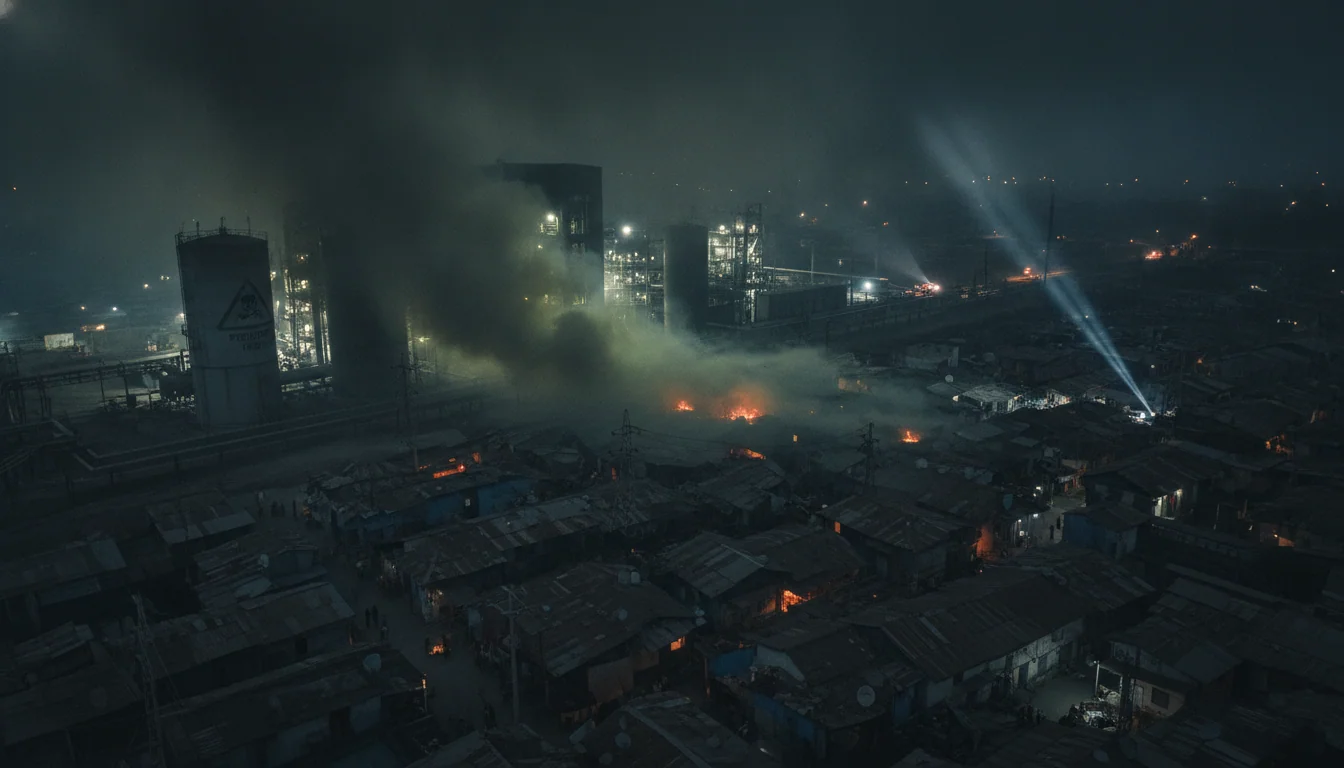
Just after midnight on December 3, 1984, the Bhopal gas leak began when a tank at a pesticide plant in the central Indian city started building pressure it was never designed to hold. By the time the sun rose over the city, thousands of people were dead or dying, and the world had a new name for its worst industrial accident.
A factory the city grew around
Union Carbide India Limited ran the Bhopal plant to manufacture Sevin, a widely used pesticide, and one of its key ingredients was methyl isocyanate, or MIC, an extremely toxic and reactive chemical that had to be stored in bulk as a refrigerated liquid under pressure. Three underground tanks held the plant's MIC supply, encased in concrete and fitted with safety systems meant to keep the compound cold, stable, and contained.
The plant had not always been surrounded by dense housing. Over the years after it opened, thousands of families settled in the neighborhoods pressed against its perimeter, drawn by cheap land, low rents, and the informal work a large industrial employer generates nearby. City authorities had reportedly raised concerns about the encroaching settlements years before the leak, but little was done to relocate residents or to widen the buffer between the plant and its neighbors. By 1984, communities including Jayaprakash Nagar sat close enough to the plant's fence line that a serious leak would have almost nowhere safe to disperse before reaching a bedroom window.
By the mid-1980s, falling pesticide demand had put the plant under financial strain, and Union Carbide's Indian subsidiary had been cutting costs for years. Maintenance staffing had been reduced, several safety-related positions had gone unfilled, and equipment meant to guard against exactly the kind of failure that followed had reportedly been allowed to fall into disrepair, or switched off outright to save on operating costs.
The night the tank turned into a bomb
On the evening of December 2, workers noticed rising pressure in one of the underground MIC tanks, known on site as tank 610. By around 11 p.m., a nearby pipe was leaking and workers reported stinging eyes near the tank farm, though the readings did not yet seem alarming enough to trigger an emergency response. Investigators later concluded that water had entered tank 610, setting off a runaway exothermic reaction that heated and pressurized the liquid MIC far beyond the tank's rated limits.
Exactly how the water got into the tank is still disputed. India's own investigation concluded water entered through a maintenance line during pipe washing, after a required isolating plate was missing or improperly installed. Union Carbide's later internal investigation instead pointed to sabotage, arguing a disgruntled employee introduced water directly into the tank through a pressure gauge connection. Neither side's account has ever been fully settled to the other's satisfaction.
What is not disputed is what should have stopped the reaction from reaching the sky. The tank's refrigeration unit, designed to keep MIC below roughly five degrees Celsius and slow any unwanted chemical activity, had reportedly been shut down months earlier as a cost-saving measure, leaving the MIC sitting at whatever temperature the surrounding air allowed. The vent gas scrubber, meant to neutralize escaping gas with caustic soda before it left the plant, was not running at a pressure or flow that could handle a leak of this scale. The flare tower, which could have burned off escaping gas safely, was disconnected, reportedly for pipe repairs, and was not operational that night.
By around 1 a.m., a thick, low-lying cloud of MIC and its reaction byproducts had begun drifting over the fence line and into the neighborhoods beyond, carried by the wind toward homes where people were asleep. MIC is heavier than air, so instead of rising and dispersing, the gas hugged the ground, seeping through doorways, open windows, and the gaps in shanty housing that offered no protection against a chemical nobody nearby had been told to fear.
The decisions that let it reach the city
The plant's alarm system had a documented habit of sounding for minor leaks, and workers had grown used to short-lived scares. When the main siren sounded that night, it was reportedly silenced within minutes, a decision workers later said was routine rather than reckless, made before the scale of the release was understood. Critically, the siren that might have warned the surrounding neighborhoods was never sounded in time to matter, and no public evacuation plan existed for a chemical release of this kind.
Local hospitals had never been told what chemical the plant stored or how to treat exposure to it. When patients arrived gasping, blinded, and vomiting in the thousands within hours, doctors initially treated them as tear gas victims, since that was the closest thing to a briefing anyone had received. The gap between what the plant knew about MIC and what the city's medical system had been told proved almost as costly as the leak itself.
The toll
People woke to burning eyes, breathlessness, and a stinging cloud filling their homes. Some never woke at all. Others ran through the gas in panic, in the dark, with no idea which direction offered safety, and many collapsed or were trampled in the crush of people trying to escape a threat they could not see. Hospitals and morgues in Bhopal were overwhelmed within hours, and mass burials and cremations began before many families could even confirm which relatives had survived the night.
Official Indian government figures counted roughly 2,000 to 3,000 deaths in the immediate aftermath, a number many independent investigators and victims' organizations have long argued undercounts the true toll of those first days by a wide margin. Over the following decades, deaths linked to gas exposure, including respiratory disease, organ damage, and complications passed on to children born afterward, brought estimates of the eventual toll to somewhere between 15,000 and 20,000, though no single figure commands universal agreement. Hundreds of thousands more were left with chronic illness from a single night's exposure, a burden that fell heaviest on families who already had the least access to long-term medical care.
Survivors described a city that had turned against its own air. People who ran in the wrong direction, toward the plant rather than away from it, absorbed the heaviest doses and often did not survive the night. Livestock died in the streets alongside their owners. Children, with smaller lungs and less capacity to sense danger and flee, were disproportionately among the dead, and many who survived carried lung and eye damage into adulthood that no settlement ever fully addressed.
The inquiry, and the reckoning that never quite finished
Multiple investigations followed, from the Indian government, from Union Carbide itself, and from independent engineers and journalists, and while they disagreed sharply on how water reached tank 610, the broader safety findings were harder to dispute. Whatever triggered the reaction, a tank of MIC should never have been able to vent an uncontrolled cloud over a city, and the layered defenses built to prevent exactly that outcome had each, independently, been left unable to do their job.
The legal and political aftermath dragged on for decades. Warren Anderson, Union Carbide's chairman at the time, was arrested briefly in Bhopal days after the leak, released on bail, and left India; he was later declared a fugitive by Indian courts after failing to appear for criminal proceedings, and the United States never extradited him. He died in 2014 without ever facing an Indian courtroom. In 1989, Union Carbide Corporation and the Indian government reached a civil settlement of 470 million dollars, a figure victims' groups have criticized ever since as far too small given the scale of the harm and the cost of ongoing medical care. In 2010, more than a quarter century after the leak, an Indian court convicted seven former executives of the local subsidiary, all Indian nationals, of causing death by negligence rather than the more severe charge of culpable homicide, and sentenced each to two years, a verdict widely condemned as too little, decades too late.
Dow Chemical, which acquired Union Carbide in 2001, has maintained that the 1989 settlement resolved the company's liability and has declined further compensation or site cleanup obligations. Soil and groundwater contamination around the abandoned plant persisted for decades after the leak, a slower, quieter continuation of the same unresolved chain of responsibility that began the night the tank gave way. The gas cleared from Bhopal's air within a day or two. The question of who truly answered for it never has.
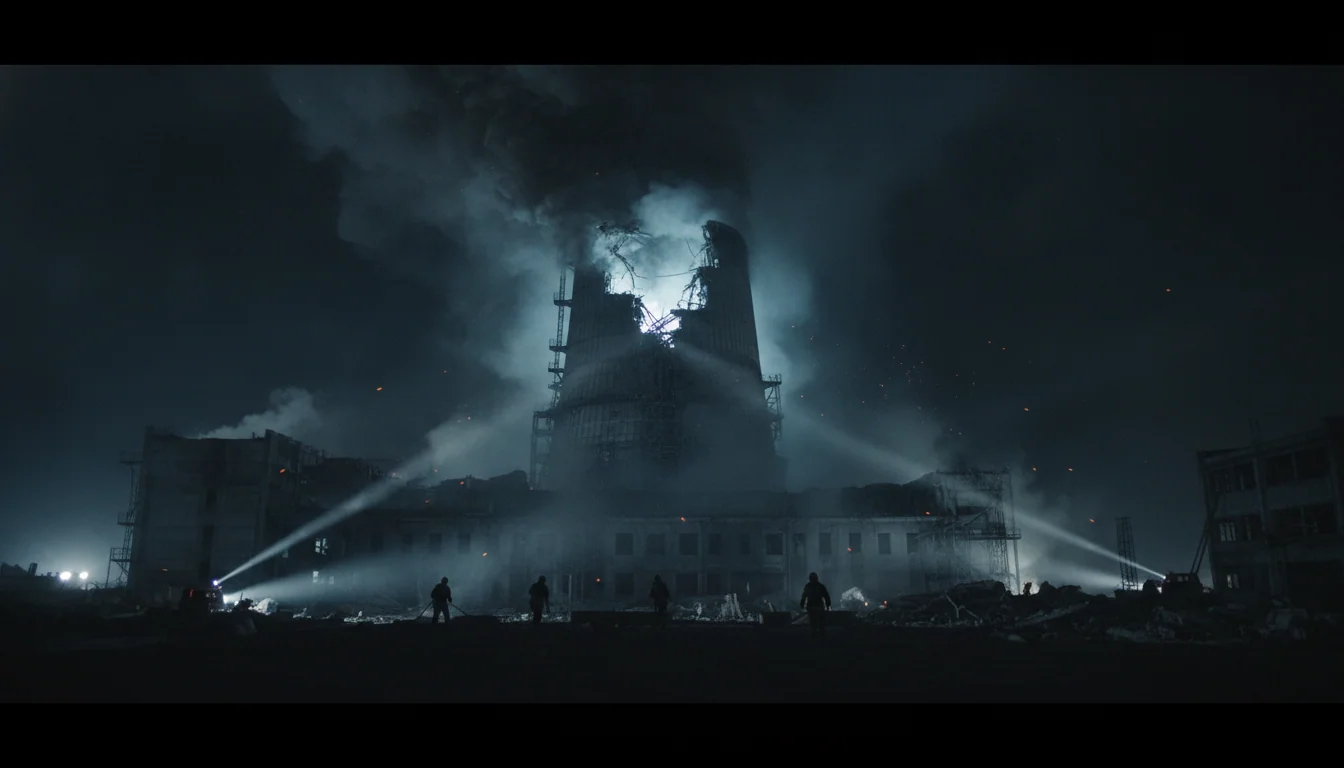
Bhopal is often paired with the Chernobyl nuclear disaster as the industrial world's two starkest warnings about ignored safety systems, and with the Triangle Shirtwaist Fire, an earlier disaster that also turned on safety measures nobody had bothered to maintain.
Quick Answers
Common questions about this topic
What caused the Bhopal gas leak?
Water entered a storage tank holding liquid methyl isocyanate, triggering a runaway chemical reaction that built pressure far beyond what the tank's safety systems could vent. Investigations disagree on exactly how the water got in, but they agree the plant's refrigeration, scrubber, and flare systems that should have contained the leak had all been shut down or were not functioning that night.
How many people died in the Bhopal disaster?
Official Indian government figures counted roughly 2,000 to 3,000 deaths in the immediate aftermath, while independent estimates and victims' groups have long argued the true toll in the first days was several times higher. Long-term deaths linked to gas exposure over the following decades are estimated at 15,000 to 20,000, though the exact figure remains disputed.
Was anyone held responsible for the Bhopal disaster?
Union Carbide Corporation paid the Indian government 470 million dollars in a 1989 civil settlement, widely criticized by victims as inadequate. In 2010, an Indian court convicted seven former Indian executives of the local subsidiary of causing death by negligence, sentencing them to two years each, while Union Carbide's American chairman never stood trial in India.
Could the Bhopal disaster have been prevented?
Most safety reviews conclude yes. Independent of how water reached the tank, a functioning refrigeration unit, a scrubber sized for the volume involved, and a working flare tower would each have been capable of containing or neutralizing the leak on their own, and all three had been disabled or left inoperable before that night.

Talk to the Survivors
Hear firsthand accounts from people who lived through history's darkest days.
Create your free account →No card required. Some figures and features require a paid plan.
Join the HistorIQly Club
Get smarter about the past.
Weekly stories, deep dives, and exclusive content straight to your inbox.