The Johnstown Flood of 1889: When a Rich Men's Dam Broke
The Johnstown Flood of 1889 killed 2,209 people when a hunting club's dam collapsed above Johnstown, Pennsylvania. No one was held legally liable.
Read Wikipedia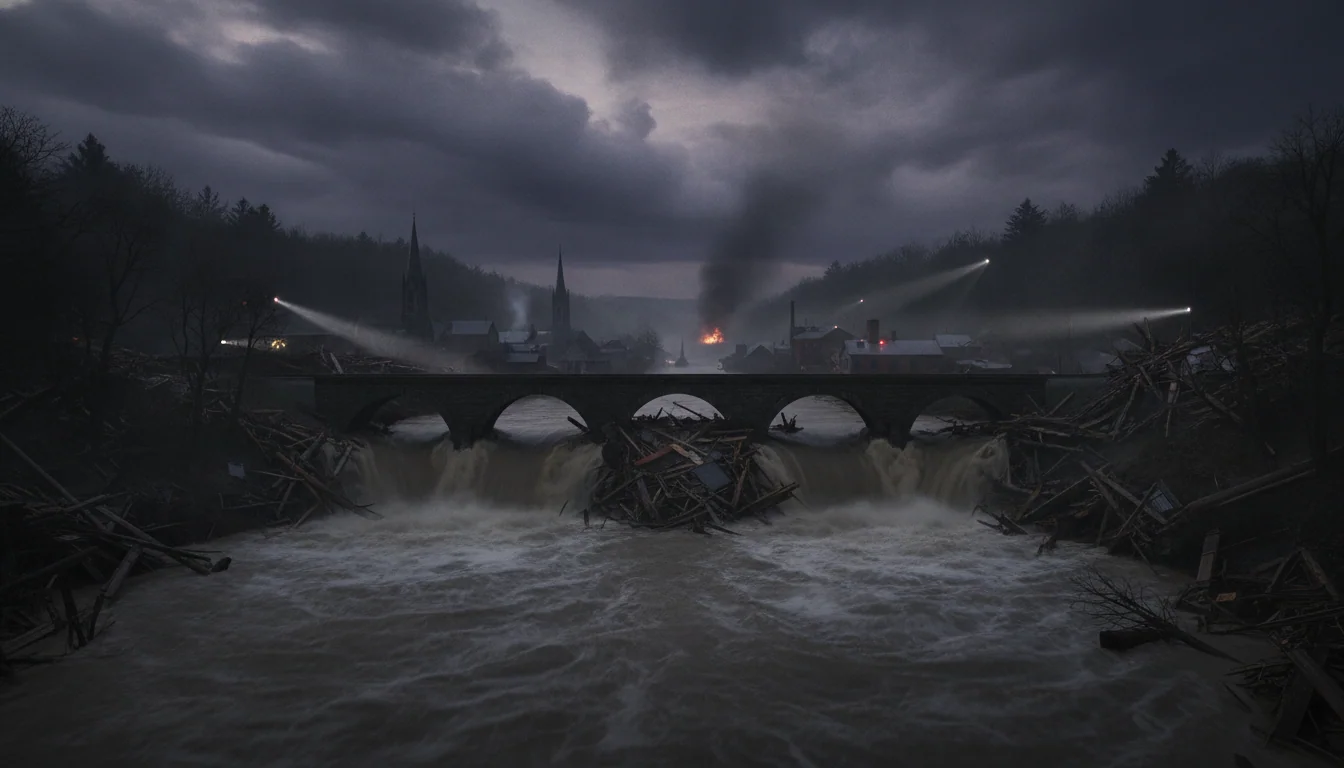
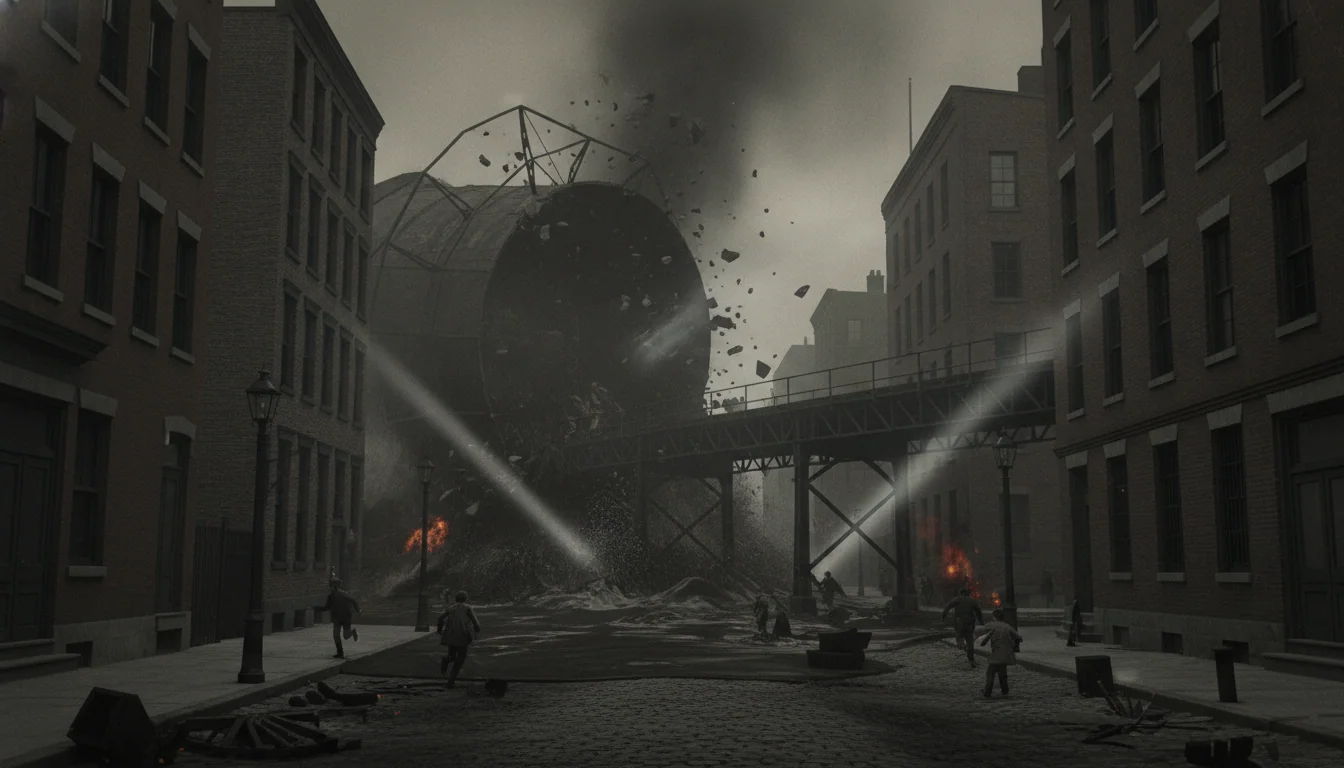
On the afternoon of May 31, 1889, a wall of water carrying houses, livestock, rail cars, and the debris of an entire mountain valley slammed into the industrial city of Johnstown, Pennsylvania, at a reported speed of up to 40 miles an hour. Within about ten minutes, a prosperous community of some 30,000 people had been struck by what would become known as the Johnstown Flood of 1889, a disaster that would kill an estimated 2,209 of them. The dam that caused it belonged to a private hunting and fishing retreat for some of the wealthiest men in Pittsburgh, and the case against them, when survivors finally brought one, went nowhere.
The setting
Johnstown sat in a narrow valley at the confluence of the Little Conemaugh River and Stony Creek, a mill town built on iron and steel that had grown thick with row houses, churches, and factories packed close to the water's edge because the surrounding hills left little other flat ground. Its Cambria Iron Works employed thousands, and the town had the confidence of a place that had survived plenty of ordinary spring flooding before, high water that rose into cellars and first floors but rarely killed anyone. That history of manageable floods shaped how residents reacted when word of a more serious danger reached them on May 31, since a similar warning years earlier had come to nothing.
Fourteen miles upstream and about 450 feet higher in elevation sat the South Fork Dam, an earthen structure originally built in the 1830s and 1840s as part of a canal system meant to move coal and other freight over the Allegheny Mountains, then abandoned once railroads made the canal obsolete and left to decay for years before a group of Pittsburgh businessmen bought the reservoir behind it in the 1870s to create a private mountain retreat.
That retreat became the South Fork Fishing and Hunting Club, whose roughly 50 members reportedly included industrialists such as Andrew Carnegie and Henry Clay Frick, drawn by the promise of a private mountain lake stocked with bass for fishing and surrounded by cottages built in a gated, exclusive community well away from the smoke and grime of Pittsburgh's mills. The club's engineers, hired to make the old dam serviceable again for the artificial lake, lowered its crest by roughly two to three feet to widen a carriage road across the top, a change that reduced the margin of safety before water could simply pour over the dam during a major storm. They also installed fish screens across the spillway to keep the club's stocked game fish from escaping downstream, screens that in practice trapped debris and reduced how much overflow water the spillway could actually pass during heavy rain. Both changes reduced the dam's capacity to handle a major storm, though at the time neither the club nor its engineers appear to have treated the alterations as a serious risk to the town below, and repairs to the dam over the years were reportedly done cheaply, using whatever materials, including straw and mud, were on hand rather than to the standards its original canal-era builders had used.
The timeline
Heavy rain fell across the region for two days before the flood, among the worst spring storms recorded in the area up to that point, and by the morning of May 31 the reservoir behind the South Fork Dam had risen dangerously close to its crest. The club's engineer, John Parke, reportedly worked through the morning with laborers trying to raise the dam's height with dirt and to clear the spillway of debris, while a rider was sent down the valley to warn Johnstown that the dam might fail. Warnings of exactly this kind had been sent before during earlier scares without incident, and many in Johnstown, a town that had flooded before from ordinary high water, did not immediately evacuate.
At around 3:10 in the afternoon, the South Fork Dam gave way entirely, releasing an estimated 20 million tons of water in about 40 minutes, a wall of water and debris that observers described moving with a low roar audible minutes before it arrived. The flood wave tore down the valley, gathering trees, rail cars, entire houses, and the wreckage of small towns like South Fork, Mineral Point, and East Conemaugh as it went, arriving at Johnstown itself within roughly an hour of the dam's collapse. By the time it reached the town the wave carried an estimated height of well over 30 feet in places and had picked up so much wreckage that survivors described it less as water than as a moving wall of debris with water somewhere inside it.
The decisions and the warnings missed
Part of what made the flood so deadly was less a single bad decision than an accumulation of smaller ones. The dam's earlier alterations had gone unchallenged for years, warnings on the day of the flood competed with a history of false alarms, and no formal system existed to force an evacuation once the danger became clear. Survivors and later investigators pointed to the fish screens and lowered crest as concrete, avoidable failures, though the storm itself was also unusually severe, and some contemporary engineers argued the dam might have failed even in its original, unaltered form under that much rain.
The survivors and the toll
The flood killed an estimated 2,209 people, a toll made worse by a horrific detail at the Stone Bridge, a substantial railroad viaduct downstream where much of the debris carried by the flood, including timber, rooftops, and barbed wire from a wire works upstream, piled up and eventually caught fire. An unknown number of survivors who had been swept into that wreckage, some still alive and pinned, burned to death there, unable to escape either the debris or rescuers who could not reach them in time. Entire families were wiped out, and the town's dead were still being identified months later; dozens of victims were never identified at all. It remained the deadliest disaster in American history until the Galveston hurricane of 1900 killed even more people barely a decade later.
The inquiry
The American Society of Civil Engineers investigated the dam's failure and found that the alterations, particularly the lowered crest and the fish screens obstructing the spillway, had measurably reduced its capacity to handle a flood of that scale, though the society's report also acknowledged the storm's severity as an extraordinary contributing factor. Survivors and the city of Johnstown sued the South Fork Fishing and Hunting Club, but the courts of the era, applying a legal standard sympathetic to property owners and reluctant to assign liability for what they characterized as an act of God, never held the club or any of its individual members legally responsible. Several club members, including Carnegie, reportedly made private donations toward Johnstown's rebuilding, a gesture that fell well short of the accountability many survivors wanted.
Public anger at the club was intense and lasting, fueled by the plain fact that its members were among the wealthiest men in America while many of the dead were mill workers and their families. Newspapers of the era openly editorialized against the club, and popular history has treated the Johnstown Flood ever since as a parable about the costs the wealthy can impose on everyone else without consequence, a framing later historians have generally found the underlying facts support even as they note the storm itself was genuinely extraordinary. A generation later, the Triangle Shirtwaist Factory fire would raise the same questions about who bears responsibility when owners' negligence costs working people their lives.
The disaster did produce two lasting changes. It became the first major disaster relief operation undertaken by the American Red Cross under Clara Barton, who arrived within days and stayed for months organizing shelter, supplies, and medical care, establishing a model the organization would repeat after later American disasters. And within engineering circles, the failure became a frequently cited case study in dam safety, feeding a slow but real tightening of standards for how earthen dams were built, inspected, and altered in the decades that followed. It remains one of the starkest American examples of a disaster where the technical cause was well understood, and the people responsible were never held to account for it.
Quick Answers
Common questions about this topic
What caused the Johnstown Flood?
The earthen South Fork Dam, holding back a private recreational lake above Johnstown, Pennsylvania, failed after days of heavy rain on May 31, 1889. The dam had been altered years earlier by its owners, the South Fork Fishing and Hunting Club, in ways that reduced its ability to handle overflow, including lowering its crest and installing fish screens that blocked debris and water from clearing the spillway.
How many people died in the Johnstown Flood?
An estimated 2,209 people died, making it one of the deadliest disasters in American history at the time. Many drowned in the initial wave, while dozens more died trapped in wreckage that piled against a stone railroad bridge and caught fire.
Was anyone held legally responsible for the Johnstown Flood?
No. Survivors sued the South Fork Fishing and Hunting Club, whose members included wealthy Pittsburgh industrialists, but courts of the era treated the dam failure as an act of God rather than negligence, and no member of the club was ever found legally liable, though several made private donations to relief efforts.
What changed after the Johnstown Flood?
The disaster helped drive the development of modern dam engineering standards and gave the newly formed American Red Cross, led by Clara Barton, its first major domestic relief operation, shaping how the organization would respond to future American disasters.

Talk to the Survivors
Hear firsthand accounts from people who lived through history's darkest days.
Create your free account →No card required. Some figures and features require a paid plan.
Join the HistorIQly Club
Get smarter about the past.
Weekly stories, deep dives, and exclusive content straight to your inbox.