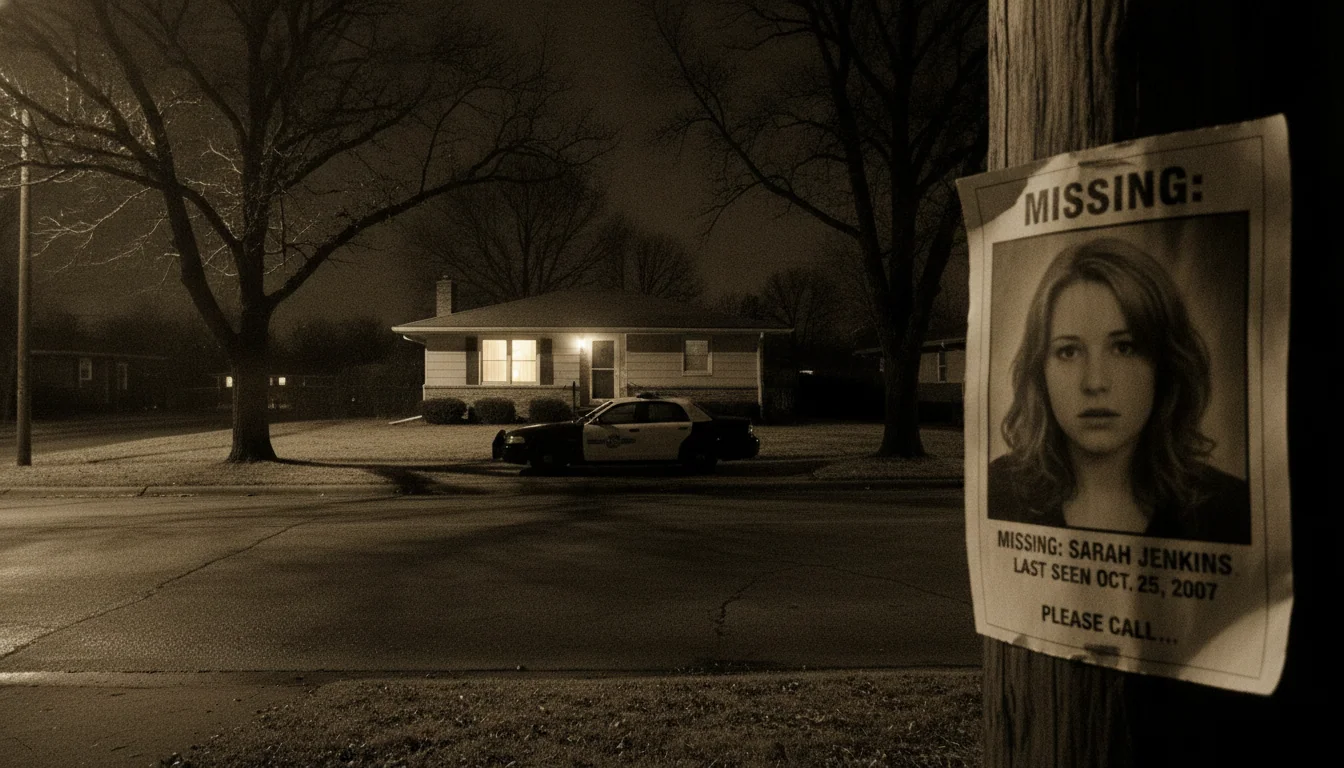
The Disappearance of Jodi Huisentruit: Iowa's Unsolved TV Anchor Case
On June 27, 1995, Jodi Huisentruit left her Mason City apartment for a morning news shift and vanished. Thirty years later, no one has been charged.
Read Wikipedia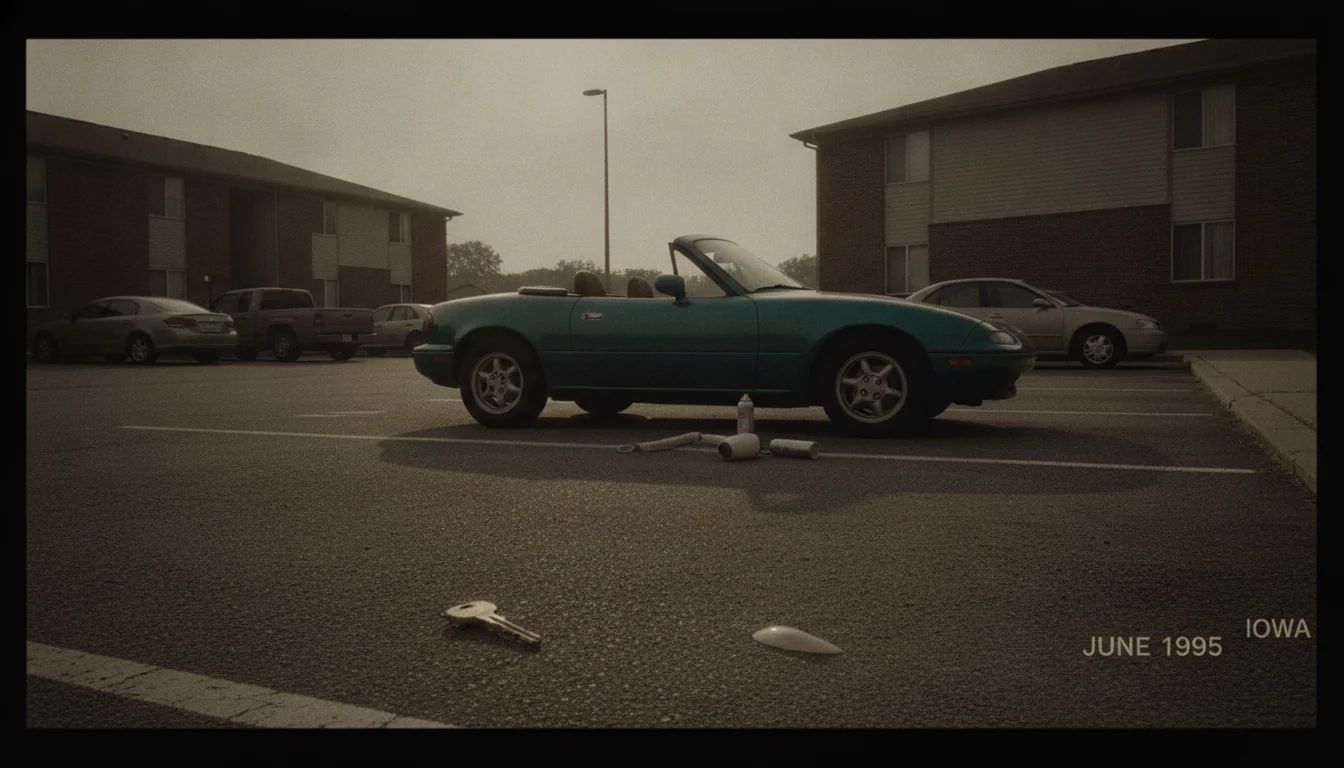
On the morning of June 27, 1995, a producer at KIMT-TV in Mason City, Iowa, phoned Jodi Huisentruit to find out why she hadn't shown up for her 6 AM shift. The call went unanswered. By the time police arrived at her apartment complex, her Mazda Miata was sitting in the parking lot, unlocked, with the engine cold. Scattered on the asphalt around it were a hairdryer, a can of hairspray, a curling iron, and a bent car key. One acrylic fingernail lay on the ground. Jodi was not there.
She was 27 years old and had been anchoring the morning news for less than a year. Thirty-one years later, she has never been found.
The anchor and the town
Jodi Huisentruit grew up in Long Prairie, Minnesota, and came to Mason City after working at smaller stations in Minnesota and Arizona. She was outgoing, well-liked, and had the kind of local-television warmth that translated naturally to small-market morning news. At KIMT she anchored alongside co-anchor Kevin Cooney and had settled into the rhythms of the pre-dawn shift: wake up around 3:30 AM, shower, load the car, drive to the studio.
Mason City, a city of about 30,000 in northern Iowa, knew her face. She was the woman who looked you in the eye at 6 AM and told you the weather. Her disappearance hit the community in a way that large-city disappearances sometimes don't - personal, proximate, and impossible to explain.
The morning of June 27
Jodi had overslept. At around 4 AM she called the station to say she was running late. A producer heard nothing alarming in the call. She had been late before, rarely, and always showed up within minutes.
She never arrived.
A neighbor later reported hearing a woman scream at some point in the pre-dawn hours. The neighbor couldn't pinpoint the exact time or direction. Iowa in late June has brief nights, and sound carries differently across a parking lot at 4 AM than it does in daylight. The scream was noted, but nobody had called police at the time.
When investigators processed the parking lot, the picture they assembled was consistent with an abduction in progress. The bent car key suggested it had been wrenched away from her hand. The personal items scattered on the asphalt suggested she had been in the middle of loading them into the car when something happened very quickly. There was no blood. There was no sign of a prolonged struggle. Whatever happened, it was fast.
The fingernail was the detail that stayed with people. A single acrylic nail, matching the polish she was known to wear. It had the quality of an unfinished sentence.
The investigation and early persons of interest
Within days the case drew FBI involvement alongside local and state authorities. The name that surfaced repeatedly in the early investigation was John Vansice, a Mason City man who had known Jodi socially, had been to her apartment, and whose name came up in interviews with people close to her.
Vansice cooperated with investigators. He was polygraphed multiple times. He submitted to DNA testing in subsequent years as technology improved. He was never arrested and was never formally named a suspect by authorities, though media coverage consistently identified him as the person of greatest investigative interest. He died in February 2022, leaving the question permanently unanswerable through direct interview.
Over the years, other names surfaced and were investigated. A convicted killer named Tony Droll was examined after confessing to a different Iowa crime and making statements that seemed tangentially connected - those statements did not produce charges. Investigators pursued tips from across the country as the case attracted periodic national attention.
The physical evidence problem
Cold cases that hinge on abductions without a crime scene are among the hardest to prosecute. There was no body, no forensic location for the act, and no witness who saw Jodi being taken. The parking lot offered what it offered and nothing more.
Forensic technology improved considerably between 1995 and the 2000s. Investigators retested physical evidence as DNA techniques advanced. Touch DNA, familial DNA searching, genetic genealogy - the tools that broke the Golden State Killer case, identified the Zodiac's envelope sender, and finally named the Boy in the Box after 65 years have all been part of the broader conversation about cold cases. Whether and how they have been applied to the Huisentruit evidence has not been disclosed publicly by the Mason City Police Department.
The 2020 announcement
In 2020, the Mason City Police Department made an announcement that jolted the case back into national coverage. Chief Jeff Brinkley told reporters that investigators had identified a strong suspect in Jodi's disappearance. He declined to name the suspect and offered no timeline for charges. The announcement was striking because it was specific - not a general expression of hope, but a claim that a name had been attached to the crime.
No charges have followed the 2020 announcement. The police department has not updated the public on what changed, if anything, or why prosecution has not proceeded. Legal observers have suggested the gap between "identified a suspect" and "charged a suspect" in cases this old often comes down to the evidentiary standard for trial: investigators may know, or strongly believe they know, who is responsible, while prosecutors determine that what they have will not survive a courtroom.
The podcast and renewed attention
In 2019, journalist Laura Prall launched a podcast called "Jodi" that revisited the case in detail, interviewing former investigators, people who knew Jodi, and experts in criminal investigation. The podcast reached audiences far outside Iowa and brought a new generation of true-crime listeners to a case that many had forgotten or never encountered.
The effect of podcast attention on cold cases is genuinely mixed. It produces tips - some of which are useful, most of which are not. It also produces noise: the internet has its own candidate pool for every unresolved case, and theories proliferate faster than they can be evaluated. What the podcast did usefully was preserve testimony and institutional memory at a moment when some of the original investigators were aging out and their recollections risked being lost.
What Jodi's case illuminates
Cases like Jodi Huisentruit's occupy a specific and painful category in American criminal history: the presumed-murder with no crime scene, no body, and no surviving path to prosecution. The family has never had closure. Mason City has never had answers. The case files remain open.
The people who worked the original investigation have spent decades with it. Several have said publicly that they believe they know what happened and who was responsible. Belief, in a courtroom, is not evidence. The gap between what investigators believe and what prosecutors can prove is where Jodi's case has lived for three decades, and where, absent new evidence, it may remain.
She would have been 58 this year. The morning news moved on without her a long time ago. The case never did.
The KIMT studio where she worked still broadcasts every morning. The parking lot where her keys were found still exists. Mason City has changed around both of them, grown and contracted in the way that midsize Midwestern cities do. The people who knew Jodi have aged. The investigators who worked the original scene have in many cases retired or died. What remains is a file that says open, a family that has never buried anyone, and thirty-one years of Iowa mornings that started without her in them.
Quick Answers
Common questions about this topic
What happened to Jodi Huisentruit?
Jodi Huisentruit was a 27-year-old morning news anchor at KIMT-TV in Mason City, Iowa who disappeared on June 27, 1995. Her car was found in her apartment complex parking lot with signs of a violent struggle nearby - bent keys, scattered personal items, and a single red fingernail. She has never been found and no one has ever been charged.
Who is the main suspect in the Jodi Huisentruit case?
John Vansice, a family friend and acquaintance of Jodi, was identified by investigators as a person of interest early in the investigation. He was polygraphed multiple times and submitted to DNA testing, but has never been charged. He maintained his innocence until his death in 2022. In 2020, Mason City police said they had identified a strong suspect but did not name them publicly.
Was anyone ever arrested for Jodi Huisentruit's disappearance?
No. Despite an investigation spanning three decades, involving the FBI and numerous persons of interest, no one has ever been arrested or charged in connection with Jodi's disappearance or presumed death. The case remains officially unsolved and open.
What clues were found at the scene?
Investigators found Jodi's car unlocked in her parking spot, her bent car key on the ground nearby, scattered personal items including a hairdryer, a curling iron, and hairspray, and a single acrylic fingernail matching her polish. A neighbor reported hearing a woman scream around 4 AM. The items suggested Jodi was grabbed as she was loading her car before her early shift.

Want to Interrogate the Suspects?
Chat with historical figures and uncover the truth behind history's greatest mysteries.
Create your free account →No card required. Some figures and features require a paid plan.
Join the HistorIQly Club
Get smarter about the past.
Weekly stories, deep dives, and exclusive content straight to your inbox.