Evelyn Hartley Disappearance: Wisconsin's Most Haunting Cold Case
The Evelyn Hartley disappearance shocked 1953 Wisconsin: a babysitter vanished with blood on the floor and a handprint on a garage wall, leaving seventy years of silence.
Read Wikipedia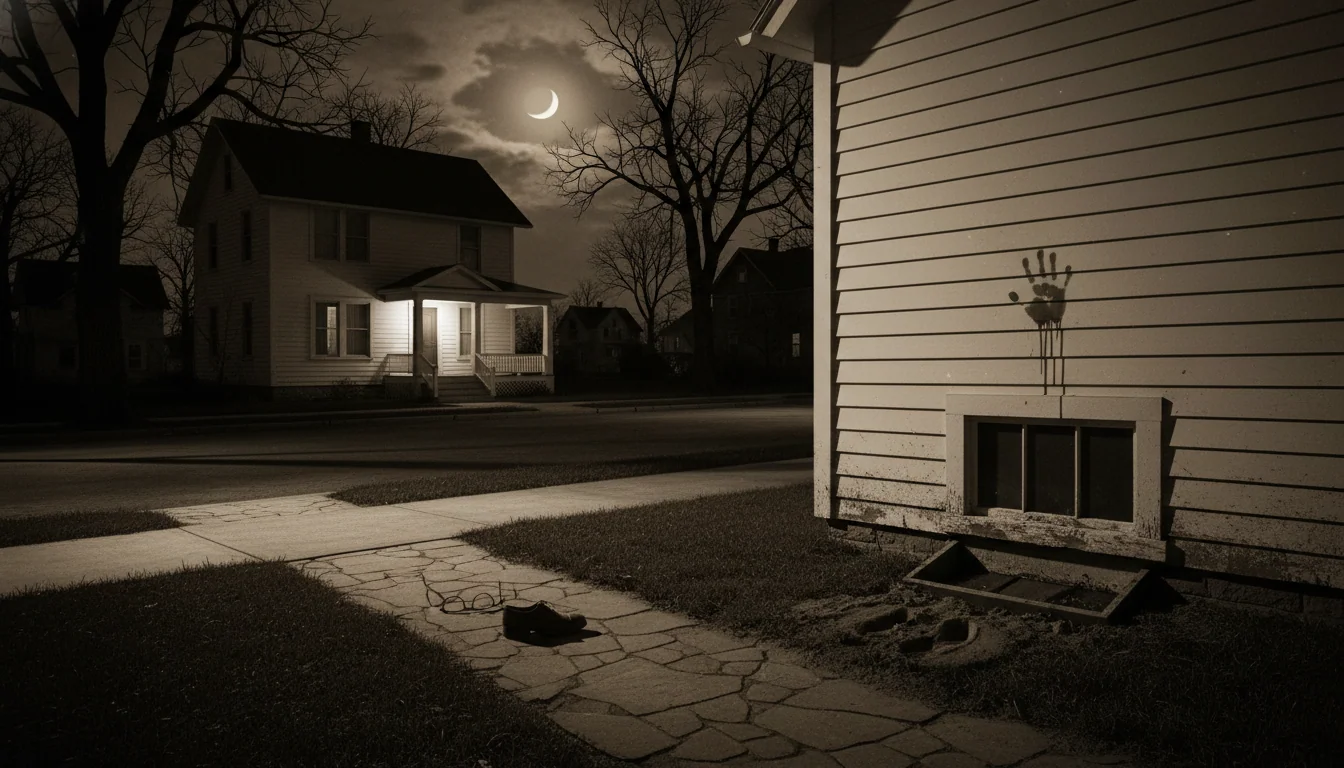
On the evening of October 24, 1953, a fifteen-year-old girl named Evelyn Hartley walked to a nearby house in La Crosse, Wisconsin, to babysit the young daughter of a college professor. She did not walk home.
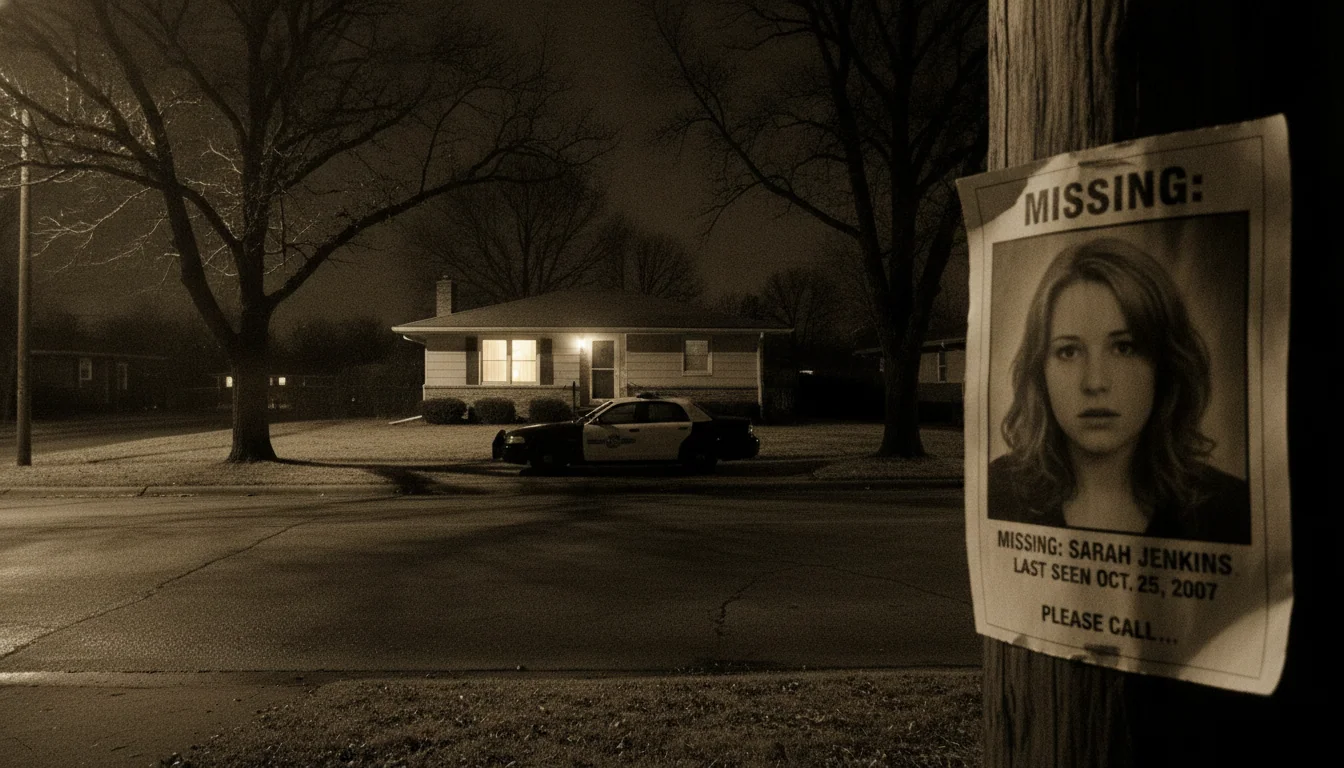
By 9 PM her father could not reach her by telephone. By 10 PM he had driven to the house and found the front door locked, a basement window screen pried off, blood on the floor, one of Evelyn's shoes inside the house, her glasses lying on the ground, and a set of bloody handprints smeared across the side of a neighbor's garage. There was no sign of the baby. There was no sign of Evelyn.
The La Crosse Police Department had a full-scale manhunt underway within hours. They would never make an arrest. They would never find a body. Evelyn Hartley has been missing for over seventy years and her case remains one of the most disturbing unsolved disappearances in the Midwest's cold-case record.
Saturday evening, the babysitting job
Evelyn was a sophomore at La Crosse Logan High School, the daughter of Clarence and Lois Hartley. By all accounts she was steady, thoughtful, and accustomed to the responsibilities of babysitting. The family of Viggo Rasmusen, a physical education professor at La Crosse State Teachers College, had hired her before.
The plan on October 24 was straightforward. The Rasmusens were going out for the evening. Evelyn would watch their toddler daughter at the family home in a quiet residential neighborhood. She arrived in the early evening and settled in for what should have been a routine Saturday night.
Clarence Hartley tried phoning at approximately 8:30 PM to check on his daughter. No one answered. He tried again. Still nothing. This was not like Evelyn - she was reliable and would have been near the telephone. He drove to the Rasmusen house.
What Clarence found
When he arrived, the front door was locked from the inside. A basement window screen had been removed and was lying in the yard. He went through an unlocked door and immediately found evidence that something had gone wrong.
Inside the house: blood on the floor, one of Evelyn's shoes, her eyeglasses set aside as if knocked off during a struggle. Outside, around the perimeter of the house and extending toward a neighboring garage: more blood, a second shoe, and a bloody handprint pressed clearly into the exterior wall of the garage next door. Two distinct sets of shoe prints were visible in the soft ground - one larger, one smaller.
The baby was unharmed in her crib. Evelyn was gone.
The manhunt
La Crosse mobilized immediately. Over the following days, more than 1,500 volunteers joined law enforcement in searching the city, the surrounding countryside, the Mississippi River shoreline, and the bluffs overlooking the valley. Aircraft flew search patterns over the region. Bloodhounds were brought in. Divers searched the river.
Bloodstained clothing items were found at a farm outside La Crosse - enough to confirm violence had occurred but not enough to indicate where Evelyn had been taken or what had happened to her. The blood evidence was typed in the limited forensic manner available in 1953. Beyond that, investigators had almost nothing to trace.
No one reported seeing anything definitive. No abandoned vehicle was connected conclusively to the scene. The two sets of footprints suggested at least two people had been present, but they led to a road where any trace disappeared.
Within days the trail was cold. Within weeks it was colder still.
The investigation's dead ends
La Crosse police and Wisconsin authorities interviewed hundreds of people in the weeks and months that followed. Persons of interest were developed and cleared. Sexual predators from neighboring states were checked against the timeline. Several individuals were questioned more than once.
None of them were charged.
The investigation was not incompetent - the detectives working the case in 1953 were experienced and the search effort was genuinely massive for a city of that size. The problem was structural. In 1953, forensic science meant blood typing, fingerprints on clear surfaces, and physical witnesses. There was no DNA analysis, no national criminal database, no digital surveillance, no mobile phone records. The evidence left at the Rasmusen house was processed with the tools available, and those tools simply were not sufficient.
The bloody handprint on the neighbor's garage was photographed and analyzed. It pointed toward a specific blood type. It did not point toward a name.
The years that followed
The case never fully closed. Wisconsin investigators periodically revisited the file as forensic technology improved. In the decades after Evelyn's disappearance, several persons of interest were examined in light of new techniques, including at least one individual whose name circulated in true-crime circles as a possible suspect. None of these leads produced a prosecutable case.
Clarence and Lois Hartley spent years searching for answers. Clarence worked with investigators, submitted to interviews, and pushed for continued inquiry. He died without learning what had happened to his daughter.
La Crosse maintained a particular civic memory of the case, partly because disappearances of teenagers leave communities with a specific kind of unresolved grief, and partly because the evidence left behind - the glasses, the shoes, the handprint on the garage - made it clear that something violent had happened in plain sight of a neighborhood and nobody had seen the critical moment.
The physical evidence, reexamined
Modern cold-case advocates have pointed to several elements of the case as potentially actionable given contemporary forensic methods.
The bloody handprint, if the original photograph is clear enough, could theoretically yield ridge-pattern evidence. The clothing found near the farm outside the city was processed at the time but any surviving biological material - if chain of custody held across seven decades - might be recoverable for DNA profiling. The two-person theory, implied by the footprints, has never been definitively confirmed or disproven.
The difficulty is that 1953 evidence was not preserved with future testing in mind. What remains in law enforcement files may or may not be sufficient for modern analysis. Cases that have been reopened and solved after similar gaps - Elizabeth Short, various 1970s disappearances, others - typically succeeded because of a specific catalyst: a deathbed confession, a database match, a surviving biological sample. None of those catalysts has materialized for the Hartley case.
What the case left behind
Evelyn Hartley's disappearance altered La Crosse in concrete ways. Parents who had sent children to babysitting jobs with little more than a wave became more cautious. Local discussions about neighborhood safety, about who might be watching, about the vulnerability of young women doing the ordinary work of their lives, ran through the community for years afterward.
The case also sits alongside a small number of 1950s abductions - Helen Brach would disappear in the following decade, Marilyn Sheppard was murdered a year before Evelyn vanished - that share a common feature: the violence was clearly real, the perpetrator was never convincingly identified, and the passage of time did not produce resolution. The 1950s, nostalgically remembered as a decade of safety and order, produced its share of cases that simply refused to close.
The last confirmed sighting of Evelyn Hartley was on an October Saturday evening in La Crosse, walking toward a quiet residential house to do what responsible teenagers did in 1953. The house was left with blood on its floor and a child asleep in her crib. Evelyn was not there.
Seventy years have passed. The handprint is still on the wall.
For other unresolved cold cases from the same era, the Lake Bodom murders in 1960 share a similar pattern of violent evidence and no conviction. The Boy in the Box mystery is another 1950s case where identity and justice both remain out of reach.
Quick Answers
Common questions about this topic
What happened to Evelyn Hartley?
Evelyn Hartley, 15, disappeared on the night of October 24, 1953, while babysitting for a professor's family in La Crosse, Wisconsin. Her father found signs of a violent struggle, blood inside and outside the house, and two sets of footprints. Her body was never found and no arrest was ever made.
Were there any suspects in the Evelyn Hartley case?
Several individuals were questioned over the decades, and a blood-type match was briefly pursued, but no arrest was ever made. The presence of two sets of footprints at the scene led investigators to believe at least two perpetrators were involved. The identity of the abductor or abductors has never been established.
Why was the Evelyn Hartley case never solved?
The investigation faced critical limitations: no body was ever recovered, forensic science in 1953 was limited to basic blood typing, witness interviews produced conflicting accounts, and the evidence trail went cold within days. DNA analysis was not available until decades later, and no primary evidence was ever linked to a confirmed suspect.
How old was Evelyn Hartley when she disappeared?
Evelyn Hartley was fifteen years old when she vanished on October 24, 1953. She was a sophomore at La Crosse Logan High School and was considered a responsible and reliable babysitter.

Want to Interrogate the Suspects?
Chat with historical figures and uncover the truth behind history's greatest mysteries.
Create your free account →No card required. Talk to anyone in history with 8 free credits a day. Some features require a paid plan.
Join the HistorIQly Club
Get smarter about the past.
Weekly stories, deep dives, and exclusive content straight to your inbox.