The Final Hours of Martin Luther King Jr.
On April 4, 1968, Martin Luther King Jr. spent his last day in Memphis planning a sanitation workers' march. That evening, a single shot on a motel balcony ended it.
Read Wikipedia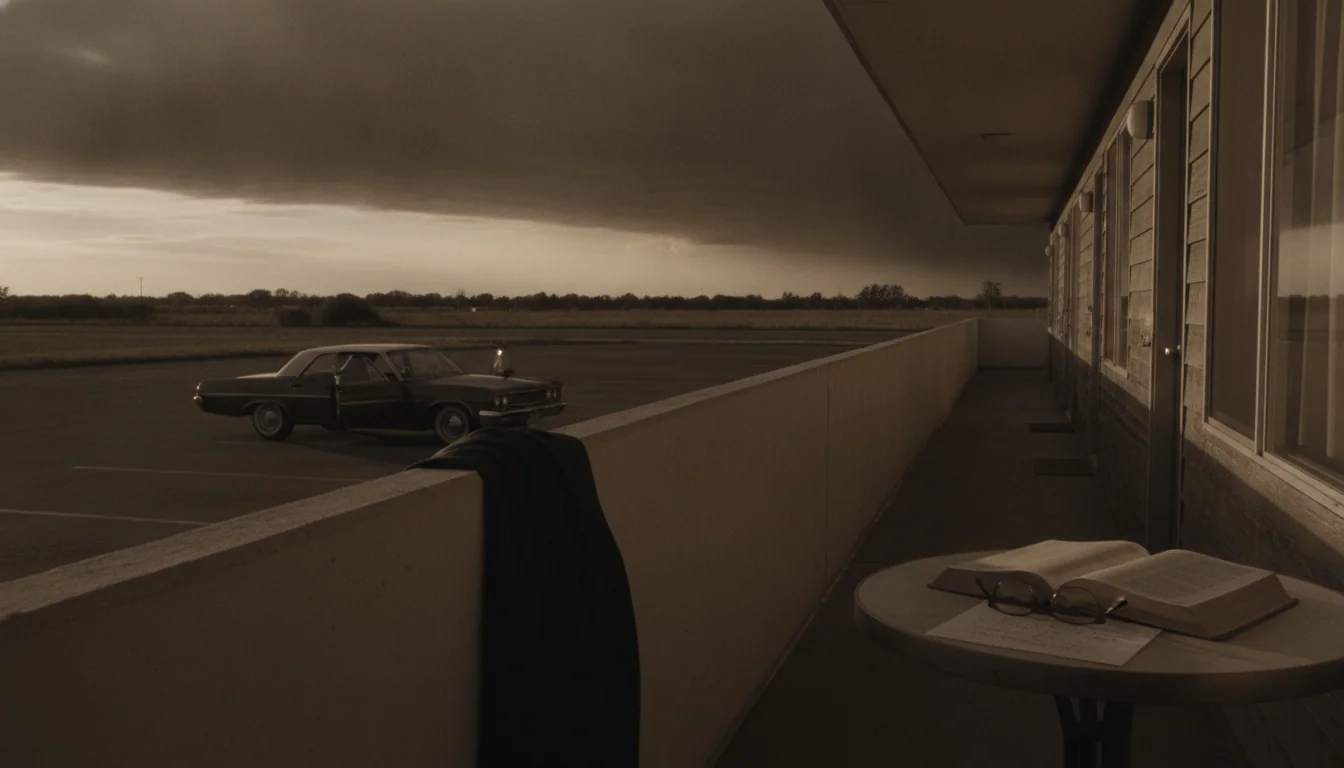
On the afternoon of April 4, 1968, Martin Luther King Jr. stood on the second-floor balcony of the Lorraine Motel in Memphis, Tennessee, joking with aides about the evening ahead and asking a musician named Ben Branch to play a particular hymn at that night's rally. He never made it to the rally. A single rifle shot from a rooming house across the street struck him in the jaw and neck, and he was pronounced dead a little over an hour later at St. Joseph's Hospital. He was 39 years old.
The day before: a prophecy at Mason Temple
King had come to Memphis, for the second time in two weeks, to support a strike by the city's Black sanitation workers, whose grievances had crystallized after two men, Echol Cole and Robert Walker, were crushed to death in February 1968 when a malfunctioning garbage truck compactor activated while they were sheltering from rain inside it. The strikers' now-famous placards, reading simply "I AM A MAN," had turned a municipal labor dispute into a civil rights flashpoint, and King viewed a peaceful, successful march in Memphis as essential proof that his broader Poor People's Campaign, a planned demonstration in Washington aimed at economic justice, could still work through nonviolent means.
His first visit, on March 28, had ended badly. A march he led was disrupted by scattered rioting from young demonstrators, an outcome that embarrassed King and gave critics ammunition to argue nonviolence had run its course. He returned to Memphis on April 3, determined to lead a second, disciplined march and repair the damage. That evening, exhausted and reportedly reluctant to leave his hotel room in the middle of a severe thunderstorm, King sent his close associate Ralph Abernathy to speak at a rally at Mason Temple in his place. The crowd, undeterred by the storm, insisted King come anyway, and Abernathy called him and convinced him to attend.
What followed became known as the "I've Been to the Mountaintop" speech, an address in which King spoke with unusual, almost unsettling candor about death threats he had received and his own mortality, telling the crowd that he had "been to the mountaintop" and had "seen the promised land," and that while he might not get there with them, "we as a people will get to the promised land." He closed by saying he was not fearing any man, because his eyes had seen the coming of the glory of the Lord. Aides who were present, and biographers who have studied the speech since, have long debated how literally to read King's language about death that night. Some later said he seemed to sense something. Others caution against reading too much prophetic weight into a speech by a man who had, in fact, received threats on nearly every trip to the South for over a decade.
The morning and afternoon of April 4
King spent much of April 4 in ordinary planning meetings at the Lorraine Motel, a Black-owned establishment on Mulberry Street where he and his staff typically stayed when in Memphis. He met with local organizers and his own Southern Christian Leadership Conference team to plan logistics for the march scheduled later that week, one meant to succeed where the March 28 march had failed. His brother, A.D. King, was reportedly staying in Memphis as well, and King spent part of the afternoon on a lighter note, engaging in a pillow fight with aides in his motel room, a detail witnesses later recounted as evidence of how relaxed the mood had briefly become after days of tension.
Around 6 pm, King stepped out onto the balcony outside Room 306, dressed for dinner at the home of a local minister, Billy Kyles, who had come to collect him. Below in the parking lot, several aides, including Abernathy, Jesse Jackson, and the musician Ben Branch, who was performing at that evening's rally, waited by their cars. King leaned over the balcony railing to speak with them, asking Branch specifically to play "Take My Hand, Precious Lord" at the rally that night, reportedly telling him to "play it real pretty."
The shot
At approximately 6:01 pm, a single rifle shot rang out from the direction of a rooming house on South Main Street, across an overgrown lot from the motel. The bullet struck King in the right side of his jaw, traveled through his neck, and severed his spinal cord before lodging in his shoulder. He was thrown backward onto the balcony floor. Aides rushed to him; Jackson and others later described trying to keep him talking, though most accounts agree King never regained consciousness or spoke again after the shot.
Abernathy, arriving from the room moments later, cradled King's head and reportedly tried to comfort him, telling him it would be all right, though the wound's severity made that reassurance almost certainly hollow even as it was said. An ambulance was called, and King was rushed to St. Joseph's Hospital, where surgeons operated but could not repair the catastrophic damage. He was pronounced dead at 7:05 pm, just over an hour after the shot was fired.
The manhunt and the plea
Investigators recovered a rifle and binoculars, wrapped in a bundle, dropped near the rooming house from which the shot was fired, along with fingerprints that would eventually be traced to James Earl Ray, an escaped Missouri convict with a history of petty crime and, by some accounts, sympathies for segregationist causes. Ray fled the country, traveling through Canada and Britain under false identities, and was captured at London's Heathrow Airport in June 1968 attempting to board a flight using a false Canadian passport.
In March 1969, facing trial, Ray pleaded guilty to King's murder and was sentenced to 99 years in prison, a plea that avoided a full trial and, with it, a complete public airing of evidence. Ray recanted his confession within days, claiming he had been pressured into pleading guilty by his own attorney and that he had not fired the shot, or had not acted alone. He spent the remaining decades of his life, until his death in 1998, attempting unsuccessfully to withdraw the plea and win a new trial. Members of King's own family, including his son Dexter King and widow Coretta Scott King, later expressed public doubt about whether Ray had acted alone, and a 1999 civil trial brought by the King family resulted in a jury finding that a broader conspiracy, potentially involving government agencies, had contributed to King's death. That civil verdict has never been matched by any criminal conviction beyond Ray's guilty plea, and historians remain divided on how much weight to give it.
Aftermath: a nation in mourning and unrest
News of King's assassination triggered rioting in more than 100 American cities within days, some of the most widespread civil disturbance the country had seen, even as it also prompted an outpouring of grief and tribute across the political spectrum. President Lyndon Johnson declared April 7 a national day of mourning. King's funeral in Atlanta drew an estimated 100,000 mourners, and his body was carried, at his own prior instruction, on a simple farm wagon pulled by two mules, a deliberate symbol tying his death to the poverty and labor struggles, like the Memphis sanitation strike itself, that had occupied his final campaign.
The Memphis sanitation workers' strike that had brought King to the city ended in victory less than two weeks after his death, with the city agreeing to recognize the workers' union and raise wages, a resolution that came at a cost King's supporters have never stopped weighing against what was lost to achieve it.
For other assassinations whose exact chain of causation remains argued over decades later, see the final hours of JFK in Dallas and the final hours of Abraham Lincoln, each a reminder that a single shot can end a life in seconds while the full explanation of who ordered it and why can remain unsettled for far longer.
Quick Answers
Common questions about this topic
What were Martin Luther King Jr.'s last words?
According to musician Ben Branch, who was with King on the Lorraine Motel balcony, King's final words to him were a request to play the hymn 'Take My Hand, Precious Lord' at a rally that evening, saying, 'play it real pretty.' Moments later King was shot.
What did MLK say in his final speech, the night before he died?
King delivered his 'I've Been to the Mountaintop' address at Mason Temple in Memphis on the evening of April 3, 1968, in which he spoke about facing threats on his life and said he had 'been to the mountaintop' and had 'seen the promised land,' though he might not get there with the crowd.
Who killed Martin Luther King Jr.?
James Earl Ray, an escaped convict, pleaded guilty in March 1969 to King's assassination and was sentenced to 99 years in prison. He later recanted his confession and spent the rest of his life claiming innocence, and members of King's own family have expressed doubts about whether Ray acted alone, though no alternative suspect has ever been proven in court.
Why was Martin Luther King Jr. in Memphis?
King traveled to Memphis to support a strike by the city's Black sanitation workers, who were protesting unsafe conditions and demanding union recognition after two workers were crushed to death in a garbage truck malfunction earlier that year.

Ask Them About the End
Chat with historical figures about their final days, in their own words.
Create your free account →No card required. Talk to anyone in history with 8 free credits a day. Some features require a paid plan.
Join the HistorIQly Club
Get smarter about the past.
Weekly stories, deep dives, and exclusive content straight to your inbox.