The Freeway Phantom: Washington DC's Most Disturbing Cold Case
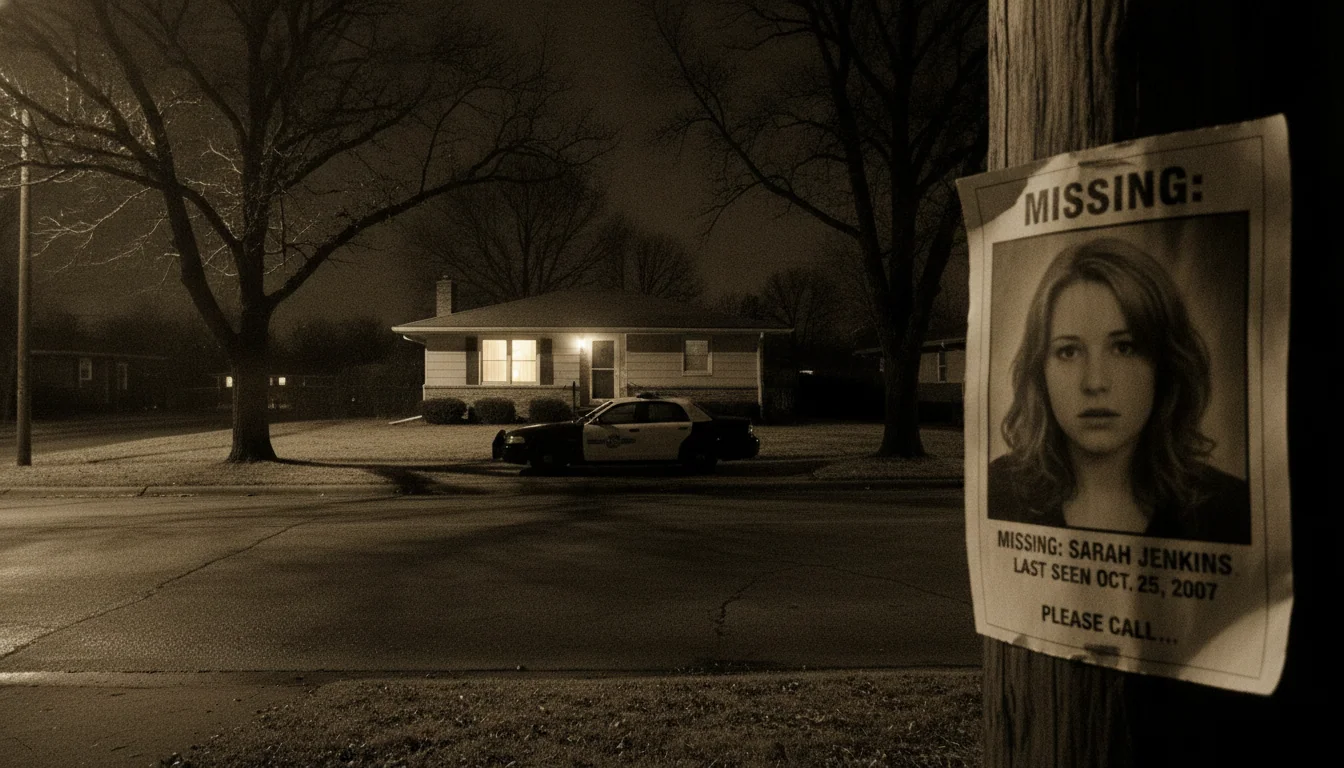
Between 1971 and 1972, six young Black girls were murdered in Washington DC and dumped along freeways. The FBI investigated for decades. No one has ever been charged.
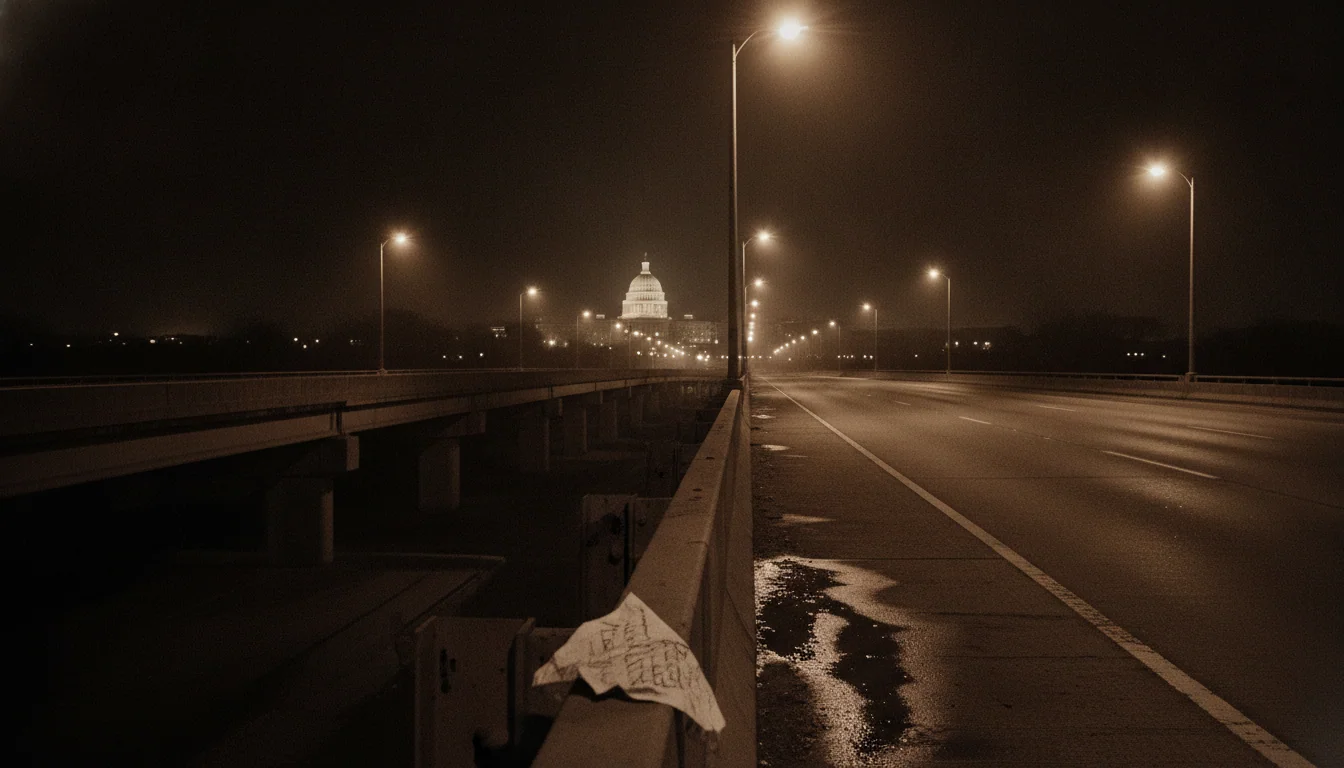
Washington DC in 1971 was a city fracturing under pressure. The civil rights movement had shifted into contested aftermath. The assassination of Martin Luther King Jr. three years earlier had left riots and resentment still burning at low heat. The city was roughly 71 percent Black, largely poor in its eastern and southern wards, and policed with a combination of indifference and occasional brutality toward its Black residents.
That is the backdrop against which six girls died.
Between 1971 and 1972, a killer abducted, sexually assaulted, strangled, and dumped six young Black women along the highways of Washington DC. No one was ever charged. The FBI took an interest. A task force investigated for years. Decades later, it remains one of the most disturbing and least-known cold cases in American history.
Six victims, eighteen months
The pattern began in the spring of 1971.
Carol Spinks, 13, was last seen leaving a convenience store on Stanton Road SE. Her body was found along Interstate 295 in April 1971. She had been strangled. No one reported seeing anything.
Months later, Darlenia Johnson, 16, disappeared from the southeast quadrant of the city and was found near the same stretch of I-295 in July 1971. Strangled, like the first victim. The proximity was noted. Investigators were not yet publicly connecting the deaths.
Ten-year-old Brenda Crockett went missing in late July 1971. Unlike the others, she called home twice after her disappearance. In the first call she said a white man had taken her somewhere to eat and was now driving her home. In the second call she said she was in Virginia and told her family not to come. Then nothing. Her body was found the next day on a roadway near the city. She was 10.
Brenda Crockett's phone calls changed everything about the investigation. A suspect vehicle - a white or light-colored car, driven by a white man - entered the case file. But the calls were never traced, and the car was never found.
Nenomoshia Yates, 12, disappeared and was found along Suitland Parkway in October 1971. Then came Brenda Woodard, 18, in November 1971 - and with her, the note.
When Brenda Woodard's body was found alongside the Baltimore-Washington Parkway, investigators discovered a handwritten note tucked into her clothing. Written in what appeared to be her own hand but composed by someone else, the note spoke directly about what had happened to her and referenced the location of her body. The FBI classified the note and has never released its full text to the public. For decades, investigators treated it as the most direct communication the killer ever made - and possibly his most significant mistake.
Diane Williams, 17, was the final confirmed victim. She disappeared in September 1972 and her body was recovered shortly after.
After Diane Williams, the murders stopped. No more victims with the same signature have ever been definitively linked.
The investigation that went nowhere
The DC Metropolitan Police formed a task force. The FBI's Behavioral Science Unit, still relatively new to serial-killer profiling in the early 1970s, became involved. The note found with Brenda Woodard was analyzed, compared against handwriting samples, and never matched to anyone conclusively.
A description emerged from Brenda Crockett's phone calls: a white man, driving a light-colored vehicle. This became a cornerstone of the investigation for years. But the DC police in the 1970s were not uniformly rigorous in documenting witness accounts, and the racial politics of the city created a fraught relationship between investigators and the communities where the victims had lived. Several residents who said they had reported suspicious activity later said those reports were not taken seriously.
One suspect - connected to a later unrelated case - was investigated for years and publicly named in some journalistic accounts as a potential perpetrator. He denied involvement. The evidence against him was circumstantial. He was never charged. The profile of a white male driver, drawn from Brenda Crockett's calls, muddied investigations that pointed in different directions.
The Green Vega theory
In the 1970s and 1980s, a separate series of attacks on young Black women in the DC area was attributed to a suspect known as the Green Vega Rapist - so called because witnesses reported a green Chevrolet Vega in connection with assaults. Investigators examined whether the Freeway Phantom and this suspect were the same person. The timelines overlapped. The geography overlapped. But the evidence never produced a usable identification.
The FBI revisited the Green Vega angle multiple times. At one point, agents believed they had a strong suspect, a man incarcerated for other sex crimes during the exact period when the murders stopped. But physical evidence was scarce, forensic technology in 1971 was primitive compared to modern standards, and witnesses had died or could not be reliably interviewed decades later.
One complication that has shadowed the entire investigation is the contradictory nature of the surviving witness accounts. Brenda Crockett's phone calls described a white driver. Other witness accounts from the neighborhoods where victims lived described a Black man in a different kind of vehicle. Investigators have never determined whether these accounts referred to the same person, to two different people, or to the same person under different circumstances. The contradiction was never resolved, and it has kept the case open to multiple competing theories for more than fifty years.
Why this case matters beyond the victims
The Freeway Phantom murders have drawn renewed attention in the context of a broader reckoning with how American law enforcement historically investigated the murders of Black women and girls. In retrospective accounts, family members of the victims described feeling that the case was never pursued with the intensity that comparable murders of white victims received.
The DC Metropolitan Police of 1971 was underfunded, understaffed, and dealing with a homicide rate among the highest in the country. Whether the inadequacy of the initial investigation reflected structural racism, resource constraints, or the limits of forensic science available at the time - or some combination of all three - is a question the surviving families have been asking for more than fifty years.
Six girls, the youngest 10 years old, were taken off streets in one of America's most politically visible cities. Their killer has never been identified. Their names were Carol, Darlenia, Brenda, Nenomoshia, Brenda, and Diane.
Where the case stands
The FBI's cold-case division has reviewed the Freeway Phantom file multiple times since the 1990s. DNA recovered from some of the victims was submitted for analysis as technology improved. No match has been found in any database.
The written note found with Brenda Woodard remains one of the most haunting pieces of physical evidence in the case. It represents the killer's voice - speaking directly, in his victim's handwriting, about what he had done. And it has, so far, told investigators nothing they could use to find him.
No task force is currently working the case in a publicly disclosed capacity. The Washington DC Metropolitan Police Department officially lists the Freeway Phantom murders as cold cases. The FBI's involvement, while intermittent, has not been formally terminated.
Journalists and documentary filmmakers have worked the case in recent years. The most consistent finding is the same one investigators reached in the early 1970s: the victims were connected by geography, by demography, and by the method of killing. Everything else - who, why, and where the trail went cold - remains open.
For other unsolved cases involving victims whose deaths went under-investigated, see The Long Island Serial Killer and The Atlanta Child Murders.
Quick Answers
Common questions about this topic
Who was the Freeway Phantom?
The Freeway Phantom is the name given to an unidentified serial killer who murdered six young Black girls in Washington DC between 1971 and 1972. All six victims were strangled and their bodies were dumped along freeways and roadways. The case was investigated by the DC Metropolitan Police and the FBI but remains officially unsolved.
Who were the Freeway Phantom victims?
The six confirmed victims were Carol Spinks, 13; Darlenia Johnson, 16; Brenda Crockett, 10; Nenomoshia Yates, 12; Brenda Woodard, 18; and Diane Williams, 17. All were Black girls or young women, and all were murdered within Washington DC.
Was a note really left with one of the victims?
Yes. When Brenda Woodard's body was found in November 1971, investigators discovered a handwritten note tucked into her clothing. The note appeared to be written in her hand but composed by the killer. The FBI analyzed it for years and has never released its full text publicly.
Was the Freeway Phantom ever identified?
No. Despite decades of investigation by the DC Metropolitan Police and the FBI, including multiple cold-case reviews, no one has ever been formally charged with the Freeway Phantom murders. Several suspects were investigated over the years but none were prosecuted.

Want to Interrogate the Suspects?
Chat with historical figures and uncover the truth behind history's greatest mysteries.
Start Your InvestigationJoin the HistorIQly Club
Get smarter about the past.
Weekly stories, deep dives, and exclusive content straight to your inbox.