Han van Meegeren, the Forger Who Fooled the Nazis
Han van Meegeren sold a fake Vermeer to Hermann Goering, then had to confess to forgery and paint a new one in custody to avoid a treason charge.
Read Wikipedia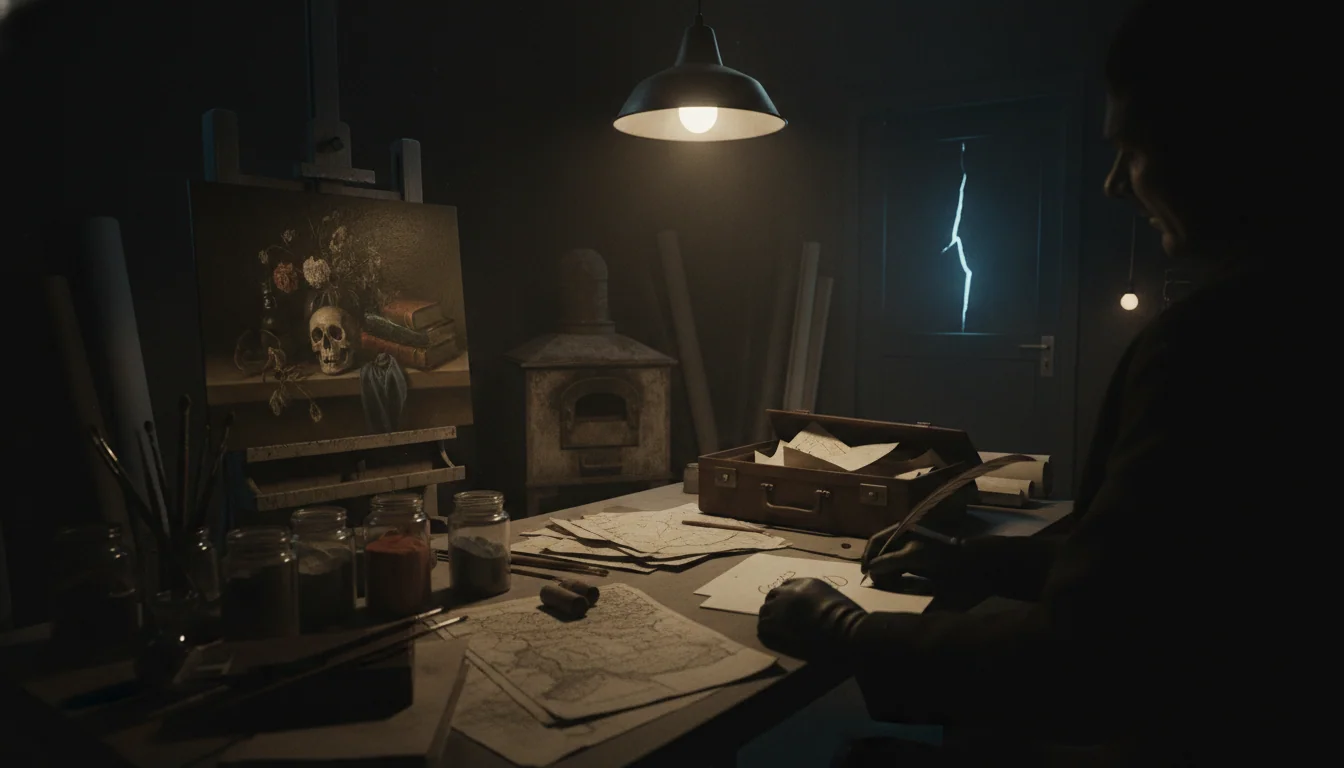
In 1945, Allied investigators combing through the private art collection of Hermann Goering found a painting attributed to Johannes Vermeer, one of the most prized and rarest painters in Dutch history. Tracing its sale led them to a Dutch painter named Han van Meegeren, who was promptly arrested for the crime of selling a national treasure to the Nazi regime, an offense that carried the death penalty. His defense was almost absurd on its face: the painting was not a national treasure at all. He had painted it himself.
The mark
Han van Meegeren had spent much of his career as a competent, commercially unremarkable Dutch painter, working in a traditional style that critics of the 1920s and 1930s dismissed as derivative and out of step with modern art. Reportedly stung by years of critical rejection, van Meegeren developed both the technical skill and the motive to prove the art establishment wrong in the most direct way he could imagine: fooling its most respected experts.
His target was not any single collector but the entire apparatus of Vermeer scholarship. Vermeer's surviving body of confirmed work is famously small, fewer than forty paintings are generally accepted today, and art historians of the era were eager to expand it, primed by the possibility that an undiscovered masterpiece might still surface. Van Meegeren understood that eagerness better than almost anyone, and he built his forgeries to satisfy it rather than to simply copy an existing painting.
Reportedly, one particular review early in his career, dismissing his own original work as imitative and uninspired, stayed with him for years. Van Meegeren later described his forgeries less as simple theft than as a demonstration aimed squarely at the critics who had rejected him, proof that the same eyes that dismissed his own name would praise his brushwork the moment it carried someone else's.
The crew and the plan
Working essentially alone, van Meegeren spent years developing techniques to defeat the forensic tests of his day. He mixed his own pigments using period-appropriate materials, ground them by hand, and painted on canvases salvaged from genuine but minor seventeenth century works so the underlying fabric would test as authentically old. He devised a method of baking his finished paintings in an oven to harden the paint and produce a network of fine surface cracks, called craquelure, that mimicked centuries of natural aging, then rubbed the cracks with ink to simulate the accumulated grime of age.
Crucially, van Meegeren did not simply forge known Vermeer paintings. He invented plausible new ones, choosing religious subject matter that fit a period of Vermeer's career art historians already suspected but had few confirmed examples of. His first major success, a work titled The Supper at Emmaus, was authenticated by a leading Vermeer expert of the time and sold to a respected Dutch museum foundation in 1937 for a substantial sum, cementing his invented paintings as accepted parts of the Vermeer catalog rather than curiosities awaiting scrutiny.
The job
By the German occupation of the Netherlands during the Second World War, van Meegeren had produced several more forged "Vermeers" and works attributed to Pieter de Hooch, selling them through intermediaries to collectors who included prominent Dutch and German buyers. His most consequential sale involved a painting titled Christ and the Adulteress, sold through a dealer to Hermann Goering, one of the most senior figures in the Nazi regime and an avid, if not especially discerning, collector of looted and purchased art.
Accounts differ on the exact terms, but van Meegeren reportedly received a substantial payment along with the return of a number of other Dutch paintings that had been taken out of the country, a transaction that, on its face, looked to postwar investigators like a Dutch national selling one of the country's cultural treasures to its wartime occupier for personal profit. That appearance, more than the actual object changing hands, is what nearly cost van Meegeren his life.
The unravelling
After the liberation of the Netherlands, Allied art recovery teams working to trace looted and sold artworks found the Christ and the Adulteress painting in Goering's collection and followed the sale back to van Meegeren. He was arrested in May 1945 on suspicion of collaboration, specifically of selling a genuine national art treasure to the enemy, a charge under Dutch law that could bring the death penalty.
Facing that charge, van Meegeren made an announcement that stunned investigators: the painting sold to Goering was not a lost Vermeer at all. It was his own forgery, and so were several other celebrated "Vermeer" discoveries of the previous decade, including The Supper at Emmaus that a respected authority had authenticated years earlier. Confessing to fraud and forgery, both real crimes but far less severe than treason, was a calculated trade, and it required proof investigators were not initially inclined to accept on his word alone.
To demonstrate the claim, Dutch authorities had van Meegeren paint a new work in the style of Vermeer while under guard, supplied with period-appropriate pigments and materials, and produced in stages before witnesses so the process itself, not just the finished object, could be verified as his own technique. The resulting painting, later known as Jesus Among the Doctors, matched the same aging and craquelure methods found in the earlier forgeries, and combined with technical analysis of the paintings already in circulation, it satisfied investigators that van Meegeren had indeed been the source of an entire body of work accepted for years as genuine seventeenth century masterpieces.
Where are they now
Van Meegeren's public reputation shifted almost overnight from suspected collaborator to a kind of folk hero, a man who had reportedly duped the Nazi high command with a painting he had made in his own studio rather than looted from his own country's heritage. Newspapers and much of the Dutch public treated the episode as a sly national victory dressed up as a crime, a reading van Meegeren did little to discourage.
He was tried not for treason but for forgery and fraud, and in October 1947 was convicted and sentenced to one year in prison, a fraction of the punishment a treason conviction would have carried. He never served it. Van Meegeren died of a heart attack in December 1947, weeks after his conviction, before beginning his sentence.
The episode left a lasting mark on how museums and auction houses evaluate old master paintings, pushing conservators toward the forensic dating and pigment analysis techniques, including tests for anachronistic modern materials that would not have existed in the seventeenth century, that later became standard practice across the art world. Investigators reportedly confirmed van Meegeren's confession in part by finding traces of a modern synthetic resin in the paint layers, a material that had no business appearing in a genuine seventeenth century canvas, exactly the kind of anachronism that later authentication regimes were built to catch.
Van Meegeren's forgeries, once celebrated as lost Vermeers and now displayed frankly as his own work in Dutch museums, remain a reminder that expert authentication in his era relied heavily on connoisseurship and reputation rather than the chemical and technical scrutiny that would make a scheme like his far harder to repeat today. The Supper at Emmaus, the painting that first fooled a leading Vermeer authority in 1937 and made every later sale possible, still hangs in a Rotterdam museum, now labeled plainly for what it actually is: not a lost Dutch master's masterpiece, but the work of the forger who briefly convinced the world he had found one.
Quick Answers
Common questions about this topic
Did Han van Meegeren really sell a fake Vermeer to Hermann Goering?
Yes. Through intermediaries, van Meegeren sold a painting he had forged in the style of Johannes Vermeer, titled Christ and the Adulteress, to the Nazi official Hermann Goering during the German occupation of the Netherlands, reportedly in exchange for a large sum along with the return of other artworks.
Why did van Meegeren confess to being a forger?
After liberation, Dutch authorities arrested him for collaboration, accusing him of selling a genuine Dutch national treasure to the enemy, a charge that could carry the death penalty. Van Meegeren confessed instead that the painting was his own forgery, a lesser crime that he could actually prove.
How did he prove the painting was a forgery?
Investigators did not simply take his word for it. Van Meegeren was required to paint a new work in the style of Vermeer while under guard, using period-appropriate materials and techniques, to demonstrate he genuinely possessed the skill and method behind the earlier forgeries.
What happened to van Meegeren after his trial?
He was convicted of forgery and fraud in October 1947 and sentenced to one year in prison, a fraction of what a treason conviction would have carried. He died of a heart attack in December 1947, before he began serving the sentence.

Question the Thieves
Chat with the detectives and masterminds behind history's boldest heists.
Create your free account →No card required. Talk to anyone in history with 8 free credits a day. Some features require a paid plan.
Join the HistorIQly Club
Get smarter about the past.
Weekly stories, deep dives, and exclusive content straight to your inbox.