The Theft of the Mona Lisa: How a House Painter Made Her Famous
In 1911 a Louvre handyman hid overnight, walked out with the Mona Lisa under his smock, and turned an admired painting into the most famous artwork on Earth.
Read Wikipedia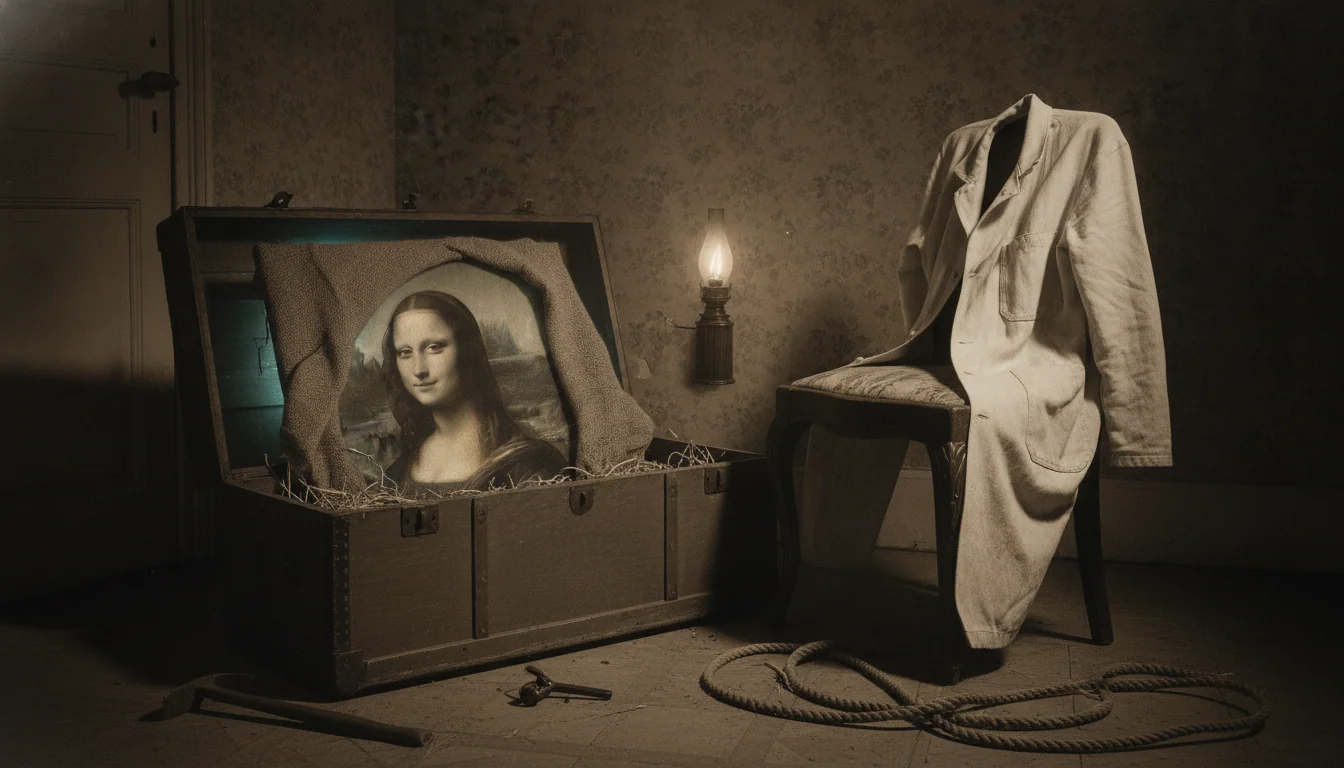
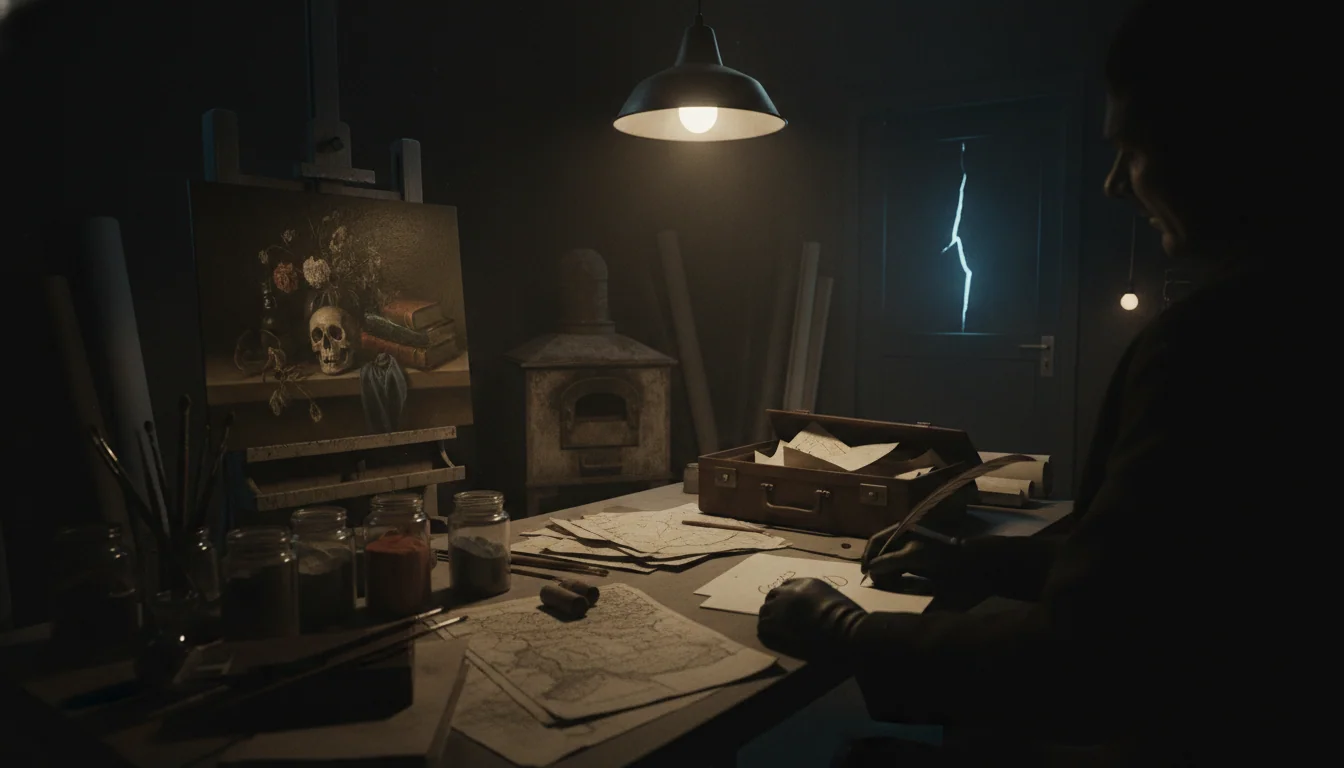
On the morning of August 22, 1911, a painter named Louis Beroud arrived at the Louvre to sketch the Mona Lisa and found four iron pegs on an empty stretch of wall. Museum staff initially assumed the painting had been removed for photography, a routine occurrence. It took most of a day before anyone accepted what had actually happened: Leonardo da Vinci's portrait, hanging in the Louvre since Napoleon's era, was gone.
The mark
By 1911 the Mona Lisa was already a respected piece in the Louvre's Salon Carre, admired by art historians and periodically written up in guidebooks, but it was not yet the cultural phenomenon it would become. Security at the Louvre, one of the largest museums in the world, was famously loose. Paintings were protected mainly by their glass cases and by the assumption that nobody could simply lift a masterpiece off a wall in a building full of guards and visitors. The museum closed to the public on Mondays for cleaning and maintenance, which meant the galleries on August 21 were staffed mostly by workers rather than watchful crowds.
The crew and the plan
The thief was Vincenzo Peruggia, an Italian immigrant and handyman who had worked for the Louvre's contracted glazing company in 1910, building the very protective glass case that covered the Mona Lisa at the time. He knew the room, knew the routine, and reportedly still had a white workman's smock of the kind Louvre staff wore, which let him move through the building without drawing attention. There is no credible evidence of accomplices acting with him inside the museum that day, despite later rumors of a wider conspiracy; investigators and most historians treat the theft as essentially a solo job aided by inside knowledge of the building's Monday closure.
The job
Peruggia entered the Louvre on Sunday, August 20, along with the public, and hid overnight, reportedly in a storage closet, until the museum's Monday closure left the galleries empty of visitors. On Monday morning he removed the Mona Lisa from its case and its frame, wrapped or carried the panel under his smock, and simply walked out through a service stairwell. One account holds that a locked door briefly stood between him and the street, and that a plumber working nearby helped him force it open, unaware of what was hidden beneath the workman's coat. Peruggia walked out into Paris with the most famous painting in the Western world tucked against his body and took it home to his small apartment, where he stored it in a false-bottomed trunk.
The unraveling that took two years
The initial investigation was a public spectacle and a private embarrassment. French police fingerprinted the case, interviewed staff, and pursued numerous false leads. Detectives detained the poet Guillaume Apollinaire, whose associate Gery Pieret had previously stolen small Iberian statuettes from the Louvre that ended up, awkwardly, in the possession of Apollinaire's friend Pablo Picasso. Both men were questioned, and Picasso reportedly panicked enough to consider disposing of the statuettes in the Seine before ultimately cooperating; neither had any connection to the Mona Lisa and both were released. The Louvre's director resigned amid the fallout, and newspapers around the world ran the story for weeks, turning the empty wall in the Salon Carre into something of a tourist attraction in its own right.
Peruggia, meanwhile, kept the painting hidden in his Paris apartment for more than two years, apparently unsure how to profit from it or unwilling to risk moving it. In December 1913 he wrote to Alfredo Geri, an art dealer in Florence, using the alias Leonardo Vincenzo and offering to sell what he described as the stolen Mona Lisa, reportedly framing the offer as a patriotic act of returning Italian art to Italian soil. Geri, skeptical but intrigued, arranged a meeting and brought in Giovanni Poggi, director of the Uffizi Gallery, to authenticate the piece. Peruggia produced the painting from a trunk in his hotel room. Poggi confirmed it was genuine by comparing it against the Louvre's own inventory markings on the back of the panel. Peruggia was arrested within days.
Where he stood, and where it went
At trial in Italy, Peruggia argued he had acted out of patriotism, claiming the Mona Lisa had been looted from Italy by Napoleon and that he only meant to bring her home. The claim did not hold up historically: Leonardo himself had brought the painting to France near the end of his life and sold it, or it entered French royal collections through Leonardo's own arrangements with King Francis I, well before Napoleon's era. Even so, the patriotic framing resonated with an Italian public sympathetic to a countryman who had, however clumsily, embarrassed the French. Peruggia received a relatively light sentence, reportedly around one year, later reduced on appeal to roughly seven months, much of which he had already served while awaiting trial.
The Mona Lisa toured Italy briefly, displayed in Florence, Rome, and Milan to enormous crowds, before returning to the Louvre in early 1914 to a reception considerably grander than any it had received before its disappearance.
Why it still fascinates
The Mona Lisa theft is one of the rare heists whose real legacy has almost nothing to do with the loot's monetary value and everything to do with publicity. Before 1911, the painting was one respected work among many at the Louvre. The two-year manhunt, the false accusations against a famous painter, and the eventual recovery from a workman's trunk in a Florence hotel generated a level of global newspaper coverage that no amount of scholarly praise could have produced on its own. Art historians have long argued that the theft, more than any single factor before or since, is what transformed the Mona Lisa from a well-regarded Renaissance portrait into the most recognized image in the history of Western art, a status that has only compounded with every subsequent decade of tourism, reproduction, and pop-culture reference.
The security question nobody wanted to answer
The theft also exposed how little serious protection major museums had for their most valuable holdings in the early 20th century. The Louvre's response was significant: new alarm systems, tighter tracking of who had access to which galleries, and a general professionalization of museum security that spread to other major institutions across Europe once the scale of the embarrassment became clear. It took a house painter with an old work smock and a trunk with a false bottom to demonstrate, in the most public way imaginable, that a masterpiece could disappear off a museum wall and stay missing for two years without anyone in Paris having the faintest idea where it was.
Peruggia's motives, still debated
Historians remain divided on how much of Peruggia's stated patriotism was genuine and how much was constructed after the fact to soften a jury and a sympathetic Italian public. Some later accounts suggested he may have been drawn into the scheme, or at least encouraged, by a conman named Eduardo de Valfierno who allegedly planned to sell forged copies to wealthy American collectors under the cover of the theft, using the real theft as proof the "originals" being sold were genuine. The Valfierno story rests almost entirely on a single journalist's account published years later and is treated by most historians with considerable skepticism, since no contemporary evidence from the 1911 investigation supports it. What is well documented is simpler and, in its way, more remarkable: one man, inside knowledge of a museum's Monday routine, and two years of nerve, or perhaps simple indecision, sitting on the most valuable object he would ever touch.
Quick Answers
Common questions about this topic
Who stole the Mona Lisa?
Vincenzo Peruggia, an Italian handyman who had previously worked at the Louvre building protective glass cases for paintings, including the Mona Lisa itself. He took the painting on August 21, 1911.
How long was the Mona Lisa missing?
The painting was missing for just over two years, from August 1911 until December 1913, when Peruggia attempted to sell it to an art dealer in Florence and was caught.
Why did the theft make the Mona Lisa so famous?
Before 1911 the Mona Lisa was respected among connoisseurs but not a global icon. The theft generated worldwide newspaper coverage, an international manhunt, and two years of public fascination, transforming it into the most recognized painting in the world by the time it was recovered.
Was Pablo Picasso really a suspect?
Yes. Picasso and the poet Guillaume Apollinaire were both briefly detained and questioned because Apollinaire's secretary had previously stolen small Iberian statuettes from the Louvre that ended up in Picasso's possession. Neither man had anything to do with the Mona Lisa theft, and both were released.

Question the Thieves
Chat with the detectives and masterminds behind history's boldest heists.
Create your free account →No card required. Talk to anyone in history with 8 free credits a day. Some features require a paid plan.
Join the HistorIQly Club
Get smarter about the past.
Weekly stories, deep dives, and exclusive content straight to your inbox.