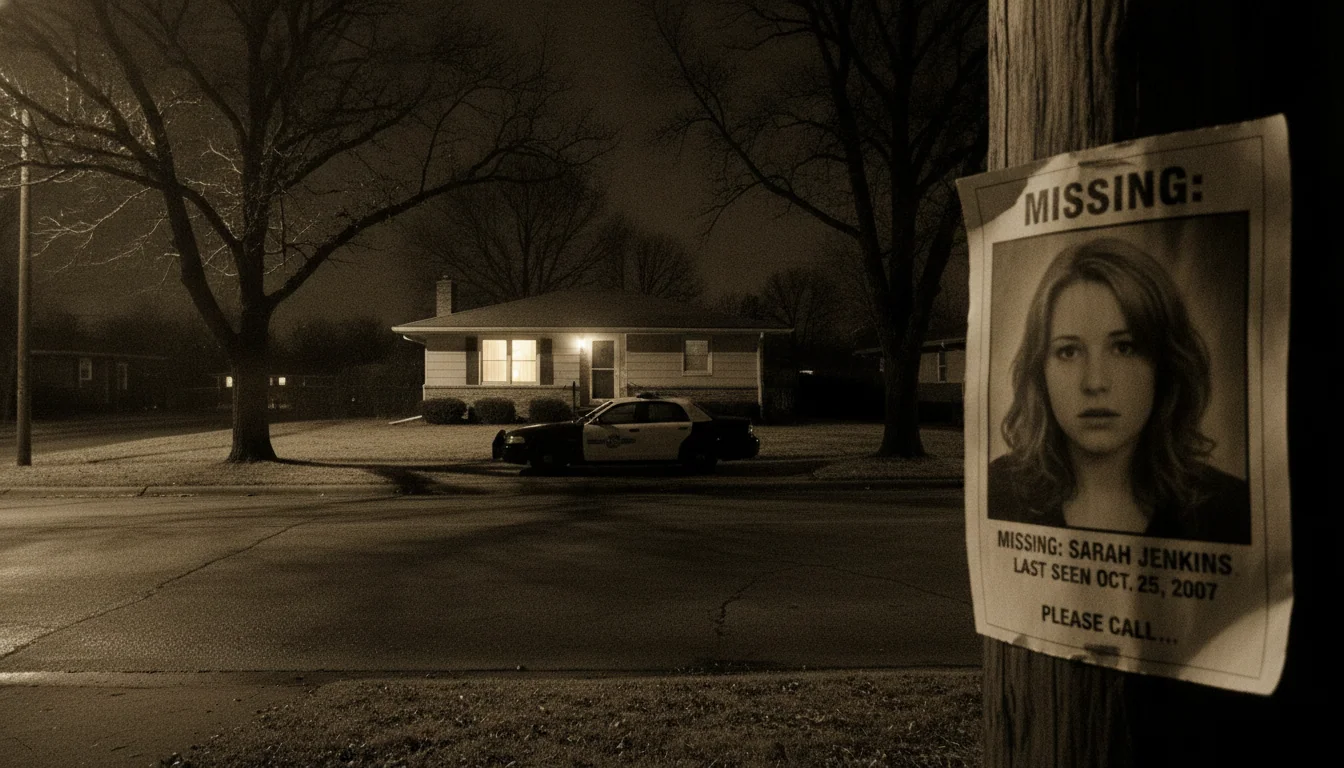
The Disappearance of Heiress Helen Brach
The Helen Brach disappearance in 1977 led to a federal murder conviction for horse trader Richard Bailey, but her body was never found and the full story remains open.
Read Wikipedia
The Brach's Candy Company made its name selling caramels, conversation hearts, and bridge mix to middle America. When Frank V. Brach died in September 1970, his widow Helen inherited an estate the press would eventually estimate at more than $21 million. She was quiet, generous with animal charities, and completely unguarded around the men who would eventually decide she was worth more dead than alive.
Seven years after Frank's death, Helen Brach vanished on a winter afternoon somewhere between Minnesota and Illinois and was never seen again. The investigation that followed revealed not just a murder conspiracy, but one of the most elaborate fraud operations the American horse world had ever produced.
A fortune and a soft spot for horses
Helen Vorhees grew up without wealth in rural Ohio. Her marriage to Frank Brach in 1951 changed that in every material sense. The Brach family had built their candy company from a single caramel kettle on North Wells Street in Chicago into one of the largest confectionery operations in the country. Frank's death left Helen with the house in Glenview, Illinois, investment accounts in the eight-figure range, and a desire to fill her days with meaning.
She found it in horses. The Chicago equestrian world in the 1970s was a well-dressed, socially aspirational scene built around show horses, stables, and the understanding that a wealthy widow was always welcome at the auction ring. Helen was not careless with money in general, but she trusted the people she liked, and she liked a horse trader named Richard Bailey.
Bailey was a tall, polished operator who had spent years identifying wealthy women, befriending them, and steering them toward expensive horse purchases at inflated prices. The horses were often misrepresented, the returns on alleged investments fabricated, and the documentation minimal. Bailey's operation was not unique in the Chicago show-horse world, which was riddled with insurance fraud, animal abuse, and layered con artistry at every level. What set Bailey apart was his personal charm, which allowed him to cultivate deep trust with targets over months and years before they understood what had happened.
By the mid-1970s, Bailey had extracted hundreds of thousands of dollars from Helen Brach through fraudulent horse sales. He had also, according to later testimony from federal informants, begun discussing with associates what would happen if she reported him or pursued civil action. The conclusion his associates reached was not reassuring.
Mayo Clinic, February 1977
In early February 1977, Helen Brach traveled to Rochester, Minnesota for a routine medical checkup at the Mayo Clinic. On February 17, she checked out. That is the last moment in her life that can be verified by a third party who was not her caretaker.
Jack Matlick had worked in the Brach household for years, managing the estate in Glenview and accompanying Helen on errands and trips. He told investigators that he drove Helen from Rochester back toward Chicago, dropped her at O'Hare Airport, and watched her walk inside. She had mentioned, he said, that she intended to take a short trip before returning home.
The story did not hold. Airlines had no booking or boarding record for her. No hotel registered her. No bank withdrawal, credit card charge, or phone call occurred after February 17. Friends who expected to hear from her heard nothing. Her pets and her home sat unattended. When employees at the estate grew alarmed and contacted police, Matlick repeated his account without variation.
Investigators questioned Matlick repeatedly over the following years. He had benefited substantially from his position in the Brach household and, it later emerged, had already begun using estate funds improperly. He was named a person of interest. He was never charged in connection with her disappearance. He died in 1994 without changing his story.
The horse fraud world
Helen Brach's disappearance might have remained a stalled missing-persons file had federal investigators not begun pulling on the thread of Chicago horse fraud in the late 1980s. What unraveled was a sprawling criminal enterprise involving dozens of trainers, dealers, and stable owners who had spent a decade defrauding buyers, burning horses for insurance money, and bribing show judges across multiple states.
Richard Bailey's name appeared throughout the investigation. So did that of Silas Jayne, a notorious figure in the Illinois equestrian world who had been convicted of conspiracy to commit murder in 1970 in a separate killing, who was widely understood to have connections reaching into organized crime, and who represented a darker layer of the same Chicago horse world that had drawn Helen Brach in. Jayne died in 1987 before investigators could fully build a case around the Brach connection.
The picture that emerged from informant testimony was grim. Prosecutors argued that Richard Bailey, fearing exposure and potential prosecution for his fraud against Helen Brach, arranged her killing through contacts in his criminal network. The method most consistently described by informants was industrial: Helen was murdered and her body processed through a rendering facility, the kind of large-scale commercial operation that turns organic and animal waste into usable fats and proteins. If the informants were right, nothing recoverable would have been left. No body was ever found. No direct physical evidence of the killing was ever produced at trial.
Richard Bailey's conviction
In 1994, federal prosecutors indicted Richard Bailey on charges including multiple counts of mail fraud, wire fraud, and conspiracy to commit murder for hire. The murder conspiracy charge rested largely on the testimony of associates who described conversations with Bailey about eliminating Helen Brach as a legal risk.
Bailey admitted to the horse frauds at trial. He contested the murder conspiracy charge vigorously. A federal jury convicted him on all counts. He received a life sentence plus 30 years on the fraud charges.
He appealed repeatedly without success. He died in federal custody in September 2021 at the age of 90, having served nearly three decades of a life sentence and having never, by any public account, offered a full explanation of what happened to Helen Brach in February 1977.
The wider reckoning
The investigation that began with Helen Brach's disappearance eventually became one of the most consequential prosecutions the American equestrian world had seen. More than 25 people were convicted of crimes connected to the Chicago horse fraud ring that federal investigators had opened by tracing leads in the Brach case. The frauds involved sums running into the tens of millions and extended from Illinois stables to Florida show circuits and beyond.
Several prominent trainers received prison sentences. Insurance companies that had paid out on suspicious horse deaths reviewed their files. The culture of the Chicago show-horse world, which had operated with minimal outside scrutiny for years, was exposed in court filings and testimony that detailed practices ranging from electrical shock to lethal injection.
For the investigators who worked the Brach case, the disappearance represented a particular pattern of predation. The target was wealthy, older, emotionally attached to the horse world, and insulated from the professional advice that might have flagged Bailey's operation early. She was not the only woman he defrauded. She was the only one who vanished.
What remains open
A probate court declared Helen Brach legally dead in 1984. Her estate was distributed primarily to animal welfare organizations, which matched her known interests. The Glenview house was sold. The horses she had owned were placed elsewhere.
She was 55 years old when she disappeared. The federal conviction of Richard Bailey established, in a jury's verdict, that he conspired to have her killed. It did not identify who carried out the killing, establish a precise date, or confirm the location. The informant accounts about a rendering facility were never corroborated with physical evidence. They were testimony, credible enough to support a conspiracy conviction, not sufficient to close every remaining question.
The Brach's caramel candies are still on supermarket shelves. Her name is not on any box. The case file sits formally open, practically immovable: a murderer convicted and dead, a victim whose body was almost certainly destroyed, and a record of exactly what kind of trust can be exploited when wealth, horses, and the wrong kind of charming man occupy the same social world.
For other cold cases involving wealthy victims and organized crime, see The Long Island Serial Killer and The Texarkana Moonlight Murders.
Quick Answers
Common questions about this topic
Who was Helen Brach?
Helen Vorhees Brach was the widow of Frank V. Brach, whose family founded Brach's Candy Company. When Frank died in 1970, Helen inherited an estate worth tens of millions of dollars. She was known in the Chicago area for her philanthropy, especially her love of animals and her support for animal welfare causes.
When did Helen Brach disappear?
Helen Brach was last confirmed alive on February 17, 1977, when she checked out of the Mayo Clinic in Rochester, Minnesota. Her caretaker, Jack Matlick, claimed he drove her to O'Hare Airport in Chicago. She was never seen or heard from again. No credit card, bank, or travel record placed her anywhere after that date.
Was anyone convicted of killing Helen Brach?
Richard Bailey, a horse trader who had defrauded Helen Brach and other wealthy women, was convicted in 1994 of conspiracy to commit murder for hire and received a life sentence. No one was ever convicted of the actual killing itself, and her body was never found. Bailey died in federal custody in 2021.
What happened to Helen Brach's estate?
After seven years without any contact, a probate court declared Helen Brach legally dead in 1984. Her estate, valued at around $21 million, was distributed primarily to animal welfare organizations, consistent with her known wishes and philanthropic history.

Want to Interrogate the Suspects?
Chat with historical figures and uncover the truth behind history's greatest mysteries.
Create your free account →No card required. Talk to anyone in history with 8 free credits a day. Some features require a paid plan.
Join the HistorIQly Club
Get smarter about the past.
Weekly stories, deep dives, and exclusive content straight to your inbox.