I, Tonya vs. History: How Accurate Is the Tonya Harding Biopic?
I Tonya accuracy review: Craig Gillespie's film uses three unreliable narrators for the 1994 Nancy Kerrigan attack - here is what it gets right and wrong.
Read Wikipedia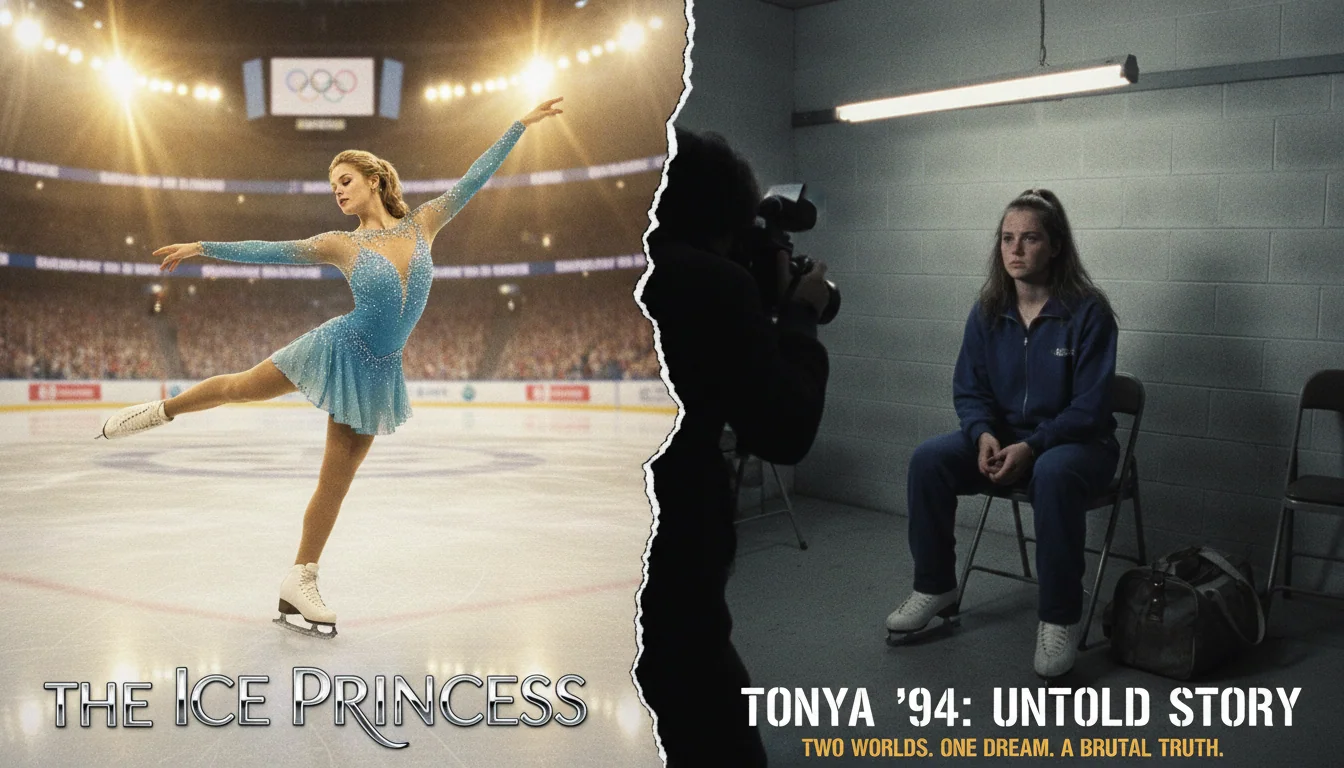
When I, Tonya opened in late 2017 it made an unusual formal promise: it would not tell you what really happened. The film opens with a title card explaining that the story is based on contradictory, irreconcilable accounts, and then proceeds to dramatize all of them simultaneously. Characters break the fourth wall to contradict each other. The same events are shown from different angles with different outcomes. The unreliable narrator is not a device tacked onto the story - it is the story, because the real story of the 1994 Nancy Kerrigan attack is a story that nobody, thirty years later, has told the same way twice.
So the more interesting question than "is this accurate" is: where the film makes specific factual claims, how does it hold up?
What the film gets RIGHT
Tonya Harding was a genuinely extraordinary skater
Margot Robbie's performance is built around the fact that Tonya Harding was, at her peak, one of the most technically gifted figure skaters in American history, in the same vein as the athletic authenticity The Smashing Machine aimed for with Mark Kerr's MMA career. The film handles this carefully and correctly. Harding became the first American woman to land a clean triple axel in competition, at the 1991 US Figure Skating Championships. The triple axel sequence in the film is not embellishment - it is the accurate depiction of a jump that her rivals could not do and judges who preferred balletic presentation were structurally reluctant to reward.
The film's portrait of Harding as an athlete perpetually punished by the sport's judges for her presentation, her working-class background, her music choices, and her personality is substantiated by her scores over the years and by the accounts of skating insiders. She won when she was technically perfect and sometimes lost when she was not. The gap between her technical marks and her presentation marks was a consistent pattern through her competitive career.
Jeff Gillooly orchestrated the attack
The film's portrayal of the attack itself - the planning, the execution, and the central role of Jeff Gillooly and bodyguard Shawn Eckhardt - is accurate to the federal investigation and the subsequent guilty pleas.
On January 6, 1994, at the US Figure Skating Championships arena in Detroit, a man named Shane Stant approached Nancy Kerrigan as she was leaving practice and struck her leg with a police-style baton. Stant fled. Kerrigan was left on the ground, famously crying "why, why." The injury was a deep bruise, not the career-ending break that had been intended. Kerrigan recovered in time to compete at the 1994 Lillehammer Olympics.
Federal investigators quickly identified the perpetrators. Eckhardt had bragged about his role to an associate who went to the FBI. The trail led to Gillooly, who had organized the operation with Eckhardt. Stant and his getaway driver Derrick Smith were arrested. Gillooly pleaded guilty to racketeering and served six months. Eckhardt, Smith, and Stant all pleaded guilty and received varying sentences. The film's account of this sequence matches the record.
The domestic abuse was documented
The film is direct about the violence in Tonya's marriage to Gillooly. Sebastian Stan's portrayal of Gillooly as a controlling and intermittently violent partner is drawn from Harding's own account given in interviews over many years, and from records related to a restraining order she sought against him. Gillooly has at various points disputed the severity of some incidents.
The portrayal of LaVona Golden, Tonya's mother, as someone who used emotional and physical cruelty as her primary parenting tools is drawn from Harding's own testimony in the same interviews. What the film offers is Harding's version of her own childhood - which is not the same as a verified documentary record, but is consistent with what she has said publicly across decades.
What the film gets WRONG or significantly oversimplifies
LaVona Golden disputed specific scenes
Allison Janney's portrayal is one of the most memorable performances in the film, and the most intensely fictionalized. Several specific scenes - including the most theatrically extreme moments of physical abuse - were disputed by LaVona Golden herself in interviews after the film's release. She acknowledged a difficult relationship with her daughter but denied that some of the depicted incidents occurred as shown.
The film is working from Tonya's account of her childhood, not from independently verified events. That is a legitimate creative choice for a film built around unreliable narration, but it is worth naming: LaVona Golden is portrayed in the most unflattering possible light by a filmmaker who had access to one side of the story.
Tonya's foreknowledge remains genuinely unresolved
The most consequential question the film raises - what did Tonya know, and when did she know it - is left deliberately unresolved, and that ambiguity is historically appropriate. What is less appropriate is the film's tendency to lean toward presenting Tonya as essentially innocent of advance knowledge.
Gillooly told federal investigators that Tonya had been present for at least one discussion of the plan. Tonya denied this. She pleaded guilty to conspiring to hinder the prosecution after the fact - not to participating in the planning. No court has settled the factual question of her foreknowledge because she was never tried on that specific charge.
The film presents her account as the most sympathetic without quite endorsing it, which is honest to the uncertainty. But some critics have noted that the film's warm, humanizing treatment of Tonya makes it structurally easier to accept her version than Gillooly's.
The lace incident at the 1994 Olympics
The scene in which Tonya's skate lace breaks at the 1994 Lillehammer Games during her short program is in the film and in the historical record. The lace did break. She was given a restart. Whether the dramatic weight the film places on this moment - presenting it as a near-collapse caused by the enormous pressure she was under - is accurate, or whether it was a more ordinary equipment failure, is something the film treats as more narratively convenient than the evidence strictly requires.
The timeline of the fall
The film's final act compresses Tonya's post-Olympics career into a montage suggesting swift and total ruin. The actual trajectory was more complicated. Her ban from competitive skating came relatively quickly, but Harding continued to make appearances in various professional capacities for years afterward. The film's structure requires a clean ending; the real aftermath was messier and longer.
I Tonya Accuracy Score: 7.5/10
I, Tonya is as honest about what it is doing as any biopic in recent memory. Its built-in disclaimer about unreliable narration is not a legal hedge - it is a genuine epistemological claim about a case where the principals have told different stories for three decades and none of them can be fully verified.
What it gets most right: the technical facts of the attack, Tonya's skating ability, and the abusive dynamics in her relationships.
What it gets most wrong: the portrayal of LaVona Golden, where the film has access only to Tonya's account and presents it as if it were the complete picture.
The film's real achievement is forcing the audience to do the same work as the jury that never convened on Tonya's specific charges: weigh contradictory testimony from self-interested witnesses, watch the same events happen multiple ways, and decide what to believe. That is not a comfortable position for a biopic audience, and it is probably the most accurate thing about the film - a sharper contrast to the more straightforwardly heroic treatment given to Trudy Ederle in Young Woman and the Sea.
Quick Answers
Common questions about this topic
How accurate is I, Tonya?
The film is broadly accurate about the facts of the attack, Tonya's skating career, and the abusive relationships in her life. Its deliberate structural choice - presenting three contradictory accounts from Tonya, Jeff Gillooly, and others - is itself historically honest, since the principals have never agreed on what Tonya knew and when she knew it.
Did Tonya Harding really know about the attack on Nancy Kerrigan?
Tonya has always maintained she knew nothing until after the attack. Jeff Gillooly told federal investigators and prosecutors that she was involved in the planning. She pleaded guilty not to planning the attack but to conspiracy to hinder the prosecution that followed it. The question of her foreknowledge has never been legally settled.
Was Tonya Harding banned from figure skating for life?
Yes. After pleading guilty to hindering prosecution, Tonya was stripped of her 1994 US Championship title and banned for life from United States Figure Skating competition and the US Olympic team. The ban applied to competitive skating under USFS jurisdiction, not to all professional performance.
Was Allison Janney's portrayal of LaVona Golden accurate?
Janney won the Academy Award for the role and Harding has said it captured something real about her mother's character. LaVona Golden herself has disputed specific scenes, including some of the physical abuse shown on screen. She has given conflicting accounts in various interviews over the years.

Debate the Accuracy with the Real Figures
Ask the real people what Hollywood got wrong about their lives.
Create your free account →No card required. Some figures and features require a paid plan.
Join the HistorIQly Club
Get smarter about the past.
Weekly stories, deep dives, and exclusive content straight to your inbox.