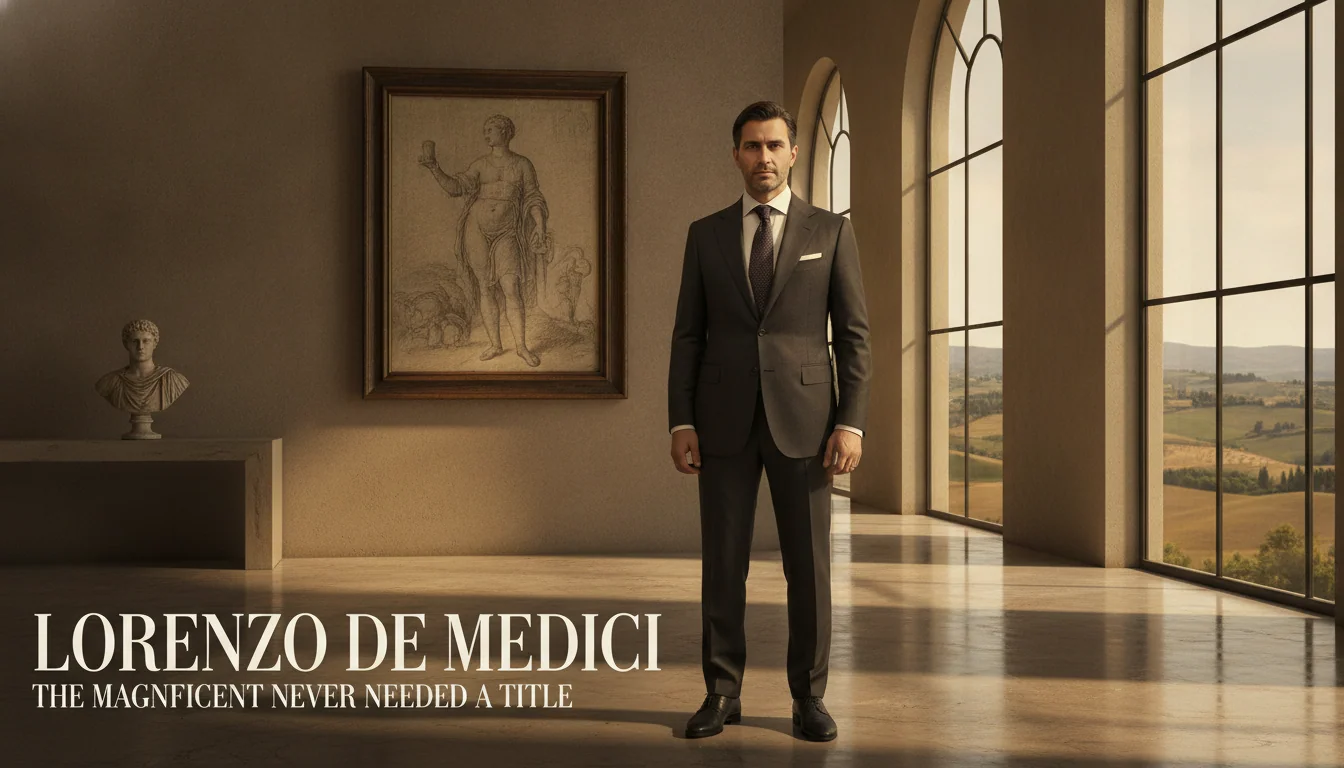
If Augustus Lived Today: Rome's First CEO
Augustus Caesar mastered the art of power without title for 40 years. If Augustus lived today, he would be the most strategically feared man in any room.
Read Wikipedia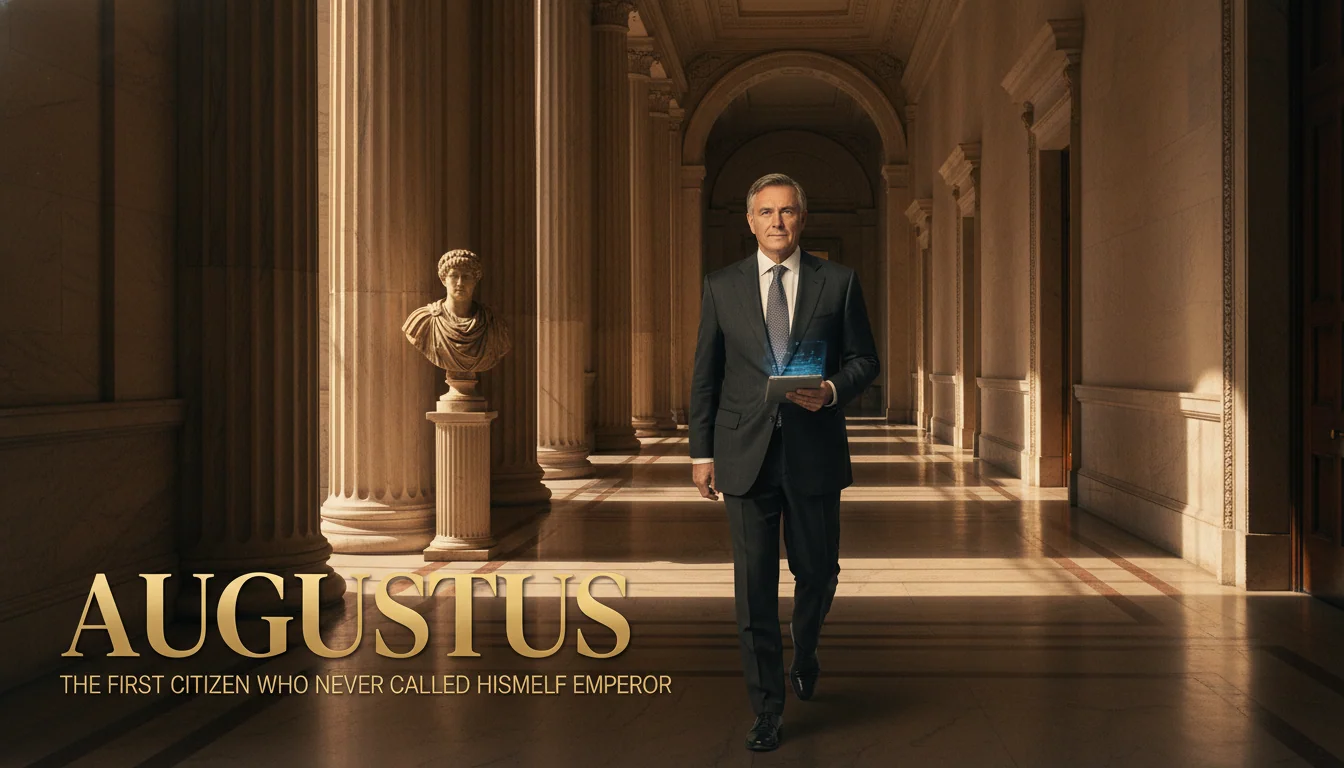
He was not the most gifted general Rome produced. Julius Caesar was. He was not the most brilliant orator. Cicero was. He was not the most feared on the battlefield. Mark Antony commanded that kind of loyalty before he destroyed himself in Egypt. What Augustus had was something subtler and ultimately more durable than any of those skills: he understood that the real work of power is not seizing it but institutionalizing it so that you never have to seize it again.
Gaius Octavius inherited Julius Caesar's name at 18 years old. He was not supposed to survive. Three civil wars, one proscription list, and two decades of Roman political violence later, he was the sole ruler of the Mediterranean world and had convinced most of it that he had never particularly wanted to be. Drop him into 2026 and the situation is instantly recognizable.
The historical man
Augustus was born in 63 BCE into a provincial Italian family with modest senatorial connections and a prominent great-uncle. When that great-uncle was assassinated on the Ides of March in 44 BCE, his posthumously adopted heir was a 19-year-old student in Apollonia who had to be told about the event by courier.
What followed was one of the most sustained and ruthless political ascents in the ancient record. Augustus formed the Second Triumvirate with Mark Antony and Lepidus, used it to destroy their common enemies, then spent the next decade undermining both partners until he was the last man standing. His victory at Actium in 31 BCE ended the last serious challenge to his supremacy. He then did something no Roman strongman before him had managed: he settled the power he had accumulated into structures that would outlast him.
The Principate, the system Augustus created, was not a monarchy in the formal sense. The Senate still met. Elections still happened. Consuls were still appointed. The traditional republican offices continued. But Augustus controlled the army directly, held tribunician power that made his person sacrosanct and gave him veto over all legislation, governed the wealthiest and most militarily strategic provinces as his personal domain, and managed the flow of money through the treasury with a hand that never formally clutched it.
For 44 years this arrangement persisted. It persisted through conspiracies, through the deaths of multiple designated heirs, through serious military disasters including the loss of three legions at Teutoburg Forest in 9 CE, and through the ordinary catastrophes of governing an empire that stretched from Scotland to Syria. When Augustus died in 14 CE at the age of 76, the system was functional enough that Tiberius could step into it without civil war.
He had made the empire machine-washable. That is the achievement most ancient historians underestimate.
The modern role
In 2026 - imagining if Augustus lived today - he does not run for office.
He spent enough time in Rome watching excellent men get stabbed in the Senate to understand that democratic legitimacy is a renewable resource and formal title is a liability. The title on his company registration is Founder and Chairman Emeritus of a holding structure that a competent attorney would need three hours to fully describe. The operating companies beneath it span infrastructure contracts, defense-adjacent technology, media, and a foundation that gives grants to universities and think tanks.
The real business is influence architecture. He builds the systems other people operate inside without realizing he designed the walls. The regulatory framework that governs a specific industry had three of his people on the drafting commission. The nonprofit that trains the next generation of policy analysts was endowed with his money and runs a fellowship program whose alumni end up in interesting places. The private research unit that briefs two separate governments on security matters uses his funding and his discretion.
He does not lobby. Lobbyists need access, and access implies that someone can decline the meeting. Augustus does not request meetings. He hosts events where the relevant decisions happen naturally.
The brand problem
Augustus' most consistent historical innovation was portrait management. The official state portraits issued across the Roman Empire showed him as a young man of about 35, idealized, serene, and in the late examples, verging on divine. He was depicted this way when he was 45, 55, and 65. The image was the product, not the man.
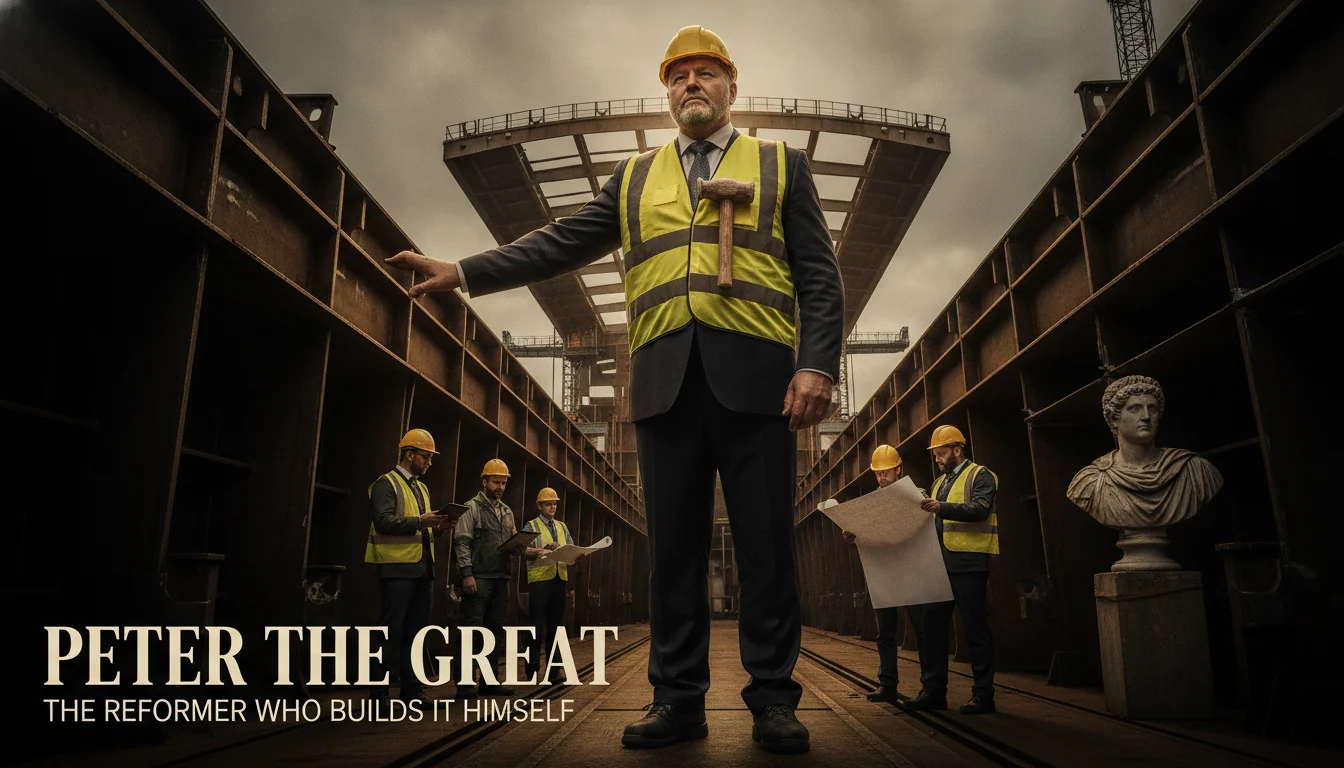
The 2026 version manages this with contemporary precision. There is a staff photographer on retainer. Every public appearance is framed through one of three approved visual contexts: the construction site hard hat (connects him to physical work and the building of things), the university lecture hall (signals intellectual seriousness without academic compromise), and the informal coffee-shop interview shot (signals availability and approachability in a way that 44 years of uninterrupted power accumulation would otherwise contradict).
He does not age on social media. His accounts are managed by a team of five who understand that the goal is not viral moments but the slow accumulation of a particular kind of authority - the kind that looks, in retrospect, inevitable.
The family
Livia, Augustus' wife for 52 years, was widely understood in Rome as one of the most formidable political minds in the empire. She outlived her husband. She navigated decades of court politics with skills that made other politicians look like passengers. The marriage was a genuine partnership, emotionally opaque from the outside, functionally indissoluble.
The 2026 Augustus marries well and wisely and does not mistake his spouse for an extension of his communications team. She runs her own foundation, manages her own investments, and has a network that complements rather than duplicates his. They appear together at the right events and not at others. She has never given an interview she didn't fully control.
His daughter is a different matter. The historical Julia was exiled twice by her own father for conduct that compromised the Augustan moral program. The 2026 version has a daughter who makes decisions that require crisis management approximately once every three years - the wrong speech at the wrong panel, the wrong association with the wrong movement, the visible rejection of the values her father has built a public identity around. He manages each episode quietly. Their relationship is not warm. It is managed.
What he builds that lasts
The aspect of Augustus that his contemporaries least appreciated was his obsession with succession. He outlived three designated heirs and spent decades engineering a transition that he never quite trusted to anyone. Tiberius was his fourth choice and a man he seems to have found genuinely unsatisfying. But when the moment came, it worked.
The 2026 version is similarly obsessive about institutional durability. He funds governance structures rather than individuals. He builds systems with redundant authority so that no single person's defection or death collapses the network. He invests in the kinds of institutions - foundations, research centers, standards bodies, professional associations - that persist regardless of who occupies any individual role.
He is not sentimental about individuals. He is extremely sentimental about structures. The distinction matters because it means he can lose people without losing the enterprise, which is the organizational insight that separates empire-builders from generals.
What goes wrong
The historical Augustus outlived nearly everyone he ever trusted and died in a bed in the city of Nola in August of 14 CE, reportedly repeating a line from a Greek comedy: "Have I played my part well in the farce of life? Then applaud as I exit." Whether the line was real or invented by the historians, it captures something true about him.
The 2026 version's failure mode is the same one the original had: he is too good at institutional design and not quite good enough at reading the people inside the institutions. Tiberius was the wrong choice. He made it because the alternatives were gone, not because he trusted the man. The contemporary equivalent - the brilliant system-builder who eventually has to hand the system to someone imperfect - plays out in board rooms with enough regularity to make the parallel uncomfortable.
He retires to a compound somewhere with good Mediterranean light. He writes. He watches what he built with the mix of pride and anxiety that comes from having done most of it correctly. The thing persists. The thing is already not quite what he intended.
He reads Virgil in the evenings. Not the Aeneid. The Georgics. He has always been more interested in the management of land than in the myths of foundation. The empire runs without him. That was always the point.
Quick Answers
Common questions about this topic
Who was Augustus Caesar?
Augustus (63 BCE-14 CE), born Gaius Octavius, was the adopted heir of Julius Caesar who defeated Mark Antony and Cleopatra at the Battle of Actium in 31 BCE and became the first Roman Emperor. He ruled for 44 years, transformed the Republic into the Principate while maintaining the forms of republican government, and presided over the Pax Romana, a period of relative peace and economic prosperity across the Mediterranean world.
What made Augustus different from other Roman rulers?
Augustus never called himself emperor. He used the title Princeps, meaning 'first citizen,' and governed through a sophisticated fiction that he was merely the senior senator restoring order after the civil wars. He held extraordinary powers, controlled the army, appointed provincial governors, and managed the succession - but he framed everything as service to the Republic. His genius was institutional: he built structures that could persist without him.
How did Augustus handle his image?
Augustus managed his public image with a precision that modern communications professionals would recognize immediately. His official portraits showed him as a young man throughout his reign - the Prima Porta Augustus statue was made when he was in his 60s and depicts him at perhaps 35. He commissioned Virgil and Horace to write works that placed his rule in the context of divine destiny and Roman greatness, and he used public building in Rome as a continuous declaration of legitimacy.
Who would Augustus most resemble in 2026?
The closest modern parallel is a Silicon Valley figure who converted a famous inheritance into institutional dominance through organizational reform rather than charisma alone - someone who built durable systems rather than just a personal following, who managed perception obsessively, and whose real power was carefully obscured behind a public posture of reluctant service. The combination is rarer than it sounds.

Meet Them in Person
Chat with the historical figures behind these modern reimaginings.
Create your free account →No card required. Talk to anyone in history with 8 free credits a day. Some features require a paid plan.
Join the HistorIQly Club
Get smarter about the past.
Weekly stories, deep dives, and exclusive content straight to your inbox.