The Redhead Murders: Eleven Women and No Answer
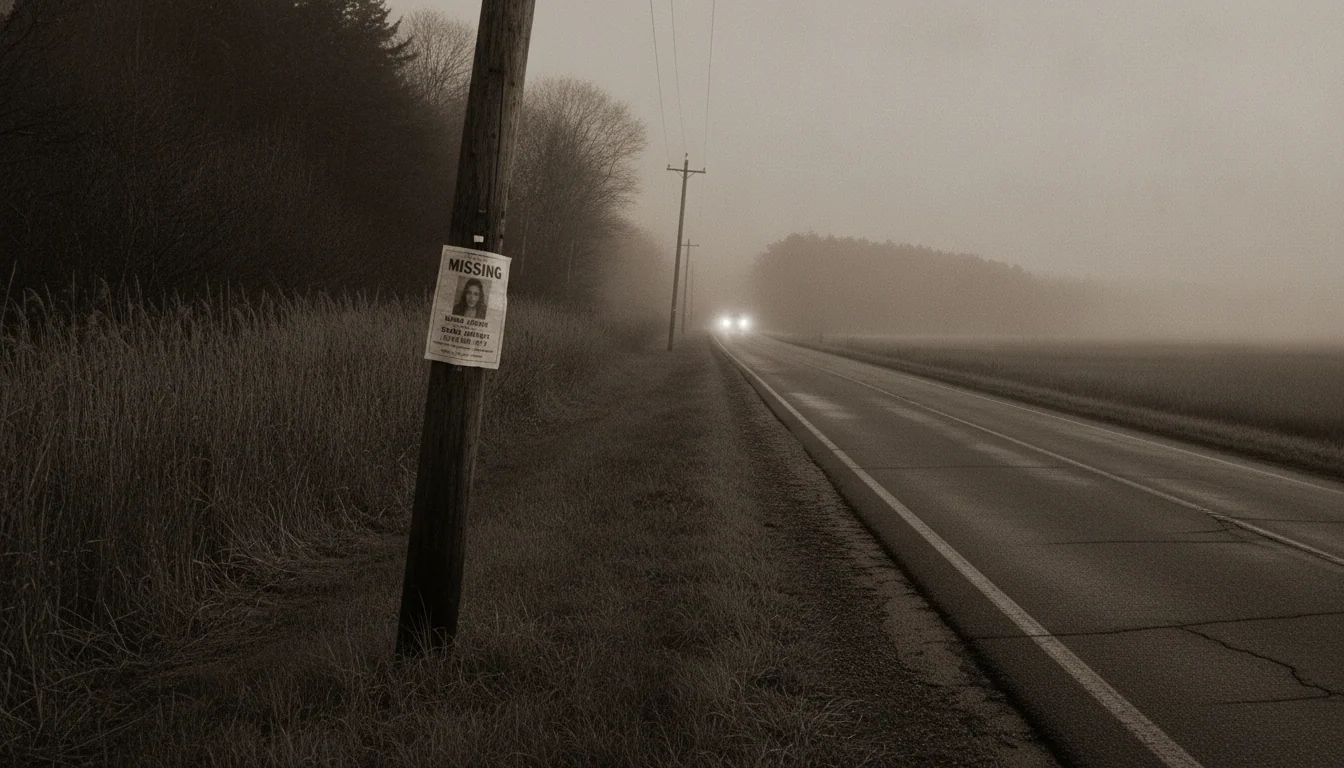
The Redhead Murders: at least eleven unidentified women found dead along I-65 between 1978 and 1992. The hair color was a selection criterion. No one was ever charged.
Read Wikipedia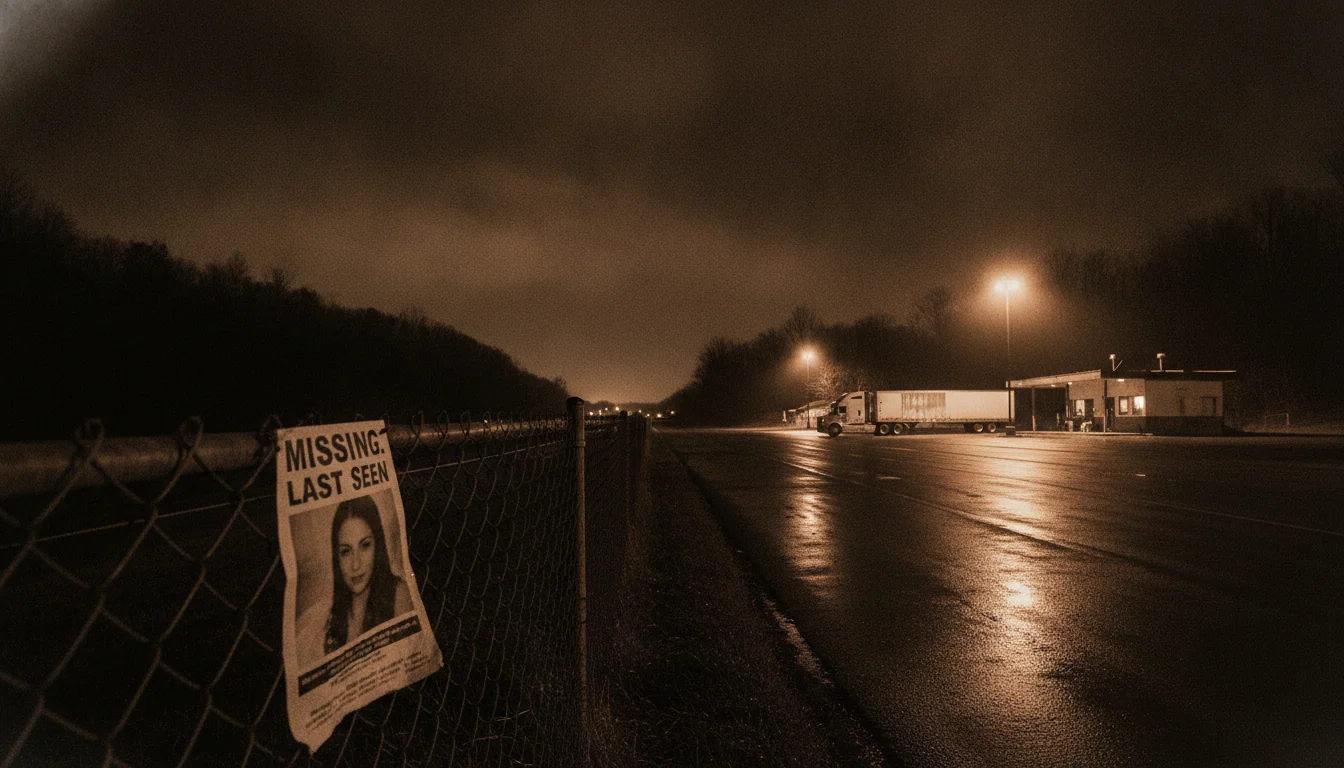
The women looked alike. That was the first thing investigators noticed, and it was the detail that made the pattern both unmistakable and deeply unsettling.
Between approximately 1978 and 1992, the bodies of at least eleven women were found along the Interstate 65 corridor threading through Tennessee, Kentucky, Indiana, and Alabama. All had reddish-brown hair. All were found near the infrastructure of long-haul trucking: rest stops, truck plazas, budget motels, and the weedy margins of exit ramps. Most were never identified. They became Jane Does in county evidence files, listed by case numbers rather than names, their faces sketched by forensic artists and distributed on circulars that mostly went nowhere.
For decades, the Redhead Murders were a footnote in regional cold-case files, scattered across different agencies, different states, and an era when information-sharing across jurisdictional lines was slow, inconsistent, and often simply did not happen. No central task force existed. No one aggregated the pattern into a picture visible enough to drive a coordinated response. The cases aged quietly in filing cabinets while the likely perpetrator, if there was one, drove on.
The corridor and the victims
Interstate 65 runs nearly straight from Gary, Indiana, to Mobile, Alabama, cutting through the agricultural and industrial center of the country. For long-haul truckers it is a workhorse route - freight from the Great Lakes south to the Gulf, produce moving north, manufactured goods going both directions around the clock.
The women found along it during those fourteen years shared a specific profile. Most were white, young - late teens to mid-thirties - and had hair in the reddish-brown spectrum. The specificity of the hair color was eventually considered significant. Investigators concluded it was almost certainly a selection criterion rather than coincidence.
They were found near Glasgow and Elizabethtown in Kentucky, near Millington and the approaches to Memphis in Tennessee, in Indiana, and in northern Alabama near the Tennessee state line. Most showed signs of strangulation. Several had been sexually assaulted. Their clothing and circumstances suggested they had been hitchhiking or had accepted rides from strangers. They were women who had stepped into a truck cab or a car and had not come out again.
The geographic spread - hundreds of miles between individual crime scenes - suggested mobility rather than a locally operating killer. Someone whose job required constant movement along this corridor. Someone whose schedule and lifestyle made interstate travel unremarkable and disappearances in one county easy to leave behind in another.
Fourteen years of silence
What kept the Redhead Murders invisible for so long was structural. Each local agency saw one case, or at most two. A sheriff's department in rural Kentucky was not routinely comparing case files with a Tennessee Bureau of Investigation office three states and two hundred miles away. In the 1980s, before national databases of unidentified persons were accessible and before DNA testing was a practical tool, the administrative distance between jurisdictions was enormous.
The women themselves compounded the problem. Some were likely hitchhiking. Some may have been sex workers. Others may have been runaways, drug-dependent, or living in circumstances where their absence was not immediately reported or, when reported, not urgently pursued. A missing woman in this demographic in 1983 did not generate the same investigative resources as a missing woman whose family had connections and a lawyer.
Several of the Redhead Murders victims went unreported as missing persons. Their families did not know what had happened to them, or did not have the relationship with law enforcement needed to file effective reports. This is why some of them spent decades as Jane Does: not because no one cared, but because the systems designed to connect the missing to the dead were not built for people at the margins.
The FBI and the pattern
The beginning of a serious organized response came in the early 2000s, when FBI analysts began examining female homicides found near major truck routes. The data was hard to dismiss. A disproportionate number of female murder victims across the United States were found within a few miles of interstates, clustered near rest areas and truck stops, and bore characteristics consistent with the Redhead Murders victims: found in unfamiliar jurisdictions, often unidentified, with circumstances pointing toward a vehicle-based killer.
The Bureau formalized this into the Highway Serial Killings Initiative in 2004. The initiative created a dedicated database to aggregate cases that would otherwise stay siloed in local files and identified the trucking industry as the most plausible environment for mobile killers operating across state lines. By some of the initiative's estimates, hundreds of female murder victims found near U.S. highways between 1970 and 2010 could be connected to long-haul trucking.
The Redhead Murders were among the case clusters the initiative examined. The analysis confirmed what regional investigators had long suspected: the cases were almost certainly connected, the victims' similarities were not random, and the perpetrator had operated over a sustained period using the highway system as both hunting ground and escape route.
Persons of interest and the limits of cold cases
Investigators working the Redhead Murders over the years identified several persons of interest. The most credible suspect profile that emerged was a long-haul trucker who operated through the I-65 corridor during the relevant years, had been convicted of another violent crime, and died in state custody before charges could be filed in connection with the highway killings. No definitive forensic link was established before that individual's death. The cases officially remained open.
This outcome - a plausible suspect who dies before the case can reach trial - is a recurring feature of cold cases this old. Time is the enemy of prosecution as surely as it is the enemy of evidence. Witnesses die. Memories change. Physical evidence degrades. And suspects, who age just like everyone else, sometimes remove themselves from accountability before the machinery of criminal justice can close the distance.
The more hopeful development in recent years has been DNA genealogy. The technique that identified Samuel Little, the Golden State Killer, and hundreds of other cold case perpetrators by running crime scene or victim DNA against consumer genealogy databases has begun to return names to the Redhead Murders victims. Some women who spent decades as numbered Jane Does now have names again. Some families have learned what happened to daughters and sisters who simply disappeared from their lives at some point in the 1980s.
The perpetrator's identity has not been resolved the same way.
What the case reveals
The Redhead Murders were not unique in their structure. Samuel Little, confirmed as the most prolific serial killer in American history, killed at least 60 women between 1970 and 2005 across multiple states, all of them along highway corridors, nearly all of them women whose disappearances received minimal official attention. He was not convicted until 2012 and did not confess the full scope of his crimes until 2018, when he was in his late seventies and dying.
The Redhead Murders fit this pattern exactly: victims selected from the margins of social visibility, killed in jurisdictions far from their last known locations, processed as individual local cases by agencies that had no mechanism for seeing the larger picture.
What changed after 2004 was the mechanism. The FBI initiative created the aggregation tool that made the pattern visible. But visible is not the same as solved. The initiative has connected cases and identified suspects; it has not produced convictions at a rate proportional to the size of the problem it documented.
Where the case stands
As of 2026, the Redhead Murders remain officially unsolved. No one has ever been charged in connection with the I-65 killings. Some victims have been named through DNA genealogy; others remain Jane Does. The most plausible perpetrator profile - mobile, connected to long-haul trucking, with a geographic range spanning the four-state corridor and a specific type of victim in mind - is established, but a named and convicted individual is not.
Cold case investigators continue to work the files. State agencies coordinate better than they did forty years ago. Forensic genealogy continues to make progress on victim identifications, if not yet on the suspect.
What the case has produced is something adjacent to justice: names returned to the nameless, families told what happened to daughters who vanished, a public acknowledgment that these women existed, were murdered, and have not been forgotten. That is not the same as an arrest.
The hair color was a deliberate choice. The corridor was a deliberate route. Eleven women who did not know each other were found dead across four states over fourteen years, all bearing the same identifying characteristic. That is a pattern that still does not have a name attached to it.
For a similar case involving a highway corridor and victim clusters, see our coverage of the Texas Killing Fields along I-45. For another series of murders that remained unidentified for decades, see the Long Island Serial Killer.
Quick Answers
Common questions about this topic
Who was responsible for the Redhead Murders?
No one has ever been charged. Investigators identified several persons of interest over the decades, including at least one convicted killer who died in state custody before charges could be filed in the I-65 cases. The murders officially remain unsolved.
Where were the Redhead Murders victims found?
The victims were found along the Interstate 65 corridor through Tennessee, Kentucky, Indiana, and Alabama, predominantly near truck stops, roadside motels, and rest areas between 1978 and 1992.
Were any of the victims ever identified?
Most victims spent years or decades as Jane Does. DNA genealogy technology has allowed some to be identified in recent years, but others remain unnamed as of 2026.
What is the FBI Highway Serial Killings Initiative?
The FBI launched its Highway Serial Killings Initiative in 2004 after analysts found a disproportionate number of female murder victims clustered near major highways and truck stops. The initiative linked hundreds of cases and identified long-haul truckers as a recurring suspect class.

Want to Interrogate the Suspects?
Chat with historical figures and uncover the truth behind history's greatest mysteries.
Create your free account →No card required. Talk to anyone in history with 8 free credits a day. Some features require a paid plan.
Join the HistorIQly Club
Get smarter about the past.
Weekly stories, deep dives, and exclusive content straight to your inbox.