The New Bedford Highway Murders: Nine Women, One Suspect Who Never Faced Trial
The New Bedford Highway Murders left at least nine women dead along local roads between 1988 and 1990, with one suspect indicted but never tried.
Read Wikipedia
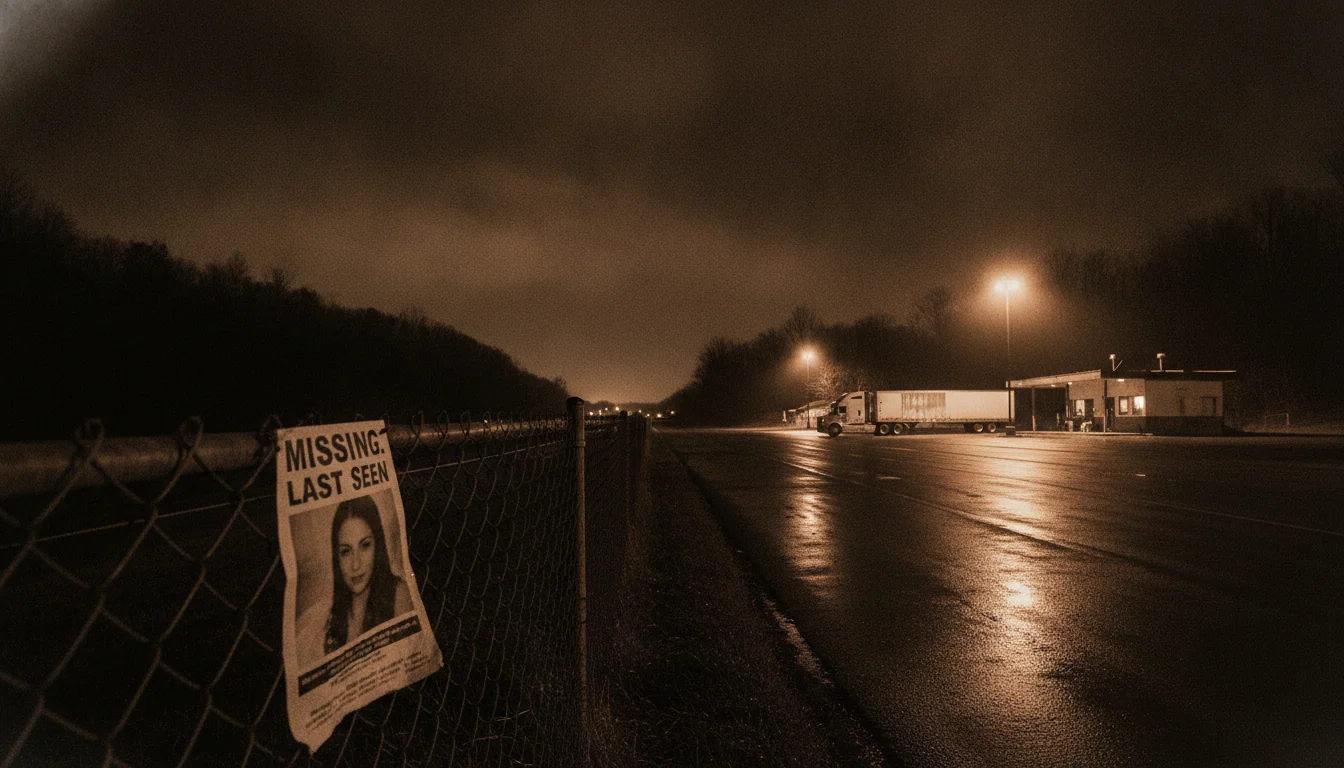
Drive southeast out of New Bedford, Massachusetts on Route 140 or I-195 and you pass through a stretch of scrub woods, marsh, and highway median that looks like nothing in particular. Between 1988 and 1989, that stretch of road became a dumping ground. Over roughly a year, the bodies of at least nine women turned up along its shoulders, ramps, and brush lines. A tenth and eleventh woman who vanished from the same city around the same time were never found at all.
The New Bedford Highway Murders, sometimes called the Highway Killings, remain one of New England's largest unsolved serial murder cases. One man was charged. He was never tried, and he died years later still legally an innocent man.
A city with a vulnerable population
New Bedford in the late 1980s was a fishing and manufacturing city working through a serious addiction crisis, and the women who disappeared were mostly known to police and to each other. Court records and press accounts from the period describe most of the victims as having struggled with drug addiction, and several were known to trade sex for money or drugs in the city's South End, near the waterfront. That made them, in the language investigators used at the time, a high-risk population: women who could vanish for days without anyone reporting it, whose disappearances competed for attention with other cases, and whose deaths did not generate the kind of citywide alarm that might have followed if the victims had been chosen at random from the general public.
The first body, that of a woman in her late twenties or early thirties named Debra Medeiros, was found along Route 140 in the summer of 1988. Over the following months, more followed: Nancy Paiva, found beside I-195 in Dartmouth; Debra Greenlaw DeMello, found off a highway ramp; Deborah McConnell, located through a cadaver-dog search off Route 140 in Freetown. By the following spring, the list included Robbin Rhodes, Mary Rose Santos, Sandra Botelho, Rochelle Clifford Dopierala, and Dawn Mendes. Exact identification order and precise ages vary slightly between contemporary news accounts and later retrospectives, so treat any single ranked list with some caution, but the pattern was not in dispute: nine bodies, recovered within about a year, all in the same narrow highway corridor outside one small city.
Two more women, Christina Monteiro and Marilyn Cardoza Roberts, disappeared from New Bedford around the same period and were never located. Whether they belong to the same case is unresolved. Some investigators and researchers count eleven likely victims; official tallies tend to stick to the nine bodies that were actually recovered.
A crime scene with almost nothing in it
What makes the case difficult, then and now, is how little physical evidence the killer left behind. The bodies were skeletal or badly decomposed by the time they were found, since some had likely been dumped weeks or months before discovery. Massachusetts winters and outdoor exposure destroyed most trace evidence. Cause of death could be determined in only some of the cases, and even where it could, it rarely pointed toward a specific person.
Investigators from the Bristol County District Attorney's Office and Massachusetts State Police worked the case as a probable serial killing from early on, given the tight geographic clustering, the similar victim profile, and the shared method of dumping bodies near highway access points rather than concealing them. But a serial pattern without forensic links to a suspect is a profile, not a case. Detectives interviewed pimps, known clients of the victims, local men with violent histories, and members of the victims' own social circles. Multiple names surfaced. Only one led to an indictment.
The case against Kenneth Ponte
Kenneth Ponte was a New Bedford defense attorney who had represented some of the victims in earlier legal trouble and who had his own documented history of drug use. He had reportedly had a personal relationship with at least one victim, Rochelle Clifford Dopierala, and acquaintances placed him in the same social world as several of the women. In August 1990, a Bristol County grand jury indicted Ponte for Dopierala's murder.
The indictment made headlines across New England, and for a moment it looked like the case might close. It did not hold up. Prosecutors had no physical evidence tying Ponte to Dopierala's death or to any of the other killings, no confession, and a case built substantially on circumstantial association and witness accounts that reportedly did not hold together well. In March 1991, the Bristol County District Attorney's Office dropped the charge, citing insufficient evidence to proceed to trial. Ponte was released and was never retried.
He spent the following years denying involvement and, according to people who covered the case, resenting the notoriety that followed him. He died in January 2010, at his home in New Bedford. Authorities who reviewed his death found no indication of foul play. He was never convicted of anything connected to the highway murders, and by the standard every American court operates under, he remains legally innocent of them. Investigators who worked the case have said publicly that they believe he knew more than he ever told them, but a belief is not evidence, and it is not a verdict.
Other suspects, no resolution
Ponte was not the only name investigators considered. Over the years, at least two or three other men with violent histories or documented connections to some of the victims were looked at seriously by police, according to later reporting on the case, though none were ever charged. Some true-crime researchers and podcasters have connected the New Bedford murders to other unsolved highway body-dump cases in southern New England from the same general period, and to similar corridor-dump patterns like the Long Island Serial Killer and the Texas Killing Fields along I-45, though no forensic or DNA link has ever been publicly confirmed between any of them. Advances in forensic genetic genealogy, the same techniques that cracked cases like the Golden State Killer, have not yet produced a break here, likely because the physical evidence recovered decades ago was too degraded to yield usable DNA profiles from anyone but the victims themselves.
Why it never closed
Several things worked against this case from the start. The victims' circumstances meant delayed reporting and, in some accounts, less initial urgency than a comparable number of disappearances might have generated in a different population. The dump sites were outdoors, exposed to weather, and often not discovered for weeks or months, which degraded evidence badly. And the one indictment the case produced fell apart quickly enough that it may have discouraged prosecutors from pursuing other, weaker leads with the same intensity.
The Bristol County District Attorney's Office has never formally closed the file. Massachusetts State Police detectives assigned to unsolved cases have periodically revisited the evidence as forensic technology improved, and the case still appears in state and regional cold-case reviews. Family members of several victims have continued to speak publicly, pushing for renewed attention, and true-crime podcasts and documentaries have kept the case in circulation well past the point where most 1980s murders fade from public memory.
What is actually known
Strip away the theories and the known facts are narrow: at least nine women connected to New Bedford's most vulnerable community died or were killed between roughly 1988 and 1989, their bodies left along a short stretch of highway southeast of the city. One man was charged and the charge did not survive to trial. He died two decades later without ever being convicted or fully cleared. No one else has ever been arrested. Whether one person was responsible for all nine deaths, or whether the geographic and temporal clustering conceals more than one killer working the same stretch of road, is a question the case never definitively answered, and short of new forensic evidence, may never answer at all.
Quick Answers
Common questions about this topic
How many victims are linked to the New Bedford Highway Murders?
At least nine women whose bodies were recovered along highway corridors near New Bedford, Massachusetts between 1988 and 1989 are generally attributed to the same killer or killers. Two additional women who disappeared from the same area around the same time were never found, and some researchers count them as likely victims, which is why totals in different accounts range from nine to eleven.
Who was Kenneth Ponte and was he convicted?
Kenneth Ponte was a New Bedford attorney with a history of drug problems who was indicted by a grand jury in August 1990 in the death of one victim, Rochelle Clifford Dopierala. Prosecutors dropped the charge in March 1991 citing insufficient evidence, and Ponte was never tried. He died in 2010, and investigators have said he may have taken answers with him.
Where were the bodies found?
The victims were found along a corridor of highways and access roads southeast of New Bedford, primarily Massachusetts Route 140, Interstate 195, and Route 88, spread across the towns of Dartmouth, Freetown, and Westport. All of the recovery sites were within roughly a 20-minute drive of downtown New Bedford.
Is the New Bedford Highway Murders case still open?
Yes. The Bristol County District Attorney's Office has never closed the case, no one has ever been convicted, and no arrests have been made since the charges against Kenneth Ponte were dropped in 1991. It remains one of the largest unsolved serial murder cases in Massachusetts history.

Want to Interrogate the Suspects?
Chat with historical figures and uncover the truth behind history's greatest mysteries.
Create your free account →No card required. Some figures and features require a paid plan.
Join the HistorIQly Club
Get smarter about the past.
Weekly stories, deep dives, and exclusive content straight to your inbox.