The Yogurt Shop Murders: Austin's Quadruple Homicide That Was Never Truly Solved
In December 1991, four teenage girls were murdered in the Yogurt Shop Murders, an Austin cold case still unsolved despite confessions and DNA testing.
Read Wikipedia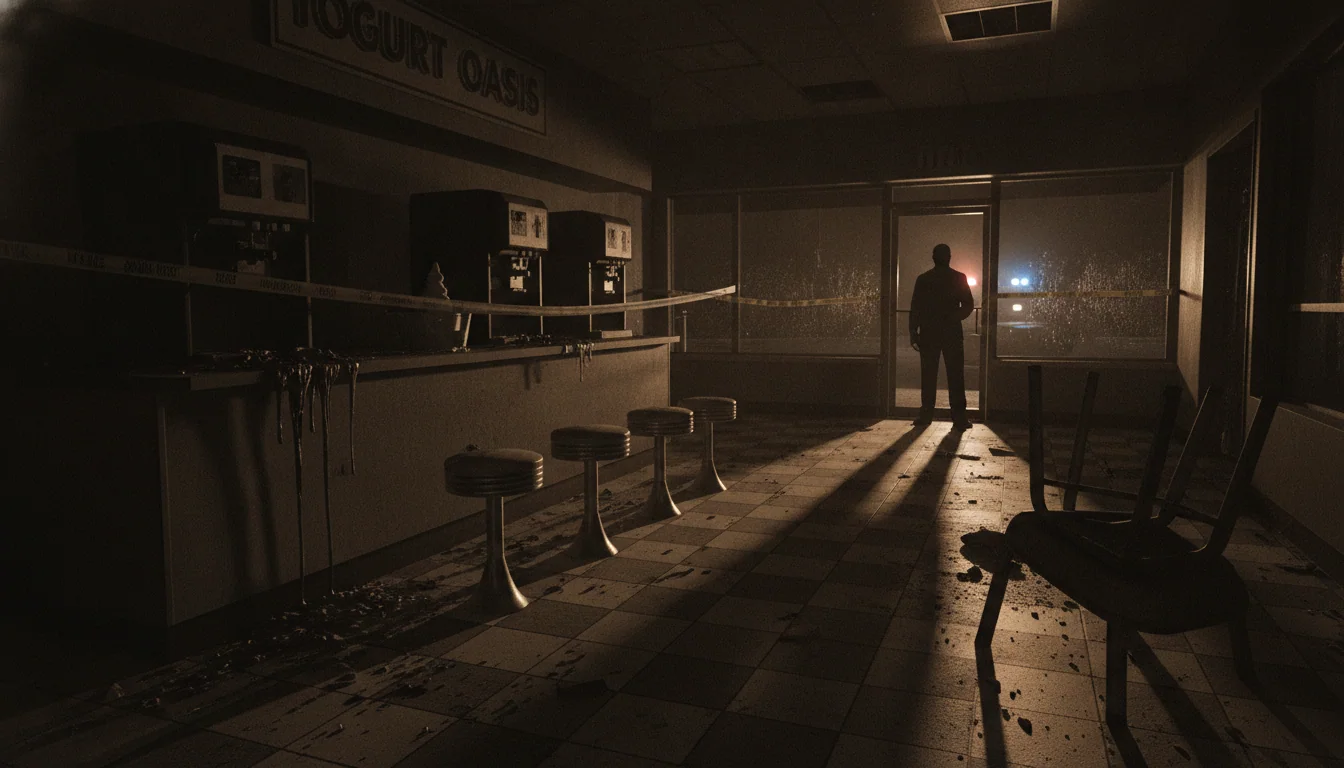
Just after closing time on the night of December 6, 1991, the I Can't Believe It's Yogurt! shop on Anderson Lane in north Austin caught fire. The call went out around midnight. Firefighters arrived expecting a commercial blaze and found the bodies.
Four girls had been murdered inside. Eliza Thomas was 17, as was her friend Jennifer Harbison. Jennifer's younger sister Sarah was 15. Amy Ayers, the youngest, was 13 and had stopped by the shop that evening to visit them. All four had been sexually assaulted, bound, shot at close range, and left in the burning building. The fire had been set deliberately to destroy evidence. It had not destroyed enough.
Austin in 1991 was still a mid-sized university town, not yet the technology hub it would become. Anderson Lane was ordinary suburban north Austin - strip malls, chain restaurants, quiet residential streets after dark. The yogurt shop was a place where teenagers worked weekend shifts and their friends came in to kill an hour. The crime had no precedent in the city's recent memory - not since the Servant Girl Annihilator terrorized Austin more than a century earlier - and the weight of it never entirely lifted.
The investigation stalls
The Austin Police Department's initial response was enormous. Investigators pulled thousands of leads through the early 1990s, canvassed the neighborhood, interviewed hundreds of people, and assembled a file that ran to tens of thousands of pages. They had very little to show for it.
The fire had done its job. Footprints, fingerprints, most of the trace evidence - the blaze had consumed what a crime scene would ordinarily offer. What survived was fragmentary: ballistic evidence, the nature of the bindings, the medical examiner's findings, and biological material from two of the victims that had survived the fire in conditions that made later testing possible.
By the mid-1990s, the case had gone cold. No arrests. No named suspects. In the flat language of investigative records, the case remained open but dormant.
The confessions
In 1999, Austin detectives returned to a group of young men who had been on the department's radar since the early years of the investigation. Using interrogation techniques that had been developed and refined in law enforcement training across the preceding decade, investigators conducted extended interviews with several of them.
Four men became the center of the case: Forrest Welborn, Maurice Pierce, Michael Scott, and Robert Springsteen IV. They had been teenagers in 1991, loosely associated through Austin's north-side social network, and investigators believed at least some of them had been near the yogurt shop that night.
Scott and Springsteen both provided confessions. The statements were detailed, describing the assault, the shootings, and the fire. Both men later recanted, claiming the confessions had been produced by hours of psychologically manipulative questioning - that they had been deprived of sleep, kept in isolation, fed details by interrogators, and broken down until they said what the investigators needed to hear.
Pierce had charges against him dismissed before trial. Welborn was also released without going to trial. Scott and Springsteen were tried separately in the early 2000s. Both were convicted. Both were sentenced to death.
The reversals
In 2009, the Texas Court of Criminal Appeals overturned both convictions.
The court found that the confessions had been obtained in violation of the defendants' right to counsel. During the interrogations, both men had made requests - variously recorded or contested - for attorneys. Those requests had not been honored. Interrogation had continued. Under established constitutional law, the confessions could not be used.
Without the confessions, the prosecution had no direct physical evidence tying either man to the scene. The charges were dropped. Both men were released, having spent years on Texas death row.
The legal outcome left an uncomfortable question hanging in the air. The reversals did not establish innocence. They established that the path used to reach conviction had been procedurally improper. Whether Springsteen and Scott were guilty and walked free on a technicality, or innocent and nearly executed for something they didn't do, is something the courts have never been required to answer.
The DNA problem
Running parallel to the legal proceedings, a separate line of analysis was generating its own set of problems.
Testing performed on biological material recovered from two of the victims identified a male DNA profile. The profile was clear and reliable - a real genetic fingerprint from someone whose presence at the scene was consistent with the nature of the crime.
That profile did not match Robert Springsteen. It did not match Michael Scott. It did not match Forrest Welborn or Maurice Pierce or anyone else investigators had ever examined in connection with the case.
The profile was entered into the Combined DNA Index System, the national database maintained by the FBI. As of the most recent reporting, it has produced no match to any identified person.
This does not resolve the case in any particular direction. A DNA profile consistent with a sexual assault does carry significant evidentiary weight. But it cannot be made to confirm or deny the confessions that were thrown out. It might belong to an unknown accomplice. It might belong to a person who has since died or been imprisoned for something else entirely. What it cannot do is identify itself.
Four families, three decades
The Harbison family - parents and relatives of Jennifer and Sarah - has been among the most sustained voices pressing for continued investigation, in the same spirit that has kept families pushing for answers in cases like the Texas Killing Fields along I-45. The families of Amy Ayers and Eliza Thomas have similarly refused to let the case fade. The Austin Police Department has maintained it as an active cold case rather than a closed one, periodically revisiting the evidence as testing technology has advanced.
Fresh national attention came in 2025 with a documentary that examined both the original investigation's procedural failures and the subsequent legal collapse. The production focused in part on the interrogation techniques used to obtain the confessions, tracing how practices that were standard in late-1990s law enforcement training have since been substantially revised in light of research on false confessions. The documentary also reviewed a claim from law enforcement sources that a named individual - someone who had since died - had been identified through investigative work as a likely participant in the crime. That claim has not been translated into any official charging decision, and the legal status of the case remains unchanged.
What we may never know
The Yogurt Shop case carries an unusual weight of unresolved contradiction. Two men gave detailed confessions describing exactly how the murders occurred - and those confessions were thrown out, not because investigators proved them false, but because of how they were obtained. An unidentified male DNA profile sits in the evidence record with no name attached to it. A named deceased person has been suggested by investigators as a likely perpetrator, but with no trial, no cross-examination, and no verdict. And four teenage girls have been dead for more than thirty years.
The fire at the yogurt shop worked better than anyone hoped. Not well enough to prevent decades of investigation, but well enough to ensure that a final answer - one that can be tested in court, verified by evidence, and accepted by the families - has remained stubbornly out of reach.
Quick Answers
Common questions about this topic
Who were the victims in the Yogurt Shop Murders?
The four victims were Eliza Thomas (17), Jennifer Harbison (17), Sarah Harbison (15), and Amy Ayers (13). Jennifer and Sarah were sisters. All four were at the I Can't Believe It's Yogurt! shop on Anderson Lane in Austin on the night of December 6, 1991.
Were anyone convicted of the Yogurt Shop Murders?
Yes, but those convictions were overturned. Robert Springsteen IV and Michael Scott were each convicted and sentenced to death in the early 2000s. In 2009 a Texas appellate court threw out both convictions because the confessions had been obtained in violation of the suspects' right to counsel. All charges were subsequently dropped.
What does the DNA evidence show?
Testing identified a male DNA profile from biological material recovered at the scene. The profile did not match any of the original suspects - not Springsteen, Scott, or the other two men investigated. It has never been linked to any identified person in a DNA database.
Is the case still open?
Yes. The Austin Police Department has designated it an active cold case. No one has ever been convicted and served time for the crime. The case attracted renewed public attention in 2025 with a documentary reexamining the original investigation and the subsequent legal proceedings.

Want to Interrogate the Suspects?
Chat with historical figures and uncover the truth behind history's greatest mysteries.
Create your free account →No card required. Some figures and features require a paid plan.
Join the HistorIQly Club
Get smarter about the past.
Weekly stories, deep dives, and exclusive content straight to your inbox.