The Affair of the Poisons: What Really Happened at Louis XIV's Court
The Affair of the Poisons dragged Versailles into a scandal of fortune tellers, poison rings, and accusations against the king's own mistress. Here is what the trial records actually document.
Read Wikipedia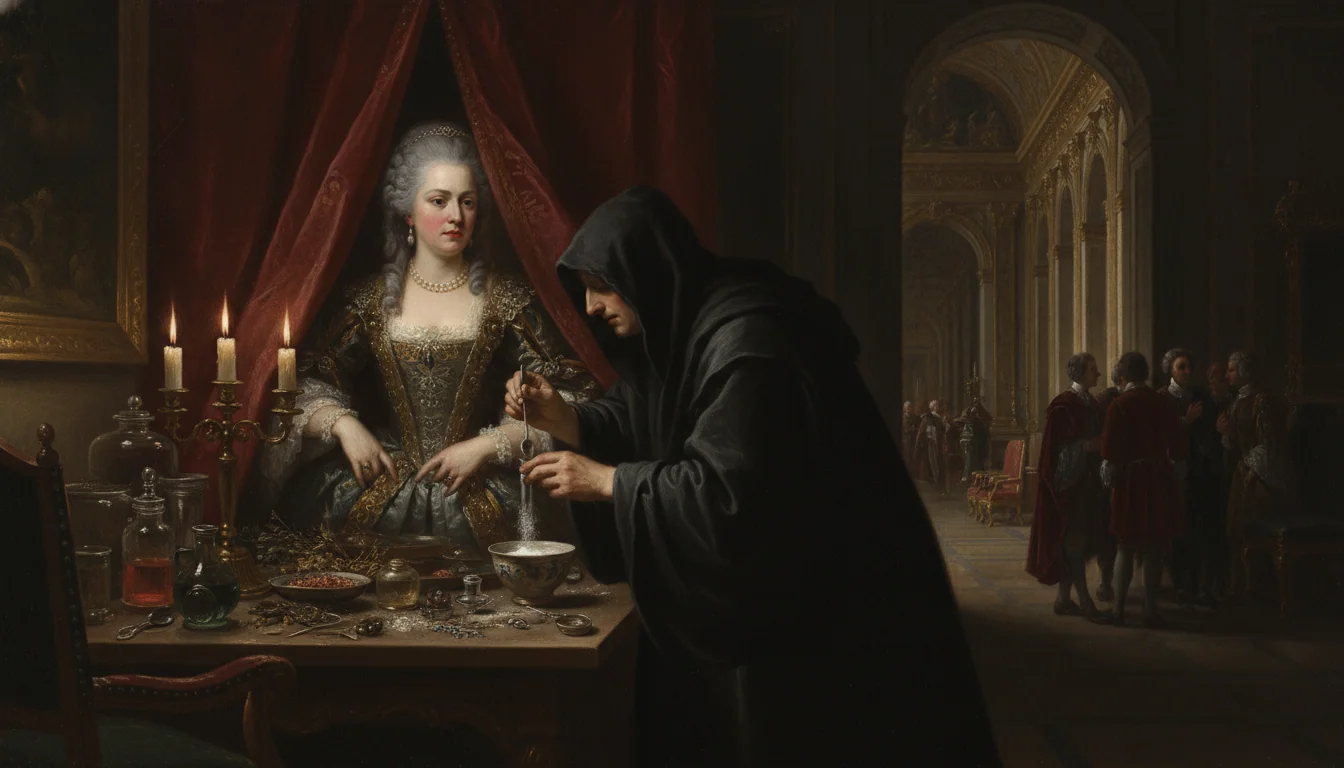
For five years, the most powerful court in Europe lived with a rumor it could not shake: that poison, black magic, and infant sacrifice were circulating among the aristocracy of Versailles, and that the king's own chief mistress might be implicated. The Affair of the Poisons, as it became known, produced one of the largest criminal investigations in French history, a body count that reached the scaffold dozens of times over, and an ending that Louis XIV made sure the public would never see in full.
The court: Versailles at its height
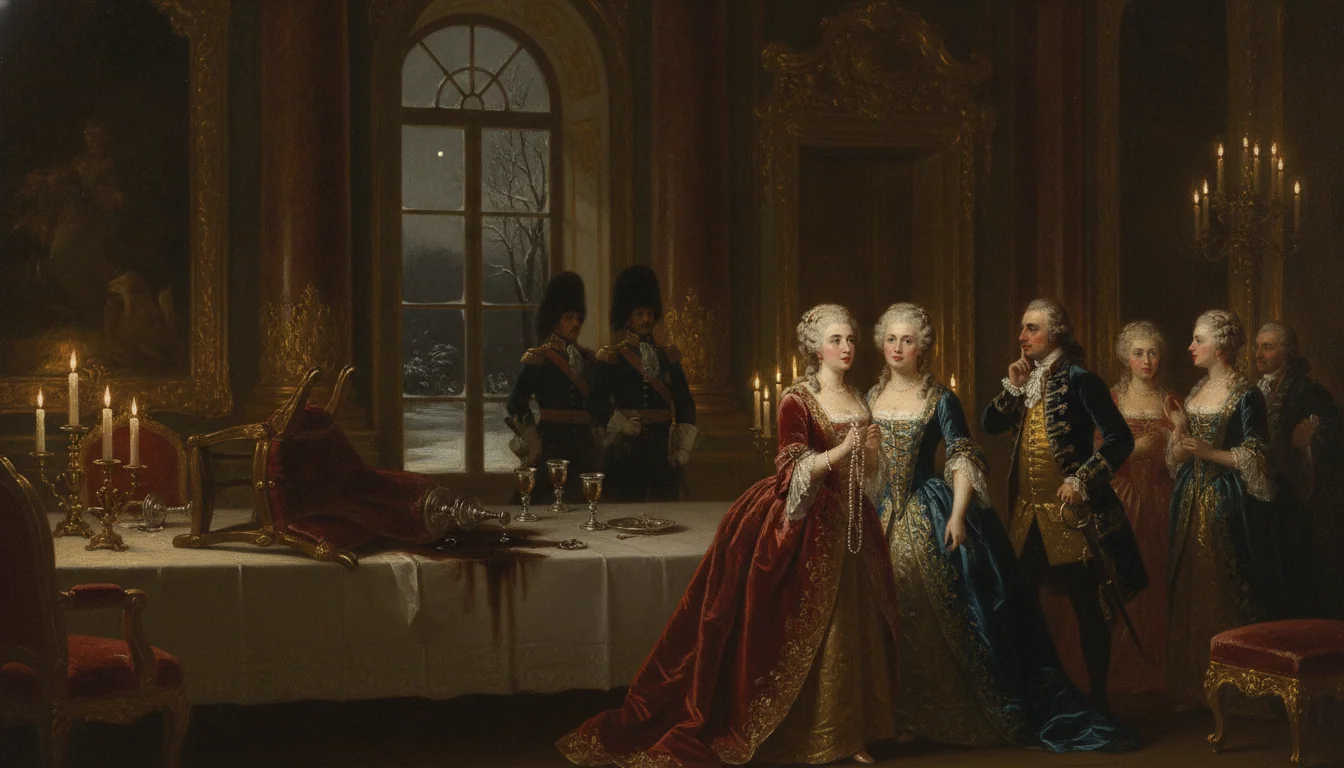
By the 1670s, Louis XIV had built Versailles into the undisputed center of European royal power, a court run on ritual, proximity to the king, and the constant, exhausting competition of aristocrats for favor. That competition had a darker underside. Fortune tellers, alchemists, and dealers in so-called inheritance powders, poisons discreet enough to pass for natural illness, did brisk business among nobles eager to accelerate an inheritance, eliminate a rival, or win back a wandering husband's affection.
Paris in this period was full of such practitioners, operating in a legal gray zone that mixed genuine poison sales with fortune-telling, folk medicine, and staged rituals invoking demonic assistance for clients willing to pay for the theater of it. The line between charlatan and genuine poisoner was often blurry even to contemporaries, and that blurriness is central to understanding how the scandal unfolded.
The immediate trigger for royal attention was a string of unexplained deaths among the minor nobility in the early 1670s, deaths that eventually led investigators to a poisoner named Marie-Madeleine Marguerite d'Aubray, the Marquise de Brinvilliers, who was tried and executed in 1676 after confessing to poisoning her own father and brothers to inherit their estates. Her case, tried under ordinary process rather than a special tribunal, exposed how widespread the underground poison trade in Paris had become and directly prompted Louis XIV to authorize a broader police investigation into the networks supplying such substances.
The players
At the center of the affair was Catherine Monvoisin, a Parisian widow known professionally as La Voisin, who ran one of the city's most successful fortune-telling and poison-dealing operations, reportedly serving a clientele that ranged from ordinary Parisians to aristocrats and court insiders. She worked alongside a network of associates, including a priest named Etienne Guibourg, alleged to have performed so-called black masses, elaborate ceremonial rituals invoking demonic favor, for paying clients seeking love, revenge, or advancement.
The investigation was driven by Nicolas de la Reynie, the Lieutenant General of Police in Paris, an official Louis XIV had appointed specifically to bring order to the city's criminal underworld. La Reynie's inquiry began modestly, tracing a series of poisoning cases among the minor nobility, but expanded dramatically once arrested suspects, under interrogation, began naming increasingly prominent clients.
The most explosive name to surface was Athenais de Montespan, Louis XIV's chief mistress for over a decade and the mother of several of his children. According to testimony gathered during the investigation, Montespan had purchased love potions and aphrodisiacs from La Voisin's network to maintain the king's affection as her influence at court began to wane, and some witnesses went further, alleging her involvement in black mass ceremonies performed over her own body and, in the most extreme testimony, plots against rivals or against the king himself.
The scandal
Between 1677 and 1682, La Reynie's investigation swelled into a sprawling criminal case implicating several hundred people. A special tribunal, the Chambre Ardente, meaning "burning chamber" for the black-draped room in which it convened, was established specifically to try the cases outside the normal court system, reportedly to keep sensitive testimony away from public parliamentary bodies that might use it against the crown.
La Voisin was arrested in 1679 and interrogated extensively, implicating numerous clients before being tried and, in 1680, burned at the stake after refusing to fully recant her confessions. Her execution did not end the investigation; if anything, testimony from her associates and other arrested practitioners continued to widen its scope, eventually reaching directly into Montespan's household and inner circle.
The gossip vs. the record
Here the documented trial record and the rumor mill diverge sharply, and separating them matters. The Chambre Ardente's surviving records do confirm that multiple witnesses named Montespan as a client of La Voisin's network, seeking potions to preserve the king's affection during a period when a younger rival, Angelique de Fontanges, had caught his eye. That much rests on testimony given under interrogation, testimony extracted under considerable duress and sometimes torture, a method of evidence-gathering that later legal standards would treat as inherently unreliable.
The more sensational claims, that Montespan participated in black masses performed over her naked body, or that she sought poison for use against a rival or even the king, rest on testimony from figures like Guibourg and other network associates whose own credibility was compromised by the same interrogation methods and by the incentive to implicate powerful names in exchange for leniency. No contemporary account independent of the tribunal's own interrogations corroborates the most extreme claims, and modern historians remain divided on how much of the testimony against Montespan reflects genuine conduct versus confessions shaped by torture, court rivalries, or simple fabrication by defendants hoping to please their interrogators with names those interrogators wanted to hear.
What is documented beyond dispute is that Louis XIV, once testimony began approaching Montespan directly, intervened to control the investigation's direction, a fact that itself fuels both readings: it can be read either as a king protecting an innocent mistress from unreliable accusations, or as a king shielding someone he suspected was genuinely guilty from a public reckoning the monarchy could not survive.
The fallout
Louis XIV ordered the most sensitive Chambre Ardente records sealed, and by most accounts a substantial portion of the testimony concerning Montespan and other high-ranking figures was destroyed or withheld from the tribunal's public proceedings entirely. The investigation was formally wound down in 1682, with Montespan never publicly charged or tried, though her standing at court declined steadily in the years that followed and she was eventually eased out of her position as royal mistress, replaced in the king's affections and later by his eventual secret second wife, Madame de Maintenon.
Of the roughly 442 people implicated over the course of the investigation, 36 were executed, a number more imprisoned or exiled, and still others released for insufficient evidence, a mixed record that reflects both a genuine underground trade in poison and ritual services and a tribunal willing to extract confessions that convicted people on testimony modern courts would reject outright. Guibourg himself was imprisoned rather than executed, and died in custody years later without the full extent of his testimony against Montespan ever being tested in open court.
The Affair of the Poisons left a lasting stain on the image of Versailles as a court of refined manners rather than one shadowed by the same superstition, desperation, and criminality found in the Paris streets below it. Louis XIV succeeded in keeping the scandal from toppling anyone at the very top of his court, but the sealed records themselves, unavailable to historians for well over a century afterward, became their own kind of evidence that the crown had something specific it needed the public never to see in full.
Quick Answers
Common questions about this topic
Did Madame de Montespan really try to poison Louis XIV?
The trial record does not prove this conclusively. Several people arrested in the investigation testified that Montespan had purchased love potions and participated in ritual ceremonies to secure the king's affection, and some testimony went further, alleging plots against rivals or even the king himself, but Louis XIV halted the investigation before her case reached a public tribunal, and no formal charge was ever brought against her.
Who was La Voisin?
Catherine Monvoisin, known as La Voisin, was a Parisian fortune teller and purveyor of poisons, aphrodisiacs, and abortion services to a wide clientele that reportedly included aristocrats and courtiers. She was arrested in 1679, tried before the special tribunal known as the Chambre Ardente, and burned at the stake in 1680 after refusing to fully recant her testimony.
How many people were prosecuted in the Affair of the Poisons?
The investigation implicated several hundred people, with roughly 442 individuals arrested over its course. Of those, 36 were executed, others were imprisoned or exiled, and a number were released for lack of sufficient evidence, though the tribunal's proceedings and standards of evidence were often irregular by later legal standards.
Why did Louis XIV shut down the investigation?
As testimony increasingly implicated his own mistress and members of the court, Louis XIV ordered the Chambre Ardente's most sensitive findings sealed and the investigation quietly curtailed, reportedly destroying or restricting many of the most incriminating records to protect the monarchy's reputation.

Summon the Court
Chat with the monarchs and courtiers at the heart of the scandal.
Create your free account →No card required. Talk to anyone in history with 8 free credits a day. Some features require a paid plan.
Join the HistorIQly Club
Get smarter about the past.
Weekly stories, deep dives, and exclusive content straight to your inbox.