The Affair of the Diamond Necklace: The Con That Helped Doom Marie Antoinette
The Affair of the Diamond Necklace: a forged signature, a fake midnight meeting, and a necklace she never touched. The con that convinced France its queen was guilty.
Read Wikipedia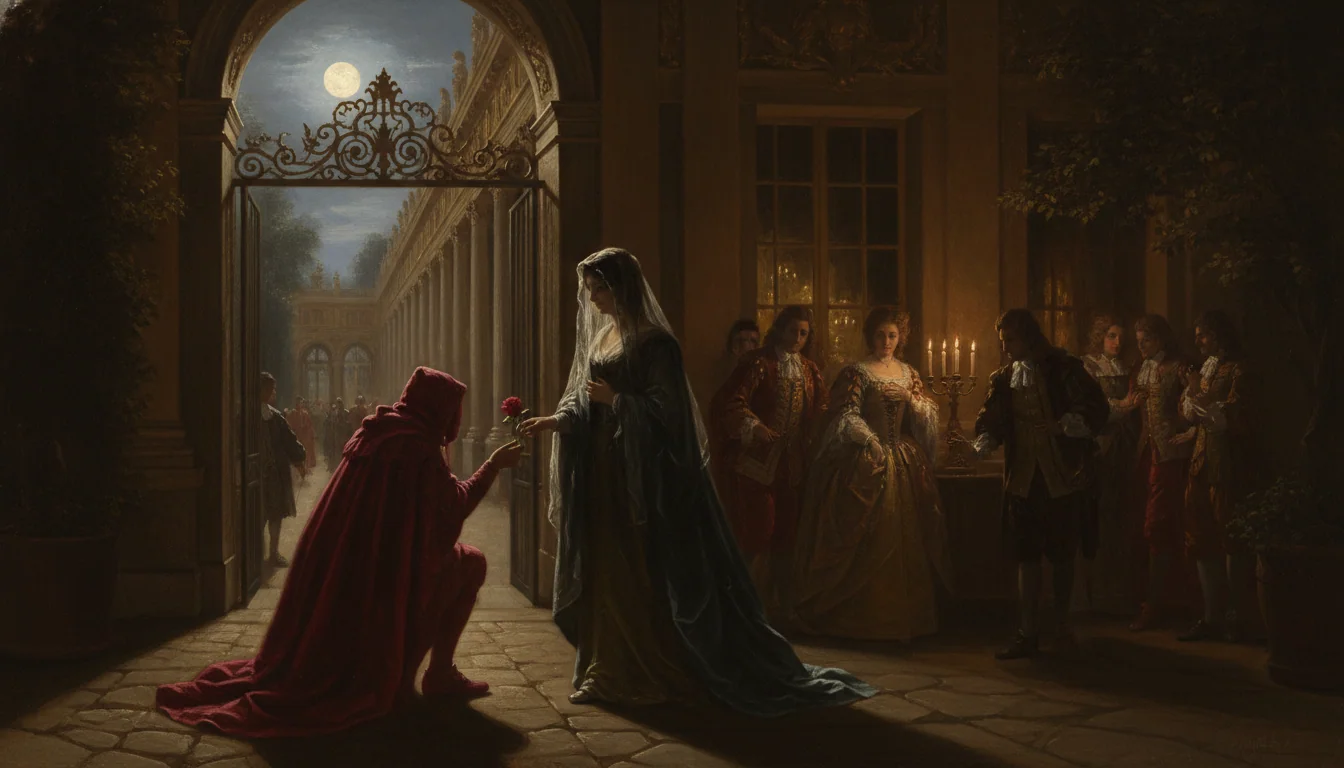
A cardinal of the Catholic Church was arrested at Versailles in August 1785, in front of the assembled court, still dressed in the vestments he had planned to wear to say Mass. The charge sounded almost too strange to be real: attempting to defraud the queen of France out of the most expensive necklace ever assembled by a Parisian jeweler. Louis XVI himself gave the order.
Here is the part that made the whole affair so combustible. The queen had never seen the necklace. She had never asked for it, never accepted delivery of it, and did not learn a scheme involving her name even existed until months after it had already fallen apart. Marie Antoinette was, by every surviving document, the one person in the entire scandal who did nothing wrong. And it nearly finished her anyway.
The court
By the mid-1780s, Marie Antoinette's reputation at Versailles was already fragile. She had arrived from Austria as a teenager, struggled for years to produce an heir, and spent lavishly on fashion, gambling, and her private retreat at the Petit Trianon while ordinary bread prices climbed. Pamphleteers had nicknamed her "Madame Deficit," and scurrilous prints accusing her of every imaginable extravagance circulated in Paris cafes. None of it was really about a necklace yet. It was the tinder the necklace affair would later ignite.
The French crown, meanwhile, was drowning in debt, partly from supporting the American Revolution, and the court ran on a currency of favor and access that mattered as much as money. A cardinal out of royal favor, a scheming minor noblewoman with an invented pedigree, and a pair of desperate jewelers holding an unsellable fortune in diamonds were all, in their own ways, chasing the same thing: a way back into the queen's good graces, or her purse.
The players
Cardinal Louis de Rohan held one of the grandest church offices in France, but Marie Antoinette despised him. Years earlier, as French ambassador in Vienna, he had reportedly written unflattering things about her mother, Empress Maria Theresa, and the queen never forgave it. By 1785 Rohan was desperate to regain her favor and, by several accounts, willing to believe almost anything that promised it.
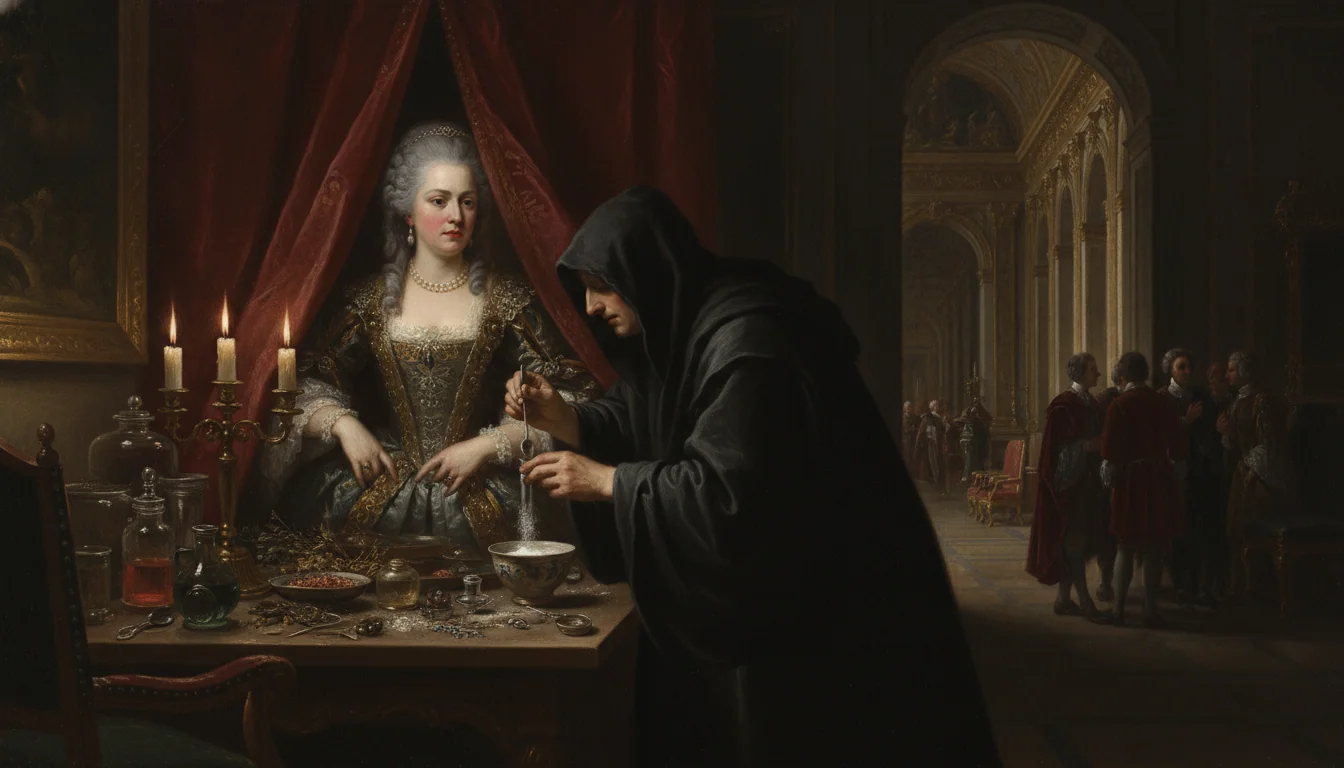
Enter Jeanne de La Motte, a self-styled countess who claimed descent from an illegitimate branch of the old Valois royal line and lived, despite the title, in near poverty. She befriended Rohan and convinced him she was a close, secret confidante of the queen. According to the trial record, she began producing letters, supposedly from Marie Antoinette, warming toward the cardinal and hinting the two might soon be reconciled, if he could prove his devotion with a discreet favor.
Two Parisian court jewelers, Boehmer and Bassenge, had a problem of their own: an extraordinary diamond necklace, originally assembled for Louis XV's mistress Madame du Barry, left unsold when the king died before completing the purchase. Priced at a sum some accounts put close to one and a half million livres, it had already been offered directly to Marie Antoinette, who reportedly turned it down as needlessly extravagant. The jewelers were still stuck with it, and still looking for a buyer.
The Affair of the Diamond Necklace
Jeanne de La Motte told Rohan that the queen secretly wanted the necklace but could not be seen buying anything so ostentatious herself, not with her spending already a public scandal. She needed a trusted intermediary to arrange it quietly. Rohan, flattered and convinced, agreed.
To seal his belief, La Motte staged a nighttime meeting in the palace gardens, in a secluded grove, between Rohan and a woman he believed to be the queen herself. The woman was in fact a Parisian shop assistant named Nicole Le Guay d'Oliva, chosen for a passing resemblance to Marie Antoinette, dressed in a plain white gown and coached to hand Rohan a rose and murmur a few words suggesting forgiveness. The meeting lasted only moments, in near darkness, but it was enough. Rohan left convinced the queen herself had signaled her favor.
With that confidence, Rohan negotiated the purchase on the queen's supposed behalf, agreeing to installment payments and personally vouching for the transaction. He handed the necklace over to a man he understood to be the queen's agent, in reality an associate of the La Mottes. The necklace was almost immediately broken apart into individual stones and sold off, some of it reportedly smuggled to London for resale.
When the first installment came due and went unpaid, Boehmer grew anxious enough to raise the matter directly with the queen. Marie Antoinette had no idea what he was talking about. She had never ordered the necklace, never received it, and had certainly never written the letters Rohan believed came from her. The forged signatures, it later emerged, had even been signed "Marie Antoinette de France," a mistake no real French queen would have made, since queens did not sign with the royal surname. Nobody involved had thought to check.
The gossip vs the record
Here the documented record and the Parisian rumor mill split sharply, and separating them matters more than almost anywhere else in the story.
The record, established through the Parlement of Paris's trial in 1785 and 1786, shows Marie Antoinette had no contact whatsoever with Rohan, La Motte, or the jewelers regarding this purchase. Her innocence was not seriously disputed even by the prosecution. What the trial did establish was a conspiracy run almost entirely by Jeanne de La Motte, using forged letters and an impersonator to manipulate a vain, credulous cardinal.
The gossip told a very different story, and it spread faster than any correction could catch it. Parisians who already believed the queen capable of any excess found it easy to believe she really had schemed for secret jewels, or worse, that the garden meeting implied some illicit relationship with Rohan. Once Jeanne de La Motte escaped custody and reached London, she made the gossip far worse on purpose, publishing memoirs stuffed with invented and often lurid claims about the queen's private life. Historians treat those memoirs as deliberate fabrication by a convicted fraudster with every incentive to lie, not as evidence, though at the time they were devoured across Europe as if they were confession.
The cruel irony, noted by essentially every historian who has studied the case, is that the entire scheme depended on Rohan and much of Paris finding it plausible that the queen would behave exactly this way, secretly, extravagantly, and in defiance of propriety. The affair did not create that reputation. It confirmed one already half built.
The fallout
Louis XVI's decision to arrest a cardinal publicly, on the Feast of the Assumption in front of the entire court, backfired badly. It guaranteed a sensational trial rather than a quiet resolution, and put the crown's own judgment on display alongside Rohan's.
When the Parlement of Paris delivered its verdict in late May 1786, Rohan was acquitted, on the reasoning that he had been thoroughly deceived rather than complicit in fraud. Nicole Le Guay d'Oliva was also acquitted, as an unwitting participant. Jeanne de La Motte was convicted, whipped, and reportedly branded with the letter V for voleuse, or thief, on both shoulders, then imprisoned in the Salpetriere. A colorful occultist named Cagliostro, whom Rohan had consulted as a mystical advisor during the affair, was tried alongside them and also acquitted, adding one more flamboyant character to an already theatrical case.
For Marie Antoinette, Rohan's acquittal was the real disaster. A cardinal of France had just been publicly forgiven for believing the queen capable of secret nighttime assignations and clandestine jewel deals, and much of Paris agreed the belief had not been unreasonable. The following year, Jeanne de La Motte escaped the Salpetriere disguised as a man and fled to London, where her memoirs kept the scandal alive right up to the eve of the Revolution. She died there in 1791, after a fall from a window under circumstances that have never been fully explained, whether accident, suicide, or something else entirely.
Napoleon Bonaparte, in memoirs of his exile recorded by companions decades later, is often quoted as saying the queen's ruin should be dated from this affair rather than from anything she actually did. Like many quotations preserved secondhand from Napoleon's final years, it survives through the memory of others rather than his own hand, but the sentiment matches how most historians read the episode. Marie Antoinette walked away from the Diamond Necklace Affair having done nothing, and lost almost everything anyway.
For more on how the queen's reputation was built and then destroyed, see our fact-check of Sofia Coppola's Marie Antoinette film and our account of her final hours before the guillotine.
Quick Answers
Common questions about this topic
Did Marie Antoinette actually buy the diamond necklace?
No. The trial record shows she never ordered it, never received it, and had already turned it down years earlier when the jewelers offered it directly. The entire purchase was arranged by a con artist forging the queen's signature and impersonating her staff.
Was Cardinal de Rohan found guilty?
No. The Parlement of Paris acquitted him in May 1786, ruling he had been deceived rather than complicit. The acquittal was still a disaster for the queen, since it meant the court found it plausible she might conduct secret garden meetings and midnight letters.
What happened to Jeanne de La Motte, the woman behind the scheme?
She was convicted, reportedly branded on both shoulders, and imprisoned in the Salpetriere. She escaped to London in 1787 disguised as a man and published memoirs full of invented claims about the queen. She died in 1791 after falling from a window, under circumstances that remain unclear.
Did the Diamond Necklace Affair really help cause the French Revolution?
Historians debate how much direct weight to give it, but most agree it did lasting damage. Napoleon is often quoted, in memoirs recorded decades later, as saying the queen's downfall should be dated from this affair, even though she was entirely innocent of it.

Summon the Court
Chat with the monarchs and courtiers at the heart of the scandal.
Create your free account →No card required. Some figures and features require a paid plan.
Join the HistorIQly Club
Get smarter about the past.
Weekly stories, deep dives, and exclusive content straight to your inbox.