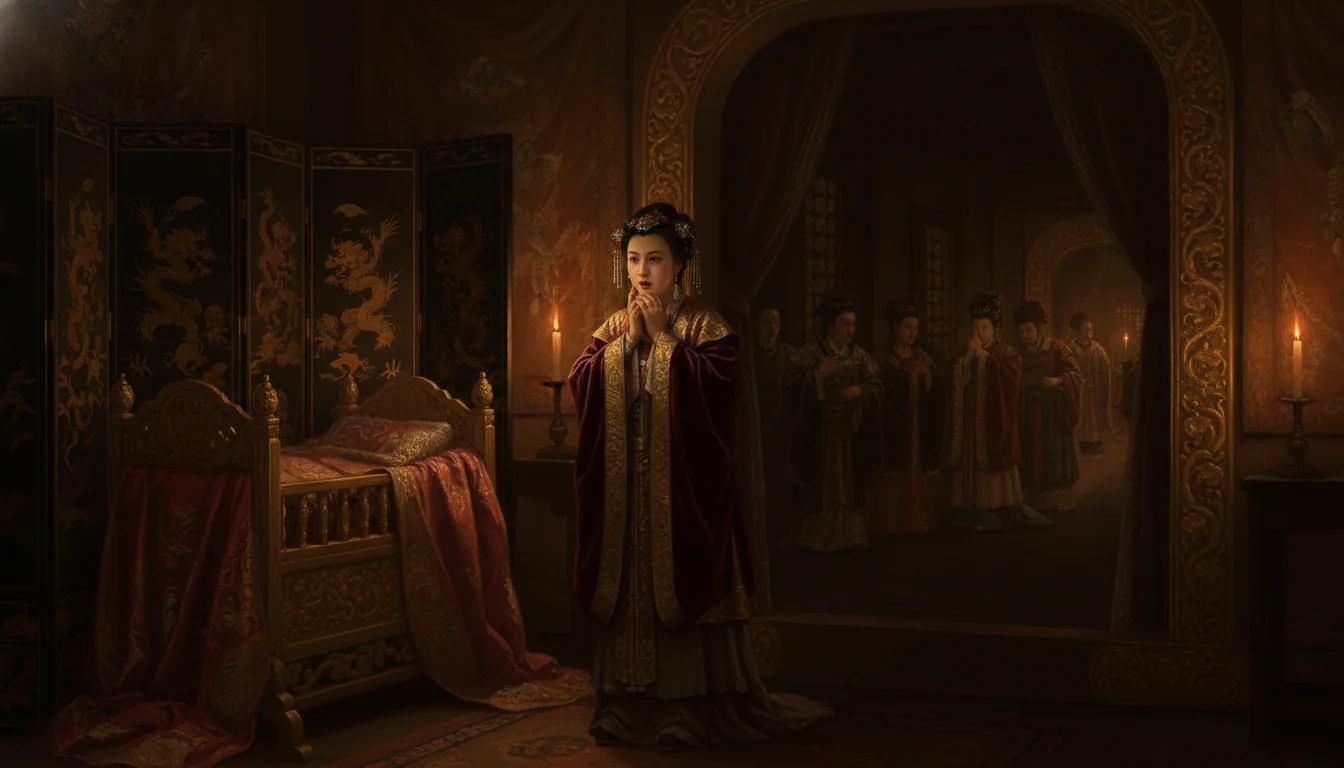
The Death of Crown Prince Sado: A Korean King Who Locked His Son in a Rice Chest
A Korean king sealed his own heir, Crown Prince Sado, inside a wooden rice chest in 1762. Here is what the court record actually says happened, and why.
Read Wikipedia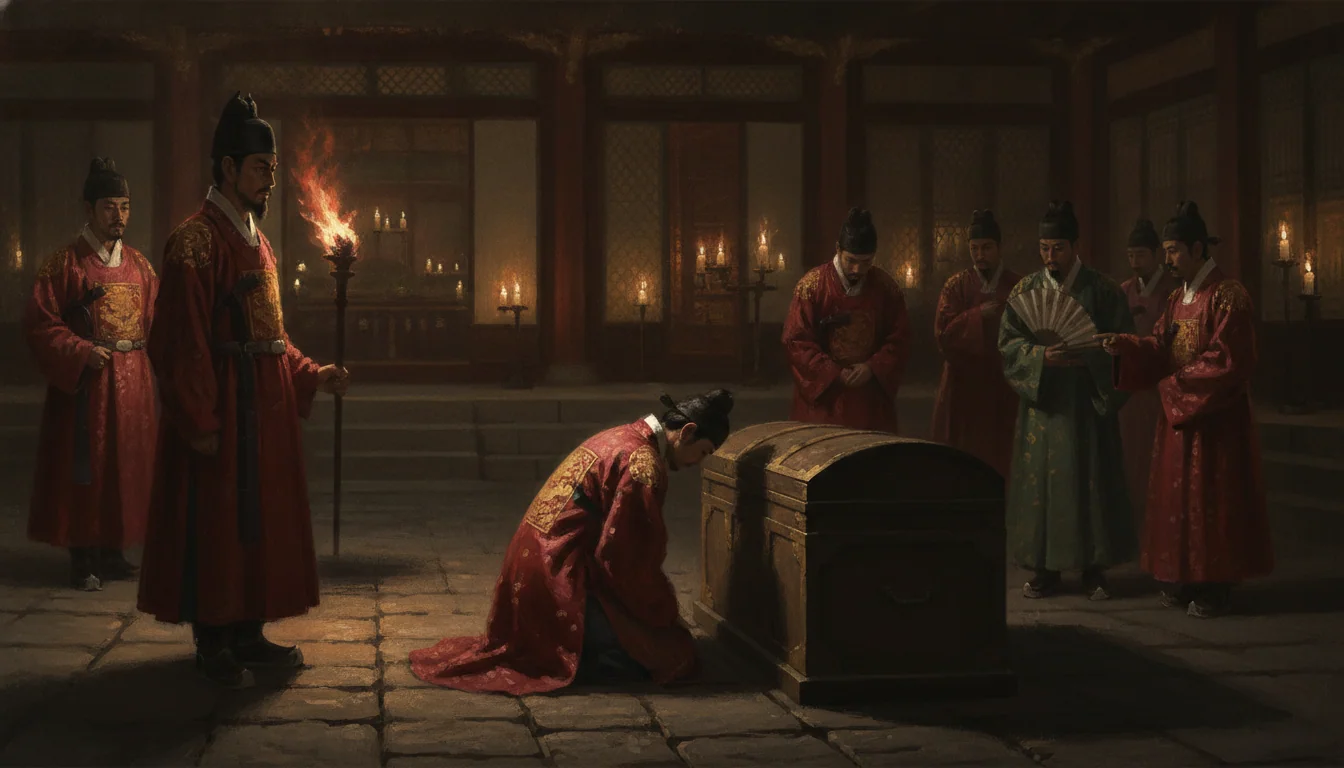
In the early summer of 1762, King Yeongjo of Joseon Korea ordered his own son, Crown Prince Sado, the heir to the throne, sealed inside a large wooden rice chest in a palace courtyard and left there until he died. It is one of the strangest and cruelest disciplinary acts any reigning monarch has taken against an heir apparent, and it was carried out in full view of a royal court that mostly watched and said nothing. By most accounts it took roughly eight days.
Korea calls it the Imo Incident, named for the year in the traditional sexagenary calendar. Outside Korea it tends to surface as "the rice chest prince," a detail so grim it sounds invented for television. It was not invented. Royal successions have gone wrong in far stranger ways elsewhere, from the still-disputed deaths at the heart of the Mayerling incident to the codified violence of the Ottoman law of royal fratricide, but few carry the same slow, deliberate cruelty as Sado's eight days sealed inside a wooden box. What has been argued over for two and a half centuries is why a father would do this to his only surviving direct heir, and what the son had actually done to bring it on.
The court: a dynasty anxious about its own legitimacy
Yeongjo took the Joseon throne in 1724, after the death of his half-brother King Gyeongjong, a death that contemporaries whispered, without ever proving, might not have been entirely natural. Yeongjo's own mother had been a low-status palace servant rather than a woman of noble rank, an origin that left him permanently sensitive about his claim to rule in a court that prized bloodline above nearly everything else. He answered that insecurity the way many anxious rulers do: with relentless personal discipline, an obsessive work ethic, and towering expectations for the son who was supposed to prove the dynasty's legitimacy after him.
Sado, born in 1735, was that son, made crown prince as an infant after an elder half-brother died in childhood. He grew up as the focus of his father's ambition and his father's temper in roughly equal measure. Yeongjo lectured him constantly, humiliated him in front of court officials, and by most contemporary accounts held him to a standard of scholarly and ceremonial perfection that would have strained anyone, let alone a child raised almost entirely inside palace walls.
The court itself was also carved into rival factions, chiefly the Noron and Soron parties, whose long-running feud over royal succession and policy shaped nearly everything that happened at court. Sado's sympathies, and his father's suspicions about those sympathies, are frequently cited as part of the political backdrop to what followed, though how much factional politics actually drove Yeongjo's decision, rather than simply supplying the language later used to justify it, remains genuinely debated among historians.
The players
Two men sit at the center of the story: Yeongjo, an aging, exacting, and by 1762 visibly paranoid king, and Sado, his adult son and heir, married with children and increasingly erratic in his behavior. Sado's wife, Lady Hyegyeong, occupies an unusual place in the story. She survived both her husband's death and her father-in-law's long reign, and later wrote the fullest surviving account of what happened, a memoir known as Hanjungnok, sometimes translated as The Memoirs of Lady Hyegyeong. Her son with Sado was a small child when his father died. He later became King Jeongjo, one of Joseon's most celebrated monarchs, still taught in Korea as the architect of a golden age of scholarship and reform.
The scandal: what the record says happened
By his twenties, Sado was showing behavior that alarmed the court. Lady Hyegyeong's memoir describes a debilitating anxiety around getting dressed, so severe that preparing a single set of ceremonial robes could take dozens of attempts, and that servants who displeased him during the process were sometimes beaten or killed. The memoir and later court records describe a run of violent incidents, unauthorized trips outside the palace grounds, and a pattern of behavior that today would likely prompt a psychiatric diagnosis, though retrospectively diagnosing a man who died in 1762 is guesswork dressed up as medicine.
In the summer of 1762, Yeongjo summoned his son, accused him publicly of conduct unfit for a future king, and ordered him to climb into a large wooden chest normally used to store rice. According to Lady Hyegyeong's account, Sado resisted at first, then complied. The chest was sealed. Officials reportedly pleaded with the king to relent. He refused. Sado died inside the chest roughly eight days later, in the middle of a Korean summer, of thirst, heat, and starvation.
The official court annals record the event in notably clipped, euphemistic language, confirming that the crown prince died by royal order without spelling out the mechanics for the state's own permanent record. For decades afterward, discussing the incident directly at court carried real political risk, which is one reason Lady Hyegyeong's later, more candid memoir became such a valuable source. It filled in what the official record had been built to obscure.
The gossip vs the record
Court gossip in the years that followed inflated nearly every number attached to the case. Some retellings put the death toll from Sado's alleged violent episodes in the hundreds. Historians who have examined the surviving record generally treat that figure as folklore, while agreeing that Sado plausibly killed a number of palace servants and attendants during his worst episodes, likely in the dozens rather than the hundreds, though an exact count is impossible to verify. Rumor also long held that Yeongjo acted purely out of factional calculation, removing a prince the rival party favored. The documented record supports factional tension as a real pressure on the decision, but not as its sole cause. Lady Hyegyeong's own account frames it instead as a tragedy of mental illness, paternal cruelty, and political fear feeding on each other until nobody at court could see a way back.
One detail that is well documented, and often skipped over in the more sensational retellings, is the method itself. A formally convicted and executed crown prince would have legally tainted his bloodline, potentially disqualifying his young son from ever inheriting the throne. Sealing Sado inside the chest, letting him die of exposure and thirst rather than by the blade, and never issuing a formal charge of treason, is widely read by historians as a calculated way for Yeongjo to remove his son while preserving his grandson's claim to the succession. Whatever else it was, it does not look like an impulsive act.
The fallout
Sado died, and within weeks Yeongjo granted his dead son the posthumous name Sado, characters that roughly translate to "the one to be mourned," an unsettling gesture of grief from the man who had ordered the killing. Lady Hyegyeong survived, raised her son, and eventually wrote the memoir that preserved the story for later generations, revising and softening parts of it at different points in her life depending on how safe candor felt at the time.
Sado's son took the throne in 1776 as King Jeongjo. He could never openly re-litigate his father's death without indicting his own grandfather, so court protocol formally listed him as heir to an uncle who had died in childhood, a legal fiction that let him inherit the throne without his birth father's fate attached to the paperwork. Privately, Jeongjo spent much of his reign honoring Sado's memory anyway, building his father's tomb into a major complex and founding the new city of Suwon partly so it could stand near it. Jeongjo went on to become one of Joseon's most admired kings, a reformer whose scholarship and governance are still studied in Korea today, which makes the rice chest less a footnote to his story than its dark opening chapter.
The story has had a long afterlife in Korean popular culture, most visibly in the acclaimed 2015 film "The Throne," which dramatizes the final months between father and son inside the palace walls. Korean historical dramas return to the Joseon court often, but the Imo Incident remains one of the few royal scandals grim enough that it never needs any embellishment at all.
Quick Answers
Common questions about this topic
Did a Korean king really lock his own son in a rice chest?
Yes. In the summer of 1762, King Yeongjo of Joseon Korea ordered his son and heir, Crown Prince Sado, sealed inside a large wooden rice chest, where he died roughly eight days later of thirst and starvation. The event is recorded, in guarded language, in the official court annals, and described in far more detail in Lady Hyegyeong's memoir. Koreans call it the Imo Incident.
Why didn't Yeongjo just execute his son?
A crown prince formally convicted of treason and executed would have legally tainted his bloodline, likely barring his own son from ever inheriting the throne. By having Sado die of exposure inside a sealed chest rather than by a declared execution, Yeongjo avoided a treason charge and preserved his grandson's claim to succeed him.
Was Crown Prince Sado really mentally ill?
Lady Hyegyeong's memoir describes severe, escalating symptoms, including a debilitating anxiety around getting dressed and violent outbursts against servants, that many historians read as serious mental illness. Modern retrospective diagnosis is inherently speculative, but the documented pattern of behavior alarmed the court for years before his death.
What happened to Sado's son after his father's death?
Sado's son ascended the throne in 1776 as King Jeongjo and became one of Joseon Korea's most celebrated reforming monarchs. He honored his father's memory throughout his reign, including building an elaborate tomb complex, even though court protocol required him to be formally listed as the heir of an uncle rather than of Sado.

Summon the Court
Chat with the monarchs and courtiers at the heart of the scandal.
Create your free account →No card required. Some figures and features require a paid plan.
Join the HistorIQly Club
Get smarter about the past.
Weekly stories, deep dives, and exclusive content straight to your inbox.