The Mayerling Incident: Crown Prince Rudolf's Murder-Suicide Mystery
The Mayerling incident of 1889 saw Austria's heir die with his teenage mistress at a hunting lodge. The Habsburgs called it heart failure; the record differs.
Read Wikipedia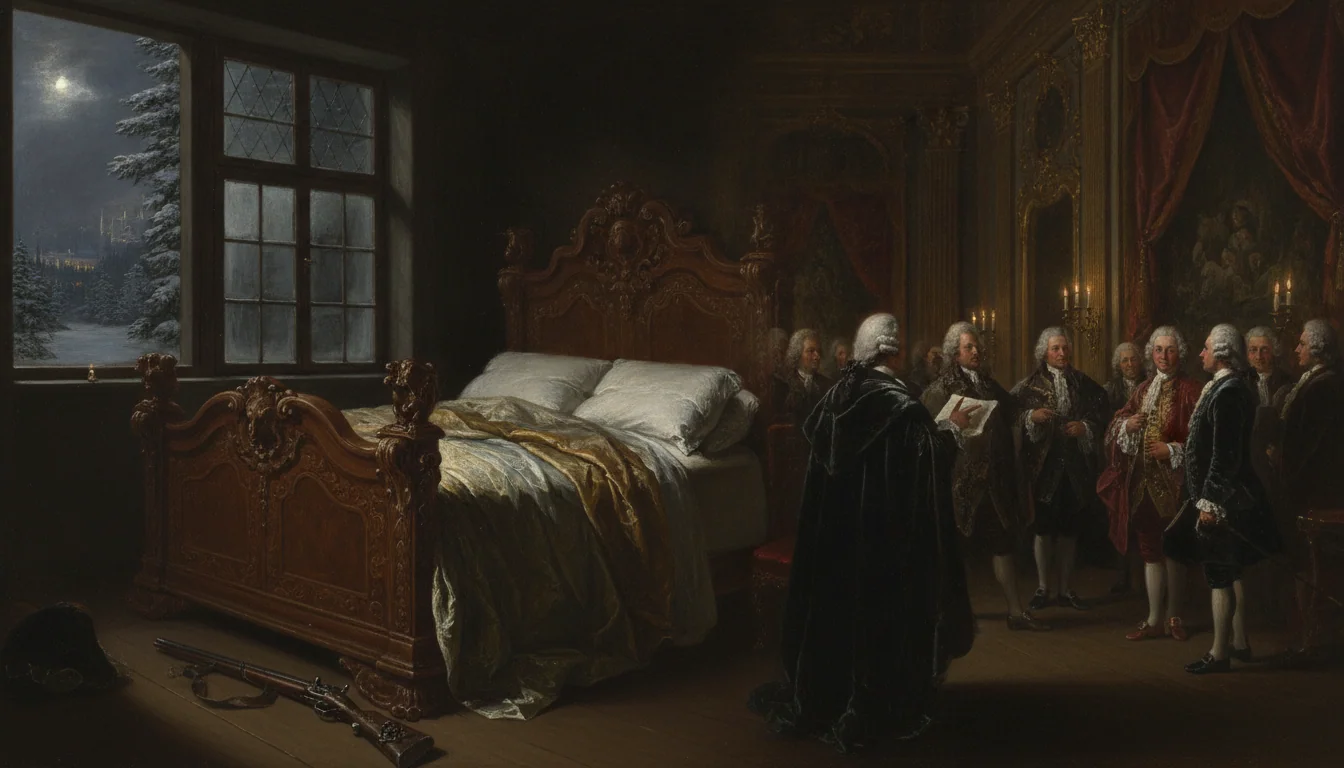
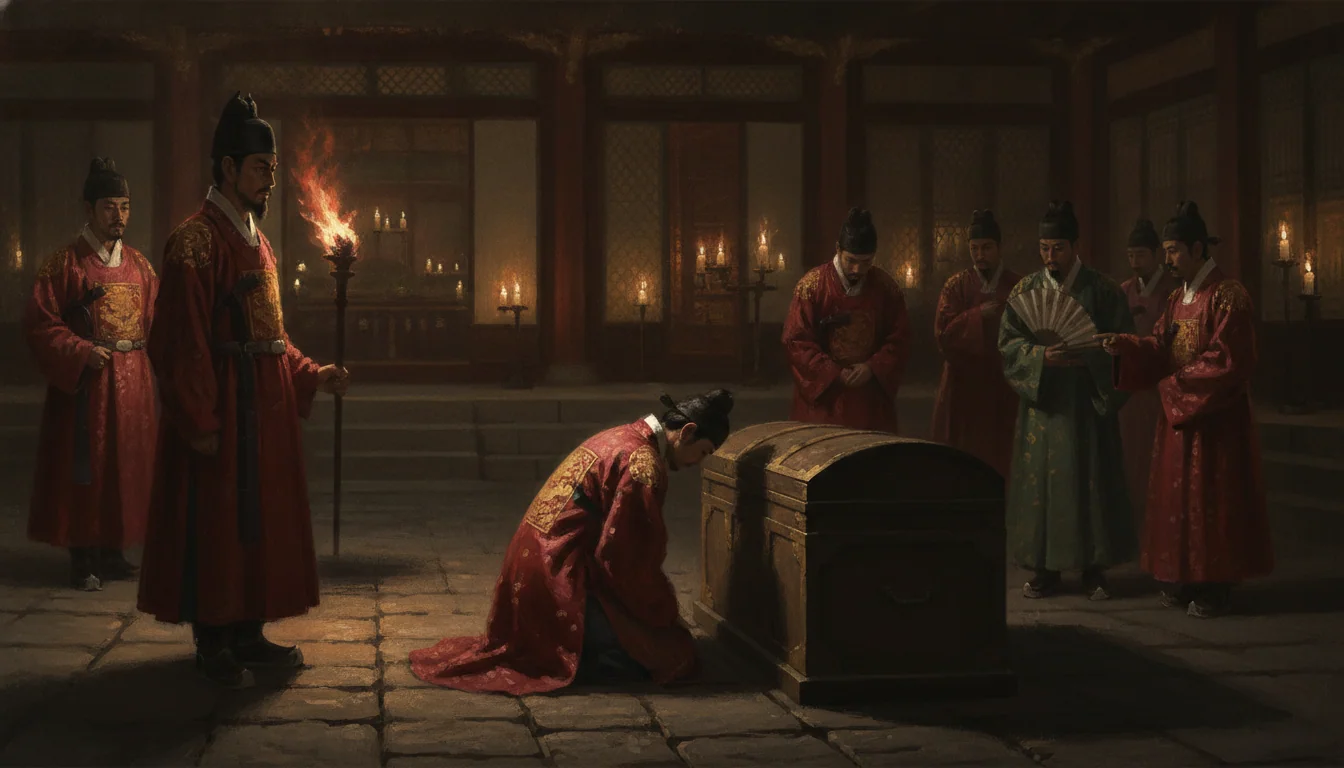
On the morning of January 30, 1889, a valet at a hunting lodge in the Vienna Woods knocked on a locked bedroom door and got no answer. When the door was finally forced open, he found Crown Prince Rudolf of Austria and a seventeen-year-old baroness named Mary Vetsera both dead, and set in motion one of the most carefully managed scandals in Habsburg history.
The official story changed within days. The conspiracy theories never stopped.
A dynasty with one heir
By 1889 the Austro-Hungarian Empire was a sprawling, multiethnic patchwork held together largely by the person of Emperor Franz Joseph I, who had ruled since 1848 and would go on ruling for decades more. The empire needed a stable succession the way a house needs a foundation, and Franz Joseph had exactly one son to provide it: Crown Prince Rudolf.
Rudolf was not the heir his father wanted. He was intelligent, restless, and politically liberal in a court built on conservative caution. He wrote political essays under pseudonyms, some of them mildly critical of his own family's allies, and quietly supported Hungarian autonomy in ways that unsettled Vienna's old guard. He had also, by his early thirties, developed a serious dependence on morphine and alcohol, worsened by chronic illness and a marriage that had collapsed in every way but name.
That marriage was itself part of the court's stakes. Rudolf had wed Princess Stephanie of Belgium in 1881 and the union produced one daughter, Archduchess Elisabeth Marie, but no son. Rudolf had contracted a venereal disease, widely reported as gonorrhea, apparently from other liaisons, and passed it to Stephanie, which most historians believe ended any real chance of an heir through that marriage. A crown prince without a legitimate son and without his father's confidence was a crown prince with very little ground under him.
The players around him
Empress Elisabeth, known as Sisi, was Rudolf's mother and, by most accounts, the parent who understood him best, though she spent much of her time traveling abroad rather than at court. Franz Joseph was a distant, formal father who ran the empire and his household on the same rigid schedule. Between them sat Rudolf, seeking approval he rarely got and escape he increasingly needed.
Mary Vetsera came from a family on the edges of high society, wealthy through her mother's banking connections but never fully accepted by the old aristocracy. She was young, infatuated, and by the accounts of those around her, genuinely devoted to Rudolf rather than angling for status, though the relationship's imbalance of age and power is impossible to ignore from any modern vantage point.
The go-between was Rudolf's cousin, Countess Marie Larisch, who arranged meetings between the crown prince and the teenage baroness and later insisted, in memoirs written long after the fact, that she had never guessed how far things would go. Court gossip at the time and since has been considerably less generous to her, casting her as a willing fixer for Rudolf's affairs.
What happened at the lodge
By late January 1889, Rudolf's affair with Mary was an open secret in Viennese circles, though not yet public. He invited a small hunting party, including his friend Count Josef Hoyos, to the imperial lodge at Mayerling, southwest of Vienna, ostensibly for several days of shooting. Mary was smuggled in separately, apparently with Larisch's help, and stayed hidden in Rudolf's rooms.
According to accounts pieced together afterward, Rudolf and Mary spent their last evening together quietly. Sometime before dawn, Rudolf shot Mary, then shot himself. The valet, Loschek, later said he had heard nothing unusual overnight and only grew alarmed when Rudolf failed to answer repeated knocking the next morning. Hoyos and Loschek eventually broke down the door and found both bodies.
Rudolf left several farewell letters, to his wife, his mother, and his sister Archduchess Valerie among others. Pointedly, he left none for his father. The letters read as the words of a man who had decided, calmly and in advance, to end his life, not as evidence of a struggle or an ambush. He also, by some accounts, had proposed a similar suicide pact to at least one other woman in Vienna before Mary, who declined and reported the conversation, though she was not taken seriously at the time.
Heart failure, officially
The first statement released by the imperial court claimed Rudolf had died suddenly, of a heart attack or a ruptured blood vessel. This was not an accident of confusion so much as a deliberate cover story. Suicide was treated by the Catholic Church as a mortal sin that barred a proper Christian burial, an impossible outcome for an heir to a Catholic empire meant to lie in state at Vienna's Kaisergruft. A double death involving an unmarried teenage mistress was, separately, a public relations catastrophe the court had every reason to bury.
The story did not survive contact with the foreign press. Within days, newspapers outside Austria-Hungary were reporting the real circumstances, and the court was forced into an awkward walk-back. Court physicians eventually issued a finding that Rudolf had acted in a state of "mental disturbance," a medically vague but ecclesiastically convenient conclusion that allowed the Church to grant him burial rites after all. He was interred in the Kaisergruft with the rest of the Habsburg dead. Mary Vetsera received no such consideration.
Her body was removed from Mayerling under cover of darkness, dressed and propped between two of her uncles in a carriage so passersby would see nothing unusual, then buried at Heiligenkreuz Abbey in a hurried private ceremony without her mother present at the graveside. The asymmetry between the two funerals says as much about the era's politics of gender and rank as anything written down at the time.
Gossip versus the record
What Vienna whispered in 1889, and what conspiracy writers have repeated ever since, was considerably more dramatic than a double suicide. Some claimed Rudolf had been assassinated by agents of a foreign power alarmed by his sympathies toward Hungarian independence. Others insisted Mary's family or jealous rivals had staged the whole scene. A persistent strand of gossip held that Mary was pregnant and that the deaths were meant to prevent a scandal even larger than the one that followed.
None of these theories has ever produced supporting evidence that survives serious scrutiny. The farewell letters, the physical evidence at the scene, and the accounts of the men who broke into the room all point the same direction. Letters connected to Rudolf that surfaced from a Viennese bank vault decades later, well after the original investigation, were consistent with the suicide account rather than contradicting it. Historians who have combed the Habsburg archives generally treat the murder theories as an understandable reaction to an official cover-up rather than as a rival account backed by documents. When a government visibly lies about the cause of death, even for defensible reasons, the public rarely takes the second version on faith either.
The fallout
For the Habsburgs, Mayerling was a wound that never fully closed. Franz Joseph outlived his son by nearly three decades, and the succession passed instead to his brother's line and eventually to his nephew, Archduke Franz Ferdinand. Empress Elisabeth, already withdrawn from court life, grew more remote after Rudolf's death and was herself assassinated in Geneva in 1898.
Mary Vetsera's family was quietly pushed out of Viennese society, their brief brush with imperial scandal costing them the respectability her mother had spent years pursuing. Countess Larisch was cut off from the court entirely and spent much of the rest of her life trading on her connection to the tragedy, publishing memoirs that historians treat with considerable caution given her financial incentive to sensationalize.
The lodge itself was demolished on Franz Joseph's orders and rebuilt as a Carmelite convent, a penance in stone for a scandal the crown could bury but never quite erase. More than a century later, the Mayerling incident remains the reference point for royal tragedy conducted mostly in the dark, its facts largely settled and its mythology still doing brisk business regardless.
Rudolf's death also reshuffled a line of succession that would matter enormously to the twentieth century: for how that chain ended in Sarajevo, see what if Franz Ferdinand's driver hadn't taken the wrong turn. Mayerling was also not the last time a royal love affair scrambled a succession and a palace tried to manage the fallout: see the Edward VIII abdication, four decades later.
Quick Answers
Common questions about this topic
Did Crown Prince Rudolf really kill himself and his mistress?
The forensic and documentary record, including farewell letters Rudolf wrote to his wife, mother, and sister, points strongly to a planned double suicide. He almost certainly shot Mary Vetsera first, then himself, in the early hours of January 30, 1889. No credible evidence has ever surfaced for the murder theories that circulated afterward.
Why did the Habsburg court first say Rudolf died of a heart attack?
The court's initial statement blamed heart failure because suicide was a mortal sin under Catholic doctrine and would have barred Rudolf from consecrated burial, while a scandal involving a mistress was politically embarrassing. Officials abandoned the story within days once foreign newspapers reported the truth.
What happened to Mary Vetsera's family after her death?
The Vetsera family was pressured to leave Vienna quietly and largely dropped out of aristocratic society. Mary's body was smuggled out of the lodge at night and buried in a rushed private ceremony at Heiligenkreuz Abbey, without the formal rites or public mourning granted to Rudolf.
Did Rudolf's death cause World War I?
Not directly, but it mattered for the succession. Rudolf's death left the Austro-Hungarian throne without a direct heir, and the line eventually passed to Rudolf's cousin Archduke Franz Ferdinand, whose assassination in Sarajevo in 1914 triggered the war. The link is a chain of succession, not a cause and effect historians treat as certain.

Summon the Court
Chat with the monarchs and courtiers at the heart of the scandal.
Create your free account →No card required. Some figures and features require a paid plan.
Join the HistorIQly Club
Get smarter about the past.
Weekly stories, deep dives, and exclusive content straight to your inbox.