The Edward VIII Abdication: The King Who Gave Up a Throne for Wallis Simpson
The Edward VIII abdication was sparked by a king's love for a twice-divorced American commoner, a constitutional crisis that cost him the throne within a year.
Read Wikipedia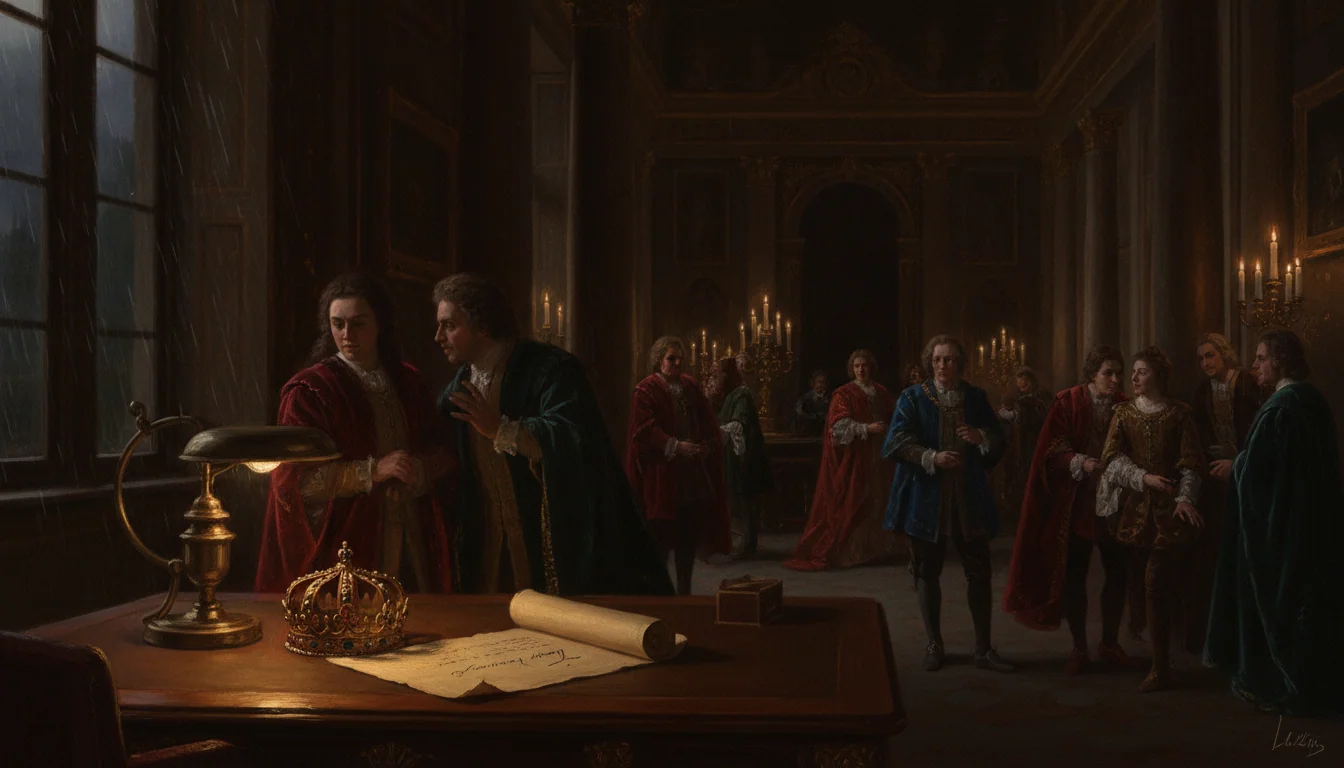
For most of 1936, the government of the United Kingdom, the American press, and the King's own family all knew something that the British public did not: the new king wanted to marry a woman the establishment considered entirely unacceptable. When the story finally broke in the British papers in early December, the country had barely more than a week to absorb a crisis that had been building for years. By December 11, the Edward VIII abdication was complete, and he was no longer king.
The court
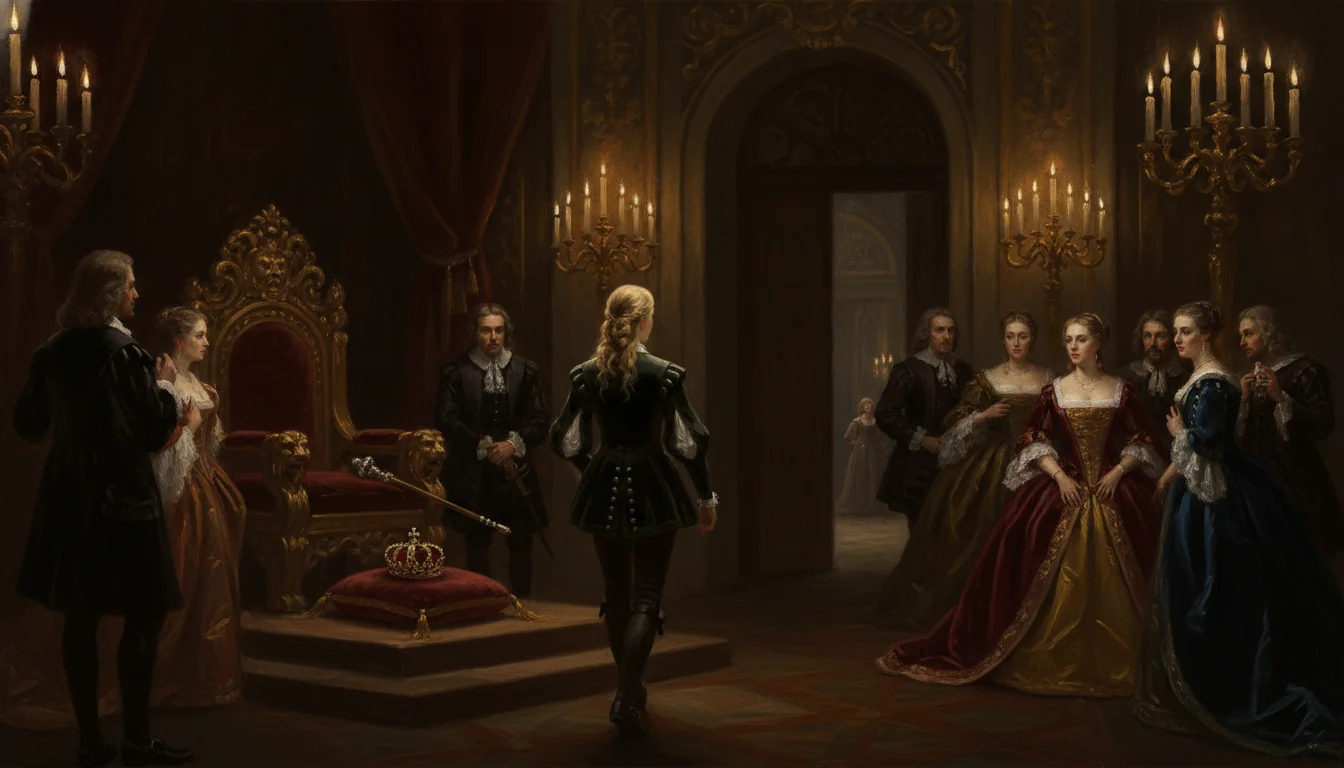
Edward became King on January 20, 1936, following the death of his father, George V, after just under 26 years as heir to the throne. As Prince of Wales he had been the most photographed man in the British Empire, a genuinely popular figure who toured the colonies, championed the unemployed during the Depression, and seemed, to many, like a modernizing force for a monarchy still shaped by his father's stiff formality.
The stakes were not merely personal. As king, Edward would also become Supreme Governor of the Church of England, an institution that did not, at the time, recognize remarriage after divorce while a former spouse was still alive. He was also head of a Commonwealth that, under the Statute of Westminster of 1931, meant any change to the rules of succession or the royal marriage required the agreement of the Dominion governments, not just Westminster. A king's marriage was not a private matter. It was, constitutionally, everyone's business.
George V had reportedly worried aloud, before his death, that his eldest son would not settle down and might undo the monarchy's careful respectability within a year of taking the throne. Courtiers around Edward had noted for years that he chafed against the routine paperwork of kingship, preferred golf and nightclubs to state boxes, and treated the formal side of the role as an obligation to be endured rather than embraced. None of that alone would have ended a reign. Combined with the marriage question, it gave his critics in government a case that ran well beyond romance.
The players
Edward's relationship with Wallis Simpson developed through the early 1930s. Wallis was an American from Pennsylvania, already once divorced from a U.S. Navy aviator, and at the time married to her second husband, Ernest Simpson, an Anglo-American businessman. She and Edward moved in the same social circles for years before the relationship deepened, and by the mid-1930s she was a regular presence at his private gatherings, first as one guest among many at weekend house parties and later as the woman who ran his household in all but name.
Queen Mary, Edward's mother, and much of the wider royal family made their disapproval of Wallis clear from early on, viewing an American who was already divorced once and still married to another man as fundamentally unsuitable for any close relationship with the heir, let alone the king. That disapproval hardened rather than softened once Edward acceded to the throne and made his intentions plain.
Prime Minister Stanley Baldwin became the central figure on the government side, tasked with managing a king he increasingly regarded as unsuited to the constraints of the role. Winston Churchill, then a backbencher with little ministerial power, championed Edward's cause and argued for delay, a position that damaged his own standing at the time. Edward's three younger brothers, Albert, Duke of York, Henry, Duke of Gloucester, and George, Duke of Kent, watched the crisis unfold knowing that the eldest of them would eventually inherit whatever Edward left behind, one way or another.
The scandal
American and continental European newspapers had been covering the King's relationship with Wallis Simpson for a long time before British readers saw a word of it. British editors maintained a self-imposed silence on the story, a gentleman's agreement that held for years even as gossip circulated at every level of society that mattered. The dam broke in early December 1936, after a bishop's public remarks about the King's need for God's grace were widely interpreted as a coded reference to the relationship, though the bishop himself later denied any such intent. Once one paper printed the connection, the rest followed within days.
By then, the substantive crisis was already well advanced behind closed doors. Wallis had begun divorce proceedings against Ernest Simpson that autumn, clearing the way for her to eventually marry Edward. Baldwin told the King plainly that the government would not accept Wallis as queen. A proposed compromise, a morganatic marriage in which Wallis would become Edward's wife but not queen, and any children would have no claim to the throne, was floated and rejected outright by the Cabinet and by the Dominion prime ministers Baldwin consulted. Edward was given, in effect, a choice: give up Wallis, or give up the crown.
Wallis, for her part, fled to the south of France as the press storm intensified and reportedly offered to withdraw from the relationship to end the crisis. It made no difference. Edward had already decided.
The gossip vs the record
The public version of events, delivered by Edward himself in his abdication radio broadcast on the evening of December 11, 1936, was simple and became instantly famous: he could not carry the burden of kingship "without the help and support of the woman I love." That framing has shaped popular memory of the abdication ever since, as a romantic renunciation.
The documented record is messier. Baldwin and his ministers had genuine and longstanding concerns about Edward's temperament, his casual attitude toward state papers, and his sympathies, which some in government found troublingly warm, toward Nazi Germany. Whether the marriage crisis was the true cause of his removal or simply the cleanest available pretext for a government that already wanted him gone is a question historians still debate, and the sources on the government's private deliberations are not conclusive either way.
There was also a persistent rumor mill around Wallis Simpson herself, including claims of a friendship, or more, with Joachim von Ribbentrop, Germany's ambassador to Britain in the mid-1930s. British intelligence reportedly kept files on her associations. This has never been established as fact in any surviving documentary record, and it belongs firmly in the category of period rumor rather than proven history, but it fed contemporary suspicion that Wallis's influence over the King extended beyond romance into politics.
The fallout
Edward signed the Instrument of Abdication at Fort Belvedere on December 10, 1936, witnessed by his three brothers. Parliament passed His Majesty's Declaration of Abdication Act the following day, and Edward's broadcast that evening confirmed to the public what had already been decided in private. His brother Albert became King George VI, inheriting a coronation date already fixed for May 1937, which simply proceeded with a different monarch.
Edward was created Duke of Windsor and married Wallis in France in June 1937, once her divorce was final. The Church of England would not sanction the marriage, and no senior royal attended. George VI's government then decided that Wallis, now Duchess of Windsor, would not receive the style of Her Royal Highness, a decision Edward considered a personal insult and never forgave, and which remained a lasting sore point between the brothers.
The scandal deepened rather than faded. In 1937 the newly married Duke and Duchess toured Nazi Germany and met Adolf Hitler at his mountain retreat, a visit accompanied by photographs, including one of Edward appearing to give a Nazi salute, that shadowed his reputation for the rest of his life. During the Second World War he was posted, at some remove from Europe, as Governor of the Bahamas, a role widely understood at the time as a way of keeping him at a safe distance from wartime politics. Captured German diplomatic documents released after the war suggested some Nazi officials had discussed him as a potential figurehead in the event of a German victory, though how seriously that idea was ever entertained on either side remains disputed.
Edward and Wallis spent most of the rest of their lives in France, largely excluded from official royal life, attending occasional family events such as George VI's funeral in 1952 but never fully reconciled with the institution Edward had left. He died in 1972; Wallis outlived him until 1986, spending her final years in seclusion.
What actually changed
The abdication crisis did more than end one reign. It confirmed, in the starkest possible terms, that the British monarchy in the twentieth century operated within limits set by elected government, not personal royal will, and it hardened the institution's official stance on divorce for a generation, a stance that would resurface when Edward's niece Princess Margaret was discouraged from marrying a divorced man in the 1950s and again, decades later, when the rules eventually relaxed enough to permit royal remarriage after divorce. Edward VIII's reign lasted less than a year and produced no coronation at all, yet few short reigns in British history have left so long a shadow.
Edward was far from the only European monarch to trade a crown for personal terms: for a very different abdication centuries earlier, see Queen Christina's abdication. For another royal scandal the palace tried and failed to keep quiet, see the Mayerling incident.
Quick Answers
Common questions about this topic
Did Edward VIII really give up the throne just for love?
That was his own framing, delivered in his abdication broadcast, and it is broadly true. But the record also shows a government that had already decided he was unsuited to the job and used the marriage question as the lever to remove him, so love was the trigger more than the sole cause.
Was Wallis Simpson rejected only because she was a divorced American?
Her nationality mattered less than her marital status. As king, Edward would also head the Church of England, which at the time would not recognize the remarriage of a divorcee whose former spouse was still living, and Wallis was already once divorced and in the process of a second divorce when the crisis broke.
What happened to Edward and Wallis after the abdication?
They married in France in 1937 and lived mostly abroad as the Duke and Duchess of Windsor, largely excluded from royal life. A controversial 1937 visit to Nazi Germany followed them for the rest of their lives. Edward died in 1972 and Wallis in 1986.
Could Edward have stayed king and just kept Wallis as a mistress quietly?
Possibly, and some in government reportedly hoped exactly that. But Edward wanted to marry her, and once the British press broke its silence in December 1936, discretion was no longer an option available to either side.

Summon the Court
Chat with the monarchs and courtiers at the heart of the scandal.
Create your free account →No card required. Some figures and features require a paid plan.
Join the HistorIQly Club
Get smarter about the past.
Weekly stories, deep dives, and exclusive content straight to your inbox.