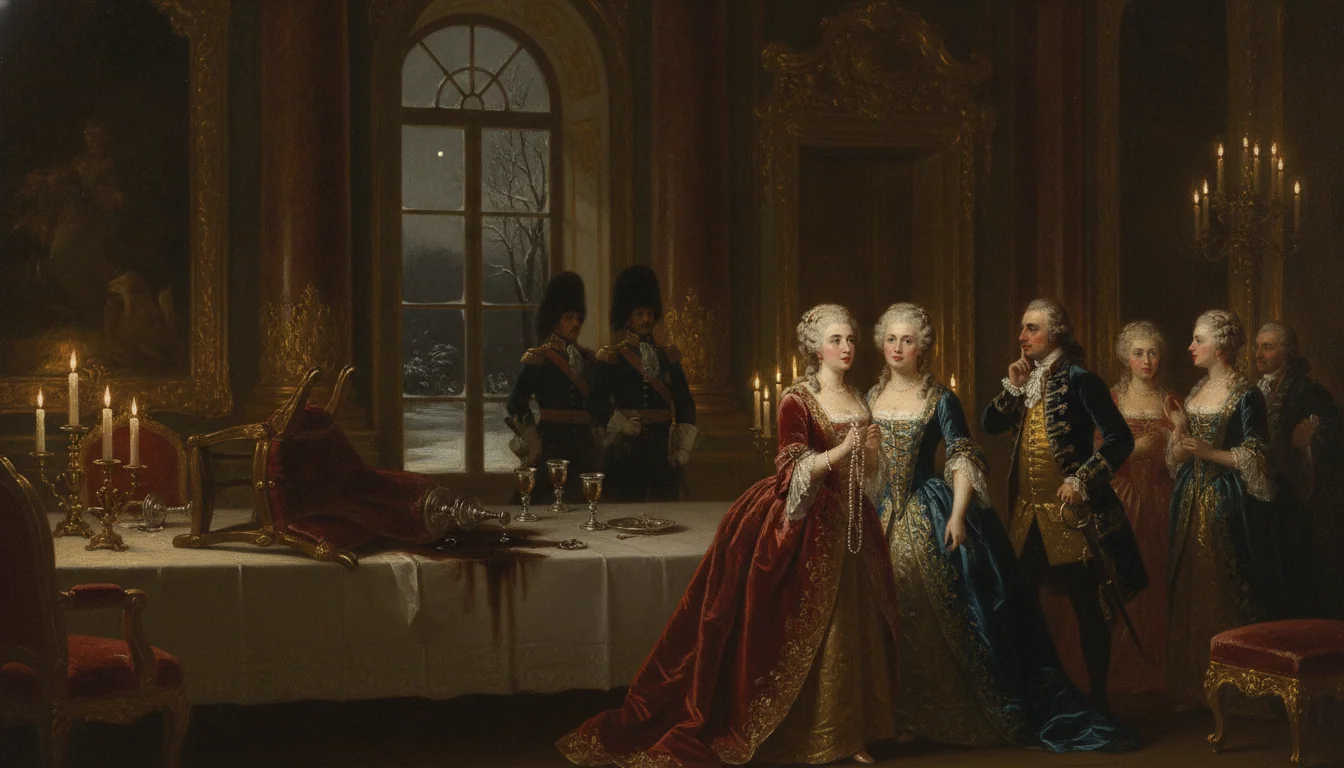
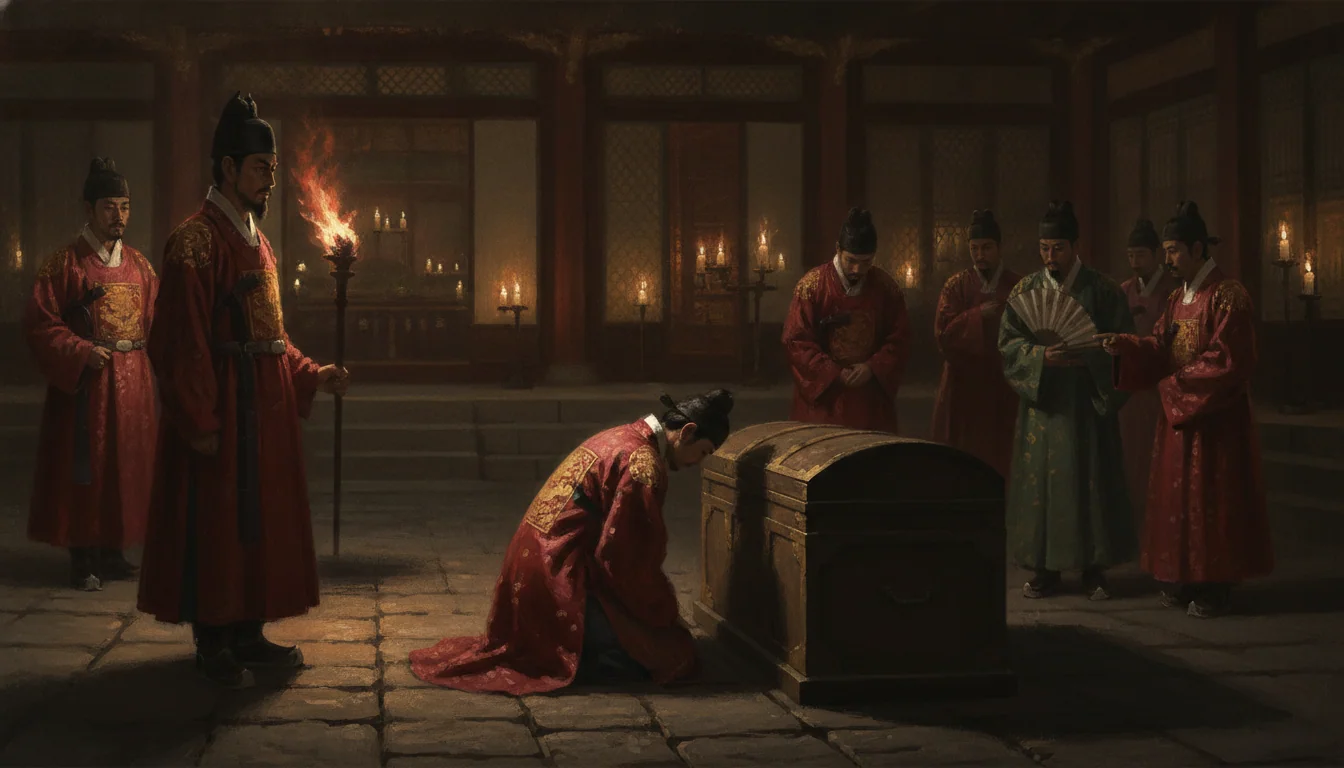
Wu Zetian and the Death of Her Infant Daughter: The Plot That Built an Empress
The story that Wu Zetian smothered her own baby to frame a rival is one of Chinese history's most debated royal scandals. Here is what the record actually supports.
Read Wikipedia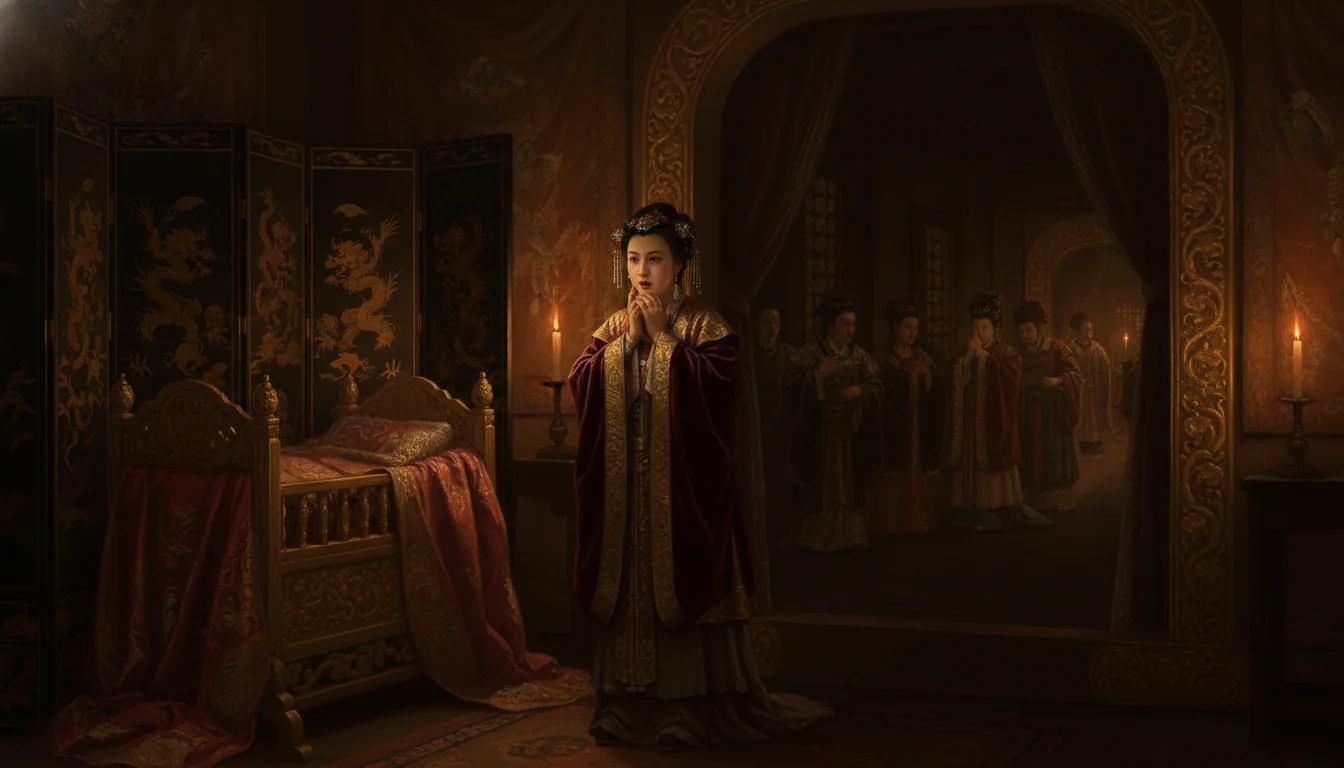
Of all the scandals that cling to Wu Zetian, the only woman to rule China as emperor in her own right, none is more disturbing, or more contested, than the accusation that she smothered her own infant daughter to frame a rival and clear her path to the throne. The story has been repeated for over a thousand years as established fact. It has also, for just as long, been the subject of pointed historical suspicion: was this a real crime, or the single most effective piece of character assassination in Chinese court history, aimed at a woman later chroniclers were determined to condemn?
The court and the stakes
The scandal unfolds inside the Tang dynasty court of the mid-600s, one of the most powerful and cosmopolitan empires on Earth at the time. Emperor Gaozong sat on the throne, a ruler later historians would describe as capable but often in poor health and, by many accounts, easily influenced by those closest to him. His empress, Wang, held the formal position of first wife, but had failed to produce a son, a vulnerability that mattered enormously in a court where succession ran through male heirs and a childless empress's position was never fully secure.
Into this court came Wu Zhao, a former junior consort of Gaozong's own father, Emperor Taizong. According to the traditional account, after Taizong's death Wu spent time in a Buddhist convent, as was customary for a former imperial consort without children, before Gaozong brought her back to the palace as his own concubine, reportedly at Empress Wang's own suggestion. Wang, according to this account, hoped Wu might serve as a counterweight to another consort, Xiao Shufei, who had become a serious rival for Gaozong's favor. If true, it was a serious miscalculation.
The players
Empress Wang held rank and ceremonial authority but lacked a son and, increasingly, the emperor's affection. Xiao Shufei held Gaozong's favor and had borne him children, making her Wang's most immediate rival at court. Wu Zhao, brought in as a supposed instrument of Wang's own strategy, quickly became something far more dangerous to both women: a favorite in her own right, ambitious, politically shrewd, and, according to later accounts, entirely willing to eliminate whoever stood between her and real power.
By the early 650s, Wu had given Gaozong at least one daughter and was pregnant again or had recently given birth to another child, depending on which account is followed. Her position at court was rising fast, and both Empress Wang and Consort Xiao reportedly recognized the threat too late.
The scandal
The traditional story, recorded in the official Tang histories compiled generations after the events, holds that Wu Zetian's infant daughter died suddenly in her cradle, and that Wu accused Empress Wang, who had visited the infant shortly before, of secretly murdering the child out of jealousy. According to this account, Gaozong, already inclined to favor Wu and increasingly convinced that Wang was both barren and cruel, accepted the accusation. Wang was stripped of her title not long afterward, and Wu was elevated to empress in her place.
What the traditional histories describe next reads less like a succession dispute and more like a purge. Wang and Xiao Shufei were imprisoned, and according to the official record, both were eventually put to death on Wu's orders, with later chroniclers adding grim, almost certainly embellished details about their final treatment designed to underscore Wu's cruelty for the reader.
The gossip vs the record
Here the scandal splits sharply into two competing histories, and separating them matters enormously.
The official narrative, as preserved in the Old Book of Tang, the New Book of Tang, and the later chronicle the Zizhi Tongjian, presents the infanticide as an established fact: Wu murdered her own child and framed an innocent empress to engineer her rise. This is the version that has been repeated in popular retellings for centuries, and it fits neatly into a broader narrative these same histories build around Wu Zetian as a ruthless, unnatural usurper of a throne that, in Confucian political theory, no woman was supposed to occupy in her own name.
The complicating problem, one many modern historians have pointed to directly, is timing and authorship. The infanticide story does not appear to have been recorded by contemporaries in the years immediately after it supposedly happened. It surfaces in official histories compiled generations later, under dynasties and court historians with a clear political and ideological stake in delegitimizing Wu Zetian's memory, since she remained, even a century after her death, the glaring exception to the entire Confucian theory of legitimate, male-only imperial rule. A historian writing under a later dynasty that had every institutional reason to portray a female emperor as a monster is not a neutral witness, and the absence of the story from the earliest surviving records is, to many scholars, a serious warning sign rather than a minor gap.
None of this proves the infanticide did not happen. Infant mortality in seventh century China was extremely high regardless of foul play, and a child's sudden death in a politically charged court could easily have been reinterpreted, retroactively and self-servingly, as murder by whichever faction benefited most from the accusation. What the documented record actually supports is narrower and more cautious than the popular version: an infant died, Empress Wang was blamed and destroyed, and Wu Zetian benefited enormously from the outcome. Whether Wu engineered the child's death, exploited a genuine tragedy, or was later blamed by hostile historians for a plot she did not actually orchestrate remains a live question that no surviving primary source resolves definitively.
The fallout
Whatever the truth of the infant's death, its political consequences were immediate and total. Empress Wang was formally deposed in 655, and Wu Zetian was installed in her place, marking the beginning of an extraordinary and, in Chinese history, unrepeated rise to power. As empress, Wu increasingly took direct control of state affairs, especially as Gaozong's health declined in his later years, ruling in practice long before she ruled in name.
After Gaozong's death, Wu maneuvered through the brief reigns of two of her own sons before formally deposing the second and declaring herself emperor in 690, founding a new dynasty she called Zhou. She governed for roughly fifteen years, a reign later historians would criticize harshly for its palace purges and secret police apparatus, while also crediting her, more grudgingly, with genuine administrative competence, expanded civil service examinations, and territorial stability. In 705, an aging Wu was pressured to abdicate in favor of her son, restoring the Tang dynasty, and she died later that same year.
The infant daughter's death, real tragedy or convenient fiction, sits at the very start of that improbable arc: the single most consequential scandal in a court full of them, and the one modern historians are still least able to fully untangle from the propaganda of the historians who came after her.
For another court scandal where documented fact and hostile chroniclers pull in opposite directions, see Rasputin and the Romanovs. For another woman who seized a throne through a decisive palace maneuver, see Catherine the Great's coup against her own husband.
Quick Answers
Common questions about this topic
Did Wu Zetian really kill her own baby daughter?
The traditional account, recorded in later official Tang histories, says she smothered her infant daughter and blamed Empress Wang for the murder. Many modern historians consider this account unreliable, arguing it reads more like a moral fable constructed by later court historians hostile to a female ruler than a documented event witnessed and recorded at the time.
Who was Empress Wang and what happened to her?
Empress Wang was Emperor Gaozong's first wife and empress before Wu Zetian's rise. She was accused of murdering the infant, stripped of her title, imprisoned, and ultimately executed on Wu's orders alongside a rival consort, Xiao Shufei, clearing the path for Wu to become empress.
Is the infanticide story historically reliable?
The story does not appear in the very earliest surviving records of the period and shows up in official histories compiled generations later, under dynasties that had political reasons to portray Wu Zetian negatively. This gap has led many historians to treat the tale with real skepticism rather than as settled fact.
Did Wu Zetian really become emperor of China?
Yes. In 690 she deposed her own son and declared herself the founding emperor of a new dynasty she called Zhou, becoming the only woman in Chinese history to rule in her own name as emperor rather than as empress dowager or regent.

Summon the Court
Chat with the monarchs and courtiers at the heart of the scandal.
Create your free account →No card required. Talk to anyone in history with 8 free credits a day. Some features require a paid plan.
Join the HistorIQly Club
Get smarter about the past.
Weekly stories, deep dives, and exclusive content straight to your inbox.