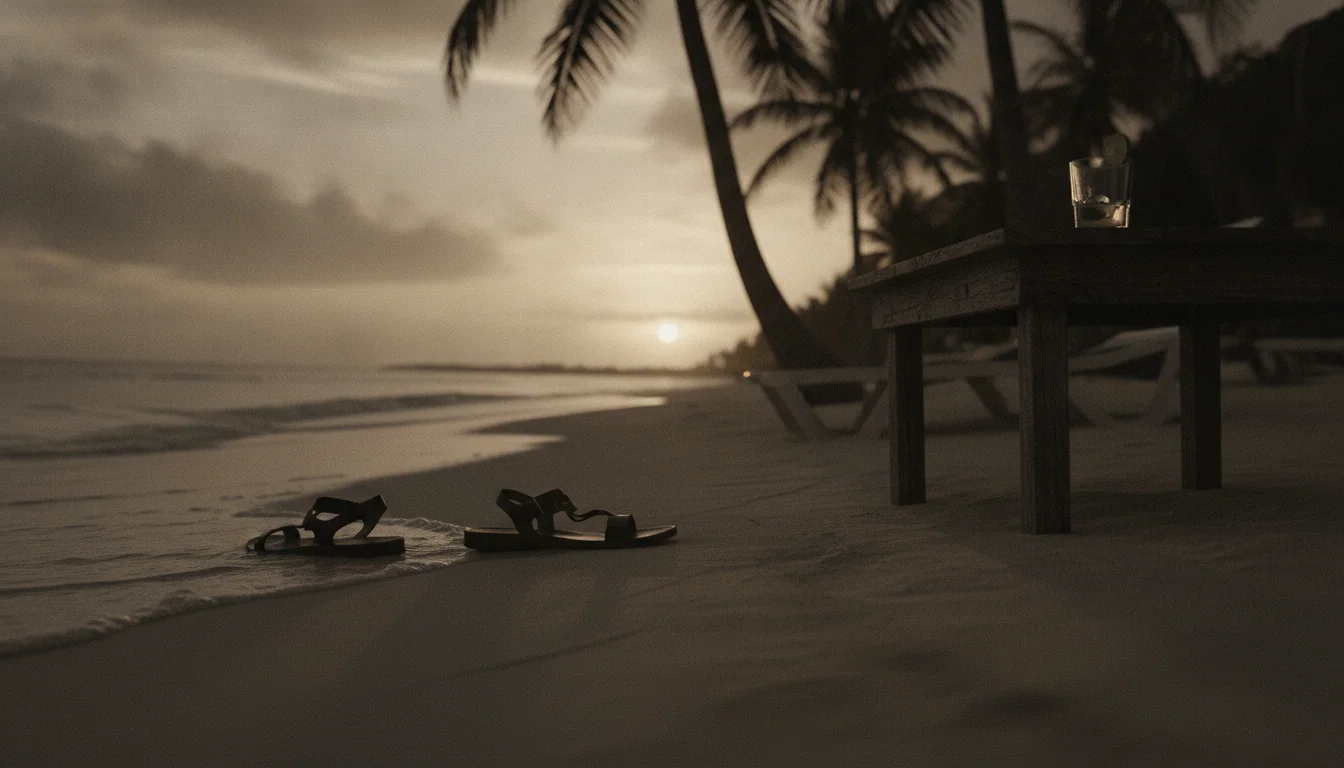
The Salish Sea Feet Mystery: Twenty Feet and No Good Explanation
The Salish Sea feet mystery: since 2007, more than twenty detached human feet have washed ashore in BC and Washington. Science explains how. The who is harder.
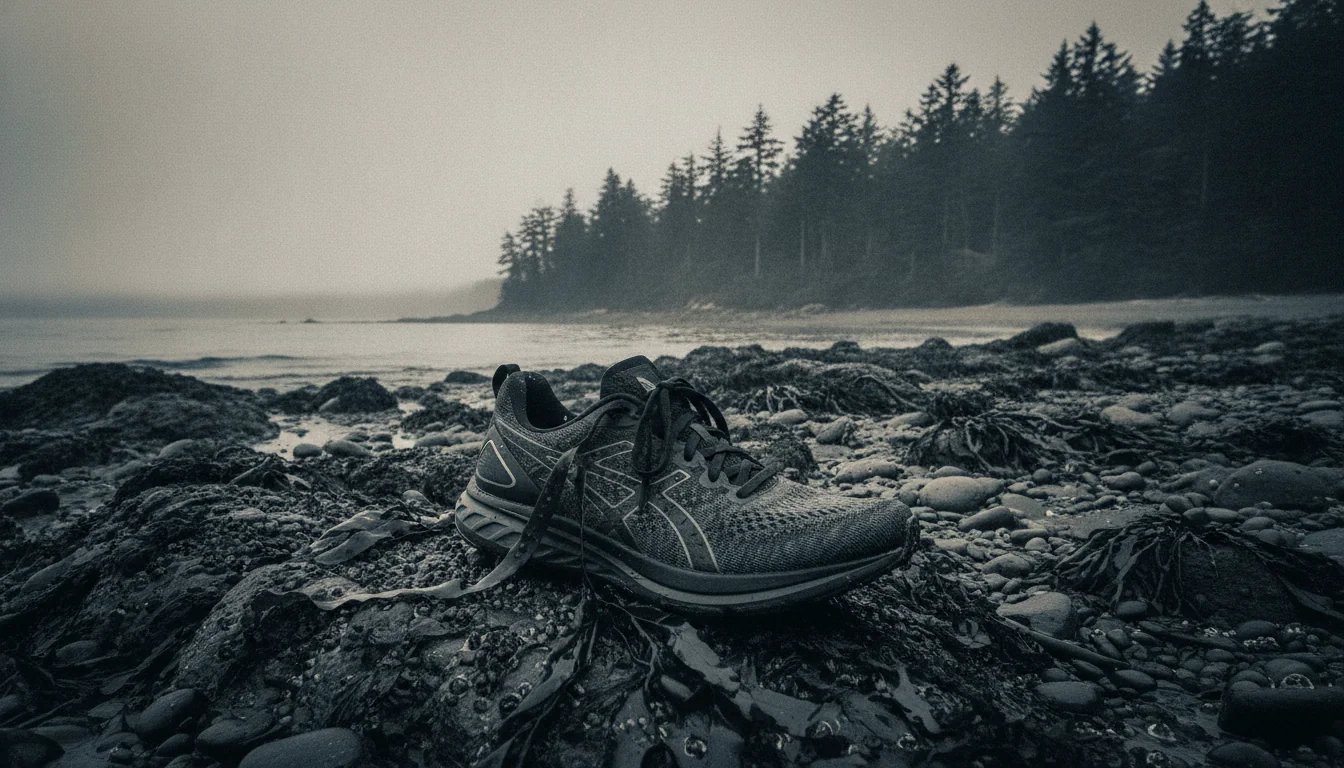
On August 20, 2007, a young girl walking a beach on Jedediah Island near Powell River, British Columbia, found a man's size 12 running shoe lying in the tidal zone. Inside the shoe was a human right foot, still wearing a sock. The find was referred to the BC Coroners Service, which noted the shoe's size and brand - an Adidas - as well as the absence of any other remains. No body. No crime scene. No obvious explanation.
Six days later, a second foot turned up on Gabriola Island, near Nanaimo. A left foot this time, in a Reebok. The two feet did not belong to the same person.
Over the following years, detached human feet in athletic shoes continued arriving on beaches and sandbars of the Salish Sea and Puget Sound, at a frequency and consistency that defied easy dismissal. By the time the count had climbed past twenty, the story had become one of the more peculiar recurring mysteries in recent North American history - a cold case that keeps reopening, on no predictable schedule, with no predictable owner.
The geography of the Salish Sea
Understanding why this happens where it does requires understanding the water.
The Salish Sea is the inland sea system enclosed by Vancouver Island and the British Columbia mainland on the Canadian side, and the San Juan Islands and Puget Sound in Washington State. It is fed by the Fraser River, one of the longest and most powerful rivers in western North America, whose discharge shapes the sea's current patterns. The result is a series of gyres and backwater eddies that concentrate floating debris in specific zones along the shore.
The region is also densely populated and crossed by ferry routes, fishing grounds, and urban coastlines. The water receives, each year, the remains of people who go missing from bridges, from boats, and from the shores of rivers that drain into it. Some of those missing persons are never recovered. Some of their remains drift for a very long time before arriving anywhere.
Why feet, and why athletic shoes
The biological explanation for the detachments took investigators a few years to arrive at but is now broadly accepted by forensic scientists and the BC Coroners Service.
When a human body sinks in cold water, decomposition proceeds slowly but steadily. Bacteria, marine organisms, and the physical forces of depth gradually sever soft tissue at its weakest points. The joints most vulnerable to this process are the ankles and wrists, where tendons and ligaments are numerous but comparatively thin. A foot will naturally separate from a leg before other extremities detach, because the ankle's soft tissue connections are more susceptible to the slow pull of decomposition in cold water.
What keeps the foot on the surface afterward is the shoe. Modern athletic shoes are sealed foam-soled constructions with significant air pockets. They are engineered to resist water penetration and maintain their shape under stress. A running shoe on a decomposing foot functions as a small personal float, keeping the foot buoyant while the rest of the body - unprotected by closed-cell foam - sinks or disperses.
This combination - common shoe types, plus the Salish Sea's gyre currents, plus a large population of missing persons in the watershed - explains why the phenomenon clusters in this region. Similar coastal water systems exist elsewhere, but without the same density of athletic footwear disposal, the same specific current patterns, and the same concentration of missing-persons cases in the surrounding watershed.
The cases
Of the feet confirmed to be human, several have been matched to missing persons through DNA analysis and physical description. The matches revealed drowning victims, people who had jumped from bridges, and individuals who disappeared under circumstances consistent with accident or suicide. None of the identified cases were linked to homicide.
The BC Coroners Service was careful from the beginning to explain that detachment of feet through decomposition is a natural process and does not imply violence. That explanation was accurate but difficult to communicate at a time when each new shoe discovery received national and international press coverage, often framed as though a killer was depositing evidence at intervals.
Several feet have remained unidentified. Their owners are missing persons who were either never reported or who entered the water in circumstances leaving no comparable DNA sample in any database. These files are open in the sense that identity is unknown, but there is no forensic basis to assume criminal involvement in the deaths.
At least one discovered foot turned out to be a deliberate hoax. In 2008, what appeared to be a human foot inside a shoe was reported at Campbell River. On examination, the BC Coroners Service determined the contents were animal, not human - a bone placed inside a shoe, apparently intended to generate media attention. This had the effect of complicating subsequent finds, since investigators were required to rule out staging before any other analysis could proceed.
What the science does and does not resolve
The biological explanation for detachment is sound and well-documented. The buoyancy explanation for distribution is supported by oceanographic modeling. The demographics of identified victims - adults who drowned in the Salish Sea watershed under non-criminal circumstances - are consistent with the known population of people who go missing near water in a densely populated coastal region.
What that leaves unresolved is the identity of the remaining unmatched feet. Some owners may be in missing persons databases without a DNA comparator on file. Others may have entered the water outside the immediate region and drifted in through currents from the open Pacific. A small number may represent individuals who were never reported missing at all.
The Coroners Service has maintained active files on unidentified remains. Each new match reduces the unsolved category. The pile is smaller than it once was but not empty.
Why the story persists
Part of the persistence is atmospheric. A detached foot in a running shoe is one of the more unsettling things a beach walk can produce, and the image carries a specific kind of weight that a body in ordinary circumstances does not. The shoe is both domestic and wrong - a recognizable object in a deeply unrecognizable context.
Part of it is that the science, while correct, is counterintuitive. "Shoes float and currents carry things" does not satisfy the same narrative demand as "a killer is operating in the Salish Sea." The tabloid version of the story spread far more widely than the coroner's measured press releases, and the corrections never fully caught up. The gap between official explanation and public narrative appears across many unsolved cases: the Flannan Isles lighthouse disappearances show how logic eventually prevailed over more dramatic theories, while the Somerton Man case demonstrates how physical evidence can accumulate for decades without resolving the central mystery.
And part of it is simply that a few feet remain without names. Cold cases are not fully cold until the last open question is answered, and the Salish Sea will produce occasional feet as long as people continue to drown in its watershed and not be found. That condition has not changed.
The gap the science cannot fill
What forensic explanation does not address is who these people were before the sea took them. The matched cases represent real individuals - people whose families reported them missing, whose photographs exist, whose lives intersected with enough others that someone filed a report. The unmatched feet represent a different category: people whose disappearance left so small a mark that no file bears their name.
The Salish Sea is a working body of water in a heavily populated region. The Fraser River drains a watershed extending hundreds of miles inland. The currents that carry beach debris toward Jedediah Island or Gabriola Island are the same currents that carry anything else that enters the water in the wrong place.
The science tells us why a foot in a shoe floats. It tells us how long it drifts before landing. It can match DNA to a name when a name exists to match. What it cannot do is explain the lives that ended in the water, or why those specific people ended there, or what the interval between the loss and the landing looked like for the families who were waiting.
That is the space where a cold case lives. The ocean returns what it can. The record remains incomplete.
Quick Answers
Common questions about this topic
Why do human feet keep washing up in the Salish Sea?
The explanation is biological, not criminal. When a human body decomposes in water, ligaments and tendons weaken and detach at the ankle joint. Modern athletic shoes are sealed, buoyant, and resistant to decomposition, so a foot inside a running shoe will float free and drift for months or years. The Salish Sea's geography, with its gyre currents and traffic from the Fraser River, funnels floating debris toward its beaches.
How many feet have been found in the Salish Sea?
By the mid-2020s, coroners and police had recorded more than twenty separate feet washed ashore along the British Columbia coast and Puget Sound in Washington. The first was discovered in August 2007. Several have been matched to missing persons through DNA. A number remain unidentified.
Were the Salish Sea feet connected to any crimes?
Most feet have been linked to people who went missing through suicide, accident, or drowning - not homicide. The BC Coroners Service confirmed a natural decomposition explanation for the detachment. However, a few feet remain unidentified, and at least one find turned out to be a staged hoax using an animal bone placed in a shoe.
Have any Salish Sea feet been identified?
Several have. DNA testing and dental records identified victims including individuals already listed as missing persons, most of them drowning victims or people who died near water. The matches confirmed natural causes in each resolved case, though a number of feet remain without a name attached.

Want to Interrogate the Suspects?
Chat with historical figures and uncover the truth behind history's greatest mysteries.
Start Your InvestigationJoin the HistorIQly Club
Get smarter about the past.
Weekly stories, deep dives, and exclusive content straight to your inbox.