The Jennifer Fairgate Mystery: Oslo's Unidentified Hotel Room Death
The Jennifer Fairgate mystery began in 1995, when a woman using that name died of a gunshot wound in an Oslo hotel room. Thirty years later, nobody knows who she was.
Read Wikipedia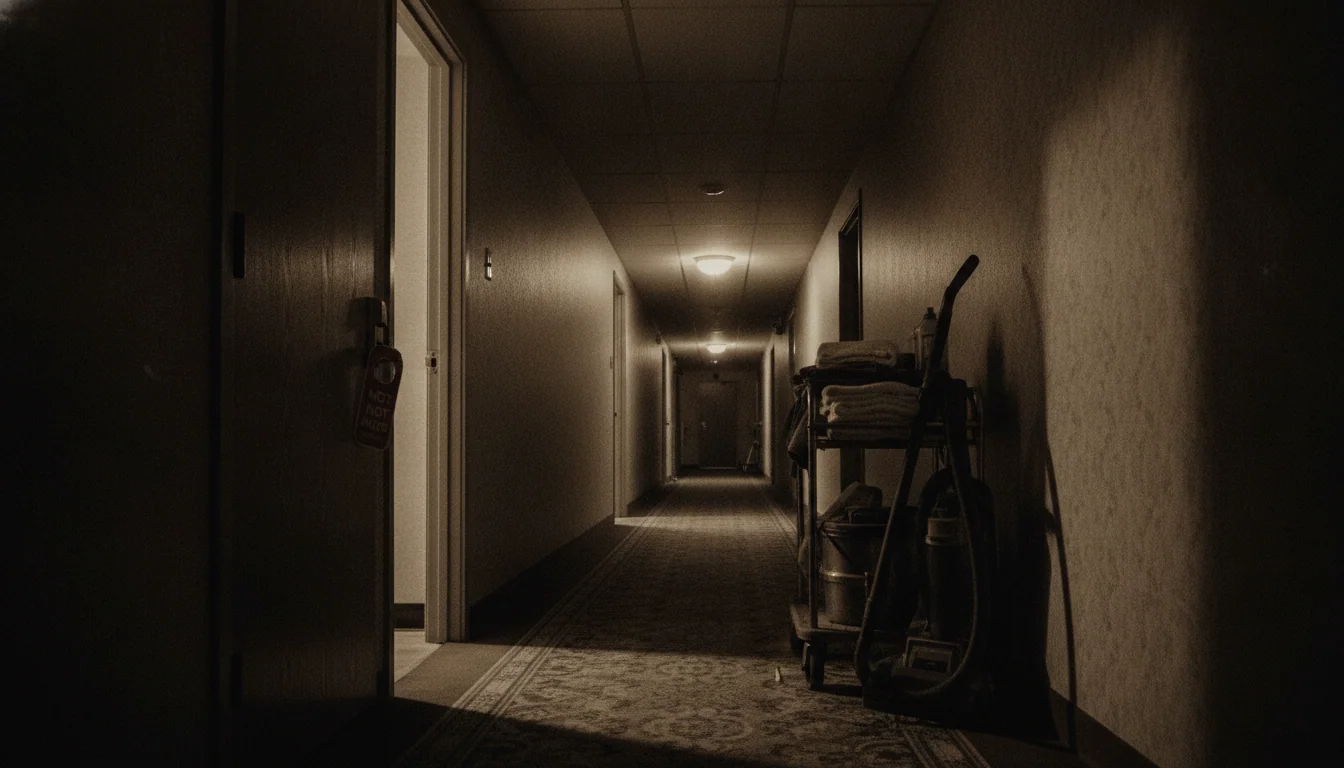
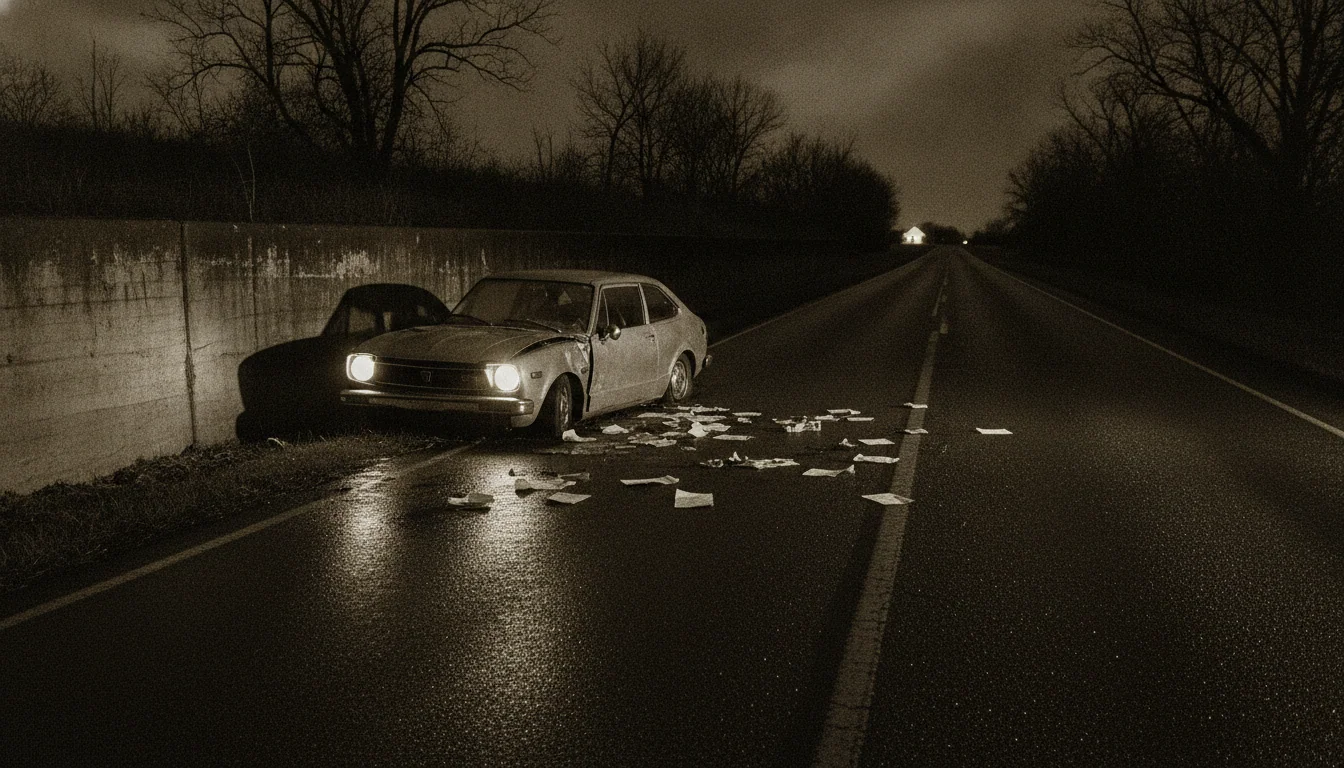
A hotel guest who does not want the room cleaned is not usually a mystery. A hotel guest who pays cash, gives a name that traces to nobody, and is found three days later with a bullet in her head and every clothing label cut out with a razor is a different matter entirely. Norway has never closed the file on the woman who died calling herself Jennifer Fairgate, and the Jennifer Fairgate mystery remains one of Scandinavia's most persistent unidentified-death cases.
Room service, declined
In late June 1995, a woman in her early thirties checked into a large hotel near Oslo's central station, the kind of business hotel that sees hundreds of anonymous guests a week. She gave her name as Jennifer Fairgate, sometimes recorded in police paperwork as Jennifer Fergate, and listed an address in Belgium that turned out not to exist. She paid for her stay in cash, in a mix of currencies, and told staff repeatedly that she did not want the room serviced.
For three days that request was honored, which is precisely why nobody checked on her right away. When a housekeeper finally entered the room, the woman was dead, lying on the bed with a handgun nearby and a gunshot wound to the head. A brief note was found, its contents in a language investigators had trouble placing, and its meaning never conclusively resolved.
What the crime scene did not answer
Norwegian police approached the case as a likely suicide, and the presence of the weapon in the room supported that reading. But almost everything else about the scene resisted a tidy explanation.
Every tag had been removed from her clothing. Not just brand labels but washing instructions, size tags, and anything else that might identify where an item had been bought. Investigators found this pattern deliberate and unusually thorough, closer to what one would expect from someone erasing a paper trail than from an ordinary traveler.
Cash in several different currencies was found in the room, along with cigarette packs from more than one country, hinting at recent travel across borders. Her fingerprints did not match any record on file in Norway or in the international databases checked at the time. Dental work found during the autopsy was consistent with practices used in several different parts of Europe, which investigators read as inconclusive rather than helpful, since it did not point cleanly to any one country.
Some investigators who reviewed the case later raised doubts about the suicide finding itself, pointing to the trajectory of the wound and the positioning of the body as details that, in their view, deserved more scrutiny than they got in 1995. Norwegian police have never reclassified the death as a homicide, but they have also never closed the file with full confidence in the original ruling.
The autopsy and the questions it raised
The initial autopsy recorded a single gunshot wound as the cause of death, but subsequent reviewers who examined the surviving case materials have noted inconsistencies that a straightforward suicide does not fully explain. The angle of entry, the distance from which the weapon appeared to have been fired, and the position in which the body was found have all drawn comment from forensic pathologists who later looked at the file, some of whom have suggested the physical evidence is at least equally consistent with someone else pulling the trigger. Norwegian authorities have maintained that the original findings were reasonable given what was known at the time, while acknowledging that a case this old, with evidence collected under 1995 standards, will always carry some irreducible uncertainty.
No accelerant, struggle, or forced-entry evidence was recovered from the room, which is part of why the suicide finding was never overturned. But the absence of a struggle is also consistent with a killer she knew or did not fear, and investigators have been careful for decades not to rule that possibility out entirely, even while treating it as less likely than the official conclusion.
Why the case resurfaced
The Fairgate case went largely unremarked outside Norway for close to two decades. That changed as international true-crime audiences, drawn first to the Isdal Woman case, discovered the Oslo hotel death as a kind of companion mystery: another well-dressed, well-funded woman with no verifiable identity, found dead under circumstances that official Norway had never fully resolved.
Documentary coverage and podcast attention in the 2010s pushed Norwegian police to release more detail than they had previously made public, including facial reconstruction images and a fuller account of the isotope testing. That publicity has generated tips over the years, none of which investigators have described as leading anywhere conclusive. The gap between renewed public interest and an actual identification has itself become part of the story: a case that receives steady attention and still yields nothing solid.
A search area, not a name
For years the case sat dormant, filed as a Jane Doe with no leads and no family inquiries. Norway does not have a large tradition of unidentified-persons databases stretching back that far, and international cooperation on such cases was far less developed in the mid-1990s than it is now.
Renewed interest came later, driven partly by journalists and true-crime researchers who noticed parallels between the Fairgate case and other anonymized deaths from the same decade, and partly by advances in forensic science. Isotope analysis of hair and dental enamel, a technique that can estimate where a person spent their childhood based on the water and food they consumed, was eventually applied to her remains. The results suggested she likely grew up somewhere in continental Europe, with some analysts favoring the general region where France, Germany, and Belgium meet, consistent with the false Belgian address she had given at check-in.
That narrowed the search from "unknown" to "somewhere in a few hundred kilometers of central Europe," which is progress but not resolution. No missing-persons report from the region has ever been confirmed as a match. Facial reconstructions based on her skull have been circulated publicly in the hope that someone, somewhere, would recognize her. So far, nobody credible has come forward.
The theories, and why none of them stick
The case has attracted the theories that any well-publicized unidentified death eventually attracts. Because the death occurred in 1995, shortly after the end of the Yugoslav wars and while parts of Europe were still adjusting to the post-Cold War order, some researchers have speculated about an intelligence connection, an asset or courier who needed to disappear cleanly. Norwegian police have never confirmed any such link, and no declassified record has surfaced to support it.
Others have proposed a more mundane, if still tragic, explanation: a woman fleeing an abusive relationship or a legal problem under a false name, who took her own life rather than be found. This fits the suicide ruling but does not explain why she would methodically strip every label from her clothes, an act of preparation that suggests planning well beyond a spontaneous decision.
A third line of speculation notes surface similarities to Norway's earlier unidentified-woman case, the so-called Isdal Woman, found burned in 1970 near Bergen with similarly obscured identifying details. Investigators have generally treated the resemblance as coincidental rather than connected, since the two deaths are separated by a quarter century and share no direct evidentiary link, but the comparison keeps recurring in public discussion of both cases. Scandinavia has produced more than one such puzzle over the decades; the Atlas Vampire case in Stockholm, an unidentified woman found dead under equally strange circumstances, follows a similar pattern of anonymity that was never fully resolved.
Where the case stands
As of the most recent public updates, Norwegian police still list the woman as unidentified. Her remains are buried in Oslo under a marker that does not carry her real name, because nobody has ever proven what that name was. The case file remains technically open, in the sense that any credible new lead, a DNA match, a family inquiry, a confirmed identification, would be pursued.
What keeps the case alive online and in cold-case communities is less the violence of her death than the completeness of her erasure. Most unidentified-person cases involve gaps in the record: a body found without paperwork, a life that simply did not leave enough of a trail. This one involves the deliberate removal of a trail that clearly existed. Disputed identities are not unique to modern cold cases either; the decades-long argument over the true fate of Anastasia Romanov shows how long a question of identity can persist before science settles it, if it ever does. Someone worked carefully to make sure that if she was found, she could not be traced. Thirty years on, that effort is still working.
Quick Answers
Common questions about this topic
Who was Jennifer Fairgate?
Jennifer Fairgate is the name a woman used when she checked into an Oslo hotel in June 1995. Police believe it was a false identity, and despite decades of investigation, forensic anthropology, and isotope testing, her real name and nationality have never been established.
How did she die?
She was found with a gunshot wound to the head and a handgun near her body. Norwegian police initially treated the death as a probable suicide, but unusual details in the crime scene, including cut-out clothing labels and a possible second wound, have kept the ruling contested among investigators and researchers ever since.
Why were the labels cut out of her clothes?
Every identifying tag, brand label, and size marking had reportedly been removed from her clothing before her death. Investigators have never settled on why, though the same pattern of deliberate anonymization appears in a handful of other unidentified-decedent cases from the same era.
Has DNA testing solved the case?
Not yet. Isotope analysis of her hair and teeth in the 2010s suggested she may have spent her early years in continental Europe, possibly near the French-German-Belgian border region, but this narrowed a search area rather than produced a match, and no relative has ever come forward.

Want to Interrogate the Suspects?
Chat with historical figures and uncover the truth behind history's greatest mysteries.
Create your free account →No card required. Some figures and features require a paid plan.
Join the HistorIQly Club
Get smarter about the past.
Weekly stories, deep dives, and exclusive content straight to your inbox.