A Time Traveler's Guide to Sumerian Uruk
Your practical guide to visiting Uruk in 3000 BCE: how to dress, eat, and survive the world's first great city without arousing suspicion among Sumerians.
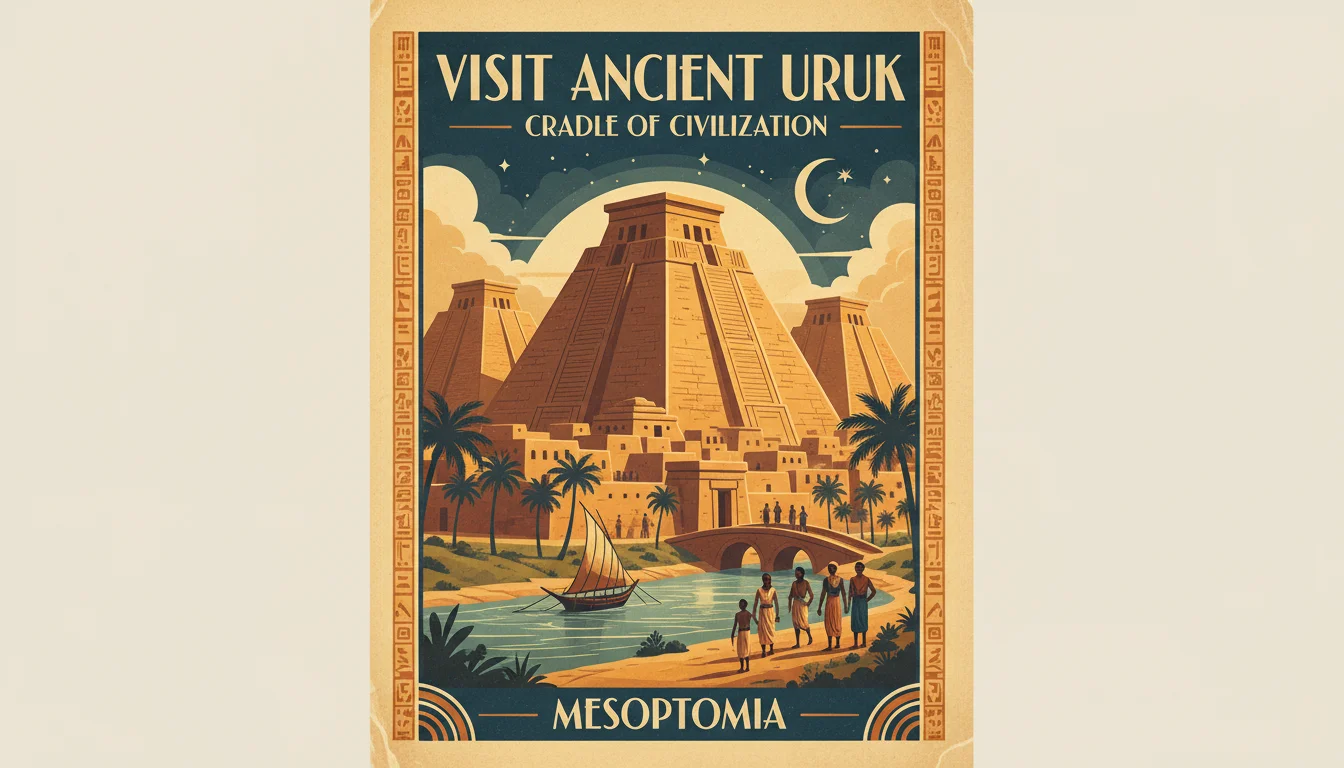
If your time machine has only one stop in the ancient world, make it Uruk. Around 3000 BCE, this booming city in southern Mesopotamia is one of humanity's biggest experiments in urban life: crowded streets, temple complexes, warehouses, workshops, and enough reed boats, sheep, and clay tablets to convince you that civilization has truly begun.
It is also loud, hot, muddy, hierarchical, and absolutely not designed for modern tourists. So before you step through the portal, here is your practical guide to surviving, blending in, and enjoying a visit to Sumerian Uruk.
First, know what kind of place you're entering
Uruk is not a quaint village with a few mud-brick huts. It is a serious city, surrounded by fields and canals, fed by irrigation, trade, and organized labor. People here are used to farmers, traders, craftspeople, priests, officials, and workers moving through busy sacred and administrative spaces. That helps you, because a stranger is not impossible. But a strange stranger is a problem.
Your safest cover story is simple: you are a traveler attached to a merchant household from a distant settlement. Keep details vague. The farther away your home is, the less anyone can verify. Do not claim to be important. Important people attract questions.
Dress like you belong, or at least like you tried
Leave the synthetic fabrics, zippers, logos, and running shoes in the machine. Uruk fashion leans practical: wool garments, wrapped skirts, shawls, belts, and sandals when the ground allows for them. Linen exists but wool is safer for blending in socially. Neutral earth tones win. Bright modern dyes will make you look enchanted.
Your best disguise kit includes:
- a rough woven wrap or kilt-style lower garment
- a simple draped shoulder cloth
- leather or fiber sandals
- a plain cord belt
- a reed basket or cloth bundle for carrying supplies
Do not over-accessorize. A fake noble look will collapse the moment someone important notices you. Aim for respectable, dusty, and forgettable.
Prepare your body for the city
Uruk is warm, dusty, insect-rich, and full of unfamiliar microbes. Bring a hidden emergency kit if your time travel ethics allow it: water purification tablets, oral rehydration salts, a compact first-aid kit, and something for stomach trouble. If your mission rules forbid imported medicine, then your strategy is prevention.
Drink cautiously. Flowing canal water may look romantic in the sunset, but it is not your friend. Freshly drawn water from a reliable household or beer-like fermented drink is safer than random standing water. Eat hot food when possible. Bread, porridge, dates, onions, and cooked stews are much safer than anything raw and rinsed in canal water.
And yes, you will smell things. Animals, humans, fish, mud, smoke, and industry all mingle into a powerful urban perfume. Do not react visibly. Nothing says "time traveler" like gagging at the birthplace of civilization.
Learn three survival behaviors immediately
1. Respect temple space
The great temple precincts dominate the city. They are economic centers as much as religious ones, and they are absolutely not places to freelance your opinions about theology. Be quiet, observant, and deferential. If everyone else pauses, you pause. If everyone gives way, you give way.
2. Watch where you step
Uruk streets can shift from packed earth to mud to refuse very quickly. Channels, animals, carts, and workshop debris create an obstacle course. Step carefully and do not wander at night unless you enjoy twisting an ankle in history.
3. Never act shocked by bureaucracy
This is early urban civilization, which means records matter. Goods are counted, stored, sealed, and tracked. If someone with a tablet or seal seems interested in your business, answer briefly and let your imaginary merchant patron absorb the prestige. Your goal is to be administratively boring.
How to talk to people without causing trouble
You probably do not speak Sumerian well enough to survive pure improvisation. Memorize a handful of practical phrases, practice humble body language, and rely on trade logic. Pointing at goods, offering thanks, and looking mildly confused but polite will get you farther than trying to deliver a perfect speech.
A few universal rules help:
- smile lightly, do not grin like a maniac
- avoid intense eye contact with high-status people
- gesture openly, not aggressively
- let silences happen
- do not touch people casually
If you make a mistake, act apologetic, not clever. Ancient cities are full of people who know their local world better than you do.
What to eat, what to avoid
Good news: Uruk can feed you. Expect bread, barley porridge, beer, dates, legumes, onions, garlic, fish, and occasional meat depending on status and circumstance. Dates are the time traveler's best friend, portable, sweet, and unlikely to start an incident.
Use caution with:
- uncooked foods
- questionable dairy left in the heat
- mystery river snacks
- anything offered in a context you do not understand socially
When in doubt, copy the most ordinary-looking person nearby.
Money, gifts, and not getting robbed
Coinage does not exist yet, so stop reaching for a wallet. Value moves through goods, weighed metal, labor obligations, and institutional distribution. Small tradeable items may help, but be careful. Anything too advanced or too finely made could draw dangerous attention.
Your safest approach is to carry plausible barter goods that would not rewrite history if lost: plain wool cloth, beads of believable craftsmanship, or simple tools. Keep them hidden and use them sparingly. Flashing wealth in a dense ancient city is just as foolish as it is now.
Also, secure your sleeping arrangements early. A reputable household, merchant contact, or work-linked lodging beats improvising after dark. Civilization begins with cities, and cities begin with opportunistic thieves.
What not to do under any circumstances
Let me save you from the classic mistakes.
Do not:
- announce that you are from the future
- introduce steel gadgets to impress locals
- insult a god, priest, ruler, or accountant
- wander into storage areas and start touching things
- promise medical miracles you cannot sustain
- mention germs, democracy, or cryptocurrency
Most importantly, do not try to "fix" history in an afternoon. Uruk does not need your productivity advice. It already invented large-scale administration before you finished charging your phone.
The experience you should not miss
If you survive the logistics, Uruk is astonishing. Climb to a high point at dawn if you can do so without offending anyone. Watch the light spread over mud-brick walls, courtyards, temple terraces, and canals. Listen to animals, workers, traders, and priests bring the city awake. You are watching humanity learn how to live together at scale, messily and brilliantly.
Visit the workshops. Watch potters, weavers, and metalworkers. Observe the tablets and seals that turn memory into administration. Stand near the temple precinct and remember that religion, economy, and politics are still one enormous machine. Uruk feels alien, but it is also recognizable. Crowded, ambitious, unequal, creative, and full of systems, it is a city in the deepest sense.
So pack lightly, dress humbly, drink carefully, and keep your cover story consistent. Uruk in 3000 BCE is not easy, but it is worth it. Just try not to get assigned to a barley inventory team unless you are planning a much longer stay.
If ancient Mesopotamia interests you, our guide to visiting ancient Babylon in 1750 BC covers the city that rose after Uruk's peak. For an entirely different ancient world, see our time traveler's guide to ancient Thebes in 1250 BC.

Need Advice from Someone Who Lived There?
Get firsthand accounts from people who actually lived through these moments in history.
Ask Them YourselfJoin the HistorIQly Club
Get smarter about the past.
Weekly stories, deep dives, and exclusive content straight to your inbox.