Victorian Arsenic Cosmetics: How Wafers and Belladonna Drops Poisoned Women for Beauty
Victorian arsenic cosmetics promised pale, translucent skin and wide, dark eyes. Here is what wafers and belladonna drops actually did, and who got blamed.
Read Wikipedia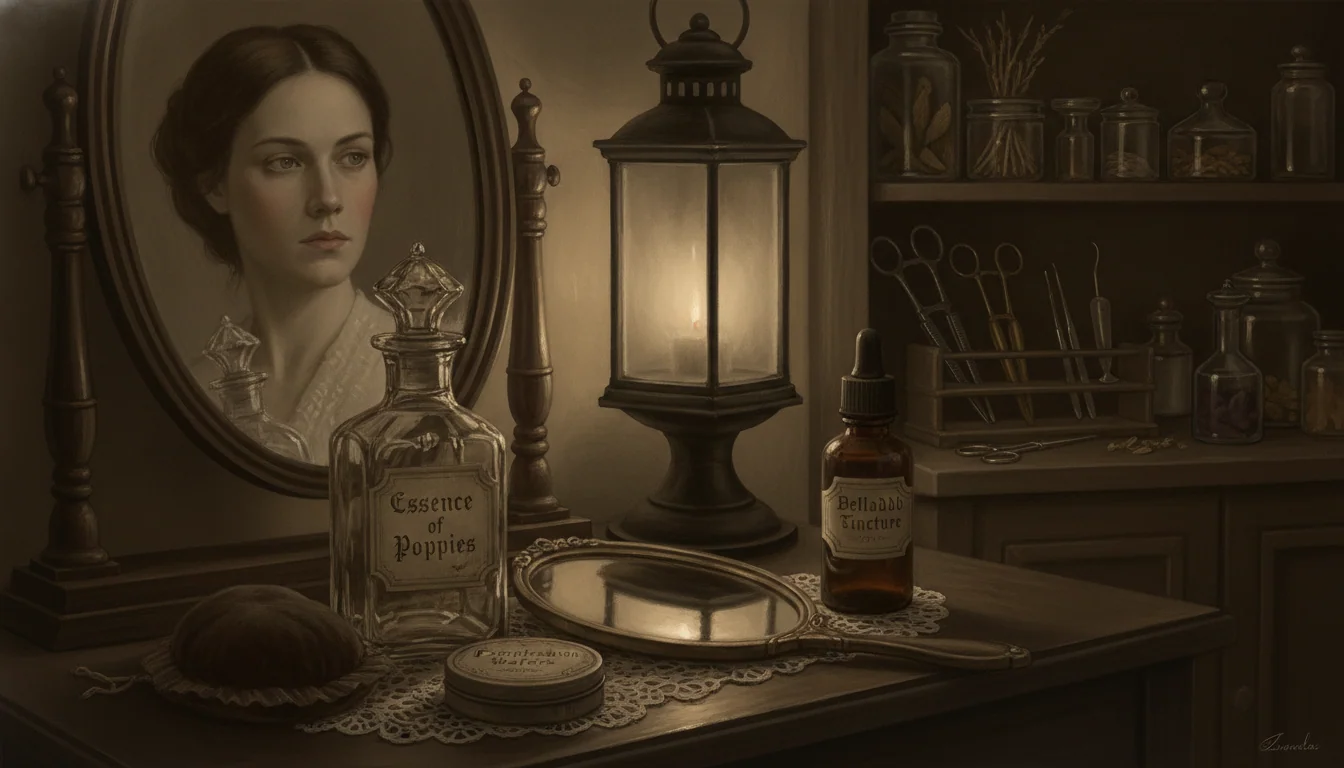
The Victorian ideal of feminine beauty prized skin so pale it looked faintly translucent, eyes so large and dark they seemed almost feverish, and a complexion with just enough color to suggest delicate health rather than the ruddiness of manual labor. Achieving that look, for a remarkable number of nineteenth-century women, meant deliberately consuming or applying substances that modern medicine classifies as acute poisons. Victorian arsenic cosmetics like arsenic wafers and belladonna drops were not fringe remedies sold in back-alley shops. They were mainstream products, openly advertised and widely trusted.
The arrival: poison as a beauty product
Arsenic had a long history as a medical treatment before it became a cosmetic, prescribed in small, carefully measured doses for conditions ranging from skin disorders to malaria, under the theory, common to much of pre-modern medicine, that certain poisons in tiny quantities could stimulate rather than harm the body, the same dose-driven logic that underpinned practices like bloodletting and humoral medicine. By the mid-nineteenth century that medical familiarity had migrated into the beauty market. Products marketed as complexion wafers, arsenic complexion soap, and arsenical beauty pills promised the pale, clear skin fashion demanded, sold in pharmacies and by mail order with little more regulatory oversight than any other patent remedy of the era.
Belladonna followed a similar path from medicine cabinet to vanity table. Physicians had used extracts of the plant, whose name itself means beautiful woman in Italian, to treat various ailments for centuries, and its pupil-dilating property had long been recognized. Fashionable women, particularly in earlier decades and continuing into the Victorian period, applied diluted belladonna drops directly to the eyes to achieve the wide, dark-pupiled look considered romantically alluring in portraiture and in person.
What people believed
The prevailing theory behind arsenic's cosmetic use held that the poison, in small and supposedly manageable doses, dilated the tiny blood vessels beneath the skin's surface, producing a delicate flush visible through translucent, pale skin, exactly the combination Victorian beauty standards demanded. Some users also believed, correctly in a narrow sense, that arsenic could suppress appetite and thin the body, reinforcing the fashionable silhouette of the period.
Belladonna's appeal rested on a straightforwardly cosmetic logic: large, dark pupils were read as a marker of youth, vitality, and emotional receptiveness, qualities the fashion of the day prized in a woman's eyes regardless of the physiological cost of achieving them artificially. Neither substance's underlying danger was treated as disqualifying, since the prevailing wisdom held that dose, not the substance itself, determined whether a poison healed or harmed, a genuinely ancient medical principle that the cosmetic trade exploited without much caution about how easily a "small" dose could creep upward with repeated use.
The Styrian arsenic eaters
Victorian scientists and physicians who studied arsenic's cosmetic use often pointed to a documented population in the Styria region of Austria, popularly known as the arsenic eaters, who reportedly consumed gradually increasing doses of arsenic for its supposed benefits to complexion, breathing, and stamina, particularly among laborers working at high altitude. Nineteenth-century medical journals treated these accounts with genuine scientific interest, since the apparent ability of long-term users to tolerate doses that would be lethal to an untrained person suggested the body could build a real tolerance to the poison over time, a phenomenon later generations of toxicologists would study more rigorously.
British and American cosmetic marketers seized on the Styrian reports as a kind of folk-scientific endorsement, citing them in advertising copy to reassure buyers that arsenic, taken correctly, was a known and manageable practice rather than a reckless experiment. Modern historians treat the Styrian accounts as likely exaggerated in places and difficult to verify fully by modern standards, but they were influential enough at the time to shape how ordinary Victorian consumers understood the risk they were taking.
What women actually experienced
Regular arsenic consumption, even at doses marketed as safe, produced a documented range of symptoms among users: gastrointestinal distress, hair thinning, skin lesions, and, with sustained use, the kind of chronic poisoning that could damage the liver, nervous system, and cardiovascular system. Ironically, some of arsenic's visible short-term effects mimicked the very pallor it was meant to produce, since a poisoned complexion can look strikingly, deceptively delicate before more serious symptoms set in.
Belladonna use carried its own hazards beyond the obvious blurred vision and extreme light sensitivity that came with dilated pupils. Overuse could produce genuine atropine poisoning, with symptoms including rapid heartbeat, confusion, and in severe cases collapse, since the margin between a cosmetically dilating dose and a genuinely toxic one was narrow and poorly understood by the general public using it at home.
Beyond cosmetics applied directly to the body, arsenic-based dyes, particularly a vivid green pigment known as Scheele's Green and its successor Paris Green, were used extensively in Victorian fashion, from ballgowns to artificial flowers worn in the hair, exposing wearers to arsenic through skin contact and inhalation of dust shed from the fabric itself. The same pigment, used in wallpaper, poisoned households through dust and, according to some period medical theories, through toxic gases released when the wallpaper grew damp, though the exact mechanism was debated even at the time.
Contemporary satirical magazines occasionally mocked the arsenic beauty trade, running cartoons and verses about women risking their lives for a fashionable pallor, but this mockery rarely translated into serious public health warnings taken up by the medical establishment or by government regulators, since the products remained legal, profitable, and broadly socially accepted for decades after their dangers had been documented in medical literature.
Who got blamed
When poisoning cases did surface, and medical journals of the period document a steady trickle of them, blame rarely landed cleanly on the manufacturers or the products themselves. Physicians and the press often attributed a poisoned woman's symptoms to weak nerves, hysteria, an unrelated underlying illness, or simple bad constitution, a pattern of scapegoating the victim rather than the substance that recurs throughout the history of Victorian-era product poisoning more broadly. Manufacturers, for their part, had every commercial incentive to insist their wafers and drops were harmless when used as directed, and litigation against cosmetic makers over poisoning was rare and rarely successful.
Working-class women employed in the manufacture of arsenic-dyed textiles and artificial flowers bore a different and often more severe version of this blame, since their occupational exposure was frequently dismissed by employers as an unavoidable hazard of an unskilled trade rather than a preventable danger the employer had a responsibility to address, a pattern of employer denial that would recur decades later in the case of the radium girls dial painters.
What finally worked
Change came slowly and unevenly, driven by a combination of accumulating medical case literature documenting the connection between these products and chronic poisoning, investigative journalism that named specific manufacturers and products by the later nineteenth century, and, eventually, regulatory action in Britain and the United States that restricted the open sale of arsenic and required clearer labeling of poisonous substances. Public fashion also shifted over time, as later Victorian and Edwardian beauty ideals moved gradually away from the most extreme pallor toward a slightly healthier-looking complexion, reducing some of the market demand that had sustained the arsenic beauty trade.
By the early twentieth century, arsenic and belladonna cosmetics had largely receded from mainstream use, replaced by newer, still sometimes hazardous but generally less acutely toxic products. The underlying pattern, though, proved durable: a beauty standard demanding an unnatural look, a product promising to deliver it quickly, and a public willing to absorb real physical risk in pursuit of a fashionable face.
Quick Answers
Common questions about this topic
Did Victorian women really eat arsenic for their skin?
Yes. Small doses of arsenic, sold openly as complexion wafers or drops, were marketed and consumed by women seeking the pale, translucent skin fashionable through much of the nineteenth century, on the theory that arsenic dilated blood vessels near the skin's surface and produced a becoming blush and pallor together.
What did belladonna drops do to the eyes?
Belladonna, derived from deadly nightshade, contains atropine, which dilates the pupils dramatically when applied as eye drops. Victorian and earlier fashionable women used it to achieve large, dark-looking eyes considered alluring, at the cost of blurred vision, light sensitivity, and, with repeated use, genuine risk of poisoning.
Who got blamed for arsenic poisoning deaths in this period?
Manufacturers and retailers largely avoided blame by marketing the products as harmless beauty aids, while poisoning deaths from arsenic-dyed clothing and wallpaper were frequently attributed to the victims' own weak constitutions or unrelated illness, delaying public recognition that the products themselves were the cause.
What finally ended the use of arsenic in cosmetics and clothing?
A combination of mounting medical case reports, investigative journalism exposing specific manufacturers, and eventually British and American regulation restricting arsenic sale and labeling in the late nineteenth and early twentieth centuries gradually pushed the most dangerous products out of the market.

Consult the Physicians
Chat with the healers and survivors who lived through history's outbreaks.
Create your free account →No card required. Some figures and features require a paid plan.
Join the HistorIQly Club
Get smarter about the past.
Weekly stories, deep dives, and exclusive content straight to your inbox.