Time Traveler's Guide to Pergamon, 180 BC
A practical guide to Pergamon in 180 BC at the height of the Attalid kingdom: proper cloaks, temple etiquette, suspicious wine, and a very steep acropolis.
Read Wikipedia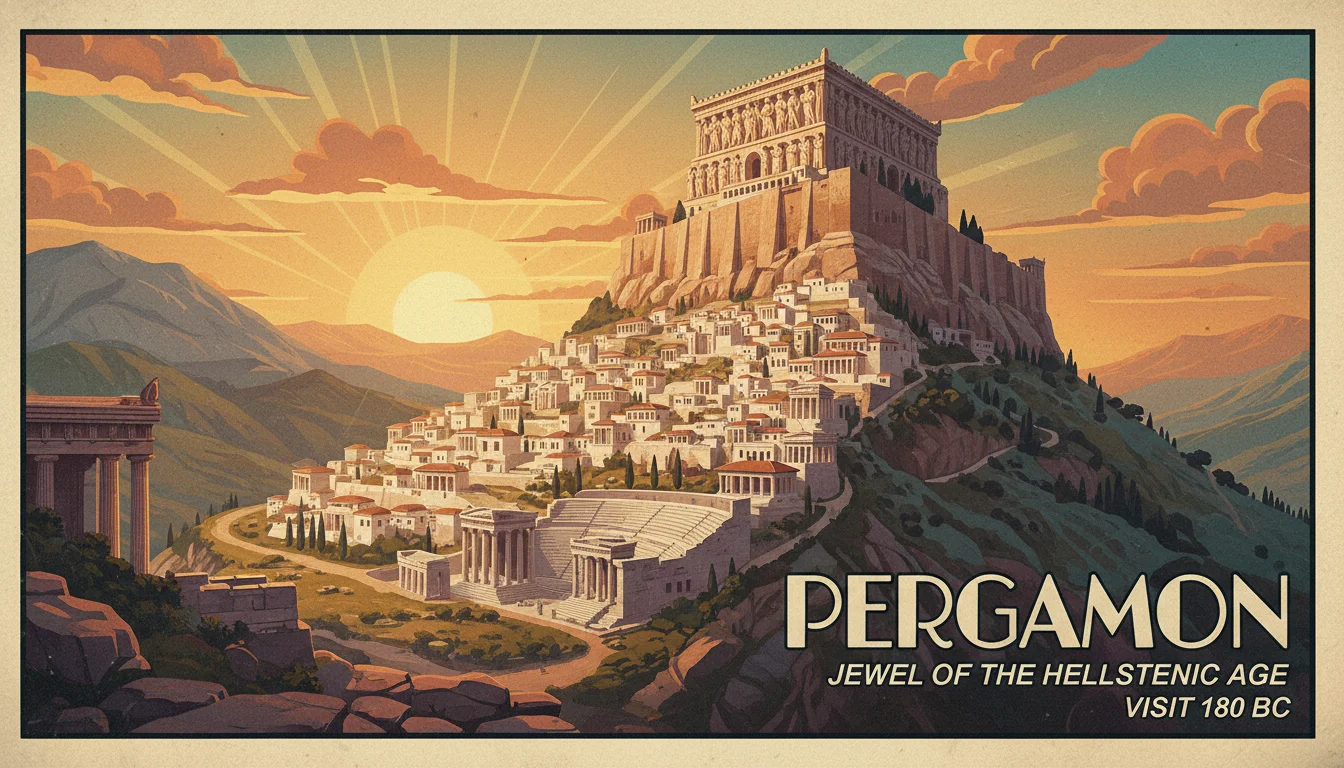
So, you have decided to visit Pergamon in 180 BC. Excellent choice. If you enjoy dramatic hilltop cities, ambitious kings, excellent libraries, and stairs that seem personally offended by your knees, Pergamon is going to be a delight.
At this moment in history, Pergamon is one of the jewels of the Hellenistic world. The Attalid dynasty has turned this city in western Anatolia into a polished showcase of power, culture, and architectural one-upmanship. Think of it as a place determined to prove that it belongs in the same conversation as Athens, Alexandria, and anywhere else with marble, intellectuals, and expensive public buildings. For its great Hellenistic rival to the south, see our guide to Seleucid Antioch around 200 BC; for the older Greek world it measured itself against, Athens around 450 BC.
Your first survival tip is simple: stretch before arrival. Pergamon is built around an acropolis that rises sharply above the surrounding plain, and the city seems to have been designed by someone who believed flat ground builds weak character.
What to Wear
Dress like a respectable free person with moderate means and good sense. This is not a place for flashy nonsense unless you happen to be an ambassador, royal official, or someone willing to be robbed.
For men, a clean tunic with a himation or cloak is perfectly acceptable. For women, a long chiton and mantle will help you blend in. Stick to natural colors - white, beige, muted red, soft brown. Bright Tyrian purple is the ancient equivalent of arriving in a gold-plated sports car. People will notice, and not in the way you want.
Bring sturdy sandals with actual grip if your time machine permits it. Ancient footwear is stylish in a philosopher-on-a-coin sort of way, but Pergamon's steep streets, stone steps, and dusty slopes can turn a graceful arrival into a public tumble. If you can quietly smuggle in decent insoles from the future, do so. History will forgive you.
Also bring a light wool layer. Days can be warm, but mornings on the hill can feel breezy, especially if you are lingering near temples pretending to understand architecture.
How to Behave Without Looking Suspicious
Pergamon is Greek in language and culture, but it sits in Anatolia and attracts merchants, priests, soldiers, artisans, and visitors from all over the eastern Mediterranean. You do not need to pass as local-born, but you do need to avoid acting like a lunatic.
Basic etiquette:
- Greet politely and do not barrel into conversations.
- Show respect at sanctuaries.
- Do not mock local gods, royal ceremonies, or sacrificial rituals.
- Do not ask anyone whether Rome will eventually absorb the kingdom. That ruins the mood.
Pergamene society is status-conscious. Be courteous to officials, deferential around priests, and modest in the marketplace until you understand the rhythm. Haggling is normal. Arrogance is tolerated only if you are rich, powerful, and preferably escorted.
If invited to dine, wash first, compliment the household, and do not drink like a Celtic mercenary on payday. Symposia can be lively, but there is a difference between charming and being remembered as "that strange foreigner who argued with the flute girl and fell into the olives."
What to Eat and Drink
You will eat well here if you keep expectations realistic. This is not a modern food capital with tasting menus. It is an ancient royal city with solid bread, olives, figs, cheese, lentils, fish, roasted meats for those who can afford them, and plenty of wine.
A safe beginner menu includes:
- Barley or wheat bread
- Olives and olive oil
- Goat or sheep cheese
- Lentil stew
- Figs, grapes, and seasonal fruit
- Grilled fish if it smells fresh
- Honey cakes when available
Street food exists in one form or another, but choose busy vendors. High turnover is your friend in every century.
Wine is everywhere, but remember that respectable people often drink it mixed with water. Asking for it undiluted is a quick way to announce either barbarian habits or an intention to make regrettable decisions. If the water source looks questionable, choose wine mixed by someone reputable, or boiled infusions if available.
Avoid raw foods washed in suspicious water, and be cautious with shellfish unless you enjoy historically authentic gastrointestinal consequences.
Must-See Sights
Pergamon has no interest in being subtle. Its major attractions are arranged to impress visitors, flatter rulers, and remind everyone that this city matters.
The Acropolis
This is the main event. Climb it early before the heat becomes vindictive. From above, you will get commanding views across the Caicus River valley and a proper sense of why kings like hilltop capitals: they are beautiful, defensible, and excellent for making everyone else feel small.
The Great Altar of Pergamon
Yes, this is the famous one with the dramatic sculpted friezes full of gods, giants, and muscular divine outrage. It is one of the great artistic statements of the Hellenistic age. Take your time. Even if mythology is not your thing, the sheer theatrical energy of the thing is extraordinary. It is less "quiet place for prayer" and more "stone monument to cosmic victory with excellent branding."
The Library
Pergamon's library is among the most celebrated in the Greek world. Depending on who is boasting, it rivals Alexandria. Scholars gather here, books are copied here, and intellectual status is manufactured here at impressive speed. If you know Greek and can keep your mouth shut, this is a wonderful place to observe educated people being extremely educated at one another.
The Theater
Carved into the steep hillside, Pergamon's theater is spectacular and vaguely alarming. The seating is dramatic, the view is magnificent, and anyone with a fear of heights may wish to sit very still and contemplate philosophy.
The Sanctuary of Asclepius
If you stay long enough, make the trip to the healing sanctuary associated with Asclepius. People come for cures, dreams, rituals, and treatments that range from soothing to medically adventurous. Even if you are healthy, it is worth seeing for the atmosphere alone. Ancient medicine is fascinating right up until it approaches you with tools.
Dangers to Avoid
The first danger is terrain. Pergamon is steep, uneven, and not designed for people who assume handrails are a human right.
The second is disease. You are in the ancient world. Assume water may be contaminated, wounds may become serious, and "a small fever" can become a large historical problem. Wash when you can, keep cuts covered, and avoid crowded unsanitary corners.
The third is politics. Pergamon is stable by ancient standards, but royal courts attract intrigue the way grain attracts pigeons. If you hear gossip about succession, alliances, or Rome, smile vaguely and become deeply interested in your bread.
The fourth is religion. This is not the era to perform ironic detachment at sacrifices or temple rites. Respect boundaries. Do not wander into sacred spaces where you do not belong, and do not touch offerings. That is how one becomes both unpopular and possibly cursed.
Finally, do not brag about future knowledge. Telling people that parchment gets associated with Pergamon, or that their kingdom will not remain independent forever, will not make you look wise. It will make you sound unwell.
Final Advice for the Sensible Time Traveler
Pergamon in 180 BC is a splendid destination for travelers who like culture with a side of altitude. Come prepared to climb, observe, and behave with a bit of dignity. Wear practical clothes, eat carefully, praise the scenery, and never underestimate the political usefulness of saying, "What a magnificent altar."
If you handle yourself well, you will leave with all your sandals, most of your dignity, and a vivid memory of one of the ancient world's most ambitious cities.
If you handle yourself badly, you may still leave with a vivid memory - but it will involve a twisted ankle, diluted wine, and several Pergamenes describing you for years as that odd foreigner who could not manage stairs.

Need Advice from Someone Who Lived There?
Get firsthand accounts from people who actually lived through these moments in history.
Create your free account →No card required. Some figures and features require a paid plan.
Join the HistorIQly Club
Get smarter about the past.
Weekly stories, deep dives, and exclusive content straight to your inbox.