William Tyrrell Disappearance: The Spider-Man Boy Who Vanished in NSW
William Tyrrell, three years old in his Spider-Man suit, disappeared in Kendall NSW in 2014. His foster mother was charged with his murder nearly a decade later.
Read Wikipedia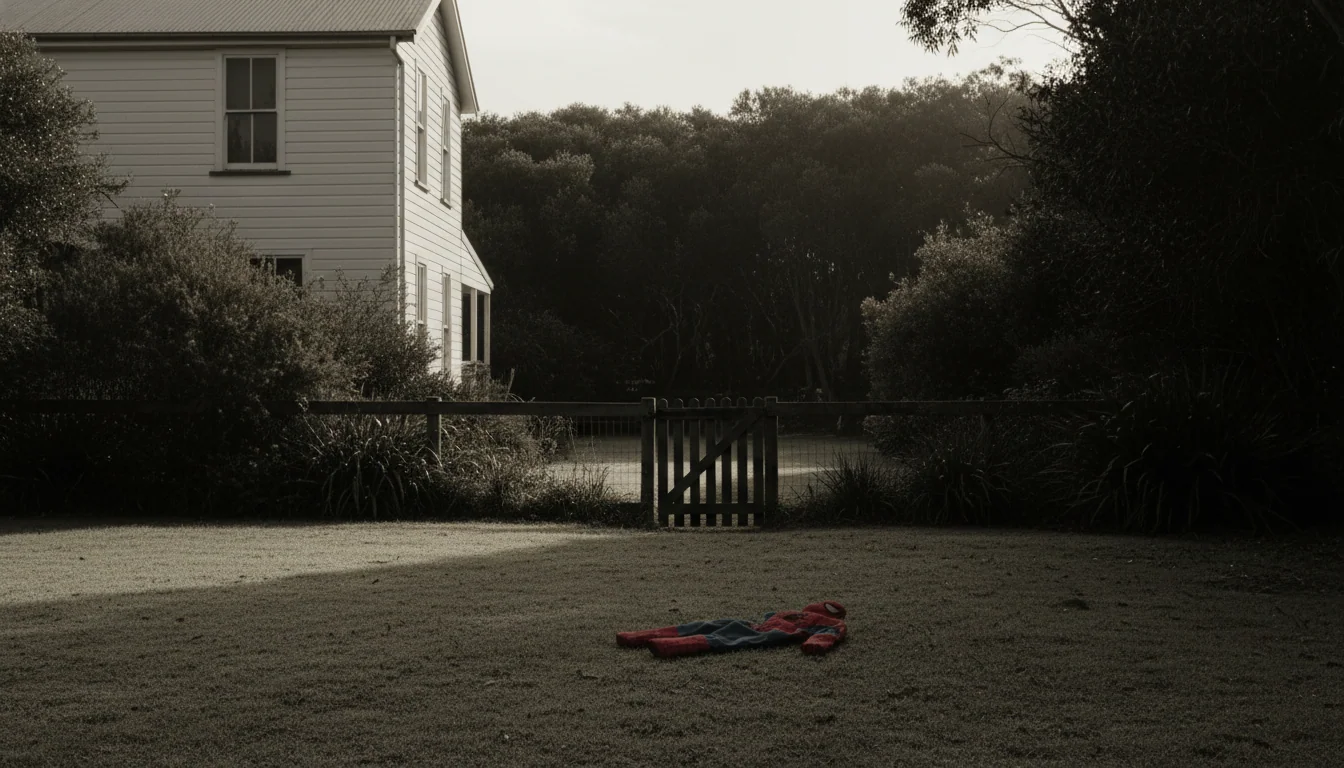
On the morning of September 12, 2014, a three-year-old boy dressed in a red-and-blue Spider-Man suit stepped into the front garden of a weatherboard property in Kendall, a small dairy town on the New South Wales mid-north coast, and was never seen alive again.
William Tyrrell's foster mother and foster grandmother were inside the house or nearby. By the time someone came to check on him, the garden was empty. The gate was shut. No one had seen anything. The searches that began that afternoon and continued through the following days found nothing at all.
The William Tyrrell disappearance became one of the longest, most expensive, and most contested child-disappearance investigations in Australian history - spanning nine years, two separate major inquiries, and a criminal charge that arrived nearly a decade after the day he vanished.
A quiet town, a disappearing child
Kendall in 2014 was the kind of inland town where properties are large and the streets are slow. The house belonged to William's foster grandmother, and the family had driven up from Sydney for a long weekend. William had been in the care of a foster family since infancy, placed with them by New South Wales child protection authorities after he and his siblings were removed from his birth parents as very young children.
He was an energetic, affectionate three-year-old with a particular attachment to his Spider-Man costume. On the morning of September 12, he had been allowed to play in the front garden while the adults were inside or nearby.
When his foster mother went to call him in, the garden was empty. NSW Police, the SES, and dozens of volunteers searched the surrounding bush. Helicopters flew grid patterns over the area. Nearby waterways were searched. No footprint, no fragment of clothing, no trail of any kind emerged.
The story broke nationally within days. The image of a bright-eyed toddler in a superhero costume became almost immediately recognisable across Australia, one of those images so specific and so tragic that it becomes immediately lodged in collective memory.
Competing theories and a slow investigation
In the absence of physical evidence, the investigation moved through a sequence of competing theories and shifting suspects.
For several years, police publicly pursued the possibility that William had been taken by a stranger - an abductor who had passed through Kendall. Composite sketches and accounts of suspicious vehicles were released to the media. None produced a viable suspect.
Investigators also examined William's biological family at various stages. His birth parents had a documented history with child protection services. Multiple members of the biological extended family came under scrutiny at different points. This line of inquiry became highly contentious, with some observers arguing that it consumed investigative resources that should have been directed elsewhere.
The NSW Coroner opened a formal inquest into William's disappearance in 2019. The inquest ran for several years, interrupted by the COVID-19 pandemic, and heard from a large number of witnesses. It examined police methodology, witness reliability, and the conduct of the investigation from its earliest hours. Critics argued the inquest revealed systemic failures in how the case had been managed. Defenders of the investigation countered that the complexity justified the long timeline.
At various points, the inquest heard evidence that seemed to point in multiple directions simultaneously, which is perhaps unsurprising in a case where the initial physical evidence had been so comprehensively absent.
Remains in the bush
The investigation's central uncertainty shifted in 2022. A specialist search team working through bushland in the vicinity of Kendall made a discovery: bone fragments and scraps of fabric material consistent with a child-sized Spider-Man suit. Subsequent forensic examination confirmed that the remains were William Tyrrell's.
The confirmation settled one question definitively. William had died close to where he disappeared, almost certainly on the day he vanished. He had not been taken to a distant location. He had not survived.
The discovery of remains did not immediately answer the harder second question: what had happened in that garden, and who was responsible.
The Coroner concluded that William had been killed - that his death was a homicide. The inquest finding was explicit on that point even before criminal charges were laid.
Charges, nine years on
In late 2023, NSW Police charged William's foster mother with his murder. She is known in proceedings only as "the foster mother," shielded by a suppression order that covers her identity on child welfare grounds. She has denied the charge.
The foster father has not been charged.
The charge closed a chapter that had been explicitly open for years - the question of who investigators believed was responsible. It did not, and does not, resolve the legal question of guilt. The trial is expected to involve contested forensic and circumstantial evidence, and the precise events of September 12, 2014 remain disputed.
The slow path from disappearance to charge is not unusual in homicide investigations where there is no direct physical evidence linking a suspect to a crime. What is unusual is the duration: nine years is a long time for a family, for a community, and for a public that followed the case through multiple cycles of reported breakthroughs and renewed dead ends.
A case that went beyond the child
The William Tyrrell case has become a lens through which Australians have examined several institutions that were not ready for the scrutiny.
The NSW child protection system sits at the centre of the most uncomfortable questions. William was removed from his birth family as a very young infant because that environment was judged unsafe for him. He was placed with carers who subsequently became the primary focus of a murder investigation. The due diligence applied to that placement, and the ongoing monitoring during his years in foster care, have been raised repeatedly in public debate and parliamentary discussion about how the state protects its most vulnerable children.
The performance of NSW Police has been closely examined. The investigation attracted criticism for the length of time before the foster family became a serious focus, and for specific decisions about how early evidence was gathered and how witnesses were handled. Whether those criticisms represent genuine investigative failures or reasonable responses to an extraordinarily difficult case is a question the trial proceedings may partially illuminate.
The use of suppression orders has created its own difficulty. Legal protections covering the identities of those involved have severely limited what Australian media can report, and have occasionally produced public confusion between what was documented and what was speculation. The tension between open justice and child welfare protection is one of the persistent fault lines in Australian courts, and this case has made it visible in ways that will outlast the proceedings.
Where it stands
The criminal proceedings against the foster mother remain before the New South Wales courts as of 2026. The charge has not been resolved. The precise events of September 12, 2014, are legally contested.
What is not contested is this: William Tyrrell was three years old, wore a Spider-Man suit, played in a garden in Kendall, and died before that day ended. His remains lay in the bush for years while a complicated, slow, and sometimes misdirected investigation moved above him.
Cases that take this long to reach a courtroom tend to be cases where the evidence was never straightforward and the truth never clearly visible from the outside. The trial will test whether what was gathered over those nine years is sufficient for a conviction, and whether it tells a coherent story about what happened in that garden on a spring morning in coastal New South Wales.
If it does not, William Tyrrell will join a short list of Australian children whose deaths were confirmed but whose full story was never delivered - the answer to the question of what happened still owed to a boy who cannot collect it.
For other notable missing children cases, see The Beaumont Children Disappearance and The Madeleine McCann Disappearance.
Quick Answers
Common questions about this topic
When did William Tyrrell disappear?
William Tyrrell disappeared on the morning of September 12, 2014, from the front garden of his foster grandmother's property in Kendall, New South Wales. He was three years old and had been playing outside in his favourite Spider-Man costume while adults were nearby in the house.
Were William Tyrrell's remains ever found?
Yes. In 2022, bone fragments and clothing material consistent with William's Spider-Man suit were found during a specialist search of bushland near Kendall, more than seven years after his disappearance. A NSW coronial inquest subsequently confirmed the remains as William's.
Who was charged with William Tyrrell's murder?
William's foster mother was charged with his murder in late 2023. She is identified in court proceedings only as 'the foster mother' under a suppression order protecting her identity. She has denied the charge and the matter is before the courts.
Why did the William Tyrrell case take so long to result in charges?
The investigation was extraordinarily complex, involving multiple competing lines of inquiry over several years, including scrutiny of William's biological family and an unknown-offender theory. The NSW Coroner's inquest, which began in 2019, significantly shaped the investigation's direction, and the remains were not confirmed until 2022.

Want to Interrogate the Suspects?
Chat with historical figures and uncover the truth behind history's greatest mysteries.
Create your free account →No card required. Talk to anyone in history with 8 free credits a day. Some features require a paid plan.
Join the HistorIQly Club
Get smarter about the past.
Weekly stories, deep dives, and exclusive content straight to your inbox.