The Cruise Ship Disappearance of Amy Lynn Bradley
In 1998, Amy Lynn Bradley vanished from a Royal Caribbean cruise ship near Curacao. Decades later, repeated sightings and a disputed photograph keep the case open.
Read Wikipedia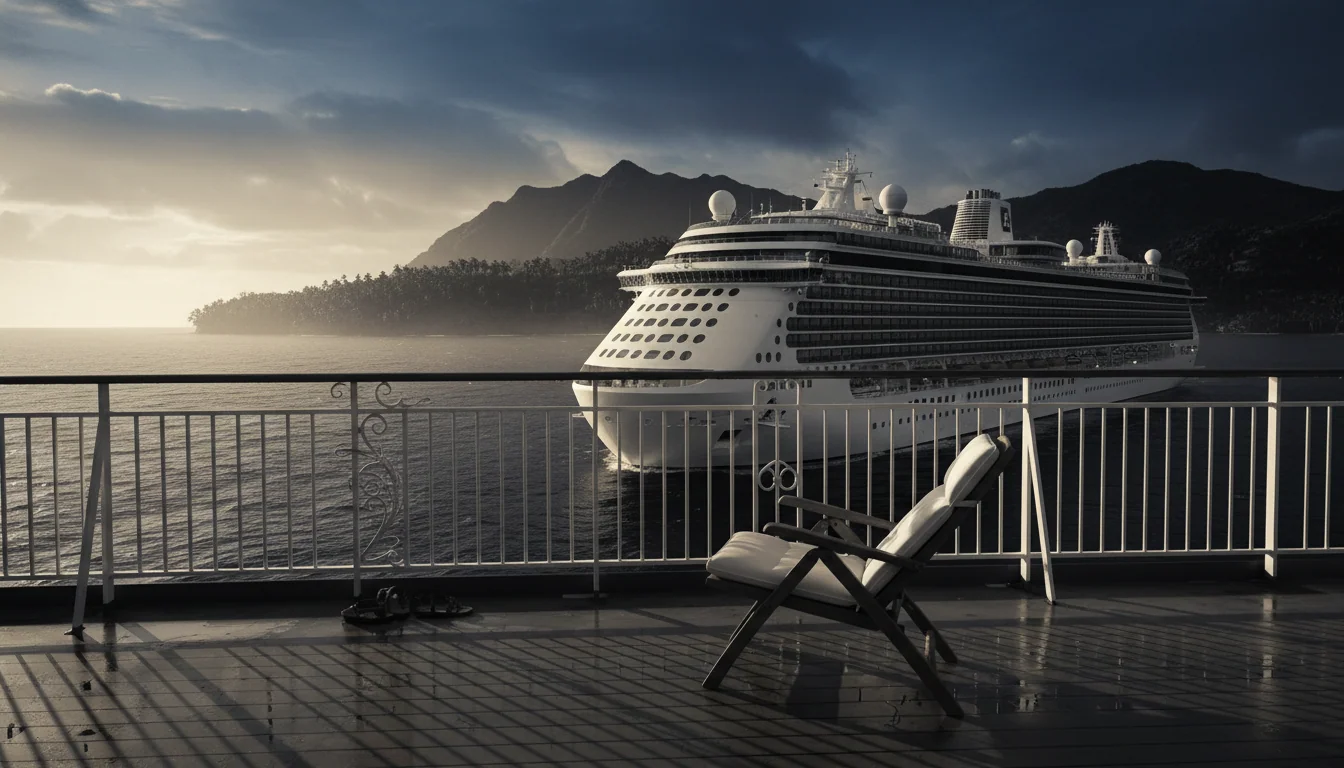
On the morning of March 24, 1998, somewhere on the Caribbean Sea between Aruba and Curacao, a 23-year-old woman named Amy Lynn Bradley disappeared from a moving Royal Caribbean cruise ship, and nobody has been able to explain how.
She did not fall overboard. No splash was heard, no alarm raised. The ship arrived in port, thousands of passengers disembarked, and Amy was not among them. Her shoes were in her cabin. Her passport was still on board. She was simply gone, and the waters between the islands offered no answer.
Twenty-eight years later, the case remains open, disputed, and surprisingly full of leads that all end at walls.
The last night and the last morning
Amy Bradley boarded the Rhapsody of the Seas in San Juan, Puerto Rico, with her parents, Ron and Yvonne, and her younger brother Brad on March 20, 1998. The cruise was a spring holiday, a gift from her parents. Amy was a recent University of Richmond graduate working as a recreation director, athletic, outgoing, and described by everyone who knew her as impossible to overlook.
The ship's itinerary included stops in Aruba before heading to Curacao. The night of March 23 into March 24 was a late one. Amy and her family spent time at the ship's nightclub and bar area, where the ship's house band was performing. Security footage and passenger accounts place Amy with the band members into the early hours.
At approximately 5:30 a.m. on March 24, her father Ron was awakened by the ship's rocking as it navigated the harbor approach. He saw Amy asleep on the balcony of their cabin. He went back to sleep. When the family woke fully at around 9:00 a.m., Amy was gone.
A passenger later told investigators they had seen a woman matching Amy's description on one of the ship's upper decks at approximately 6:14 a.m. That appears to be the last confirmed sighting.
The investigation aboard ship
The captain was notified. Royal Caribbean's shipboard security conducted a search, which turned up nothing. Curacao authorities were informed when the ship docked, and a wider search of the island and harbor area began.
Ron and Yvonne Bradley refused to leave without their daughter. They remained on the island while local police, U.S. authorities, and eventually the FBI began working the case. The cabin was processed. Surveillance footage was reviewed. The band members were interviewed.
One band member was identified as having been particularly close to Amy the night before. He was interviewed multiple times by investigators. His accounts were inconsistent. No charges were ever filed. He left the ship's employment not long afterward.
What the investigation could not establish - partly because shipboard investigations in 1998 operated under no coherent legal framework - was whether anything had happened aboard the ship in those early morning hours. Royal Caribbean's cooperation with investigators was later criticized as slow and incomplete. The cruise ship industry in the late 1990s operated largely beyond the reach of American law enforcement once it left U.S. ports.
The sightings
In the months and years following Amy's disappearance, a series of sightings were reported that have kept the case alive in ways that few missing-person cases sustain.
The most striking came from a U.S. Navy petty officer stationed in Barbados who contacted the Bradleys in 1999. He reported seeing a woman matching Amy's description in a bar on the island, who had whispered "please help me, I am being held here against my will" before being quickly removed by two men accompanying her. The sailor had not known about the Bradley case at the time and came forward only after seeing her photograph in a newspaper. His account was taken seriously enough that the FBI interviewed him multiple times.
In Curacao, a couple vacationing on the island photographed what they later believed was Amy working at a beachside location. The photograph was widely analyzed. Her family believes the woman in the image is their daughter. Forensic photo analysts have produced conflicting opinions.
A further account, from an American man, described an encounter at a commercial establishment in Curacao in which a woman introduced to him as "Amy" said she was being held against her will. He left without taking action and came forward years later. Investigators could not corroborate the account.
What the theories say
The Bradleys have consistently maintained that their daughter was abducted - either by crew members acting with intent or by a trafficking network that used the ship's environment to take a vulnerable target without leaving evidence. Their logic is direct: Amy's belongings were in the cabin. She had no reason to flee. She had no documented history of depression, substance abuse, or suicidal ideation. She was 23 years old on a vacation she had not paid for, surrounded by her family.
The "fell overboard" theory has never satisfactorily explained why there was no sound, no alarm, and no body. The Caribbean waters where cruise ships operate are well-trafficked and regularly patrolled. Passengers who fall overboard are found frequently. Amy has never been found.
The trafficking theory is disturbing but supported by the fact that multiple sightings - from different witnesses, in different countries, across several years - describe an identifiable woman in circumstances of captivity. None of those sightings has been decisively confirmed, and none has been definitively disproved.
A smaller theory holds that Amy left voluntarily, possibly with members of the band, and has chosen not to resurface. Her family regards this explanation as incompatible with everything they know about her character and with the nature of the sightings.
What came after
Ron and Yvonne Bradley have spent nearly three decades in public pursuit of their daughter. They testified before Congress, helped lobby for the Cruise Vessel Security and Safety Act of 2010, which significantly tightened requirements for cruise lines to report crimes to the FBI and preserve evidence, and they have maintained public awareness of the case through media and an ongoing website.
In 2004, the National Center for Missing and Exploited Children generated age-progressed images of what Amy might look like in her thirties. Subsequent updates have been produced. The Bradleys have said they will not stop looking.
The FBI designates the case an ongoing investigation. In the years since 1998, the legal framework around cruise ship crime has improved substantially, partly because of the Bradley case and cases like it. Whether that framework, had it existed in 1998, would have changed Amy's outcome is a question with no answer.
What we know and what we don't
The case presents an unusual combination of evidence: no body, no confirmed crime scene, no confirmed suspect, and multiple independent witnesses across several years reporting contact with a woman in captivity who matches Amy's description. Those sightings could all be mistaken. They could also all be pointing at the same person.
The absence of a body is significant in both directions. It prevents the case from being officially closed as a death. It also means the investigation cannot follow the forensic track that most homicide cases require. The evidence is entirely witness-dependent, and witnesses in this case have been inconsistent, geographically scattered, and often unavailable for sustained follow-up.
What is not seriously disputed is this: Amy Lynn Bradley boarded a cruise ship with her family. She was alive at approximately 6:14 a.m. on March 24, 1998. She was never seen by anyone whose identity could be confirmed again. No body has been recovered. No perpetrator has been charged.
Amy would be 51 years old in 2026. The question her family has asked for twenty-eight years is the simplest one possible: is she alive, and if so, where is she? The Caribbean Sea has not answered, and neither has anyone else.
Other cold cases involving young travelers who vanished in remote locations include the Kris Kremers and Lisanne Froon case in Panama and the Wanda Beach murders in Australia, both of which remain unresolved.
Quick Answers
Common questions about this topic
What happened to Amy Lynn Bradley?
Amy Lynn Bradley, 23, disappeared from the Royal Caribbean cruise ship Rhapsody of the Seas during a Caribbean cruise in March 1998. She was last seen on a ship deck near Curacao at approximately 6:14 a.m. She has never been found, and the case remains officially open.
Was Amy Bradley seen after she disappeared?
Multiple reported sightings occurred over the years. A U.S. Navy sailor reported seeing a woman matching her description in a Barbados bar in 1998, who whispered 'please help me' before being led away by two men. A photograph taken by vacationers in Curacao in 1999 appeared to show a woman resembling Bradley. None of the sightings has been confirmed.
Did anyone on the cruise ship know what happened to Amy Bradley?
The ship's band was reportedly seen with Amy the night before she vanished. One band member was interviewed multiple times by investigators. Her parents believe she was abducted by crew members or traffickers. No charges were ever filed against anyone aboard the vessel.
What is the current status of the Amy Bradley case?
The case remains open. The FBI maintains it as an active investigation. Bradley's parents, Ron and Yvonne Bradley, have maintained a website, organized awareness campaigns, and lobbied Congress for stronger regulations on cruise ship crime reporting. As of 2026, Amy Bradley would be 51 years old.

Want to Interrogate the Suspects?
Chat with historical figures and uncover the truth behind history's greatest mysteries.
Create your free account →No card required. Talk to anyone in history with 8 free credits a day. Some features require a paid plan.
Join the HistorIQly Club
Get smarter about the past.
Weekly stories, deep dives, and exclusive content straight to your inbox.