Damascus Steel: The Legendary Blade Metal Nobody Has Fully Reproduced
Damascus steel could reportedly split a falling hair and shrug off a blow. The ore that made it is gone, and metallurgy still hasn't fully rebuilt it.
Read Wikipedia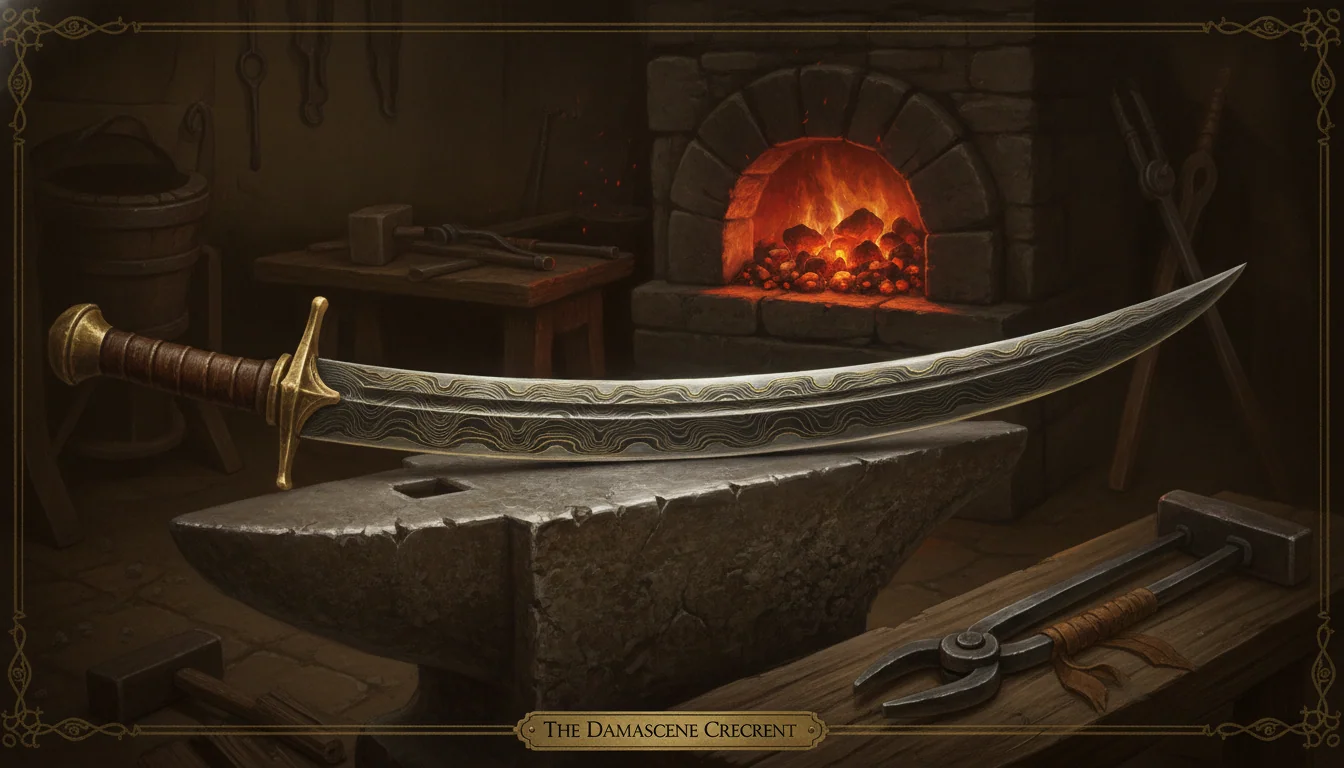
A curved sword pulled from an Ottoman armory, its surface rippling with a pattern that looks like watered silk or the grain of oak, has a way of stopping metallurgists in their tracks. European swordsmiths who encountered these blades during the Crusades told stories that sound like tall tales: a Damascus blade could reportedly slice a silk scarf drifting down onto its edge, hold that edge through a full day of battle, and still bend double without snapping. Some accounts have a Damascus saber cutting clean through a European blade laid across it. Centuries later, the people who make swords for a living still cannot fully explain how it was done, and they definitely cannot buy the same raw material the original smiths used, because that material stopped being produced a long time ago.
The impossible object
What set genuine Damascus steel apart was not just sharpness. Plenty of well-made blades were sharp. What stunned observers, then and now, was the combination: a hardness sufficient to hold a razor edge, paired with a toughness that let the blade flex and absorb impact without shattering. In ordinary steel of the period, those two properties worked against each other. Harder steel tended to be more brittle. Softer steel bent but dulled fast. A Damascus blade seemed to cheat that tradeoff, and it announced itself visually with a distinctive banded or "watered" surface pattern once etched with a mild acid, patterns that acquired their own names among sword collectors, from ladder-like bands to swirling rose patterns.
The blades entered the European imagination through the Crusades, when knights returning from the Levant brought home both the swords and the stories attached to them. Whether Saladin actually sliced a floating silk cushion in front of Richard the Lionheart is the kind of legend historians treat with real skepticism, but the underlying reputation for a blade that combined a keen edge with unusual resilience was not invented by storytellers. Later European metallurgists who examined surviving pieces confirmed the blades really did behave differently under stress than the pattern-welded steel Europe was making at the time.
How it actually worked
The heart of the story is a manufacturing method called crucible steel, and the specific product is usually referred to today as wootz steel. Ironworkers packed iron with a carbon source, such as charcoal or plant matter, sealed it inside a clay crucible, and heated the whole thing until the iron absorbed carbon and partially melted. Cooled slowly inside the sealed crucible, the resulting ingot came out as a high-carbon steel, typically somewhere around 1 to 2 percent carbon by weight, far higher than the wrought iron and low-carbon steel most other cultures were working with at the time.
That high carbon content is what made the pattern possible. As the ingot cooled slowly, some of the carbon combined with iron to form cementite, an extremely hard iron carbide compound. Left to its own devices, cementite tends to form as a brittle network throughout the metal, which would make a blade shatter rather than bend. What set wootz apart was that trace elements naturally present in the original ore, elements like vanadium and other carbide-forming metals in only tiny quantities, appear to have interrupted that even network and encouraged the cementite to segregate into discrete bands and particles instead. A skilled smith, working the ingot at carefully controlled, comparatively low forging temperatures, could then draw those bands out into long, wavy lines running the length of the blade without dissolving them back into the surrounding matrix.
The result, once the finished blade was polished and etched with a mild acid, was steel with hard, wear-resistant bands of cementite embedded in a softer, tougher matrix of iron and pearlite. The hard bands held the edge. The softer matrix absorbed shock and let the blade flex. The visible pattern was not decoration bolted on afterward. It was the physical signature of the exact microstructure that made the blade work.
It is worth being precise about a persistent mix-up. Most of what is sold as "Damascus steel" today, from kitchen knives to wedding rings, is pattern-welded steel: different steel alloys stacked, forge-welded together, folded repeatedly, and etched to reveal contrasting layers. It can be an excellent knife, and the technique itself has its own long history unrelated to wootz. But it is a fundamentally different process, building the pattern from the outside by welding layers together rather than growing it from within a single ingot as it cools. Genuine historical Damascus steel was wootz crucible steel, and the distinction matters to anyone trying to understand what the original smiths actually achieved.
Who built it, and why
The ingots themselves were not made in Damascus. Wootz steel was smelted primarily by ironworkers in South India and Sri Lanka, in a tradition of crucible steel production that appears to reach back roughly two and a half thousand years, grounded in local ore deposits and a metalworking culture that had refined the crucible process long before it reached the Middle East. Merchants carried the finished ingots, not the ore, along trade routes westward, where bladesmiths in Damascus, Persia, and other centers of the medieval Islamic world forged them into the swords that eventually reached European hands. The city of Damascus lent its name to the finished blades largely because it was a major hub of the sword trade encountered by Crusaders and later travelers, even though the steel itself began its life on the other side of the Indian Ocean.
This division of labor mattered. The Indian and Sri Lankan smelters controlled access to ore with the right trace-element chemistry, an accident of local geology they could not have fully understood in chemical terms but clearly recognized through generations of trial and observation. The Middle Eastern bladesmiths controlled the forging knowledge needed to turn that raw material into a working sword without destroying the pattern in the process. Neither half of the chain worked without the other.
How it was lost
By some point in the 18th century, production of genuine wootz Damascus steel had effectively ended, and the exact reasons are still debated rather than definitively settled. The leading explanations point to a combination of factors rather than one single cause. Trade networks that carried the specific ores were disrupted by shifting political control across South Asia and the Middle East. The smelting tradition itself relied on knowledge, passed down within particular workshops, about which ore sources produced steel with the right trace elements, and that kind of transmitted craft knowledge is exactly the sort of thing that disappears quietly when a workshop closes, a lineage of smiths ends, or a colonial economy reorders which industries get to survive. Some metallurgists have also proposed that the specific ore deposits bearing the necessary trace elements were gradually exhausted, though this remains one hypothesis among several rather than a settled conclusion. Whatever the precise mix of causes, nobody sat down and decided to stop making the best steel in the world. The knowledge simply stopped being passed on, and within a couple of generations the capability was gone. Damascus steel is far from the only lost ancient technology modern engineers are still chasing; see how Roman concrete has outlasted its modern equivalent by two thousand years.
Rediscovery and replication
Modern metallurgists took the mystery seriously well before it became a fashionable puzzle. Detailed studies through the 20th century established the crucible-steel process and its high carbon content, but reproducing the actual visible pattern and its associated toughness proved stubborn. The breakthrough usually credited in the field came from research published in the late 1990s by the metallurgist J.D. Verhoeven working with bladesmith Alfred Pendray, who identified that trace carbide-forming elements, present in only very specific historical ore sources, were the key ingredient the pattern depended on, and who succeeded in forging blades that reproduced the classic banded pattern using modern steel doped with those same trace elements.
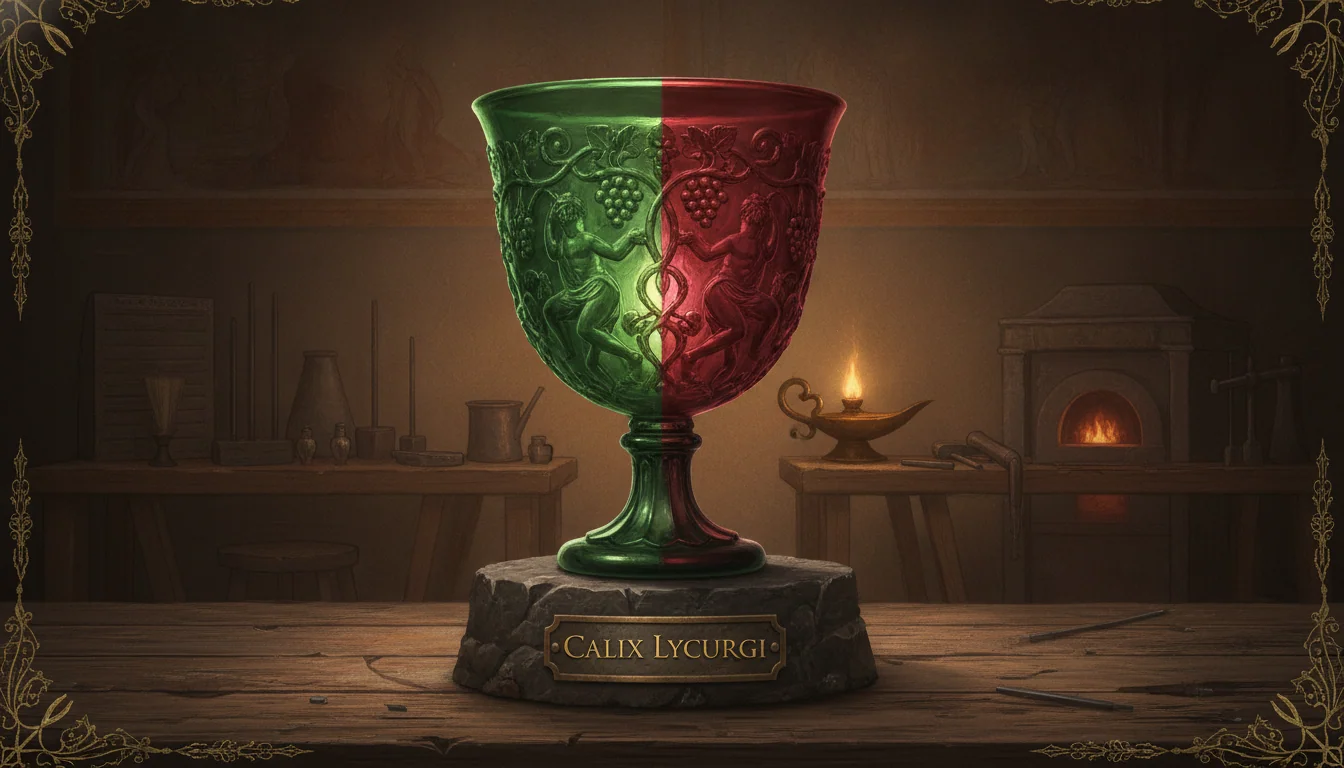
A separate line of research pushed the story further into strange territory. A study published in 2006 by a team including the German physicist Peter Paufler examined a genuine historical Damascus blade at the nanoscale and reported structures resembling carbon nanotubes and cementite nanowires within the metal, an unexpectedly sophisticated internal architecture for a pre-industrial material. That finding generated enormous attention, though it has also drawn caution from other researchers who note it comes from a single sample and needs further independent confirmation before anyone treats nanotube formation as a routine feature of wootz steel rather than an intriguing anomaly. Damascus steel is not the only ancient material hiding unexpected nanoscale engineering; the Roman-era Lycurgus Cup owes its color-shifting glass to metal nanoparticles that predate the word "nanotechnology" by roughly 1,600 years.
So where does that leave replication today? Modern smiths can reliably produce steel with the characteristic Damascus pattern and genuinely excellent edge-holding and toughness, using ore deliberately chosen or alloyed for the right trace elements. That is real, useful, hard-won progress, and it closes most of the practical gap. What remains unresolved is whether any modern reproduction precisely matches the composition and microstructure of the original Indian ore, since the exact historical deposits were never scientifically documented before they stopped being used and cannot be definitively located today. Damascus steel, in other words, has been functionally cracked. Whether it has been exactly rebuilt is a question that may never get a clean answer, because the original recipe was never written down. It was mined, smelted, and remembered, and then the remembering stopped.
Quick Answers
Common questions about this topic
How did Damascus steel actually get its pattern?
The pattern came from bands of iron carbide (cementite) forming inside a block of crucible steel called wootz, which was smelted in South India and Sri Lanka and imported to Middle Eastern forges. Trace elements in the original ore encouraged the carbide to line up into visible bands, which bladesmiths then coaxed into swirling patterns during careful, low-temperature forging.
Is modern 'Damascus steel' cookware and knives the real thing?
Mostly no. Almost everything sold as Damascus steel today is pattern-welded steel, made by folding and forge-welding different alloys together, which produces a similar-looking layered pattern through a completely different process. Genuine wootz-based Damascus steel is a crucible steel with its pattern formed internally, not welded from layers.
Who actually made Damascus steel?
South Indian and Sri Lankan metalworkers smelted the wootz ingots, and bladesmiths across the Middle East, particularly in Damascus and other Syrian and Persian centers, forged those ingots into the finished swords that gave the steel its European name.
Can scientists recreate Damascus steel today?
Metallurgists have reproduced the visible pattern and much of the performance using ore with the right trace elements, most notably in research published in the late 1990s. But the original Indian ore deposits are gone or unidentified, so no modern blade has been confirmed to exactly match the composition of a genuine historical piece.

Meet the Ancient Engineers
Chat with the inventors who built the impossible centuries early.
Create your free account →No card required. Some figures and features require a paid plan.
Join the HistorIQly Club
Get smarter about the past.
Weekly stories, deep dives, and exclusive content straight to your inbox.