Anna Delvey: The Fake Heiress Who Conned New York
Netflix made Anna Delvey famous. Here's how a Russian-born nobody talked her way into Manhattan high society, and nearly walked off with millions.
Read Wikipedia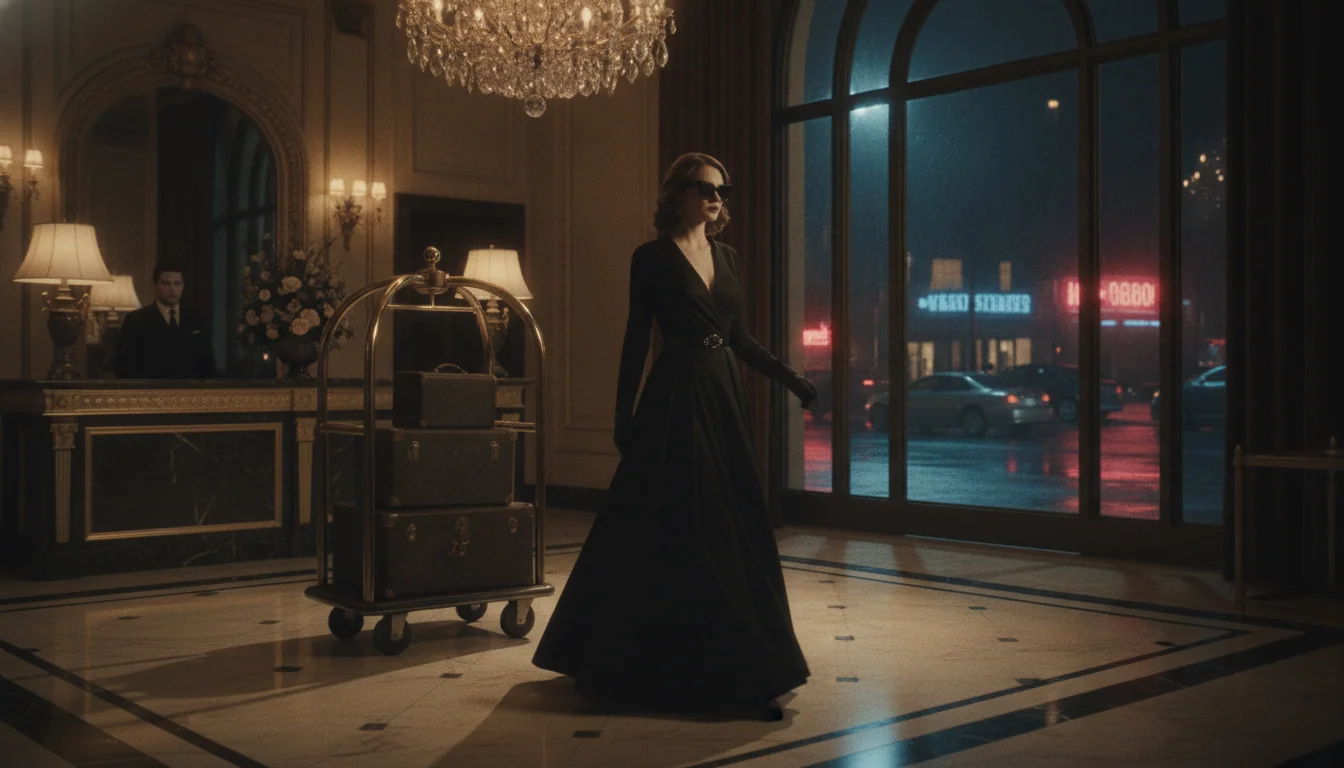
Every few years a new true-crime dramatization sends people back to their search bars asking the same question: was any of that actually real? Netflix's Inventing Anna did it for a case that barely needed the embellishment. The woman behind the headlines, Anna Sorokin, spent roughly four years convincing New York's wealthiest people that she was a German heiress with tens of millions of dollars parked in a European trust. She never had it. What she had instead was nerve, a good eye for expensive things, and a con that worked for far longer than it should have. She belongs to a particular strain of image-driven con artist that also produced Billy McFarland's Fyre Festival and Elizabeth Holmes's Theranos fraud, operators who understood that a convincing enough lifestyle can outrun the paperwork for years.
The mark
Sorokin's targets were never a single vault or a single victim. Her mark was an entire social ecosystem: the hotel concierges, private bankers, gallery owners, and socialites of Manhattan who took confidence, European vowels, and a Céline wardrobe as proof of money. New York's elite circles run on a kind of soft verification. If you look right, talk about the right galleries, and tip generously, nobody actually checks your bank balance before your third stay at a luxury hotel.
Born in Russia in 1991, Sorokin moved to Germany with her family as a teenager, where her father reportedly built a modest heating and freight trucking business, comfortable but nowhere near the wealth she would later claim. She studied fashion in London, interned at a Paris fashion magazine, and by the mid-2010s had reinvented herself in New York as "Anna Delvey," the daughter of a German diplomat or oil-and-solar-power magnate depending on who she was talking to, heir to a trust reportedly worth $60 million or more that would be released to her once she turned 25.
The costume mattered as much as the backstory. Sorokin dressed in designer pieces, favored a particular Instagram-ready aesthetic of understated European wealth, and cultivated a habit of appearing slightly bored by luxury, as though private jets and tasting menus were simply the water she swam in. That performance of casual entitlement did more work than any forged document. People who might have hesitated to lend money to an enthusiastic stranger rarely thought twice about extending credit to someone who acted as if she had already forgotten she owed it.
Building the trust
Before the money ever moved, Sorokin spent roughly two years simply being seen. She attended gallery openings, fashion week parties, and members' club dinners, always generous with tips and small gifts, always vague about the exact mechanics of her wealth. She let others fill in the blanks: a friend of a friend had heard about the trust, a hotel manager had seen the size of her previous tips, a socialite assumed that someone dining with people she already trusted must be trustworthy herself. By the time she needed real money to move, an entire circle of acquaintances was prepared to vouch for a woman none of them had ever actually seen produce a bank statement.
The plan
There was no crew in the traditional sense. Sorokin worked the con largely alone, which is part of what made it so effective; there was no partner to slip up and no split of the take to argue over. Her method had a simple, repeatable core. She would check into a luxury hotel, such as 11 Howard or the Beekman, present a card that would eventually be declined, and simply let the bill run while she tipped staff lavishly and dropped the names of her supposed foundation's backers. When bills came due, she paid just enough, or offered just enough of an excuse involving a delayed wire transfer, to keep the account open.
Her most ambitious plan was to open the Anna Delvey Foundation, a private arts club she pitched as a members-only space for exhibitions, dining, and events inside a building on Park Avenue South. To finance it, she reportedly sought a loan of more than $20 million from City National Bank and later approached Fortress Investment Group for tens of millions more, backing the applications with forged bank documents that appeared to show a substantial European trust awaiting release. Financial institutions did their own diligence and eventually balked, but not before Sorokin had used the appearance of a pending loan to extend her credit everywhere else.
The job
The caper's centerpiece, and the one that finally caught up with her, was a trip to Morocco in 2017. Sorokin invited Rachel Williams, a photo editor and acquaintance, on a luxury vacation to Marrakech, reportedly staying at a five-star riad-style hotel with private villas, personal trainers, and a full staff. When Sorokin's cards failed at the hotel, Williams's employer-issued and personal cards absorbed the bill, running to roughly $62,000, on Sorokin's repeated promise to wire the money back the moment her trust cleared.
It never cleared, because it never existed. Similar scenes played out across New York: private jet charters booked and abandoned, personal trainer sessions billed to cards that bounced, tabs at private clubs left to a "temporary transfer issue." Sorokin was a details person. She knew which SoHo galleries to be seen at, which stylists to be photographed with, and how to make a maître d' feel like turning her away would be the embarrassing move, not extending credit to a woman who behaved like she had never once worried about money.
The unraveling
Confidence games survive on victims who stay quiet out of embarrassment. Sorokin's finally came apart because Rachel Williams did not. After absorbing the Morocco bill and watching repayment promises evaporate for months, Williams began cooperating with investigators and eventually told her side of the story publicly, feeding into the magazine journalism that later inspired the Netflix series. Around the same time, a concierge at one of the hotels Sorokin had stiffed alerted authorities after her cards failed one time too many and the pattern of unpaid luxury stays became impossible to write off as an accounting delay.
Manhattan prosecutors built a case around a documented pattern: unpaid hotel bills, a falsified loan application, and the Morocco trip Rachel Williams had reported. In October 2017, investigators tracked Sorokin to Passages Malibu, a rehabilitation facility in California, where she was arrested and extradited to New York to face charges of grand larceny, theft of services, and attempted grand larceny.
Where are they now
Sorokin's 2019 trial in Manhattan drew a courtroom crowd nearly as attentive as the parties she used to crash. The jury convicted her on eight of ten counts, including multiple counts of grand larceny and theft of services, but notably acquitted her on the single largest charge tied to the multimillion-dollar loan attempt that never actually paid out. Prosecutors put her total take, across unpaid bills, bounced loan applications, and the Morocco trip, at roughly $275,000. She was sentenced to 4 to 12 years in New York state prison and ordered to pay roughly $200,000 in restitution along with a fine.
She was paroled in February 2021 after serving part of her sentence, only to be detained immediately by immigration authorities for having overstayed a visa years earlier. She spent well over a year in immigration detention while fighting deportation, before being released in late 2022 to home confinement in New York City, an ankle monitor and a set of court-ordered restrictions standing in for the borrowed credit lines she used to travel the world on.
None of the money she took ever amounted to a fortune by the standards of the lifestyle she performed. What she actually stole, by prosecutors' own account, was closer to the price of a nice apartment than the trust fund she claimed. But she generated something more durable than cash: a story good enough that Netflix paid for the rights, a portion of which reportedly went toward her court-ordered restitution. Sorokin has continued to give interviews, sell paintings from a body of work she began in custody, and remind anyone still fascinated by her that the most valuable thing she ever really had was everyone else's willingness to believe her.
Her deportation case, tied to her original visa overstay, remained unresolved in her most recent public appearances, meaning the woman who once talked her way past every velvet rope in Manhattan is still, on paper, waiting to find out whether she gets to stay in the country she conned.
Quick Answers
Common questions about this topic
Was Anna Delvey ever a real heiress?
No. Anna Delvey was a persona invented by Anna Sorokin, a German-raised woman of Russian birth whose father reportedly ran a modest heating and freight business. There was no trust fund, no European foundation, and no inheritance waiting for her at 25.
How much money did Anna Sorokin steal?
Prosecutors alleged she defrauded banks, hotels, and acquaintances of roughly $275,000 through unpaid bills, falsified loan documents, and one notoriously expensive vacation. Her biggest attempted score, a loan of more than $20 million, was never actually paid out.
How was Anna Sorokin caught?
A friend she stuck with a five-figure hotel and travel bill in Morocco reported her, and a Manhattan hotel concierge tipped off investigators after Sorokin's cards kept failing. She was arrested in 2017 at a rehab facility in Malibu.
Where is Anna Sorokin now?
She served part of a 4 to 12 year sentence, was paroled in 2021, and was immediately detained by immigration authorities for overstaying her visa. As of her last public appearances she was living under home confinement in New York City while her deportation case continued, selling art and giving interviews.

Question the Thieves
Chat with the detectives and masterminds behind history's boldest heists.
Create your free account →No card required. Some figures and features require a paid plan.
Join the HistorIQly Club
Get smarter about the past.
Weekly stories, deep dives, and exclusive content straight to your inbox.