Arsenal: The MP40 - Germany's Most Misnamed Submachine Gun
MP40 history: Germany's iconic submachine gun wasn't designed by Schmeisser, wasn't issued to all infantry, and was never called what Allied soldiers called it.
Read Wikipedia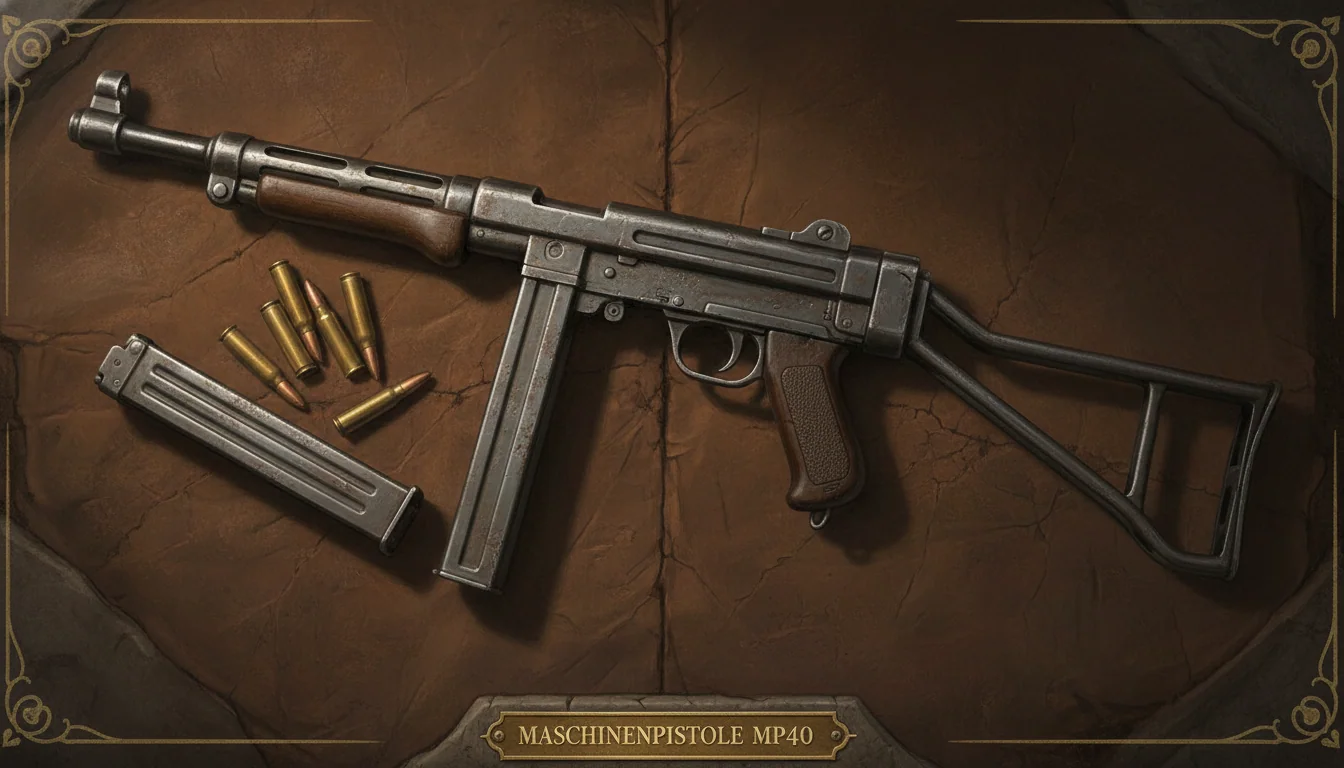
The weapon Allied soldiers called the Schmeisser was not designed by Schmeisser. The gun shown in war films equipping entire German infantry platoons was, in reality, issued mostly to squad leaders and vehicle crews. The submachine gun that became one of the most recognizable silhouettes in military history is also one of the most consistently misrepresented - a product of wartime propaganda, postwar mythology, and the enduring power of a wrong name attached to a distinctive shape.
The MP40 - Maschinenpistole 40, in full - was a functional, well-engineered, and deliberately unpretentious weapon that served the Wehrmacht from the campaign in France through the end of the war in Europe. It did not win battles on its own. It did not transform infantry tactics the way the English longbow or the Maxim gun had. What it did was put reliable automatic fire in the hands of the officers and specialists who needed it most, in a package compact enough to be carried in a halftrack or dropped from an aircraft without taking up half the passenger space. For that narrow job, it was very good indeed.
The weapon the MP40 replaced
The German military had experimented with submachine guns since the First World War, when the MP18 appeared in the final months of the conflict - the first purpose-built submachine gun fielded by any military. The interwar period produced several refinements, culminating in the MP38, which entered service with the Wehrmacht in 1938.
The MP38 was a significant design: it used a stamped and welded receiver rather than the machined parts common to earlier weapons, making it cheaper and faster to produce. It introduced the folding tubular stock that would become the MP40's most recognizable feature. It fired the standard 9x19mm Parabellum cartridge from a 32-round single-stack box magazine. It was a good weapon with one persistent problem: it was still expensive and slow to manufacture for a military that was about to fight a very large war.
Heinrich Vollmer at Erma Werke led the redesign that produced the MP40 in 1940. His changes were mostly industrial - more stamped parts, less milling, simpler assembly - but they produced a weapon that was meaningfully cheaper and faster to make without sacrificing the functional reliability of the MP38. The MP40 looked almost identical to its predecessor. It was, in engineering terms, what the MP38 would have been if it had been designed with mass production as the primary constraint from the start.
The Schmeisser myth
Before the MP40's performance in the field, a word on its name, because the name has confused the historical record for eight decades.
Hugo Schmeisser was a legitimate and important German weapons designer. His MP18 effectively created the submachine gun category. His later designs, including the MP28 and variants, were widely used. But Hugo Schmeisser did not design the MP40. His firm, C.G. Haenel, manufactured the MP40's distinctive 32-round magazine, and the magazine's body was stamped with the words "PATENT SCHMEISSER." Allied soldiers, encountering the weapon and reading the magazine, assumed the patent holder's name was the designer's name.
The misattribution stuck. British and American military reports from the early 1940s consistently called the weapon the Schmeisser. Journalists used it. Postwar films used it. The name was in wide circulation by the time corrective historical accounts appeared, and a nickname sixty years in the making does not die easily in popular culture.
Hugo Schmeisser's actual contribution to this period of German small arms history was the StG 44 assault rifle, which genuinely was his design and which appeared from 1943 onward. Conflating the two weapons, which a surprising number of historical accounts still do, produces additional errors.
Into France, Crete, and the Eastern Front
The MP40 saw its first significant combat use in May 1940 during the invasion of France and the Low Countries. German Fallschirmjager - paratroopers - adopted it enthusiastically: a folding-stock submachine gun that could be slung across the chest during a parachute drop and deployed within seconds of landing was exactly what the airborne role demanded. The Battle of Crete in May 1941, the largest airborne operation Germany had yet attempted, was among the MP40's most demanding early tests. German paratroopers landing under fire with their rifles in separate containers sometimes survived on MP40s alone during the first hours of combat.
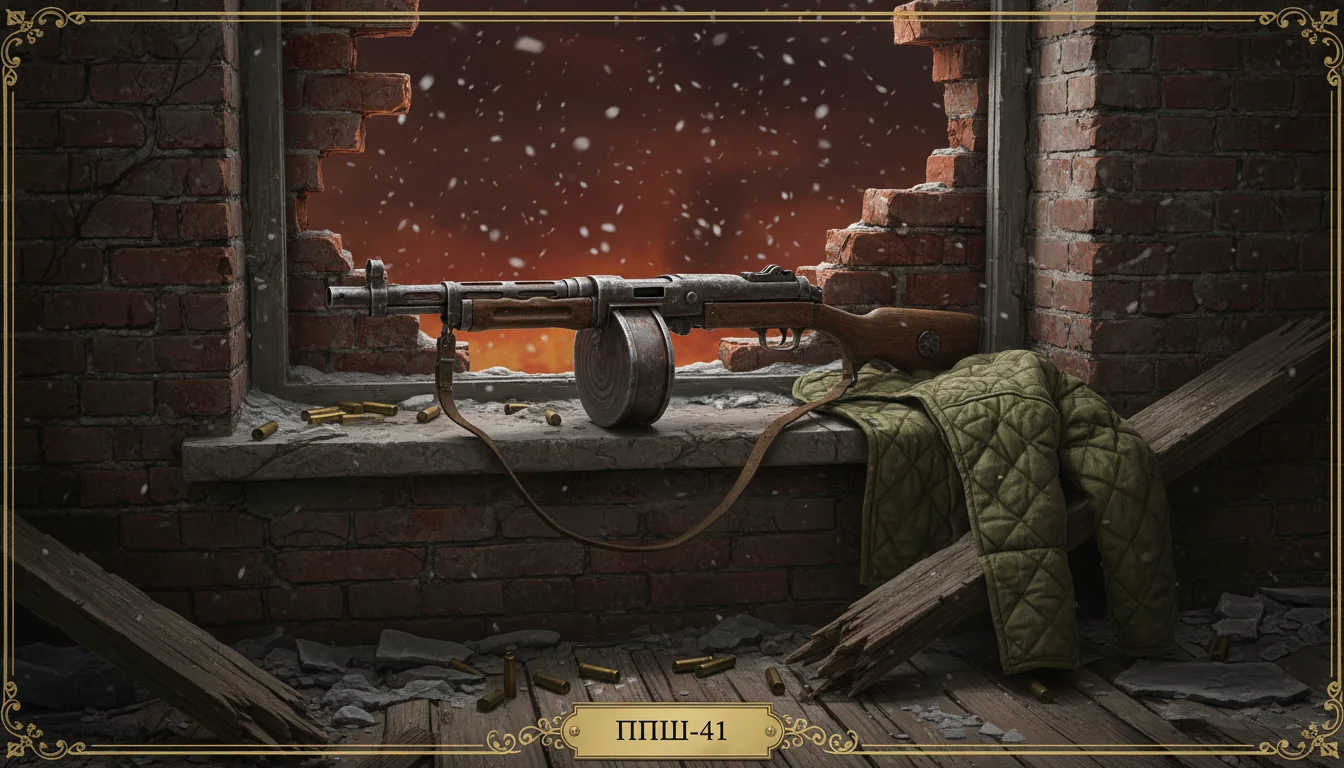
On the Eastern Front, the MP40 met its most serious tactical challenge in the form of Soviet submachine gun doctrine. The Red Army, having watched Finland's Talvisota demonstrate the value of automatic fire at short range, had massively expanded production of the PPSh-41 - a drum-fed submachine gun that fired at roughly double the MP40's rate and could saturate a room or a trench far more thoroughly. In the close-quarters fighting at Stalingrad in late 1942 and early 1943, Soviet soldiers equipped with PPSh-41s frequently had an advantage in sustained automatic fire that the slower-cycling MP40 could not match.
German commanders noticed. Some units collected captured PPSh-41s and used them in preference. The MP40 remained in service, but the Eastern Front experience reinforced a tactical reality: at ranges beyond fifty meters, an NCO would be better served by a rifle.
What it was and wasn't for
Understanding the MP40 requires understanding its intended users. It was not a universal infantry weapon. German tactical doctrine kept the rifle - primarily the Karabiner 98k - as the backbone of infantry squads throughout the war. The MP40 was issued to squad leaders, section commanders, halftrack crews, dispatch riders, and specialist units where compactness and automatic fire at short range outweighed accuracy at distance. A typical German rifle squad in 1942 carried eight to nine Kar98k rifles and one or two MP40s.
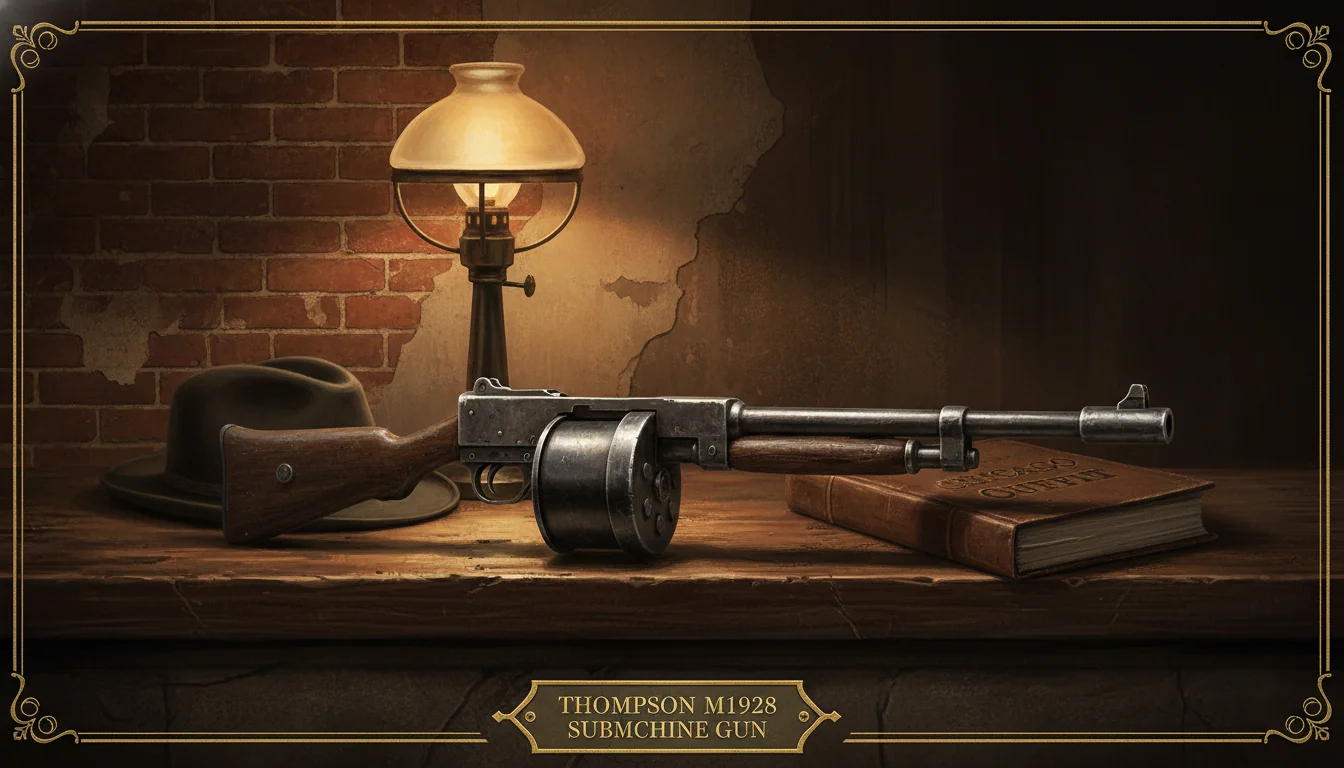
The weapon's rate of fire, roughly 500 rounds per minute, was actually slow by submachine gun standards - the Thompson and PPSh-41 both fired considerably faster. German engineers considered this a feature. At 500 rounds per minute, a trained user could fire short, controlled bursts from an open-bolt weapon without emptying the 32-round magazine in seconds. The MP40 was designed for economy and control, not for the maximum volume of fire that Soviet doctrine prioritized.
The double-stack magazine problem and the MP40/II
One persistent complaint from users was that the 32-round single-stack magazine ran out quickly in intense close-quarters fighting. Erma Werke responded with the MP40/II, a variant that used a sliding magazine housing allowing the user to mount two magazines side by side and shift between them. The solution worked mechanically but added weight and bulk to the weapon. The MP40/II was produced in relatively small numbers and never replaced the standard version.
Production and spread
Approximately 1.1 million MP40s were produced between 1940 and 1945, by Erma Werke, C.G. Haenel, and Steyr-Daimler-Puch in Austria. They were captured in large numbers by Allied forces, Soviet partisans, and resistance groups across occupied Europe, and were frequently turned against their original owners. Captured MP40s were valued by French Resistance and Yugoslav Partisan units precisely because German ammunition - 9mm Parabellum - was easy to scavenge from enemy casualties.
The design continued to influence postwar weapons. Several nations produced 9mm submachine guns in the late 1940s and 1950s that borrowed directly from the MP40's simplified manufacturing approach. The Israeli Uzi, the British Sterling, and others share its basic philosophy of stamped-receiver construction even if they solved the design problems differently.
The pop-culture afterlife
No submachine gun has appeared in as many war films and video games with as much inaccuracy as the MP40. The weapon's distinctive folding stock and pistol-grip receiver photograph dramatically, which is why production designers reach for it whenever they need a German soldier prop. The dramatic error - entire units carrying them, officers spraying them from the hip at ranges of 200 meters - does not reflect reality, but it does reflect the weapon's visual power.
The "Call of Duty" franchise has done more to spread the name MP40 than decades of historical writing. Players who would have called it a Schmeisser in 2000 learned its correct designation from a video game in 2003. This is either a minor contribution to historical accuracy or a demonstration of gaming's genuine influence on popular military history, depending on how generously you read it.
What the MP40 actually represents
The MP40 is not one of history's decisive weapons. It did not change the balance of power on any front or open up tactical possibilities that had not existed before. What it represents is a specific philosophy of military engineering: that a weapon designed first for manufacturing efficiency and second for user simplicity can be produced in sufficient numbers to matter strategically, even if it is not the best weapon in any individual engagement.
Germany in 1939 needed weapons it could make quickly, issue to specialists, and retrieve in pieces from the mud of the Soviet steppe without losing them as weapons. The MP40, stripped of its mythology, is the answer to that question - a reliable, adequate, intelligently designed piece of stamped steel that did a specific job through six years of war and never quite got credit for the modesty that was its actual virtue.
The name Schmeisser does not appear on it anywhere except the magazine.
Quick Answers
Common questions about this topic
Who designed the MP40?
The MP40 was designed by Heinrich Vollmer and manufactured primarily by Erma Werke. Hugo Schmeisser, whose name Allied soldiers attached to the weapon throughout the war, designed the magazine - his firm's name appeared stamped on the magazine body - but had nothing to do with the gun itself. The Schmeisser nickname stuck for decades despite being factually wrong.
Was the MP40 issued to all German soldiers?
No. The MP40 was issued primarily to squad and section leaders (NCOs), vehicle crews, paratroopers, and special units. The standard German infantryman carried the Karabiner 98k bolt-action rifle throughout the war. Films showing entire German units armed with MP40s are inaccurate; the ratio of rifles to submachine guns in a typical Wehrmacht infantry squad was around 9 to 1.
How does the MP40 compare to the American Thompson submachine gun?
The MP40 was lighter (roughly 4 kg loaded versus the Thompson's 5.5 kg), had a slower rate of fire (around 500 rounds per minute versus 700-800 for the Thompson), and used a 32-round single-stack magazine versus the Thompson's 20 or 30-round box or 50-round drum. The MP40's folding stock made it more compact for vehicle crews and paratroopers. The Thompson was heavier and harder-hitting in close quarters; the MP40 was more practical to carry all day.
What replaced the MP40?
The MP40 was never fully replaced within its role. The Sturmgewehr 44 (StG 44), introduced in limited numbers from 1943 and more widely from 1944, filled a different tactical role - it fired a longer intermediate cartridge and was accurate at much greater distances than any submachine gun. For close-range use in vehicle crews and special operations, the MP40 remained in service until the end of the war.

Talk to the People Who Wielded These Weapons
Chat with the soldiers, smiths, and commanders whose lives were shaped by the weapons of their age.
Create your free account →No card required. Talk to anyone in history with 8 free credits a day. Some features require a paid plan.
Join the HistorIQly Club
Get smarter about the past.
Weekly stories, deep dives, and exclusive content straight to your inbox.