The Disappearance of Ben Needham on Kos
The Ben Needham disappearance from a Kos farmhouse in 1991 remains one of Britain's longest-running missing-child cases - no body, no confirmed suspect, and no answer.
Read Wikipedia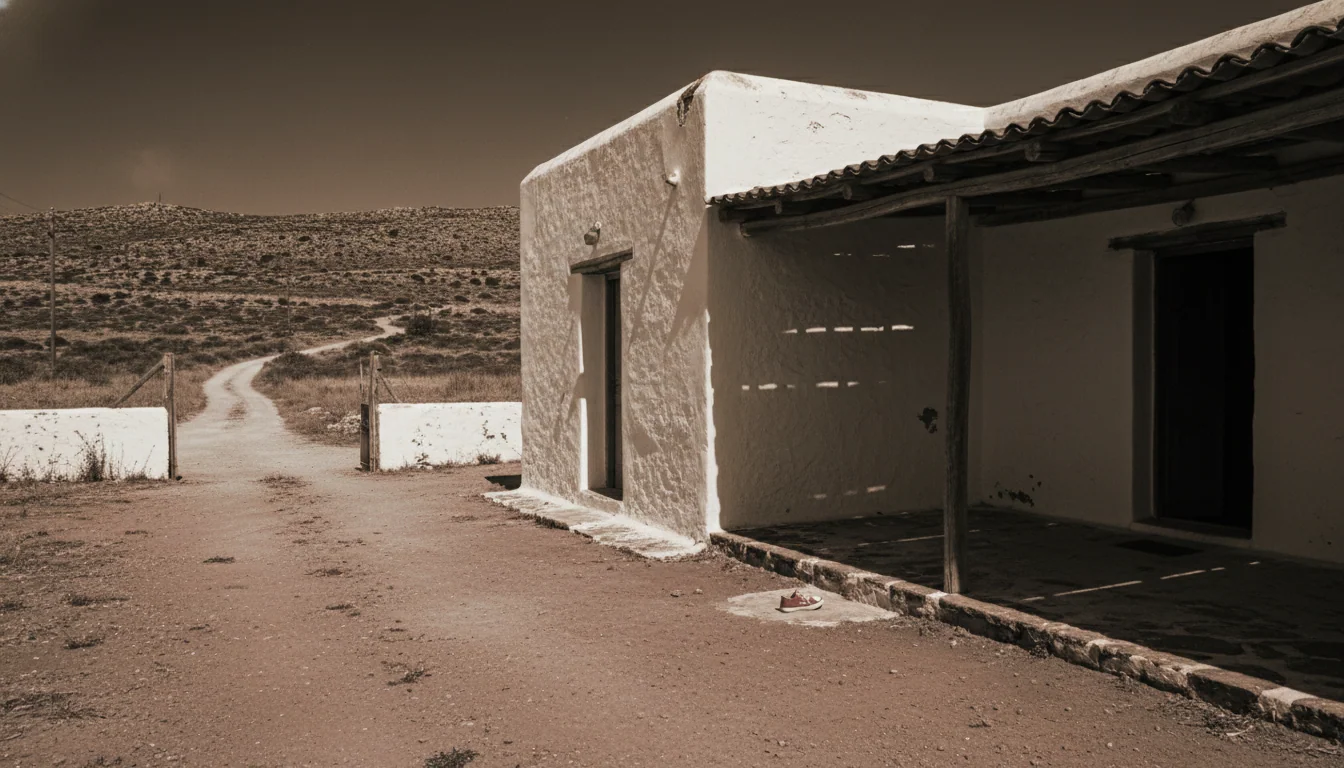
Ben Needham was twenty-one months old on July 24, 1991, when he vanished from a farmhouse courtyard on the Greek island of Kos and was never seen again. He was blond and sturdy and old enough to walk but not old enough to know to stay close. The family searching the scrubland around the house found nothing. The Greek police who arrived that afternoon found nothing. In the thirty-five years since, no remains have been discovered, no credible witness has come forward to describe seeing him taken, and the official position remains an open missing-person file that neither the British nor the Greek investigation has been able to close.
A working holiday that turned into a nightmare
Kerry Needham was twenty years old and the mother of a toddler when she traveled to Kos in the summer of 1991 with her parents, Eddie and Christine Needham. Her grandparents owned a farmhouse near the village of Iraklis, several kilometers inland from Kos Town, and the family had come to renovate it - one of those extended working-holiday projects that look manageable on a map and in conversation.
The farmhouse was unfenced, set in stony scrubland with a road nearby. On the morning of July 24, Ben was outside in the courtyard as the adults worked. Family members and at least one other person present that day saw him during the morning. Around midday, someone noticed he was gone. No one had seen him leave. No one had seen anyone approach. He was simply no longer in the courtyard.
The search began within minutes. The Needhams and people nearby spread out across the surrounding land, checking irrigation ditches, scrub, and the road margin. The local police were called. Officers from Kos Town arrived and initiated a wider search. Over the following two days the effort expanded to include military personnel and dozens of volunteers. The island's terrain - rocky hillsides, scattered farm plots, olive groves - swallowed the search. Ben was not found.
Kerry Needham was in Kos Town that day and returned as soon as she heard. The British press picked up the story within days. The image of a blond British toddler vanishing on a Greek island in tourist season was exactly the kind of story that traveled. Kerry was photographed arriving back on Kos, and the image of Ben in a red sweater became familiar across UK tabloids by the end of July 1991.
An investigation without a crime scene
The initial Greek investigation was compromised before it had properly started. There was no conventional crime scene - no blood, no signs of a struggle, no broken gate, no discarded clothing, no evidence of intrusion. There was a courtyard, and a missing child. Greek police in 1991 were not equipped with the forensic resources or case-management experience that a major missing-child inquiry requires. The scene was not secured. The first days were chaotic, and the information gathered in those critical hours was of limited use.
Theories proliferated quickly and most of them were wrong. The child-trafficking narrative dominated Greek press coverage and was fueled by some wildly irresponsible reporting, including speculation about specific ethnic groups that had no evidentiary basis. A series of claimed sightings - a blond boy seen in Athens, a child matching Ben's description at a market in northern Greece, a report from a village in the interior - were investigated and eliminated over the months and years that followed.
Kerry Needham threw herself into advocacy. She founded an appeal, hired private investigators, and continued to appear in the British media consistently across two decades, maintaining public pressure on both Greek and British authorities to keep the case active. Without that sustained campaigning it is likely the investigation would have been wound down long before it was.
The British review
South Yorkshire Police, the force covering the Sheffield area where the Needhams lived, took formal responsibility for the British side of the investigation in 2004. This marked a shift from ad hoc effort to structured review, with detectives analyzing the original Greek police files, re-interviewing available witnesses, and using forensic tools that had not existed in 1991.
A DNA profile from Ben was established and submitted to Interpol's database of missing persons. In 2012, a man who had been in a relationship with Kerry Needham was arrested and questioned in connection with the disappearance. He was released without charge and has consistently denied any involvement.
The 2012 review brought fresh scrutiny to a detail that had surfaced in the original investigation but had not been pursued aggressively: the presence, near or adjacent to the farmhouse on the day Ben disappeared, of earthmoving machinery operated by a local man named Konstantinos Barkas. Barkas himself had died in September 2012, before the renewed focus on his role.
The digger hypothesis
In 2016, South Yorkshire Police received new information from a witness who described seeing Ben near the machinery Barkas was operating on July 24, 1991. The hypothesis the police took seriously was stark: Ben had wandered into the path of the digger, died in an accident, and been buried under spoil or rubble that Barkas subsequently moved, either out of panic or deliberate concealment.
The scenario was plausible. A twenty-one-month-old child, unsupervised, in the vicinity of heavy machinery on an unfenced property, is at obvious and severe risk. Accidental deaths covered up by frightened adults are not rare in rural communities anywhere. Barkas, conveniently for anyone wishing to close the matter, was dead and could not be questioned.
South Yorkshire Police announced the theory publicly and coordinated a formal excavation with Greek forensic specialists and archaeologists. In September 2016, the dig began on land around the farmhouse, targeting areas identified by the new witness information and by analysis of where Barkas had moved spoil during his work.
The excavation found items. A small red shoe and a Noddy toy were recovered - items the Needham family said were consistent with Ben's belongings, though not definitively his. The finds attracted intense media coverage. They did not produce human remains. The excavation was concluded without finding bones. South Yorkshire Police said they remained confident in the theory but acknowledged that physical confirmation had not been recovered.
What the evidence says
The absence of remains does not disprove the accident theory, but it leaves it unresolved. If Ben died near the farmhouse in July 1991 and was buried under moved soil, his remains should in principle be recoverable. Mediterranean ground does not dissolve bone over thirty-five years. The question is whether the 2016 excavation was deep enough, comprehensive enough, or located precisely where the spoil actually ended up after decades of land use and disturbance.
Kerry Needham has publicly rejected the accident hypothesis. She does not believe her son died near the farmhouse. She maintains that he was taken by a person or persons who have never been identified. Investigators working the case have described the accident theory as the most plausible available explanation while conceding that it is not proven.
Greek and British investigators have not always been well-coordinated. The two jurisdictions have run parallel files rather than a unified inquiry, and the transfer of information between them has been inconsistent over the decades. Greece has never officially closed the file.
Thirty-five years
Ben Needham would be thirty-six in 2026. His case has outlasted most of the people directly involved in the events of July 1991, and Barkas - the man at the center of the most specific theory - has been dead for fourteen years. The evidence available today is a combination of thirty-five-year-old witness recollections, incomplete Greek police files, and a 2016 excavation that found objects but not answers.
What is not in doubt: a small British boy named Ben Needham disappeared from a farmhouse courtyard on Kos on a hot July day in 1991, and no one in the thirty-five years since has produced a verified account of what happened to him. His mother continues to insist he was taken alive. The official investigation considers the accident the most likely explanation. The ground near Iraklis has been dug and has not answered the question.
Missing-child cases without resolution do not simply age into irrelevance. The Madeleine McCann disappearance offers the closest parallel - another British child lost on a European holiday, drawing sustained international attention without a confirmed resolution. The Elaine Park disappearance in California shows how similar patterns recur across different jurisdictions and decades. They accumulate more anniversaries, more birthdays uncelebrated, more well-meaning witnesses coming forward decades late, more questions about how a child could vanish from a courtyard surrounded by family and leave no trace that anyone has yet been able to read. The Ben Needham disappearance case is still open. The sun still rises over Kos. The farmhouse has been rebuilt. The answers have not arrived.
Quick Answers
Common questions about this topic
When did Ben Needham disappear?
Ben Needham disappeared on July 24, 1991, from a farmhouse near the village of Iraklis on the Greek island of Kos. He was twenty-one months old and had been playing outside while family members worked on a property renovation.
Has Ben Needham ever been found?
No. Ben Needham has never been found and no human remains have been recovered. A 2016 excavation near the farmhouse, prompted by new witness information, found personal items consistent with a young child but produced no remains. The case remains an open missing-person investigation.
Who is Konstantinos Barkas and what is the digger theory?
Konstantinos Barkas was a local man who operated earthmoving machinery near the Needham farmhouse in 1991. In 2016, South Yorkshire Police received witness information suggesting Ben may have wandered into the path of Barkas's digger, died in an accident, and been buried under moved spoil. Barkas died in 2012 and could not be questioned. The 2016 excavation did not find human remains.
Is the Ben Needham case still open?
Yes. South Yorkshire Police continue to hold the file as an open missing-person investigation. Greek authorities have a separate, parallel investigation. Neither has been formally closed. Kerry Needham, Ben's mother, has never accepted the accident hypothesis and continues to believe her son was taken by a person or persons unknown.

Want to Interrogate the Suspects?
Chat with historical figures and uncover the truth behind history's greatest mysteries.
Create your free account →No card required. Talk to anyone in history with 8 free credits a day. Some features require a paid plan.
Join the HistorIQly Club
Get smarter about the past.
Weekly stories, deep dives, and exclusive content straight to your inbox.