The Disappearance of Brianna Maitland
In 2004, seventeen-year-old Brianna Maitland left a Vermont motel and vanished. Her car was found backed into an abandoned farmhouse. No answers in twenty years.
Read Wikipedia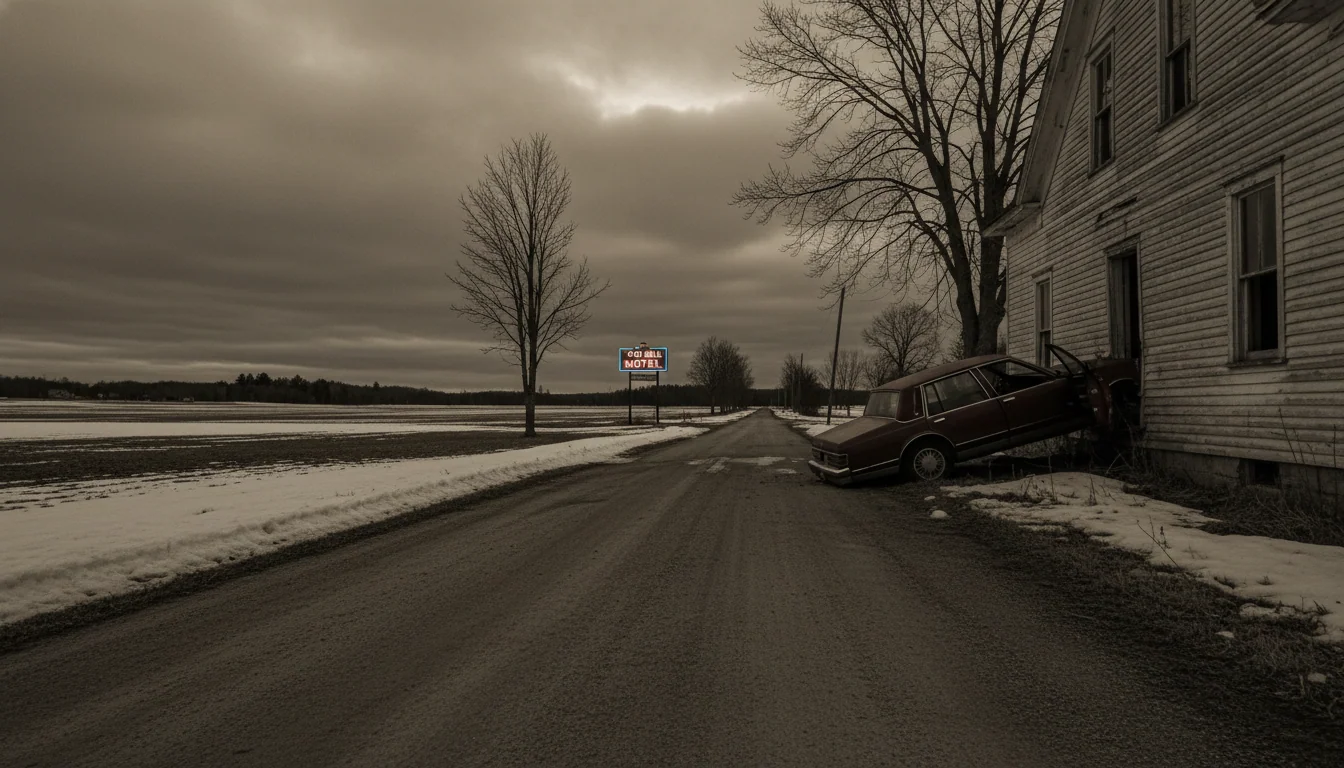
On the morning of March 20, 2004, a passing motorist spotted something on Route 118 in Montgomery, Vermont that did not belong: a maroon 1985 Oldsmobile Delta 88 with its rear end buried into the wall of an abandoned farmhouse that stood just off the roadside. Inside the car were a purse, a paycheck, and the rest of the belongings of the car's owner. The driver's door was open. The owner was not there.
Seventeen-year-old Brianna Maitland had finished her shift at the nearby Black Bear Motel the previous evening. She had driven away. She was never found.
A teenager in the far north of Vermont
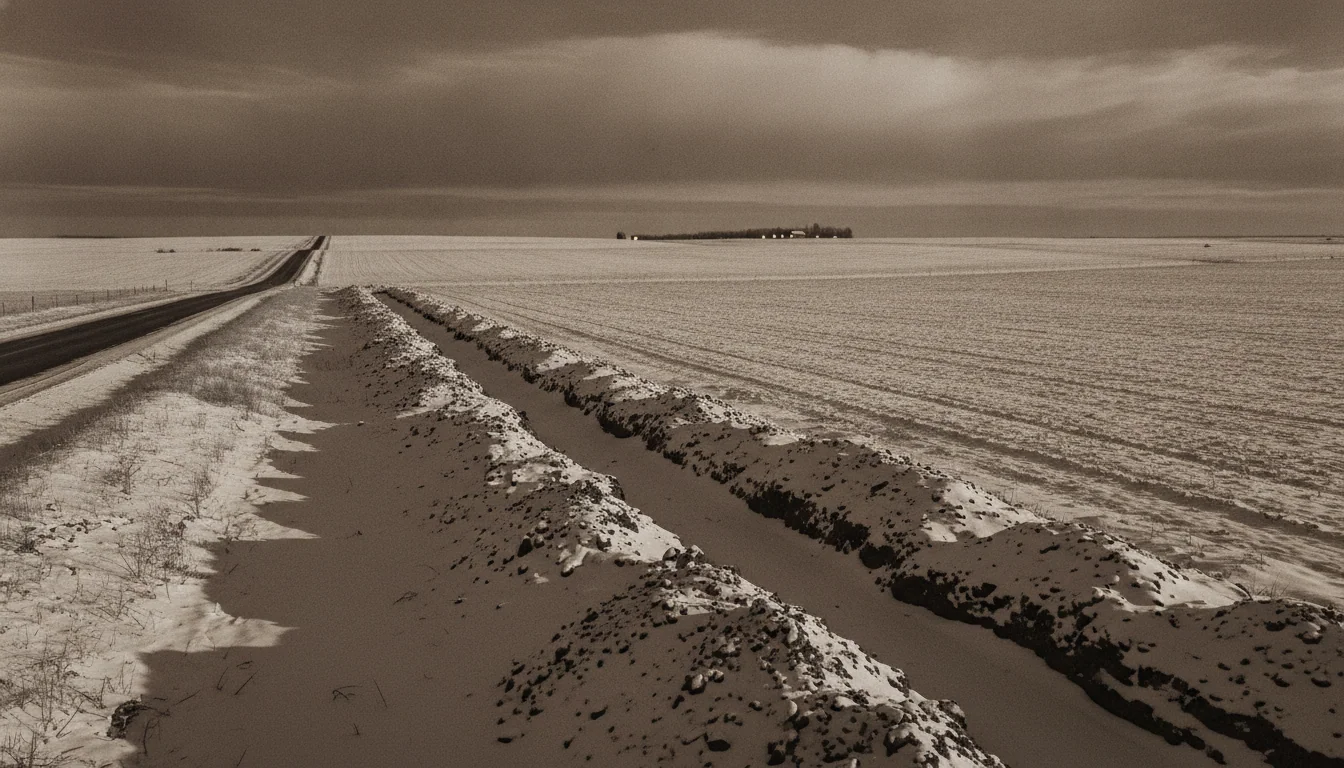
Montgomery sits in the northeastern corner of Vermont, close to the Canadian border and the New Hampshire line, in the kind of rural township where winter is long and the population is small enough that strangers draw attention. In March 2004 it was a community of a few hundred residents, served by a string of small inns and motels that catered to skiers heading for the slopes nearby.
Brianna Maitland was seventeen and had recently moved out of her parents' home in Sheldon, Vermont. She was sharing an apartment with friends and working to support herself, the way a determined teenager does when she has decided she is ready to manage on her own. The job at the Black Bear Motel was part of that independence. She had plans - modest, concrete plans - and the people who knew her did not believe she had any intention of walking away from them.
She was not the profile of a runaway.
The night of March 19
Brianna worked her shift on the evening of March 19, 2004. Coworkers at the motel were among the last people to see her. At some point that evening she got into her car and pulled out of the parking lot. The drive from the motel to her apartment was short - a few minutes at most on Route 118, a two-lane road that runs through the woods between Montgomery Center and Montgomery village.
She did not arrive home.
The following morning, the Delta 88 was found less than a quarter mile from the motel, backed hard against the wall of an abandoned farmhouse set back slightly from the road. The rear of the car had struck the building with enough force to cause damage to both the car and the structure. Yet Brianna's belongings - her purse, her paycheck from that night's shift, everything a person normally takes when they go somewhere deliberately - were still inside the vehicle.
The driver's door was open.
What the car told investigators, and what it did not
Investigators who arrived at the scene faced a physical picture that did not fit neatly into any standard explanation. A car backed into a building, rear-first, at speed, is not what a simple road accident normally looks like. A driver who loses control going forward strikes things with the front of the vehicle. The backwards orientation at the farmhouse required either that Brianna had deliberately reversed in that direction at some speed, or that someone else had moved the car after she left it.
No blood was found in or around the vehicle. No signs of a struggle, no evidence that anyone had been injured at the scene. The paycheck was particular - a person picking up and leaving voluntarily almost always takes money. Brianna's was still on the seat.
Vermont State Police arrived and quickly classified the case as suspicious. The farmhouse itself was on a stretch of road visible from the motel's parking area, close enough that Brianna would have passed it within seconds of leaving the lot. Whatever happened to her happened fast, in a known place, on a road she used regularly.
Beyond that, the scene offered almost nothing.
The Maura Murray connection
Thirty-nine days before Brianna Maitland vanished from Montgomery, Vermont, a twenty-one-year-old University of Massachusetts student named Maura Murray crashed her car on Route 112 near Haverhill, New Hampshire. She told a school bus driver who stopped to check on her that help was already on the way, and by the time police arrived she was gone. She was never found.
The distance between the two disappearance sites is roughly 40 miles. The time between them is six weeks. Both young women vanished from rural roads in a region with low population density, limited security camera coverage, and proximity to the Canadian border. Both left vehicles behind under circumstances that did not fully make sense. Neither case has been solved.
Investigators from Vermont and New Hampshire have been aware of both cases throughout their parallel investigations, and no confirmed connection has been established. The more disciplined view is that the proximity is coincidence - two intractable cases in a region where missing persons cases can be especially difficult to resolve, linked in public consciousness primarily because they share geography and time.
But the clustering has never stopped drawing attention from researchers who believe coincidence is not the full explanation.
Theories that have survived the years
Several explanations have circulated in the two-plus decades since Brianna's disappearance, none proven.
The most widely held among investigators is foul play by someone Brianna knew or encountered on the road that night. Vermont State Police have named persons of interest at various points and conducted multiple rounds of interviews. Some of those individuals have been cleared; others have died without the investigation reaching a conclusion.
A second theory involves the regional drug trade. Northern Vermont in the early 2000s had a documented problem with methamphetamine distribution networks that moved product across the border from Canada. Some investigators have suggested that Brianna may have had contact with people connected to that trade, either through acquaintances or by accident. She was not suspected of involvement herself.
A third line of inquiry has followed the idea of opportunistic abduction - someone who spotted a young woman alone on an empty road at night and acted. This theory requires no prior connection to Brianna and fits the physical evidence at the scene reasonably well, but has left no traceable trail.
Vermont State Police have never publicly settled on a theory, and the investigation has been classified as open and active throughout.
The advocates who have not stopped
Brianna's parents, John and Kellie Maitland, have spent more than twenty years keeping the case in public view. They have given interviews, collaborated with missing-persons advocacy organizations, and cooperated with investigators through multiple rounds of renewed interest. Their refusal to accept permanent silence has made the difference between a case that fades and one that continues to generate tips.
In 2017, Vermont State Police issued a renewed public appeal for information, which brought the case to a new audience through social media and true-crime forums. Podcasts and researchers have revisited the evidence repeatedly in the years since, producing new interviews and timelines without producing a resolution.
The abandoned farmhouse where the car was found was demolished years ago. The physical site no longer exists. The Oldsmobile has been processed by investigators and returned to the family.
What remains is a paycheck left on a seat, a door standing open on a cold Vermont road, and a teenager who was there and then was not. More than twenty years of investigation have not produced the single witness, the physical trace, or the confession that would explain what happened to Brianna Maitland between the motel parking lot and the abandoned farmhouse wall.
The case is open.
For another cold case from rural northern New England where the investigation has outlasted every available lead, see the Bear Brook murders in New Hampshire. For a case where a planned departure from a transport hub left no trail, see Andrew Gosden's disappearance at Kings Cross.
Quick Answers
Common questions about this topic
When did Brianna Maitland disappear?
Brianna Maitland was last seen on March 19, 2004, after finishing a shift at the Black Bear Motel in Montgomery, Vermont. She was seventeen years old. Her 1985 Oldsmobile was discovered the following morning backed into the wall of an abandoned farmhouse less than a quarter mile from the motel.
Was Brianna Maitland's case connected to the Maura Murray disappearance?
No official connection has been established. Maura Murray vanished on February 9, 2004, in Haverhill, New Hampshire, roughly 40 miles from Montgomery, Vermont. The two cases share geographical and chronological proximity - both young women disappeared in a narrow corridor of rural northern New England within six weeks of each other - but investigators have not publicly confirmed any link.
What did the scene at the farmhouse tell investigators?
Brianna's car was found backed rear-first into the wall of an abandoned farmhouse on Route 118, with enough force to cause visible damage to the vehicle. Her purse, paycheck, and other belongings were inside the car. There were no signs of struggle and no blood. The backwards trajectory of the car has never been satisfactorily explained.
Has anyone been charged in Brianna Maitland's disappearance?
No. Vermont State Police have investigated the case for more than two decades without making an arrest. Several persons of interest have been identified over the years. The case remains open and is classified as a suspicious missing persons investigation.

Want to Interrogate the Suspects?
Chat with historical figures and uncover the truth behind history's greatest mysteries.
Create your free account →No card required. Talk to anyone in history with 8 free credits a day. Some features require a paid plan.
Join the HistorIQly Club
Get smarter about the past.
Weekly stories, deep dives, and exclusive content straight to your inbox.