Crystal Rogers and the Bardstown Disappearances
Crystal Rogers disappeared from Bardstown, Kentucky in July 2015. Her car was abandoned, her body never found, and her father's murder a year later brought no conviction.
Read Wikipedia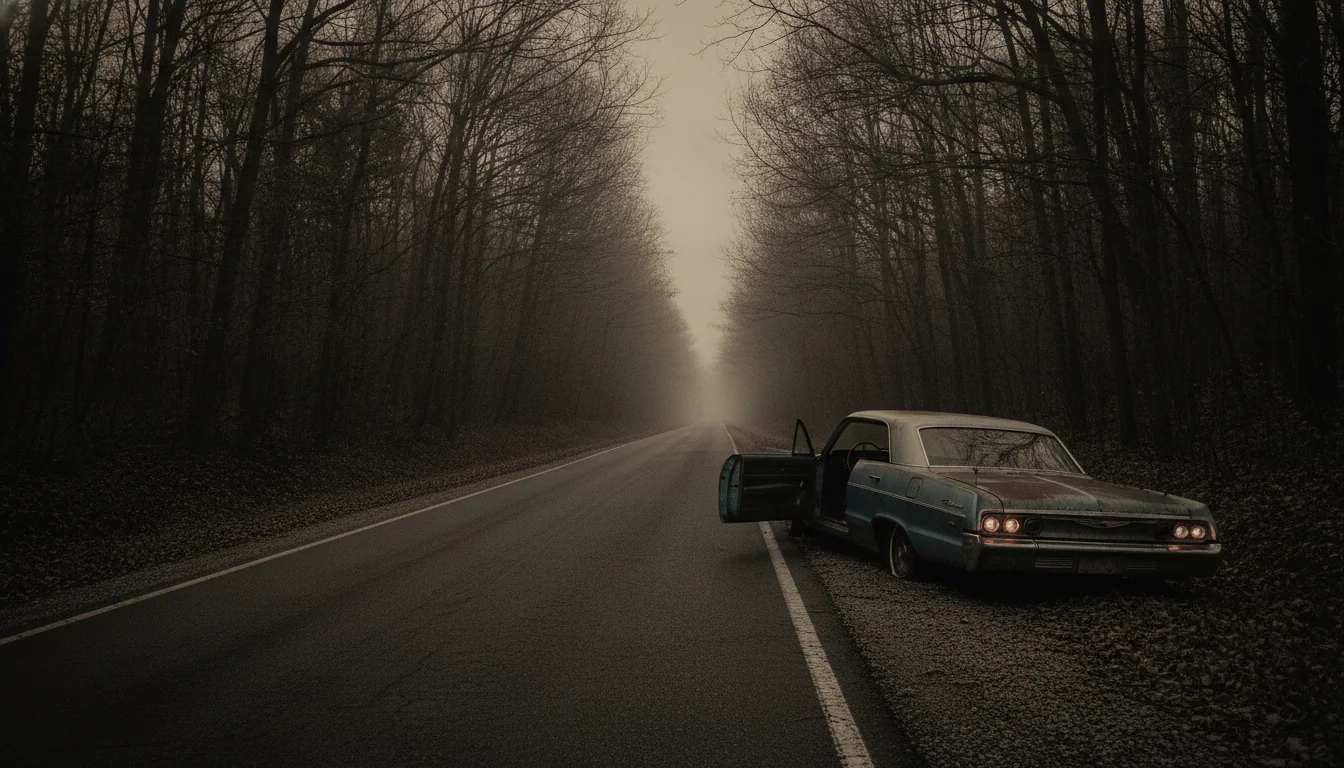
The car was still running when a passing driver found it on the Bluegrass Parkway. The hazard lights were blinking. A flat tire on the right rear had brought the vehicle to the shoulder. The keys were in the ignition. Crystal Rogers's purse, cell phone, and wallet were inside. Crystal was not.
It was the morning of July 5, 2015, and nobody in Bardstown, Kentucky, could account for where she had gone since the previous evening. She had five children and a life built around them. She had not said goodbye to anyone. She had not accessed her bank accounts. And her abandoned car, sitting on a rural Kentucky highway between Bardstown and the interstate, made the least alarming explanations very difficult to sustain.
Crystal Rogers
Crystal Rogers had grown up in Nelson County and spent most of her life there. She was 35 years old in the summer of 2015, a mother to five children ranging in age from a toddler to a teenager. Friends described her as someone whose life revolved around her kids - present at school events, reliable to family, unlikely to walk away from any of it without warning.
She had been in a relationship with Brooks Houck for several years. They shared a child together, Houck's son, and lived intermittently at his property outside Bardstown. The relationship was, by multiple accounts, complicated. People close to Crystal later told investigators she had spoken about Houck in ways that made them uneasy, though such accounts are difficult to evaluate in retrospect when everyone is searching for a narrative that explains the worst.
On the evening of July 3, Crystal was at Houck's property. That is the last time anyone can place her with certainty. By the following morning, her car was on the Bluegrass Parkway with no driver and no explanation.
The investigation and its obstacles
The Nelson County Sheriff's Office opened a missing persons case. Brooks Houck became a person of interest almost immediately - he was the last person known to have been with Crystal, and his accounting of the evening did not satisfy investigators. But a missing persons investigation without a body is a difficult thing to build into a murder case. The legal threshold for arrest is high when the evidence is circumstantial and the physical record is thin.
What investigators had was a car on a highway, personal belongings that suggested Crystal had not planned to go anywhere, and a boyfriend who alternated between public denials and carefully managed silence. What they lacked was physical evidence tying Houck to a specific crime, and without Crystal's remains, establishing the fact and circumstances of her death in court was a long-term project rather than a near-term prosecution.
Years passed. Houck gave occasional media interviews in which he denied any involvement. He sued a news outlet at one point over coverage he found defamatory, a move that struck many observers as aggressive for a person who claimed to be a grieving parent of one of Crystal's children. Investigators continued to build their case slowly, conducting repeated interviews and revisiting evidence. The community in Bardstown watched, and grew frustrated.
After an extended investigation, charges were eventually filed against Brooks Houck in connection with Crystal's murder. The case entered the court system, but as of 2026, no conviction had been secured. The procedural timeline had been extended by legal motions and the fundamental challenge of prosecuting a homicide where the victim's remains have never been recovered.
Tommy Ballard
Crystal's father Tommy Ballard never stopped pushing. He gave interviews to local and national journalists. He appeared at public events and spoke plainly about who he believed was responsible for his daughter's disappearance. He was not quiet, and he was not willing to wait for the system to move at its own pace.
On November 16, 2016 - sixteen months after Crystal vanished - Ballard went deer hunting on family land near Bardstown. He was shot and killed. His body was found on the property.
The manner of death was not consistent with an accident. A single gunshot, no apparent theft, no obvious motive beyond silencing a man who had become the most persistent public voice demanding accountability for his daughter. Investigators drew a direct connection between the two cases. Tommy Ballard, who had no known enemies outside of his campaign for Crystal, had almost certainly been murdered to stop him from talking.
What emerged from the Ballard investigation compounded everything about the Rogers case that had made progress so difficult. Nick Houck - a former officer with the Bardstown Police Department and the brother of Brooks Houck - was implicated in the killing. The possibility that local law enforcement had a direct family connection to the murder of the man pushing hardest for answers explained, at least in part, why the original investigation had moved with such apparent friction. It is a dynamic with echoes in the murder of Chandra Levy, another case where a young woman's disappearance and the years-long pursuit of justice afterward were shaped as much by institutional failure as by the crime itself.
Bardstown's wider shadow
The Rogers and Ballard cases did not exist in isolation. Bardstown, a small bourbon-country town of roughly 12,000 people, carried other unresolved violence. In May 2013, two years before Crystal disappeared, a Bardstown police officer named Jason Ellis was found shot dead in a ditch off the Bluegrass Parkway. He had been responding to a call. No one was ever charged. The location matched, in a grim geographic echo, where Crystal's car would later be found.
The accumulation of unsolved killings in a small community drew sustained attention from a Netflix documentary series that examined the Rogers case alongside the broader pattern of death and silence in Nelson County. The series reached a national audience and generated a wave of public pressure that local officials had not experienced at that scale before. It also produced the kind of narrative compression that can distort public understanding: a documentary is not a trial, and the elements it emphasizes are not necessarily the elements that matter most in court.
What the national coverage did accomplish was to make the case impossible to shelve. Investigators, prosecutors, and local officials knew the case was being watched. That pressure has consequences over time, for better or worse.
What the evidence shows
Crystal Rogers's body has never been recovered. In cases without remains, prosecutors must build their proof of death from other forms of evidence - testimony about the relationship, behavior patterns, financial records, witness accounts, forensic evidence from other scenes. That is a harder case to make than one where physical evidence can place a defendant at the scene of a specific death.
What the available evidence does establish, below the criminal threshold: Crystal Rogers did not leave voluntarily. She is almost certainly dead. The circumstances of her disappearance implicate people who knew her. The murder of her father, a man with no other apparent enemies, reinforces every inference that someone with something to hide acted to prevent justice from reaching them.
The question the courts are still working through is whether those inferences can be assembled into a conviction. For a community that has been asking the same question for more than a decade, the answer has been slow in coming.
For another case that dragged on for decades without a conviction despite intense public scrutiny, see JonBenet Ramsey: Thirty Years of Theories, No Conviction.
Quick Answers
Common questions about this topic
What happened to Crystal Rogers?
Crystal Rogers, 35 and a mother of five, disappeared over the Fourth of July weekend in 2015 from Bardstown, Kentucky. Her car was found abandoned on the Bluegrass Parkway with the keys in the ignition and her belongings inside. Her body has never been found.
Who is Brooks Houck?
Brooks Houck was Crystal Rogers's boyfriend at the time of her disappearance and the father of her youngest child. He became the prime suspect in her disappearance. Charges were eventually filed against him, but the case had not produced a conviction as of 2026.
Who killed Tommy Ballard?
Tommy Ballard, Crystal's father, was shot and killed in November 2016 while deer hunting near Bardstown. Investigators believe his murder was connected to his vocal campaign for answers about his daughter. Nick Houck, a former Bardstown police officer and Brooks Houck's brother, was implicated in the killing.
Did Netflix cover the Crystal Rogers case?
Yes. A Netflix documentary series brought national attention to the Rogers disappearance and the broader pattern of unexplained deaths around Bardstown, including the 2013 murder of a local police officer. The coverage intensified public scrutiny but did not immediately produce a conviction in the Rogers case.

Want to Interrogate the Suspects?
Chat with historical figures and uncover the truth behind history's greatest mysteries.
Create your free account →No card required. Some figures and features require a paid plan.
Join the HistorIQly Club
Get smarter about the past.
Weekly stories, deep dives, and exclusive content straight to your inbox.