Debunked: Did Hitler Really Have Only One Testicle?
A wartime marching song made it common knowledge. The actual evidence behind the Hitler one testicle claim is a single contested document, not a settled medical fact.
Read Wikipedia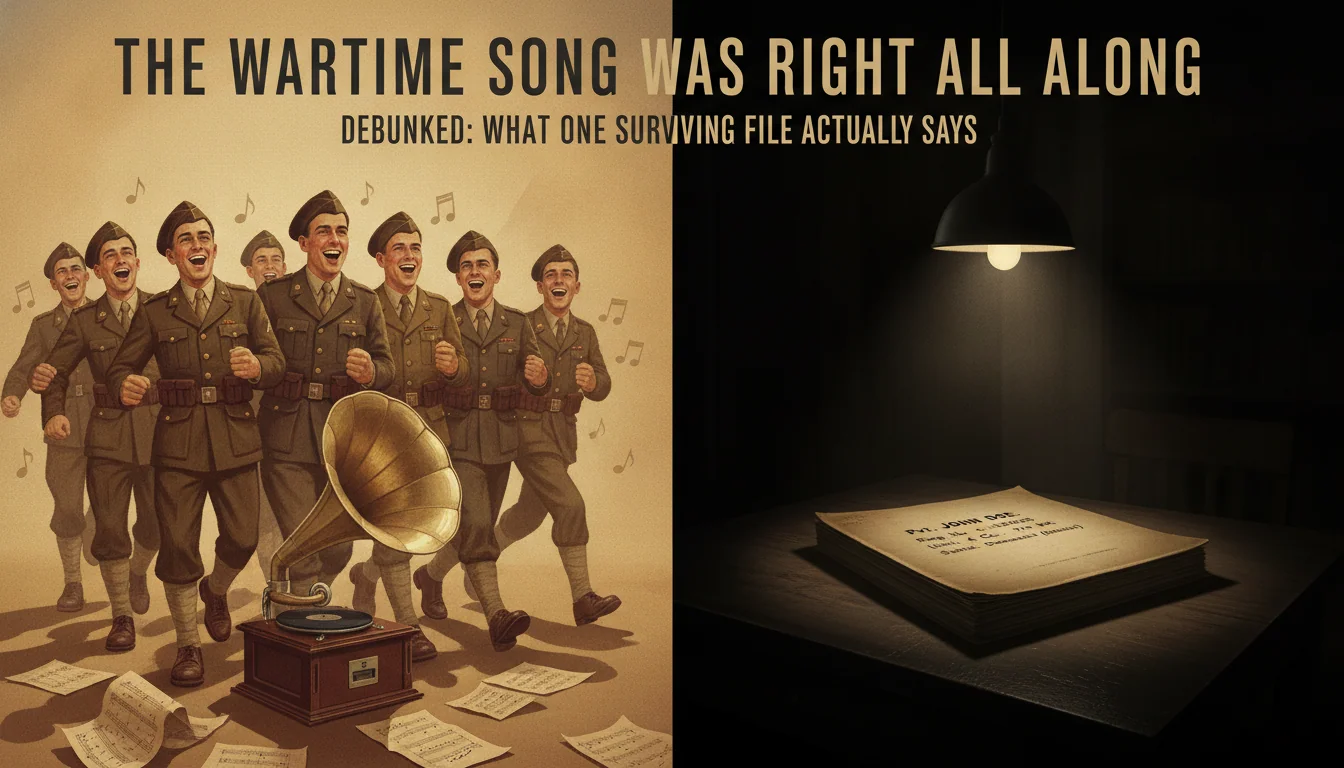
For most of the twentieth century, "Hitler only had one testicle" was less a historical claim than a punchline, the kind of fact everyone half-remembered from a song their grandfather used to sing. It is still repeated today as settled trivia, the sort of grim joke that gets dropped into pub quizzes and history documentaries alike. But is it actually true, or is it a wartime insult that picked up a thin coat of archival respectability decades later? The honest answer is that nobody can say for certain, and the claim rests on far less solid ground than its universal familiarity suggests.
The myth, stated fairly
The version most people know goes something like this: Adolf Hitler, along with several of his top lieutenants, suffered from an embarrassing physical defect that British soldiers turned into mockery during the Second World War, and archival research since has confirmed it was true all along. It is a satisfying story precisely because it fits a broader pattern people already wanted to believe about the Nazi leadership, that men who projected an image of racial and physical superiority were, underneath the propaganda, ordinary or even diminished. The myth also benefits from having a specific, memorable form, a marching song lyric rather than a vague rumor, which made it stick in a way an ordinary battlefield insult never could have.
Why it is so believable
Much of the myth's staying power comes from a real historical discovery that arrived decades after the joke was already common knowledge. In 2015, German historian Peter Fleischmann published research based on a military medical file compiled in 1923, in preparation for Hitler's trial following the failed Beer Hall Putsch. That file, drawn from wartime medical records, described a groin wound Hitler reportedly suffered during the Battle of the Somme in October 1916, and included a doctor's notation of "right-side monorchism," meaning an absent or undescended right testicle. When British and international newspapers picked up the story, headlines framed it as proof that the old wartime song had been right all along, and the myth's credibility jumped overnight from schoolyard joke to apparent documented fact. That is exactly the kind of vindication a persistent rumor rarely gets, and it is why the claim now circulates with far more confidence than the underlying evidence actually supports.
Where it actually came from
The traceable origin of the popular belief has nothing to do with medical files at all. It comes from a British and Allied wartime song, sung to the tune of Kenneth J. Alford's Colonel Bogey March, with lyrics mocking the physical failings of the Nazi high command: Hitler with only one, Hermann Göring with two but small, and other lines targeting Heinrich Himmler and Joseph Goebbels. The song spread widely among Allied troops and the British public during the Second World War, functioning as morale-boosting insult humor rather than intelligence reporting. Nobody singing it in 1940 had access to a German military medical file; the joke was invented, or at best guessed at, entirely independent of any documentary evidence, in the same tradition as wartime propaganda mocking an enemy leader's appearance, voice, or manhood.
The 1923 medical file that later attached itself to this rumor was not public knowledge during the war and was not the song's source. It surfaced only through archival research nearly seventy years after the war ended, discovered among captured German military records, and its connection to the wartime joke is coincidental rather than causal. The song came first, invented from thin air, and the document that seemed to confirm it arrived generations later.
How it spread
Once the wartime song had planted the idea in Allied popular culture, it needed little further help to spread. Postwar historians and biographers occasionally repeated the claim as an established, if minor, biographical detail, generally without close scrutiny of its evidentiary basis, since it fit comfortably alongside decades of anecdotal and secondhand reporting about Hitler's personal peculiarities. Television documentaries and popular history books picked it up as an entertaining aside. Then the 2015 discovery of the Fleischmann document gave the claim a fresh news cycle and a veneer of scholarly confirmation, and outlets around the world ran headlines asserting the old wartime song had been "proven true," even though the underlying document was considerably more ambiguous than that framing suggested.
What the primary sources actually say
This is where the myth runs into trouble. The single document at the center of the modern version of the claim, the 1923 medical file examined by Fleischmann, is a secondhand notation compiled years after the alleged 1916 wound, prepared for legal purposes surrounding Hitler's trial rather than as a contemporaneous clinical examination. It records a doctor's note describing the condition, but it is not the result of an independent physical examination performed at the moment of the wound, and it is the only document of its kind that has ever surfaced. No other confirmed medical record from Hitler's lifetime, including accounts from other physicians who treated or examined him at different points, corroborates the specific finding. Some historians who have reviewed the discovery describe it as a genuinely intriguing piece of corroboration for an old rumor, while cautioning that a single, secondhand wartime file, standing alone, does not meet the bar most historians would set for confirming a specific and highly personal medical claim about a figure this scrutinized.
There is also a structural problem with treating the matter as settled either way: no verified, independent postmortem examination of Hitler's remains exists in a form that historians consider reliable enough to resolve the question definitively, given the destruction of his body after his 1945 suicide and the fragmentary, disputed nature of what little forensic material has surfaced from Soviet-controlled records since. The honest historical position, then, is not that the claim is false, but that it has never been established with anything close to the certainty popular retellings assume.
What is true instead
The more interesting reality is not a settled medical verdict but a case study in how a rumor and a document can merge, decades apart, into something that feels far more confirmed than it actually is. The wartime song was invented mockery with no medical basis whatsoever, created to boost Allied morale, not to report a genuine fact. The 2015 discovery is a real archival document, but a thin and singular one, describing an old and unverified wound rather than a confirmed clinical condition, and it has never been corroborated by any other surviving record. Treating the pairing of a decades-old joke and a single ambiguous file as proof says more about how eager people are to see a schoolyard insult vindicated by history than it does about what can actually be documented. The honest answer to "did Hitler have one testicle" is not yes or no. It is that nobody has ever been able to prove it either way, and the popular certainty surrounding the claim outruns the actual evidence by a wide margin.
Quick Answers
Common questions about this topic
Is it true that Hitler only had one testicle?
It is not established fact. The claim rests almost entirely on a single 1923 German military medical file, discovered by a historian in 2015, that recorded a groin wound and noted "right-side monorchism." No other confirmed medical examination of Hitler corroborates the finding, and the wartime rumor that inspired the popular myth predates that document by two decades and was never based on medical evidence at all.
Where did the Hitler one testicle myth come from?
It traces to a British and Allied wartime song, sung to the tune of the Colonel Bogey March, that mocked the physical shortcomings of the Nazi high command, with a lyric claiming Hitler had only one testicle. The song was morale-boosting mockery, not a report of confirmed intelligence, and it circulated for years before any archival document was found that could even loosely be connected to the claim.
What does the 1923 medical document actually say?
The file, compiled ahead of Hitler's trial following the failed 1923 Beer Hall Putsch, includes a doctor's note describing a groin injury Hitler reportedly suffered during the Battle of the Somme in 1916, alongside a notation of monorchism affecting the right side. Historians who have examined the document note it is a single, secondhand medical record rather than a direct clinical examination performed at the time of the injury.
Do other historical sources confirm Hitler's condition?
No other verified medical examination of Hitler during his lifetime documents the condition, and the matter cannot be independently confirmed today. Historians treat the 2015 discovery as intriguing corroboration of an old rumor rather than as proof, given how thin and singular the surviving documentary record actually is.

Ask What Really Happened
Chat with the figures behind the myths everyone still believes.
Create your free account →No card required. Talk to anyone in history with 8 free credits a day. Some features require a paid plan.
Join the HistorIQly Club
Get smarter about the past.
Weekly stories, deep dives, and exclusive content straight to your inbox.