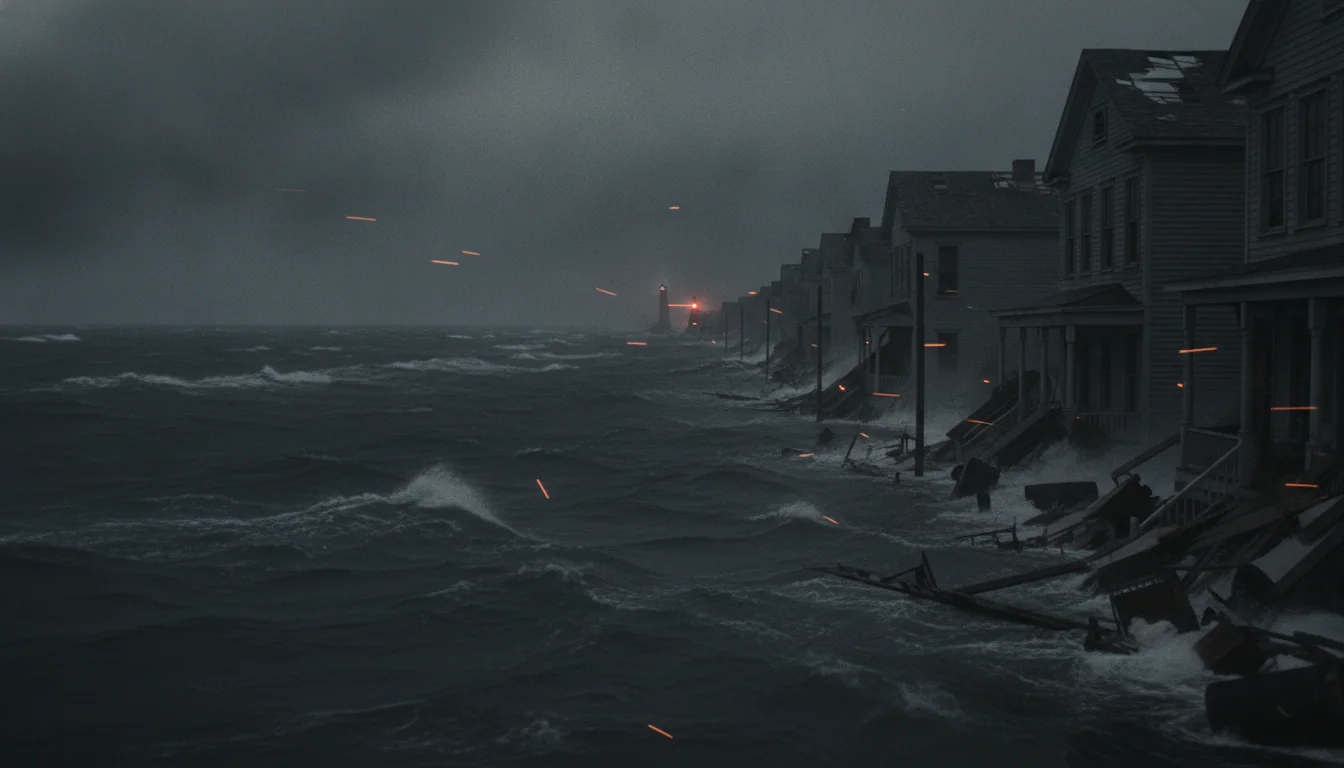
The Indian Ocean Tsunami: The Morning the Sea Vanished First
The 2004 Indian Ocean tsunami killed an estimated 230,000 people across 14 countries. No warning system existed to tell them the wave was coming.
Read Wikipedia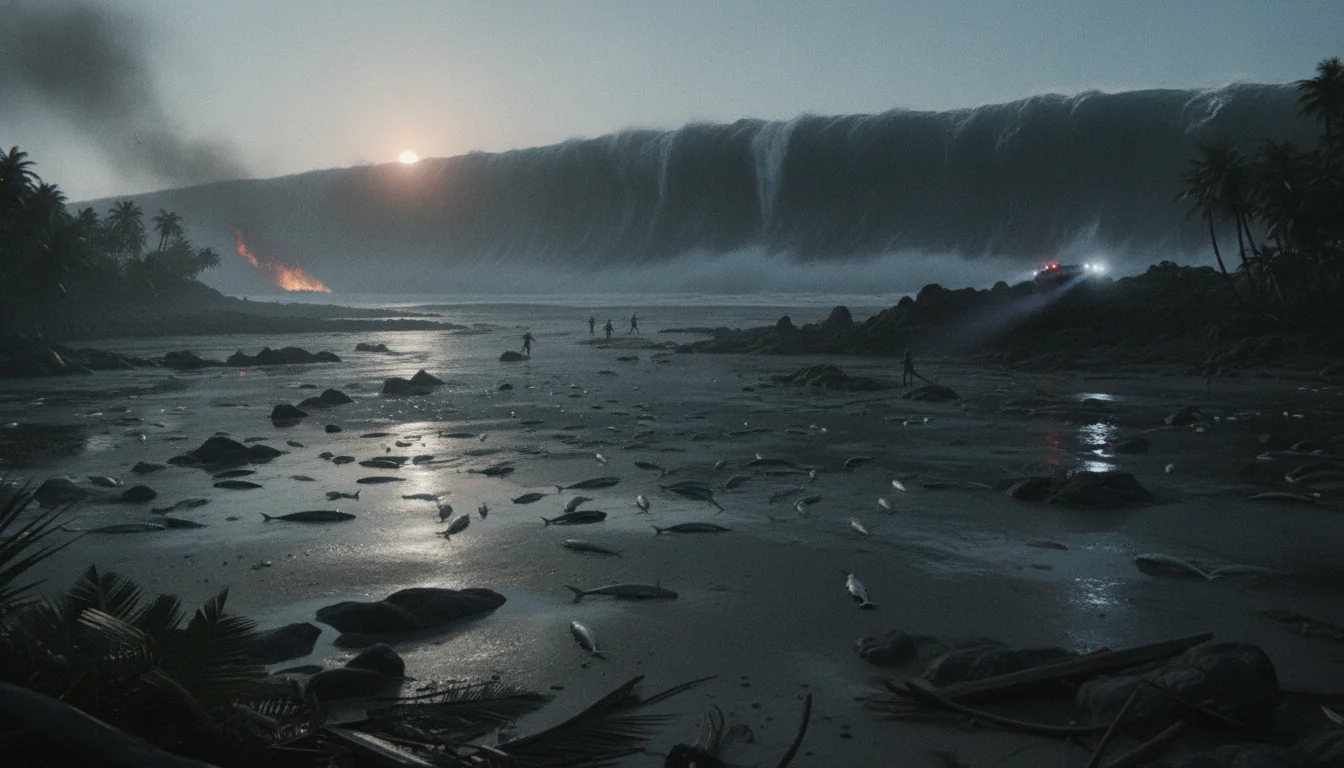
On the morning of December 26, 2004, the sea along parts of Thailand's Andaman coast did something that should have terrified anyone who saw it: it pulled back, exposing hundreds of meters of seabed, stranded fish, and coral that tourists had never seen at low tide. Some people walked out to look. Others, including a ten-year-old British girl named Tilly Smith who had studied tsunamis in a geography class weeks earlier, recognized the sign for what it was and ran. Within the hour, waves that would kill an estimated 230,000 people across fourteen countries arrived on shores that had no warning system to tell them what was coming.
The setting
The Indian Ocean rim on the morning after Christmas 2004 was full of people who had no reason to expect anything unusual. It was peak holiday season along Thailand's beaches, where resorts at Khao Lak and Phuket were packed with European and Australian tourists. Along Indonesia's Aceh coast, fishing communities and small cities were beginning an ordinary Sunday. Sri Lanka's coastal towns, India's Tamil Nadu shoreline, and the Andaman and Nicobar Islands were similarly unremarkable that morning, populated by fishermen, market vendors, and families with no reason to look twice at the horizon.
Beneath the seafloor off the west coast of Sumatra, along a stretch of the Sunda Trench where the Indian tectonic plate grinds beneath the Burma microplate, centuries of accumulated strain had built toward a rupture. Seismologists would later estimate the resulting earthquake at magnitude 9.1 to 9.3, among the largest ever recorded, with a fault rupture stretching over roughly 1,000 kilometers and lasting several minutes, an almost unimaginable duration for an earthquake.
The timeline
At approximately 7:58 a.m. local time, the seafloor ruptured, displacing an enormous volume of water and setting tsunami waves moving outward across the Indian Ocean at speeds comparable to a jet aircraft in deep water, slowing and rising dramatically as they reached shallow coastal shelves. Aceh, the closest populated coastline to the epicenter, had almost no time at all. Waves reportedly reached parts of the province within roughly 15 to 20 minutes of the quake, arriving with little to no warning before local residents had even finished processing the ground-shaking they had just felt.
Sri Lanka and the eastern coast of India, roughly 1,500 kilometers from the epicenter, had somewhat more time, with waves arriving approximately 90 minutes to two hours after the quake. Thailand's Andaman coast, closer to the source but shielded somewhat by the geometry of the Bay of Bengal, saw its waves arrive roughly two hours after the initial rupture. Even East Africa, thousands of kilometers away, was not spared: waves reached the coasts of Somalia and other parts of the Horn of Africa roughly seven hours after the earthquake, killing people who had no conceivable reason to associate a quake near Indonesia with danger on their own beach.
In several locations, including the beach where Tilly Smith was vacationing with her family, the tsunami's first visible sign was not a wave but its opposite: a rapid, dramatic recession of the sea, exposing seabed far beyond the normal low-tide line. This is a well-documented precursor of a shallow-water tsunami, caused by the trough of the wave arriving ahead of its crest, but almost nowhere around the Indian Ocean in 2004 had this been taught as public safety knowledge. Smith's recognition of the pattern, and her family's decision to warn others on the beach and move to higher ground, is among the most cited individual actions credited with saving lives that morning, though it also underscored how much depended on chance exposure to the right information rather than any institutional warning.
The decisions and the warnings missed
The core failure was structural rather than a single bad call by any one official. The Pacific Ocean had operated a functioning tsunami warning system since the 1960s, built after earlier Pacific-wide disasters, complete with seismic monitoring, sea-level sensors, and established communication channels to coastal governments. The Indian Ocean had none of this. Seismologists at the Pacific Tsunami Warning Center in Hawaii detected the earthquake within about 15 minutes and recognized its potential to generate a major tsunami, but the center had no formal relationships with most Indian Ocean nations and no clear protocol for issuing warnings outside its own ocean basin. Reported attempts to reach some regional government contacts in the crucial early minutes struggled to find the right officials or reliable communication channels quickly enough to matter.
Compounding the gap, most vulnerable coastal populations, unlike those in Pacific nations with a cultural memory of tsunami risk, had never been taught to recognize a receding shoreline as a danger sign. In community after community, the sight of exposed seabed drew crowds of onlookers rather than triggering evacuation.
The survivors and the toll
The death toll is generally estimated at around 230,000 people across the fourteen affected countries, though precise figures remain disputed given the number of transient tourists, undocumented residents, and entire coastal families lost together with no one left to report them missing. Indonesia's Aceh province bore the heaviest toll, with well over 100,000 dead. Sri Lanka lost an estimated 35,000 people, India around 18,000, concentrated heavily in Tamil Nadu and the Andaman and Nicobar Islands, and Thailand roughly 8,000, a disproportionate number of them foreign tourists vacationing over the holidays. Entire villages along Aceh's coast were erased outright, and the search for the dead and missing continued for months.
Survivor accounts collected in the months afterward described a common pattern: the first wave was rarely the largest, and people who returned to the shoreline to look for belongings, help others, or simply out of shock were frequently caught by a second or third wave arriving minutes later, in some locations considerably larger than the first. Relief agencies estimate that a substantial share of the missing were never formally accounted for, and mass graves became necessary in Aceh and parts of Sri Lanka simply to manage the scale of the dead in tropical heat within days of the disaster.
The inquiry
In the disaster's aftermath, international scientific bodies and the United Nations conducted extensive reviews of what had failed and what could prevent a repeat. Their conclusions centered less on any single decision-maker's error and more on the absence of infrastructure: no Indian Ocean-wide seismic and sea-level monitoring network, no established alert pathway to national governments, and no public education program teaching coastal residents to recognize natural warning signs.
The response was substantial. UNESCO's Intergovernmental Oceanographic Commission coordinated the creation of the Indian Ocean Tsunami Warning and Mitigation System, which became operational in 2006, linking seismic stations, deep-ocean pressure sensors, and coastal sea-level gauges across the region to national warning centers for the first time. Coastal nations invested heavily in siren networks, evacuation route signage, and school curricula that now explicitly teach children, the way Tilly Smith's geography class inadvertently had, what a sudden retreat of the ocean actually means. The 2004 disaster remains the clearest case study in modern disaster science for a simple, brutal lesson: the scientific capability to detect the danger existed within minutes, but the human systems needed to act on it did not, and it was ordinary people on the beaches, not any warning siren, who saved the lives that were saved that morning.
Quick Answers
Common questions about this topic
What caused the 2004 Indian Ocean tsunami?
An undersea megathrust earthquake, estimated at magnitude 9.1 to 9.3, ruptured along the Sunda Trench off the west coast of Sumatra, Indonesia, on December 26, 2004. The seafloor displacement pushed an enormous volume of water upward, generating tsunami waves that radiated across the Indian Ocean.
How many people died in the 2004 tsunami?
Estimates commonly cite around 230,000 deaths across 14 countries, making it one of the deadliest natural disasters in recorded history. Indonesia's Aceh province suffered the largest share of the toll, followed by Sri Lanka, India, and Thailand.
Why did so many people not know the tsunami was coming?
No tsunami warning system existed for the Indian Ocean at the time, unlike the Pacific, where such systems had operated for decades. Seismologists detected the earthquake within minutes but had no established channel to alert coastal communities or issue evacuation orders before the waves arrived.
What changed after the 2004 tsunami?
The disaster led directly to the creation of the Indian Ocean Tsunami Warning and Mitigation System, established in 2006, along with major investment in coastal sirens, seismic monitoring, and public education about natural warning signs such as receding water.

Talk to the Survivors
Hear firsthand accounts from people who lived through history's darkest days.
Create your free account →No card required. Talk to anyone in history with 8 free credits a day. Some features require a paid plan.
Join the HistorIQly Club
Get smarter about the past.
Weekly stories, deep dives, and exclusive content straight to your inbox.