Tenerife: How Two 747s Collided on a Foggy Runway
A bomb threat, thick fog, and one ambiguous radio call: how two Boeing 747s collided at Tenerife in aviation's deadliest disaster.
Read Wikipedia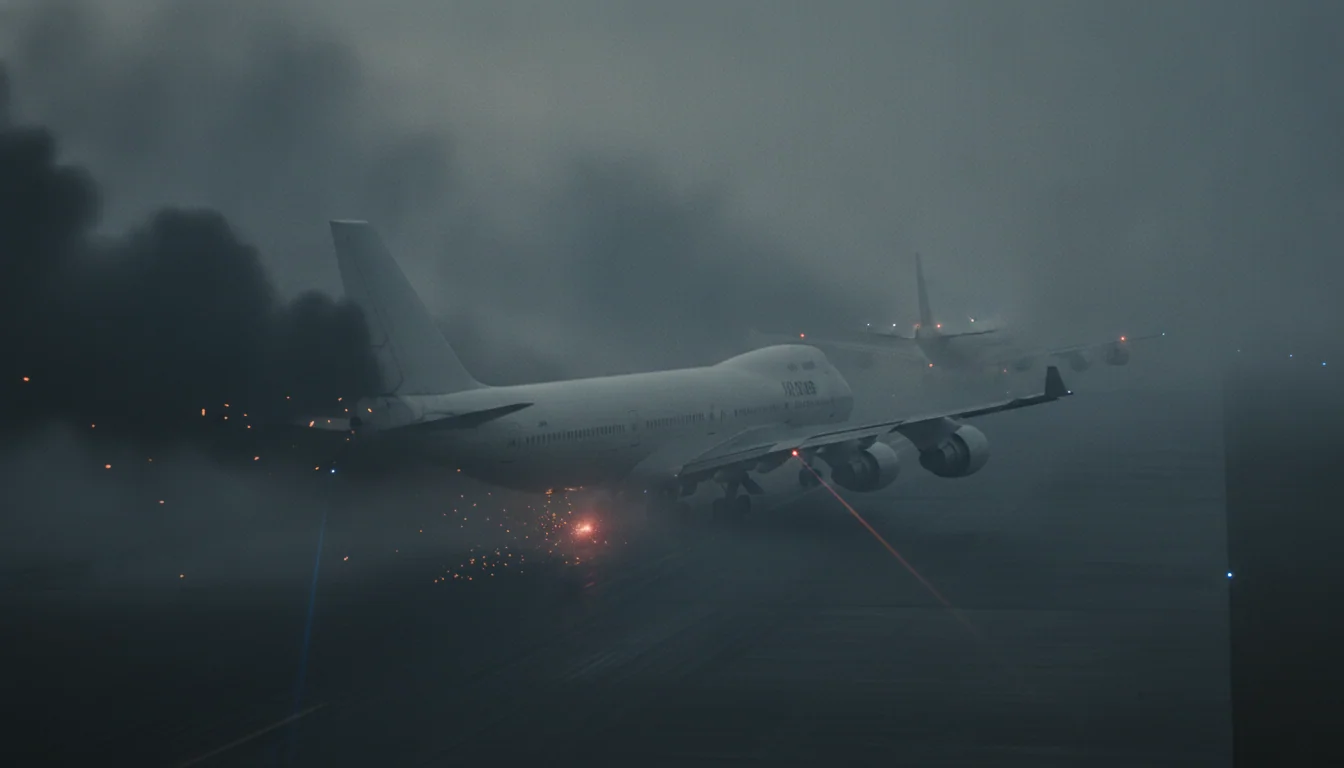
Los Rodeos was never meant to hold this many airplanes. The small airport on the north side of Tenerife, built for short island hops between the Canaries, sat in a saddle of high ground where cloud rolled in off the Atlantic most afternoons and settled without warning. On March 27, 1977, a Sunday, it was hosting two jumbo jets it had no ordinary reason to see at all.
The setting
Both aircraft were headed somewhere else. KLM Flight 4805, a Boeing 747 chartered out of Amsterdam, and Pan Am Flight 1736, a 747 chartered out of Los Angeles by way of New York, were both bound for Gran Canaria's Las Palmas airport, a hub for cruise-ship passengers and holidaymakers. Neither crew had planned to see Los Rodeos at all.
That morning, a bomb went off inside the terminal at Las Palmas, reportedly the work of a Canary Islands separatist group seeking independence from Spain. No one was killed, but the airport shut down while police searched for a second device, and Spanish authorities began diverting incoming flights to the only nearby field that could take a widebody jet: Los Rodeos.
Within a couple of hours, a runway and taxiway built for propeller planes and the occasional narrow-body jet were crowded with diverted 747s, DC-8s, and smaller aircraft, most parked nose to tail along the single taxiway that ran beside the runway. There was no ground radar to track any of them. There was one runway, and it now had to double as a parking apron, a taxiway, and a departure strip, sometimes all at once, with controllers working the unfamiliar traffic largely by radio and by eye.
The timeline
By mid-afternoon, Las Palmas reopened, and the backed-up aircraft prepared to leave in sequence. The KLM captain, a senior training pilot and one of the airline's most experienced men, was anxious about the clock. His crew was close to running out of legally permitted duty hours, and if the flight slipped much later, KLM would have to cancel it and put well over two hundred passengers up overnight. He had also ordered extra fuel earlier that day, weight the aircraft did not strictly need for the short island hop, which meant a longer refueling stop at Los Rodeos and a heavier jet to get airborne.
Fog thickened through the afternoon, rolling across the field in patches that could cut visibility from clear to a few hundred feet within minutes. Because the parked aircraft blocked the taxiway, ground control told both 747s to taxi down the active runway itself and backtrack to the far end before turning around for takeoff. Pan Am was instructed to follow the KLM aircraft and then leave the runway at a taxiway further along, turning off at a sharp angle to clear it for KLM's departure.
In the fog, the Pan Am crew struggled to positively identify the correct turnoff. Whether they missed it, misjudged the awkward angle, or were still working out which exit the controller meant is not entirely settled, but the result was the same: Pan Am 1736 was still moving down the runway, not yet clear of it, when KLM 4805 reached the far end, turned around, and lined up for takeoff facing the Pan Am jet head-on, invisible to each other in the mist.
The decisions
What happened next has been picked over by investigators for decades, because so much of it turned on a few seconds of ambiguous radio traffic. KLM's first officer read back the airline's route clearance, the instructions for the climb after takeoff, and then added a transmission indicating the aircraft was beginning its roll. At almost the same instant, the Pan Am crew transmitted that they were still on the runway. The two transmissions overlapped, producing a shrill interference squeal on the frequency that blotted out parts of both messages. The tower's own response, telling KLM to stand by, was similarly garbled by the time it reached the cockpit.
The word that mattered most was "takeoff" itself. Investigators later concluded that non-standard phrasing, stating an intention to take off rather than requesting or confirming a clearance, is exactly the kind of ambiguous language that lets a stressed crew hear what it expects to hear rather than what was actually said. The KLM captain had a route clearance in hand. He did not have takeoff clearance. In the confusion of the squeal, he seems to have believed he had both.
Inside the KLM cockpit, the flight engineer reportedly asked whether the Pan Am aircraft was clear of the runway yet. The captain answered firmly that it was and continued accelerating. He was one of the airline's most senior and respected pilots, a man who had trained many of the airline's own crews, and that seniority appears to have made it harder for a junior officer to press a doubt he could not fully confirm through the fog. By the time either crew saw the other aircraft's lights emerge from the mist ahead of them, there were only a few seconds left. Pan Am's crew shoved the throttles forward and tried to turn off the runway; KLM's crew, already committed to the takeoff roll, tried to pull the nose up early. Neither maneuver was enough.
The survivors and the toll
The KLM jet's landing gear and lower fuselage tore through the top of the Pan Am aircraft before crashing back to the runway and sliding on, engulfed, for hundreds of feet. Both aircraft caught fire almost immediately. Everyone aboard the KLM flight, 248 people, died, most in the initial impact rather than the fire that followed. Aboard the Pan Am aircraft, 335 of the 396 people on board were killed, largely in the blaze that swept through the wreckage, but 61 people escaped, mostly from the forward section of the fuselage nearest the cockpit, which had not yet been consumed by flame when they scrambled clear through gaps torn in the hull. The total death toll, 583, remains the highest of any accident in aviation history, a grim distinction that dwarfs even far more famous crashes like the Hindenburg, which killed 36 people, and one that neither airline, nor the small airport that hosted it, ever sought.
The inquiry
Spanish authorities led the investigation, joined by representatives from the Dutch aviation authority and the United States, and the process was, by most accounts, unusually contentious. The Dutch delegation initially resisted conclusions that placed primary responsibility on their own captain, a rare public disagreement in an industry that generally presents joint findings without much daylight showing between the parties.
The finished report placed the immediate cause squarely on the KLM captain's decision to begin the takeoff roll without a clear and unambiguous takeoff clearance. But it also catalogued the chain of contributing failures that made that single decision so lethal: an airport never designed to hold this many wide-body jets at once, a runway pressed into service as a taxiway, fog that came and went in a way local controllers knew well but visiting crews did not, and radio phrasing loose enough that a crew under time pressure could mishear a request for a takeoff as a clearance for one.
The disaster's most lasting legacy was not a change to the runway at Los Rodeos but a change to what pilots are allowed to say to each other. Aviation authorities worldwide moved to eliminate the word "takeoff" from radio exchanges except in an actual takeoff clearance or its cancellation, replacing it elsewhere with "departure." Just as significant was a cultural shift inside the cockpit itself: the accident became a founding case study for what airlines now call crew resource management, training built specifically to give junior officers standing to challenge a captain's decision, and to give captains a reason to listen, the same kind of institutional silence that would later doom the Challenger crew. The fog at Los Rodeos lifted within the hour. What the accident exposed about hierarchy, haste, and a single misunderstood word took much longer to clear, and reshaped how every airliner on earth talks to its own tower.
Quick Answers
Common questions about this topic
What caused the Tenerife airport disaster?
The KLM captain began his takeoff roll believing he had clearance when he did not, while a Pan Am jet was still taxiing on the same runway. Thick fog hid each aircraft from the other, and an ambiguous radio transmission, partly blocked by interference, left both the tower and the Pan Am crew unsure that KLM was rolling.
How many people died in the Tenerife airport disaster?
583 people died, all 248 aboard the KLM aircraft and 335 of the 396 aboard the Pan Am aircraft. It remains the deadliest accident in aviation history.
Could the Tenerife disaster have been prevented?
Very likely. A bomb at a nearby airport, not the accident itself, forced both jets to divert into a small airport that could not safely hold them, and standard radio phrasing, clearer taxi instructions, or a captain willing to wait a few more seconds for confirmation would each have broken the chain.
What did the investigation find?
Spanish investigators, joined by Dutch and American officials, found the KLM captain took off without clearance, but cited contributing factors including fog, airport congestion, ambiguous radio phrasing, and a cockpit culture that discouraged junior crew from challenging a senior captain.

Talk to the Survivors
Hear firsthand accounts from people who lived through history's darkest days.
Create your free account →No card required. Some figures and features require a paid plan.
Join the HistorIQly Club
Get smarter about the past.
Weekly stories, deep dives, and exclusive content straight to your inbox.