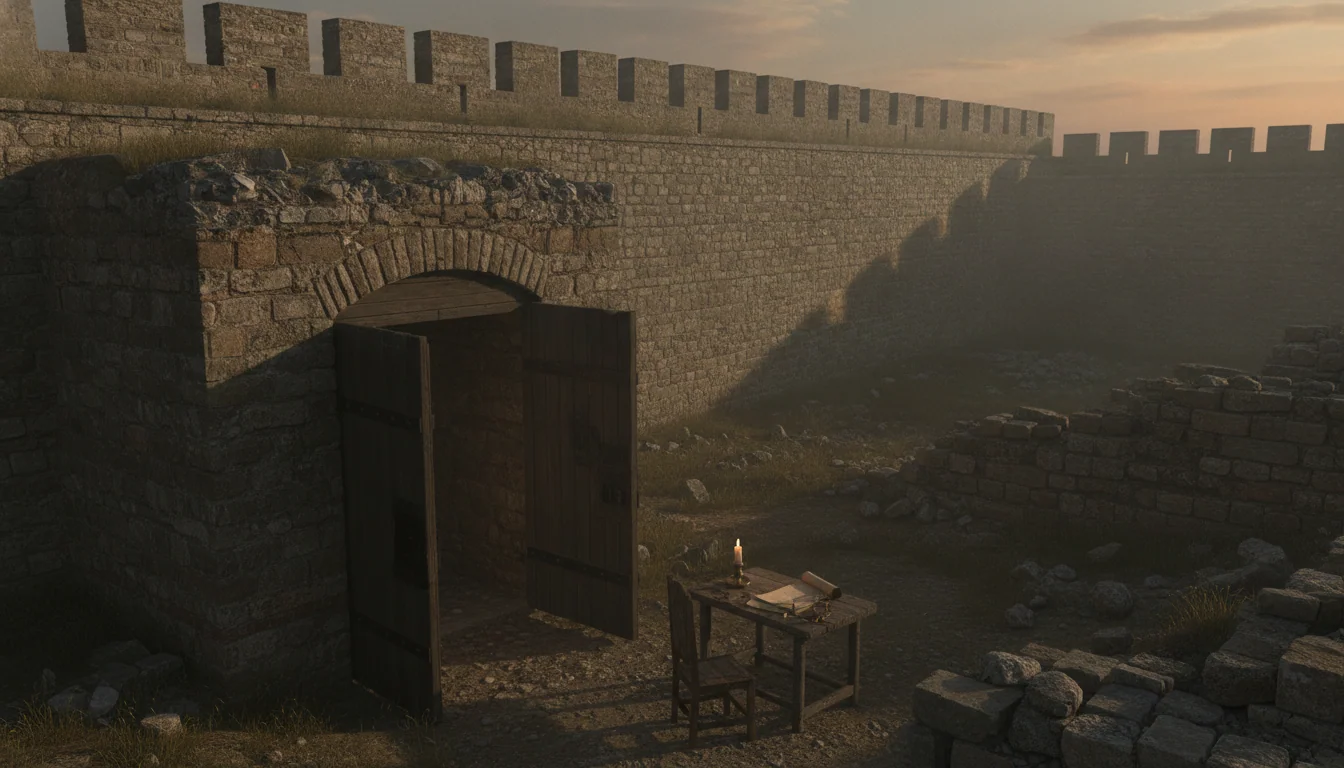
The Final Hours of Julius Caesar
A wife's nightmare, a soothsayer's warning, and the senate meeting he nearly skipped: the last hours before the Julius Caesar assassination and its 23 stab wounds.
Read Wikipedia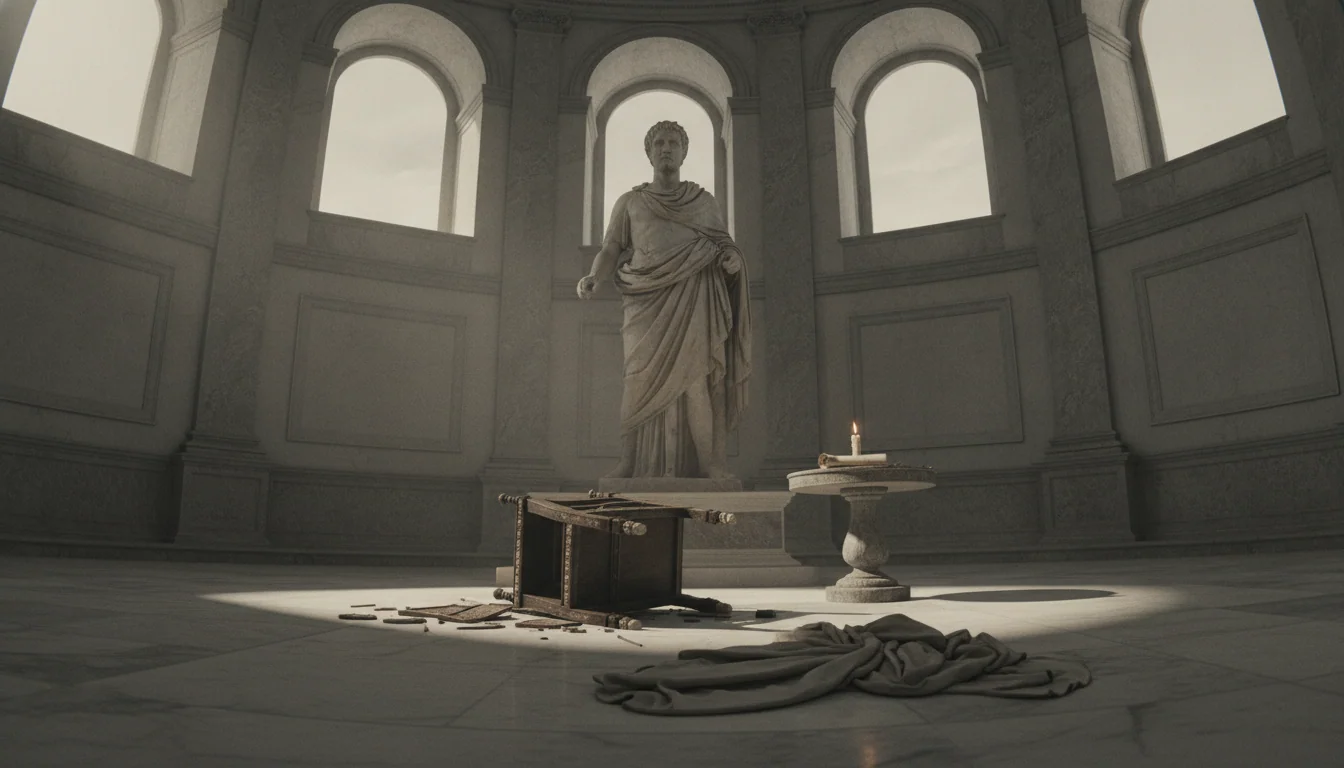
On the evening of March 14, 44 BCE, Julius Caesar dined at the house of Marcus Aemilius Lepidus, his second-in-command and soon to be one of the three men who would divide Rome between them after his death. Ancient writers say the talk that night drifted, as dinner talk does, to the best kind of death to have. Caesar, half-listening while he signed letters, is said to have looked up and answered without much thought: sudden, and unexpected. He would get exactly that within about eighteen hours, in a hall built by the man he had beaten in a civil war a few years before.
The night before
Caesar was 55 years old and, on paper, at the height of his power. He had crossed the Rubicon five years earlier, defeated Pompey's forces, pardoned most of his Roman enemies rather than executing them, and in February of that year accepted the title dictator perpetuo, dictator for life. He was also, by every account, exhausted, and planning to leave the city in three days to lead a long campaign against Parthia.
That night's sleep was reportedly bad on both sides of the marriage bed. Caesar's wife, Calpurnia, dreamed vividly and woke distressed. Ancient sources disagree on the details, one version has her dreaming the pediment of their house collapsed, another has her dreaming she cradled her murdered husband in her arms. Suetonius adds that the doors and shutters of Caesar's own bedroom reportedly blew open on their own during the night, and that Caesar himself woke unsettled enough to consider not going out the next day.
None of this was treated as unusual for the time. Romans took dreams and omens seriously, and Caesar had, weeks before, already been given a specific warning to worry about.
The morning he almost stayed home
A seer named Spurinna had told Caesar to beware the Ides of March, the 15th, sometime earlier that spring. On the morning itself, walking to the Senate, Caesar reportedly spotted Spurinna in the crowd and joked that the Ides had come and nothing had happened. The seer's reply, as later writers tell it, was measured rather than triumphant: they had come, yes, but they had not yet gone.
A sacrifice was performed that morning as custom required before public business, and the omens were reportedly bad, according to some accounts the victim was found without a heart. Combined with Calpurnia's distress, it was apparently enough. Caesar decided to send word to the Senate that the meeting was postponed.
That decision did not hold. Decimus Junius Brutus Albinus, a general who had served under Caesar in Gaul and was trusted enough to be named in his will, and who should not be confused with the more famous Marcus Junius Brutus, arrived at the house that morning specifically to talk him out of staying home. He argued that senators had traveled and gathered specifically for Caesar, that postponing on the strength of a wife's dream would invite ridicule, and that the Senate was expected to formally offer him a crown for use only in the eastern provinces that very session, a prize he was not likely to want to delay. Caesar agreed to go. Decimus Brutus was one of roughly sixty senators involved in the plot to kill him.
To the Theatre of Pompey
Rome's original senate house, the Curia Hostilia, had burned down in street rioting a few years earlier and its rebuilding, ironically commissioned by Caesar himself, was not yet finished. The Senate met instead in a hall attached to the Theatre of Pompey, a complex built by the general Caesar had defeated in the civil war and which still held a large statue of him.
Caesar traveled there by litter through streets that, according to tradition, were full of people trying to reach him with petitions and messages, as was normal for a man of his position. Among them was a Greek teacher of rhetoric named Artemidorus of Cnidos, who had reportedly learned some detail of the conspiracy and prepared a scroll naming the plotters, meant for Caesar's hand alone. He pressed it on him as he approached the entrance. Caesar, buried in a stack of similar petitions handed to him constantly, did not read it.
Near the doorway a senator named Popillius Laenas drew Caesar aside and spoke to him closely and at length. The conspirators nearby, watching, briefly assumed their plan had been discovered and considered killing themselves rather than face arrest. Popillius, it turned out, was talking about something else entirely.
The Julius Caesar Assassination
Caesar took his seat. Senators crowded around him, ostensibly to support a petition from one of their number, Tillius Cimber, asking for the recall of his exiled brother. Caesar reportedly waved the request off. Cimber then seized Caesar's toga and pulled it down from his neck, the agreed signal. A senator named Casca struck the first blow, a glancing wound near the neck or shoulder, and Caesar reportedly grabbed his attacker's arm and stabbed it with the metal stylus he had been using to write, crying out that this was violence.
After the first blow the rest of the conspirators closed in. Caesar apparently tried briefly to break free and run, then, seeing his old ally Marcus Junius Brutus among his attackers, is said to have stopped resisting. Suetonius, drawing on a source close to the events, reports that Caesar pulled the fold of his toga over his head and let it fall to cover his legs as well, so that he would die with some dignity, and that he said nothing more, though he adds that others claimed Caesar addressed Brutus in Greek. He collapsed at the base of the statue of Pompey.
The physician Antistius later examined the body and reportedly counted 23 wounds. Of those, by his account only one, a second wound to the chest, was judged fatal on its own. Meanwhile, outside the hall, one of the conspirators had reportedly kept Mark Antony engaged in conversation to prevent him from intervening or raising an alarm.
The end
The Senate meeting dissolved into panic. Most senators who were not part of the plot fled the hall the moment the attack began, some trampled in the rush. The conspirators, several of them wounded by each other in the crush of the attack, walked out into the Forum with bloodied weapons raised, declaring the tyrant dead and calling on Rome to celebrate its restored liberty. The response from the crowd was not the one they expected: silence, then flight, as ordinary Romans shut themselves indoors rather than take a side.
Caesar's body was left where it fell for some time. No senator or magistrate stepped forward to claim it immediately, and the hall reportedly emptied around him. Later that day, according to the surviving accounts, three of his own slaves came with a litter and carried the body home through the streets, one arm hanging loose over the side, to Calpurnia.
Reconstructing the record
Nothing about that day comes from an eyewitness account written down at the time. The narratives historians rely on today, chiefly Suetonius and Plutarch, writing roughly a century and a half later, and Appian and Cassius Dio writing later still, drew on earlier histories that have since been lost, including one by Nicolaus of Damascus, writing within a few decades of the event and often cited as the earliest surviving account of it. Where those later writers disagree, on the exact content of Calpurnia's dream, on whether Caesar said anything as he died, on the precise order in which the senators struck, historians generally flag the disagreement rather than pick a winner.
What survives with more confidence is the shape of the day: the warnings offered and dismissed, the friend who talked a hesitant man into walking into a trap, the petition that became a signal, and a wound count precise enough to suggest it came from someone who genuinely looked at the body rather than simply repeating a legend. Caesar had spent his career defying omens that told other men to stop. On the one morning it might have mattered, he did the same thing again, and did not survive it.
The killing did not restore the Republic his assassins claimed to be saving. It opened another thirteen years of civil war and ended, eventually, in exactly the kind of one-man rule Caesar had been accused of wanting, held instead by his adopted heir.
That heir's rise finished off the queen who had allied herself with Caesar and then Antony; see the final hours of Cleopatra. For a different kind of counterfactual, see if Julius Caesar lived today.
Quick Answers
Common questions about this topic
What were Julius Caesar's last words?
Nobody alive today can say for certain. Shakespeare's Et tu, Brute is a literary invention, not a line from any Roman source. The historian Suetonius, writing about a century and a half later, reports that some said Caesar addressed Brutus in Greek with a phrase meaning you too, child, but adds that others held he said nothing at all and simply pulled his toga over his head as he fell.
How many times was Julius Caesar stabbed?
Twenty-three times, according to the physician Antistius, who examined the body afterward. Antistius reportedly concluded that only one wound, a second blow to the chest, was fatal on its own, meaning Caesar might conceivably have survived a lesser attack.
Did Caesar ignore warnings that he would be killed?
Yes, several. His wife Calpurnia begged him to stay home after a disturbing dream, the seer Spurinna had already warned him weeks earlier to beware the Ides of March, and a Greek teacher named Artemidorus tried to hand him a scroll naming the plotters as he walked into the Senate meeting. Caesar set all of it aside.
Why did the Senate meet away from the regular Senate House?
Rome's old senate house, the Curia Hostilia, had burned down years earlier and its replacement was still under construction, so the Senate convened that day in a hall attached to the Theatre of Pompey. Caesar was killed beneath a statue of Pompey, the rival he had defeated in the civil war.

Ask Them About the End
Chat with historical figures about their final days, in their own words.
Create your free account →No card required. Some figures and features require a paid plan.
Join the HistorIQly Club
Get smarter about the past.
Weekly stories, deep dives, and exclusive content straight to your inbox.