The Great Train Robbery of 1963
In the Great Train Robbery 1963, a gang stole millions from a Royal Mail train. Ronnie Biggs's escape and years hiding in Brazil made it Britain's most famous heist.
Read Wikipedia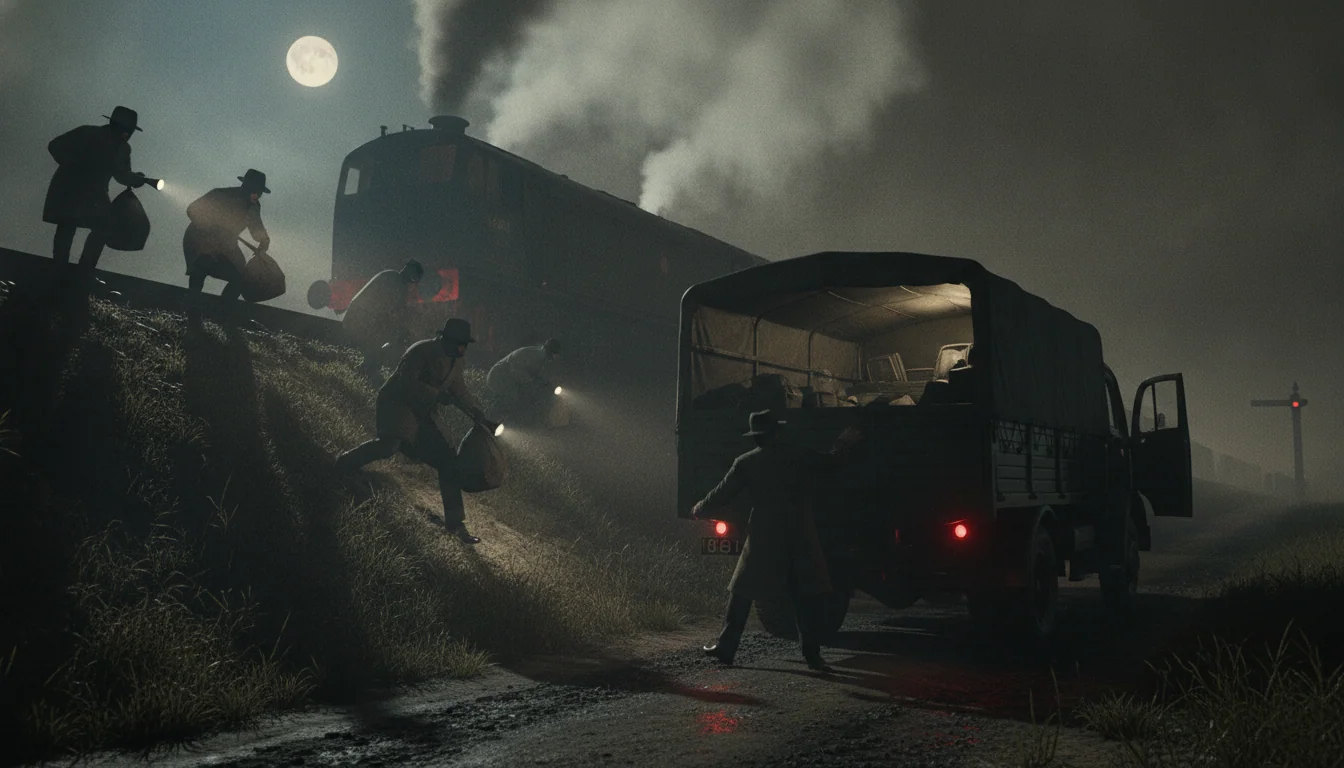
Just after 3 a.m. on August 8, 1963, a mail train slowed to a stop at a rigged signal in the Buckinghamshire countryside. Within about twenty minutes a gang of London criminals had loaded roughly 120 mailbags of used banknotes into a fleet of waiting trucks. In pure cash terms it was one of the biggest robberies Britain had ever recorded. It might have stayed a single grim headline if not for what came after: a farmhouse full of fingerprints, a driver who never fully recovered, savage prison sentences, and a small-time robber named Ronnie Biggs who turned a prison break into five decades of tabloid legend.
The mark
The target was the Glasgow-to-London Travelling Post Office, a train that sorted mail by hand as it rolled south through the night. Bank holiday timing meant the second carriage, known inside the Royal Mail as the High Value Package coach, was carrying far more cash than usual: banknotes withdrawn from Scottish banks and being sent to London for destruction. Security amounted to a handful of postal clerks sorting letters in a moving carriage, with no armed guards and no reason to expect anything worse than a delay. There was no electronic tracking of the cash, no radio link to the police, and no reason for anyone on board to imagine the train was a target at all. Whoever tipped the gang off, and an inside source was almost certainly involved, knew that this particular run, on this particular night, would be worth stopping. That source's identity was never officially confirmed.
The crew and the plan
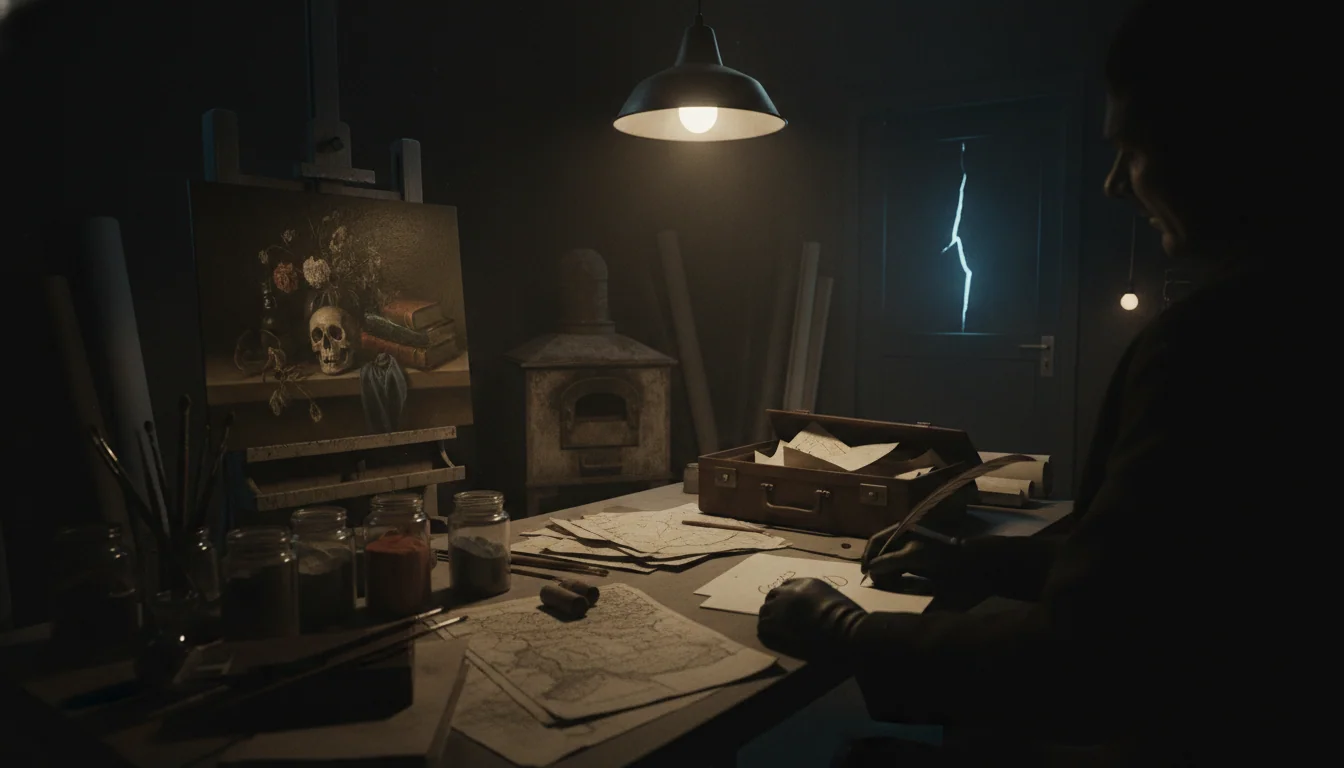
The operation was organized by Bruce Reynolds, a career thief with a taste for planning and a reputation for style, working with a loose alliance of South London firms that did not normally cooperate on a single job. Around fifteen men eventually took part, including Charlie Wilson, Gordon Goody, Buster Edwards, Roy James, and Ronnie Biggs, then a minor figure whose main job was reportedly to bring in a retired train driver who could take the locomotive once the crew had control of it.
The plan's cleverness was mechanical, not violent. Rather than storm the train, the gang rigged the trackside signal at Sears Crossing. They covered the ordinary green light with a glove and wired in a battery-powered red bulb of their own, tricking the driver into stopping for a danger signal that did not really exist.
The job
When the train stopped, the fireman climbed down to the phone box beside the track to report the fault, as railway procedure required, and was overpowered before he could make the call. The driver, Jack Mills, was struck with a length of pipe when he tried to resist, an injury that put him in the headlines and, later, at the center of a long argument over whether the robbery had really been bloodless.
With the cab under their control, the gang uncoupled the front two coaches from the rest of the train, intending to leave the ordinary mail carriages and their sorters behind at the crossing. The retired driver they had recruited, however, could not operate the newer diesel locomotive, so the gang forced an injured Mills back into his seat to drive the shortened train roughly half a mile down the line to Bridego Bridge, a spot chosen because trucks could pull almost up to the rails there.
At the bridge the gang formed a human chain and passed sack after sack of cash down the embankment to waiting vehicles. In well under half an hour they moved around 120 mailbags, reportedly holding close to 2.6 million pounds in used notes, leaving behind a handful of sacks they judged too risky to carry in the time they had. They left the postal workers in the rear carriages shaken but unhurt, climbed into their trucks, and drove off into the dark toward a rented farmhouse.
The unravelling
The plan called for the gang to lie low at Leatherslade Farm, a remote property about 27 miles from the crime scene, for several weeks until the search cooled. Instead, once radio reports made clear the scale of the manhunt Scotland Yard was mounting, panic set in and the crew scattered within a day or two, leaving behind a farmhouse full of evidence: fingerprints on a Monopoly board the gang had used to pass the time, on food packaging, and on a getaway lorry parked outside.
A local tip led police to the farm within days, and the fingerprints did the rest. Scotland Yard's Flying Squad, led by Detective Chief Superintendent Tommy Butler, used those prints to build a list of suspects within weeks, even though rounding them all up, and eventually trying them, would take much longer. Butler reportedly pursued the case with an almost personal obsession, chasing leads across Europe and Canada for years after the initial arrests. It was the kind of unravelling that owed nothing to the cleverness of the crime and everything to ordinary carelessness once the adrenaline wore off. A couple of the men believed to have taken part were never conclusively identified, and whatever share of the cash they carried away went with them.
Where are they now
Most of the gang was tried at Aylesbury in 1964, and the sentencing shocked the country. Several of those in the dock, including Wilson and Biggs, received roughly 30 years each, among the longest terms ever handed down in England for a crime in which no one was killed. Reynolds and Edwards were still on the run at the time and faced separate, later trials after their own arrests. Jack Mills never fully recovered from his injuries and died in 1970. His family and some biographers have long argued that the assault contributed to his decline, although it was never treated as a homicide.
The sentences also produced two of the era's most famous prison breaks. Charlie Wilson escaped from Winson Green prison in Birmingham in 1964 and fled to Canada, only to be recaptured in 1968; he was later shot dead at his villa in Marbella, Spain, in 1990, a killing that has never been solved. Ronnie Biggs went over the wall at Wandsworth Prison in 1965 after serving only about a year of his sentence, had his face altered by plastic surgery in Paris, and resurfaced years later in Australia before settling in Rio de Janeiro around 1970. When a Scotland Yard detective tracked him down in 1974 and tried to bring him home, Brazilian law came to his rescue: as the father of a Brazilian child, Biggs could not legally be extradited.
He spent the following decades as an open, unrepentant celebrity: selling robbery-themed souvenirs to tourists, recording a novelty track with the Sex Pistols, and giving interviews to any journalist willing to make the trip to Rio. Failing health finally brought him home in 2001, when he flew back to Britain on his own terms and was driven straight into custody. He was released on compassionate grounds in 2009 and died in London in 2013.
Bruce Reynolds evaded capture for five years before his own arrest in 1968; he served his time, was released in the late 1970s, and later wrote a memoir defending the operation's ingenuity. Buster Edwards fled to Mexico, surrendered in 1966, and after his release ran a flower stall near Waterloo Station, a detail that inspired the 1988 film "Buster." He died by suicide in 1994. Most of the stolen cash, reportedly close to 2.6 million pounds, was never recovered.
Why it became the myth
What kept the Great Train Robbery 1963 famous was never really the theft itself. Bigger cash hauls have come and gone and been forgotten. It was the aftermath: the punishing sentences, an ordinary man's health quietly ruined at the trackside, and above all Biggs, who turned a bungled escape into decades of sunlit defiance an ocean away from the detectives who wanted him. Britain has had larger heists since, including the Hatton Garden heist of 2015. It has never had a more mythologized one.
For another heist where the loot vanished for good, see the Gardner Museum theft of 1990.
Quick Answers
Common questions about this topic
How much money was stolen in the Great Train Robbery?
The gang took roughly 120 mailbags containing an estimated 2.6 million pounds in used banknotes, a sum worth tens of millions of pounds today. Most of it was never recovered.
What happened to Ronnie Biggs after the robbery?
Biggs escaped from Wandsworth Prison in 1965 and eventually settled in Rio de Janeiro, where Brazilian law protecting the fathers of Brazilian children shielded him from extradition. He lived openly there for decades before returning to Britain in 2001, serving more of his sentence, and dying in 2013.
How was the gang caught?
Detectives traced the gang to Leatherslade Farm within days of the robbery and found fingerprints on a Monopoly board, food packaging, and a getaway lorry the gang had used while hiding out. Most participants were identified from that evidence alone.
Was anyone killed in the Great Train Robbery?
No one died during the robbery itself, but train driver Jack Mills was struck on the head and never fully recovered, dying in 1970. His family long argued the assault contributed to his decline, though it was never treated as a homicide.

Question the Thieves
Chat with the detectives and masterminds behind history's boldest heists.
Create your free account →No card required. Some figures and features require a paid plan.
Join the HistorIQly Club
Get smarter about the past.
Weekly stories, deep dives, and exclusive content straight to your inbox.