Judy vs. History: How Accurate Is the Judy Garland Biopic?
Judy 2019 accuracy reviewed: Renée Zellweger won every award for this portrait of Judy Garland's chaotic London residency in 1968 and her final marriage.
Read Wikipedia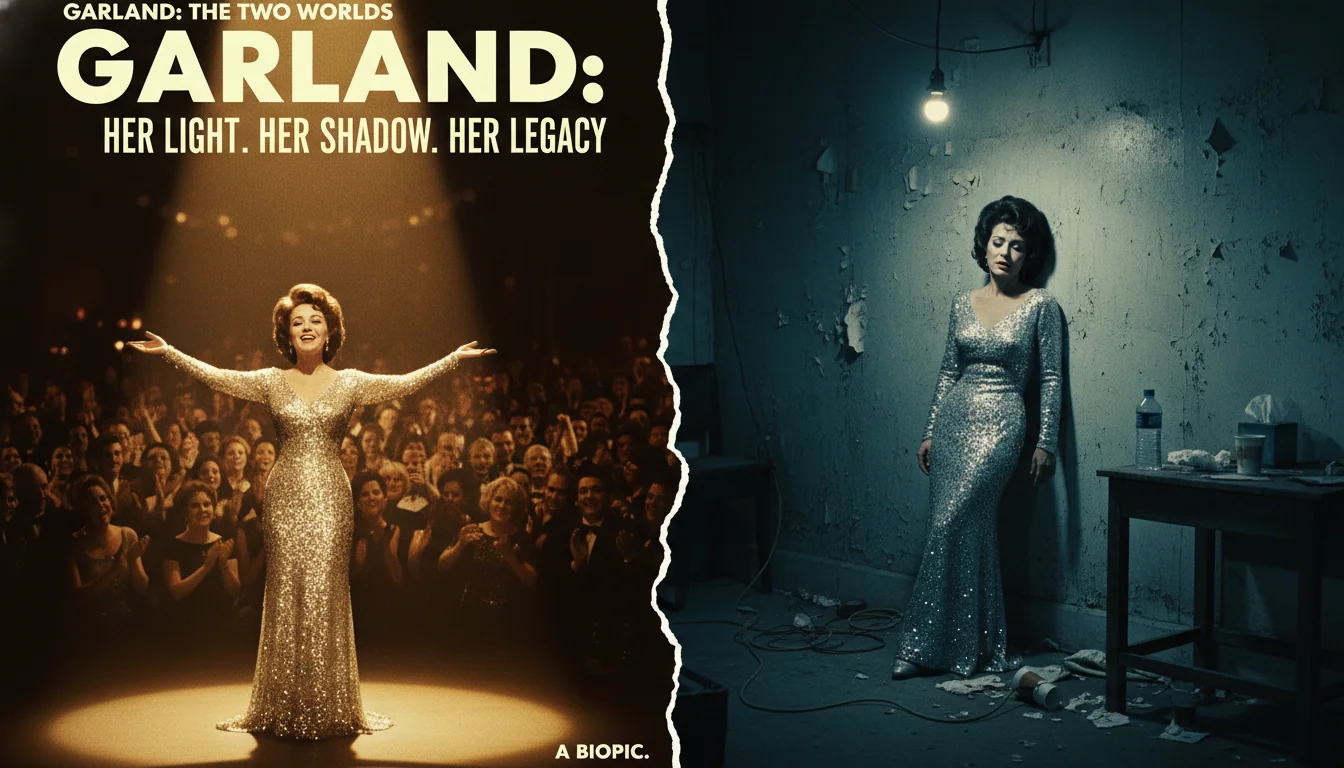
Judy Garland died on June 22, 1969, in a rented terraced house in London's Chelsea neighborhood. She was 47 years old, had been married five times, and had spent the last months of her life performing at a supper club while her health and finances collapsed around her. The circumstances were grim enough to seem invented.
Rupert Goold's 2019 film Judy does not invent much. It tells a story that is already extraordinary, and Renée Zellweger won every major acting award for bringing it to the screen. This Judy 2019 accuracy review asks whether the film earns those accolades through truthfulness or through emotional construction.
The answer is: mostly through truthfulness, with some significant structural choices that the audience deserves to know about.
Historical accuracy score: 7/10
What Hollywood Got RIGHT
The Talk of the Town residency
The film's central event - Judy Garland's five-week engagement at the Talk of the Town supper club on Charing Cross Road - really happened. She opened on December 30, 1968. The booking came about because her management recognized that London audiences, more forgiving than American ones after years of tabloid coverage, might offer her a financial lifeline. She was, by this point, nearly bankrupt, had lost custody of her two younger children to a previous husband, and could not reliably secure work in the United States.
The performances themselves were exactly as the film depicts them: radically inconsistent. Some nights she was brilliant - clear-voiced, commanding, and magnetically present. On others she arrived very late, stumbled through lyrics, or became combative with the audience. Contemporary British reviews swung from "triumph" to "disaster" depending on which night the critic attended. The film captures this quality accurately, and does not soften the difficult evenings.
Mickey Deans and the fifth marriage
The relationship depicted in the film between Garland and Mickey Deans is substantially accurate in its broad shape. Deans was an American who managed a nightclub called Arthur in New York and had a passing career as a musician. He was roughly 20 years younger than Garland. They married on March 15, 1969 at Chelsea Register Office, with a blessing ceremony at St. Marylebone Parish Church two weeks later.
The film portrays Deans as genuinely attached to Garland while also being somewhat out of his depth managing her crises. Contemporary accounts suggest this is fair. He clearly found the situation overwhelming. Whether the relationship was as tender as the film suggests is harder to verify, but those who knew them in London generally described it as affectionate, if chaotic.
The estrangement from her children
One of the film's most resonant threads is Garland's desperate need to see her younger children - Lorna and Joe Luft - and her frustration that their custody arrangements restricted access. This reflects real circumstances. After her divorce from Sid Luft, her third husband, custody of the two younger children had been contested. During the London period she was not living with them.
Her eldest daughter, Liza Minnelli, had already built her own career by late 1968 and maintained an independent relationship with her mother. The film's representation of the parent-child rupture is not fabricated.
Her relationship with gay audiences
One of the film's most memorable elements is the scenes between Garland and two gay men, a composite fictional couple, who befriend her in London. The film uses them to illuminate the specific devotion that gay audiences of that era felt toward Garland - the appeal of a woman who had suffered publicly, been discarded professionally, and kept performing anyway.
This is historically accurate in spirit. Garland's status as a gay icon was well established by the 1960s. The connection is real; the specific characters are invented. The film handles this relationship with warmth rather than exploitation.
What Hollywood Got WRONG (or simplified)
The framing characters are fictional composites
The two gay fans, Stanley and Dan, do not represent real individuals. They are constructed to give the film an intimate emotional anchor and to embody a larger community relationship that would otherwise require exposition. This is a legitimate screenwriting choice, but the specificity of their scenes - the dinner, the late-night cooking in their apartment - makes them feel more real than they are.
The MGM childhood flashbacks are compressed
The film intercuts scenes of a young Judy on the MGM lot, being denied food, given pills, and managed by studio executives as a money-generating instrument. These scenes are broadly based on reality - Garland and her contemporaries have extensively described the pharmaceutical management of child performers at MGM in the 1940s, the controlled diet, the amphetamines to keep energy high and weight down. But the film's specific scenes are constructed rather than documented, and compress a decade of exploitation into a handful of images. The emotional truth is accurate; the specifics are illustrative rather than sourced.
The timeline of her physical decline is sharpened
The film presents Garland's decline as largely happening during the London period. In fact, she had been seriously ill and physically fragile for years before the Talk of the Town residency. Her voice, still remarkable in the film's depiction, had actually deteriorated significantly from its peak. The 1968 performances were given by a woman who had been dependent on barbiturates and stimulants since her mid-teens. The film implies a more sudden collapse than the medical record supports.
Her death happens offscreen and is slightly sanitized
The film ends with Garland returning to London from a brief Paris trip, exhausted, preparing to sleep. It does not depict the morning of June 22, 1969 in any clinical detail. Mickey Deans found her body in the bathroom of their home at 4 Cadogan Lane. The Westminster Coroner's inquest determined she had taken an accumulation of Seconal tablets, each individually within normal dose range, but together lethal given her diminished physical state. The film wisely declines to turn this into a scene.
The verdict
Judy works as biography because the real story is already structured like tragedy. The London residency, the impossible performances, the fifth marriage, and the death within six months of the wedding - none of it requires embellishment. Where the film invents, it invents to clarify the emotional stakes of a documented situation rather than to substitute fiction for fact.
Renée Zellweger's performance is built on the available recordings and accounts of what Garland was like in those final months. The physical mannerisms, the voice, the way Garland handled a crowd when she was both commanding and barely functional, are close enough to the record to be instructive rather than just impressionistic.
The film is wisest when it stays close to the documented timeline and trusts the facts to carry their own weight. The Talk of the Town residency opened to mixed notices but drew genuine crowds of devoted fans. The marriage to Mickey Deans gave Garland a brief moment of real happiness, by most accounts, even amid the physical deterioration. Neither of those truths required invention, and the film is mostly honest enough to let them stand.
What the film cannot quite capture is the sheer duration of the preceding damage. The woman who performed at the Talk of the Town had been carrying the accumulated weight of twenty years of mismanagement, medication, and public scrutiny. The London residency was not the beginning of the end. It was, by a long way, the last stop.
For other music biography films fact-checked against the historical record, see our reviews of Walk the Line and Bohemian Rhapsody.
Quick Answers
Common questions about this topic
How accurate is Judy (2019)?
The film is broadly accurate in its broad outlines: Judy Garland did perform a chaotic five-week London residency at the Talk of the Town starting December 30, 1968, did marry Mickey Deans that spring, and died of an accidental barbiturate overdose on June 22, 1969. The supporting details - the erratic performances, the warmth toward gay fans, the estrangement from her children - are grounded in contemporary accounts. The film invents specific characters and compresses events for storytelling.
Did Judy Garland really perform in London in 1968?
Yes. Garland opened at the Talk of the Town supper club in London on December 30, 1968. The residency ran roughly five weeks and was, by multiple accounts, extremely uneven. On good nights she was magnetic; on difficult nights she arrived late, forgot lyrics, or broke down onstage. Reviews were polarized. The booking was arranged partly because her American career prospects had narrowed due to her reputation as an unreliable performer.
Who was Mickey Deans?
Mickey Deans was Garland's fifth and final husband. An American nightclub manager and sometime musician, he was significantly younger than Garland. The couple met in New York in 1967, reconnected in London during the residency, and married on March 15, 1969 at Chelsea Register Office. He was the person who found Garland's body in their rented Cadogan Lane home on the morning of June 22, 1969.
What did Judy Garland die of?
The Westminster Coroner recorded the cause of death as accidental barbiturate poisoning, specifically an accidental overdose of Seconal. The coroner noted she had taken several tablets and that the cumulative amount was more than her body could tolerate. At the time of her death she was 47 years old, physically fragile, and had been dependent on barbiturates and amphetamines for most of her adult life.

Debate the Accuracy with the Real Figures
Ask the real people what Hollywood got wrong about their lives.
Create your free account →No card required. Some figures and features require a paid plan.
Join the HistorIQly Club
Get smarter about the past.
Weekly stories, deep dives, and exclusive content straight to your inbox.