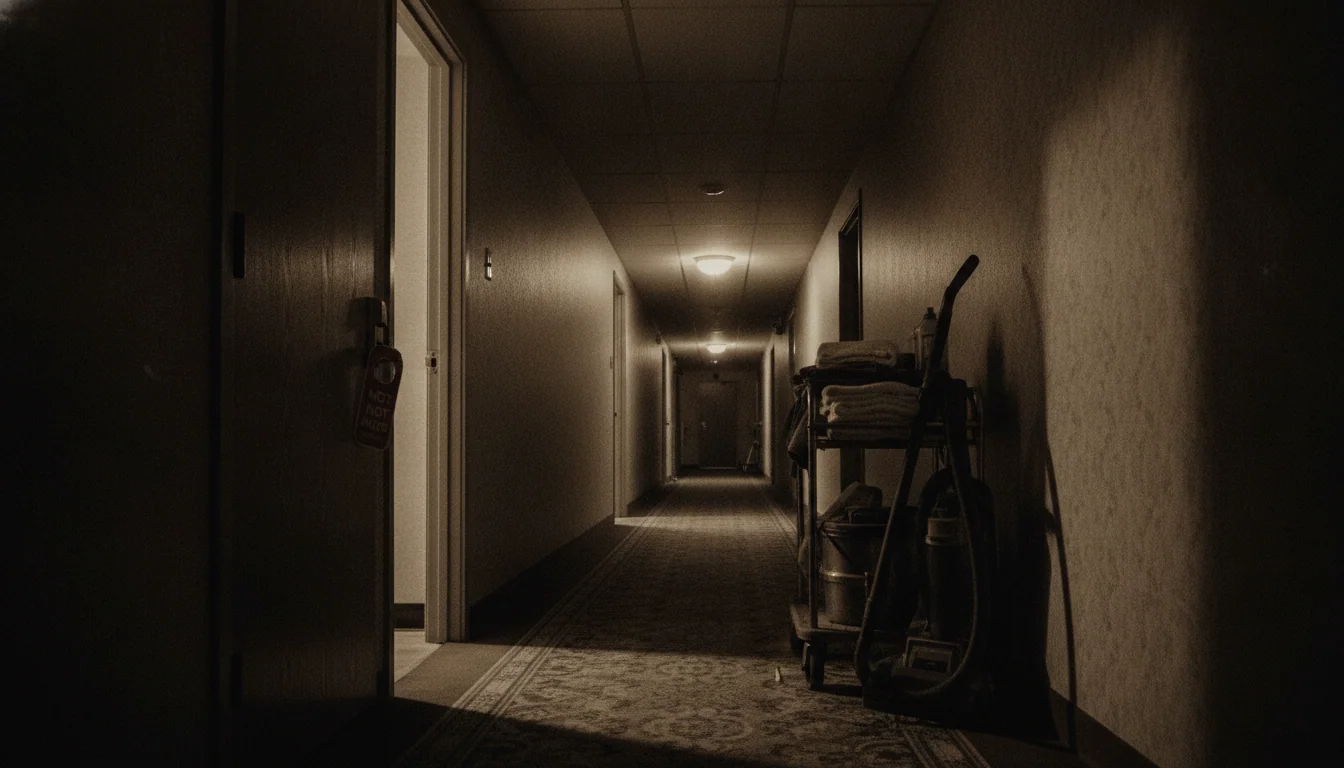
The Death of Karen Silkwood: Whistleblower, Plutonium, and the Road to Nowhere
Karen Silkwood died in a disputed 1974 car crash while carrying evidence of nuclear safety violations. No charges were ever filed and her documents were never found.
Read Wikipedia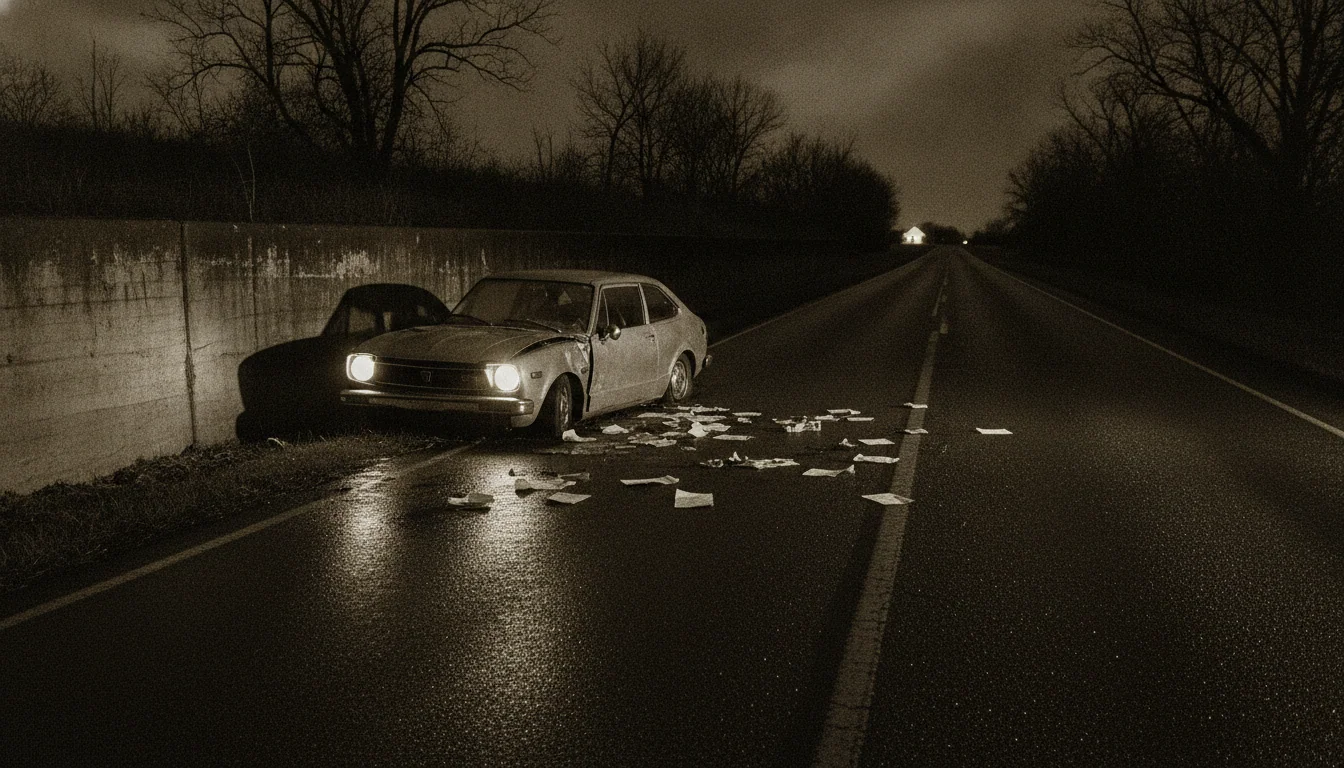
In the fall of 1974, a twenty-eight-year-old woman who worked with plutonium at a nuclear fuel plant in rural Oklahoma was becoming the most inconvenient employee in American nuclear history. By the time she died on a rain-slicked highway on the night of November 13, the circumstances of her death had produced a mystery that remains, fifty years later, officially unresolved.
Karen Gay Silkwood was born in 1946 in Longview, Texas, and trained as a medical laboratory technician before taking a job at the Kerr-McGee Cimarron Fuel Fabrication Site in Crescent, Oklahoma, in 1972. The plant manufactured plutonium fuel pellets destined for the Hanford, Washington, nuclear facility. It was painstaking, hazardous work. Workers handled plutonium oxide powder and pellets in sealed gloveboxes, but contamination was a known risk, and the Atomic Energy Commission was already watching the plant for safety problems.
The union and the evidence
In 1974, Silkwood became active in the Oil, Chemical and Atomic Workers International Union, which was negotiating a new contract with Kerr-McGee. She was elected to the union's negotiating committee and assigned, with two colleagues, to investigate health and safety conditions at the plant.
What she found disturbed her. Workers reported broken glovebox seals, spilled plutonium powder, inadequate protective equipment, and systematic record-keeping shortcuts. More troubling were allegations that quality-control documents on the fuel rods had been falsified. Defective welds on plutonium fuel rods, if passed to a reactor, could cause serious problems. In September 1974, Silkwood traveled to Washington, DC, and testified before the Atomic Energy Commission about the violations she had documented.
In early November, something alarming happened that shifted the situation from occupational hazard to personal crisis. On November 5, routine monitoring showed Silkwood herself was contaminated with plutonium. Tests on November 6 and 7 confirmed it. On November 7, investigators went to her apartment and found contamination in several rooms - the bathroom, the refrigerator, a package of bologna she had been eating. Someone had brought significant amounts of plutonium into the domestic space.
The circumstances of the contamination were never satisfactorily explained. The amounts found in her apartment were far more than could plausibly have drifted in on workplace clothing. Kerr-McGee took the position that Silkwood may have brought samples home deliberately to manufacture evidence. Her union and family argued the contamination was deliberate sabotage intended to discredit or intimidate her. The Atomic Energy Commission's investigation did not resolve the question.
November 13, 1974
Ten days after the first contamination discovery, Silkwood drove from Crescent toward Oklahoma City. She was carrying, by the account of everyone who spoke to her that day, a manila folder containing documents she had collected - evidence of the safety violations and falsified records she had been compiling for months. She was scheduled to meet Steve Wodka, her union representative, and David Burnham, a New York Times reporter who had been covering the nuclear industry.
She never arrived.
At approximately 7:30 p.m., her 1973 Honda Civic left Oklahoma State Highway 74 and struck a concrete culvert wing wall about three miles south of Crescent. She was pronounced dead at the scene. Oklahoma Highway Patrol investigators concluded she had fallen asleep at the wheel. Traces of methaqualone were found in her system, which investigators cited as a possible contributing factor to drowsiness.
The manila folder was not at the scene. Wodka, Burnham, and union officials all confirmed she had been expected to deliver documents. Nothing matching that description was recovered from the wreck or from anywhere along the route between Crescent and the crash site.
The dent and the dispute
Shortly after the accident, A. O. Pipkin, a private investigator hired by the union and the Silkwood family, examined the car. He reported finding damage on the rear left bumper and left rear tailfin consistent with contact from another vehicle - damage that, he argued, was not consistent with a single-vehicle accident and was not present in accident reconstruction photographs taken at the scene.
The Oklahoma Highway Patrol disputed this interpretation. Its accident reconstruction concluded the damage pattern was consistent with the vehicle leaving the road at speed and striking the culvert. No other vehicle was identified as involved. No witness to a second vehicle came forward. The physical evidence was limited, and automotive engineers retained by Kerr-McGee produced contradictory findings to Pipkin's report.
The gap between these two conclusions has never been bridged. The question of whether someone forced Karen Silkwood off the road remains the central unresolved element of the case, and it is unresolvable without evidence that does not exist. The investigation never produced a suspect, a witness, or a second vehicle. The documents she was reportedly carrying were never found and have never surfaced anywhere.
The trial and the aftermath
In 1976, the Silkwood estate filed a civil lawsuit against Kerr-McGee, not for the car crash but for the plutonium contamination of her person and apartment. The trial lasted three months and produced testimony about conditions at the Cimarron plant that was deeply damaging to the company. In May 1979, a federal jury awarded $10.5 million in damages - $505,000 for personal injury and $10 million in punitive damages - one of the largest personal injury awards in Oklahoma history to that date.
Kerr-McGee appealed immediately. The case wound through the federal courts for years, producing a significant Supreme Court ruling in 1980 on whether state tort law could impose punitive damages in industries regulated by federal law. After the Supreme Court sent the case back to the circuit court, both parties settled in 1986 for $1.38 million with no admission of fault.
The Cimarron plant itself had already closed in 1975, partly due to regulatory scrutiny and partly because its contract with Hanford ended. The AEC investigation found significant record-keeping violations at the facility. What no investigation established, either at the time or since, is who contaminated Karen Silkwood's apartment, whether a second vehicle was involved on Highway 74, or what happened to the documents she was reportedly carrying.
The film and what it left out
The 1983 film "Silkwood," directed by Mike Nichols with Meryl Streep in the title role and Cher and Kurt Russell in supporting parts, brought the case to a mass audience. Streep received an Oscar nomination. The film is sympathetically aligned with Silkwood's account of what she witnessed and reconstructs the last months of her life with a closely-observed domestic detail that still reads as authentic. It also dramatizes scenes and relationships for which the documented record is incomplete, and it allows the viewer to draw conclusions the evidence does not strictly support.
The film is not propaganda. It is an intelligent dramatization of a genuinely ambiguous situation. That ambiguity is what the Silkwood case remains: a collection of facts whose most provocative interpretation - that she was killed for what she knew - is plausible but unprovable, while the official interpretation - that she fell asleep at the wheel after an evening that included methaqualone - is consistent with the physical evidence and yet sits uncomfortably with everything else.
The case now
The nuclear power industry of the 1970s operated under regulatory frameworks that would be unrecognizable today. Safety culture at many facilities was poor, record-keeping was inconsistent, and the relationship between plant management and workers who raised safety concerns was often adversarial. Whether the danger Karen Silkwood faced was from plutonium contamination alone, or from something more deliberate, is a question that the American legal system circled for twelve years without reaching a final criminal answer.
No criminal investigation was ever opened. The Oklahoma accident record has never been reclassified. The civil case closed with a settlement. The documents, if they existed in the form described by everyone who expected to receive them, have never appeared. The case is cold, in the precise technical sense: there is no new evidence, no active investigation, and no path to prosecution even if a suspect had ever been identified.
What remains is a collection of documented facts arranged around a gap. The gap is the twenty minutes between Crescent and the culvert on Highway 74, and the manila folder that was supposed to travel with her and did not arrive.
The Silkwood case shares the defining quality of other permanently open American mysteries - like the Zodiac Killer's unbroken ciphers or the Black Dahlia murder - where the gap between what is known and what can be proven has proved impossible to close.
Quick Answers
Common questions about this topic
How did Karen Silkwood die?
Karen Silkwood died on November 13, 1974, when her Honda Civic left Oklahoma State Highway 74 and struck a concrete culvert wall at around 7:30 in the evening. She was pronounced dead at the scene. She had been driving from Crescent, Oklahoma, to Oklahoma City to meet a New York Times reporter and her union representative, reportedly with documents on safety violations at the Kerr-McGee plutonium plant.
Was Karen Silkwood murdered?
No one has been charged and no definitive conclusion has been reached. A private investigator hired by her family and the union found what appeared to be contact damage on the rear of her car consistent with a second vehicle striking her from behind. The Oklahoma Highway Patrol concluded she had fallen asleep at the wheel. Whether she was run off the road to prevent her from delivering documents remains officially unresolved.
Were documents found after Karen Silkwood's death?
No. Silkwood's family, union representatives, and the New York Times reporter waiting for her all reported she had been expected to deliver a folder of documents on safety violations and falsified quality-control records at the Kerr-McGee plant. No such folder was found at the crash scene or anywhere along the route.
What happened to the lawsuit against Kerr-McGee?
The Silkwood family filed a civil lawsuit against Kerr-McGee in 1976 over the plutonium contamination. A jury awarded the estate $10.5 million in 1979. After years of appeals that produced a significant Supreme Court ruling on punitive damages in federally regulated industries, the case was settled in 1986 for $1.38 million with no admission of fault by Kerr-McGee.

Want to Interrogate the Suspects?
Chat with historical figures and uncover the truth behind history's greatest mysteries.
Create your free account →No card required. Some figures and features require a paid plan.
Join the HistorIQly Club
Get smarter about the past.
Weekly stories, deep dives, and exclusive content straight to your inbox.