The Death of Rebecca Zahau: Coronado's Unanswered Questions
Rebecca Zahau was found bound, gagged, and hanging from a Coronado mansion balcony in 2011. Officials ruled suicide. A civil jury later found otherwise.
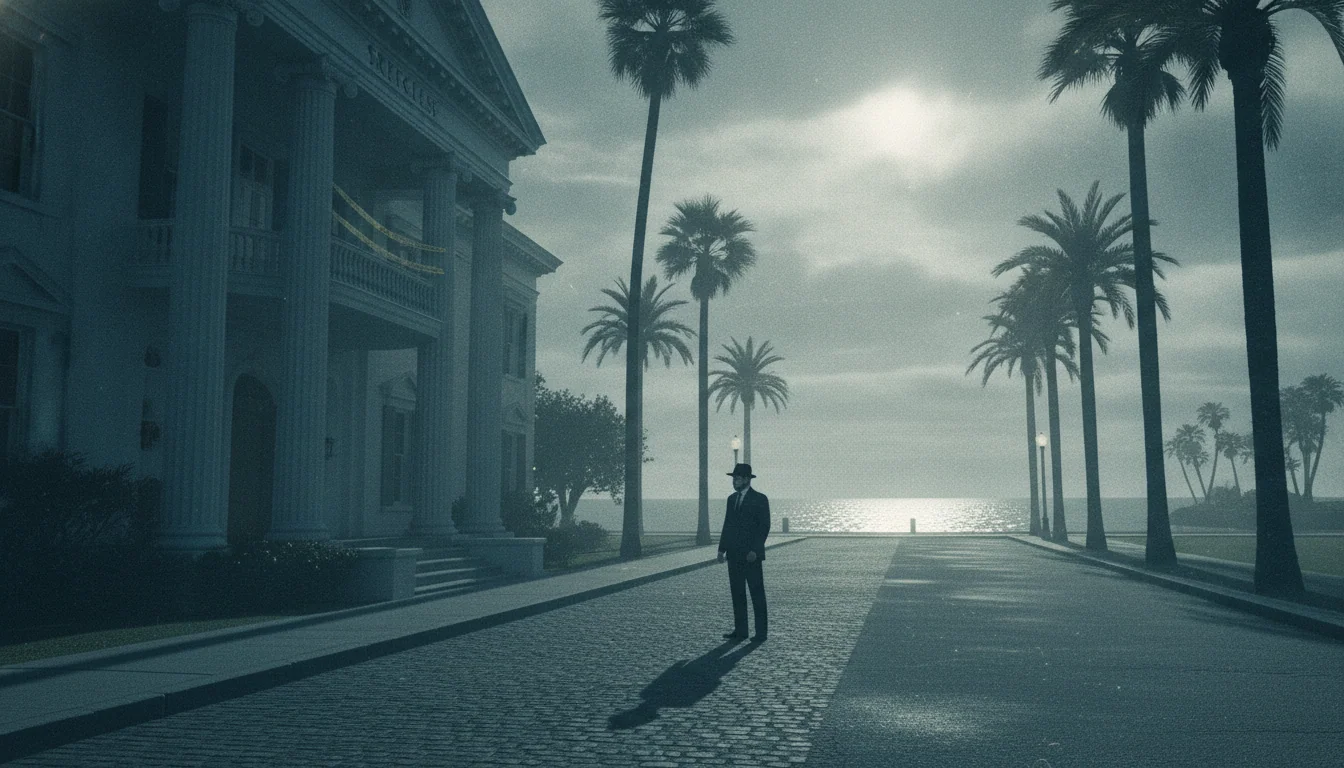
On the morning of July 13, 2011, a 911 call went out from a Coronado, California mansion overlooking San Diego Bay. A woman had been found hanging from a second-floor balcony. She was naked. Her hands were bound behind her back with rope. Her feet were bound. A t-shirt had been cut and used to gag her. On the bedroom door inside was a message painted in black: "She saved him. Can you save her?"
San Diego County sheriff's investigators spent weeks on the case and ruled it suicide. Rebecca Zahau, 32, had hanged herself. The painted message was hers. The rope was hers. The bindings were self-applied.
Rebecca Zahau's family never accepted the ruling. Neither, eventually, did a civil jury.
The mansion and the week before
The Spreckels Mansion is one of the most storied properties in Coronado, a historic estate on the Silver Strand peninsula. By 2011 it was the home of Jonah Shacknai, the billionaire founder of pharmaceutical company Medicis. Jonah and Rebecca had been together for roughly two years. She was a physician's assistant and former pageant contestant from Myanmar who had grown up in rural South Dakota.
The week of her death began in catastrophe. On July 11, Jonah Shacknai's six-year-old son Max fell from the mansion's main staircase. Rebecca was the only adult present. Max was rushed to Rady Children's Hospital with severe head injuries and slipped into a coma from which he never recovered.
Jonah drove to the hospital. His brother Adam Shacknai arrived that evening from Tennessee at Jonah's invitation. According to Adam's account, he slept in the guest cottage. At approximately 6:48 a.m. on July 13, he called 911 to report finding Rebecca's body hanging from the main bedroom balcony. He told the dispatcher he had cut her down with a pocketknife.
By the time paramedics arrived, Rebecca was on the ground in the courtyard.
What the sheriff's investigators concluded
The San Diego County Sheriff's Department released its findings in September 2011: Rebecca Zahau had committed suicide by hanging. Investigators proposed that she had tied her hands behind her own back, bound her feet, gagged herself, attached a rope to the interior bed frame, threaded it through a window, climbed over the balcony railing, and jumped.
They noted that Rebecca was physically fit, with some documented knowledge of knot-tying. They read the painted message as her farewell note - a reference to her guilt over Max's accident two days earlier. They found no DNA on the rope or the paint that excluded her, and no physical evidence placing anyone else in the room. The case was closed as suicide.
The disputes
Rebecca's family hired a private investigative team that included former FBI profilers and independent forensic pathologists. Their findings contradicted the sheriff's on nearly every major point.
The knot used to bind Rebecca's hands was a specific double-looping configuration associated with rope bondage, not the kind of single simple self-tie someone might improvise in crisis. Her experts argued that producing this knot behind one's own back required either a second set of hands or a degree of practiced flexibility inconsistent with a first attempt. The simultaneous binding of both hands and feet was, in their view, physically implausible for a person acting alone without assistance.
The painted message also presented complications. Investigators said Rebecca had used a bottle of black paint found in the room. Family experts noted that the letter forms were blocky and angular in a style inconsistent with her known handwriting, and that a person in terminal despair would be unlikely to pause for the precise motor task of painting a legible message on a door.
Luminol testing of the bedroom revealed blood traces that the sheriff's report categorized as insignificant. Independent analysts disputed that categorization. Bruising on Rebecca's arms and wrists - attributed by the medical examiner to the hanging itself - was characterized by family experts as more consistent with a physical struggle prior to death.
The civil trial
In 2015, Rebecca's sister Aziza Zahau filed a civil lawsuit against Adam Shacknai. The civil standard of proof - preponderance of evidence rather than the criminal threshold of beyond reasonable doubt - allowed the jury to weigh the competing forensic conclusions differently.
In June 2018, after deliberating for roughly three hours, the civil jury found Adam Shacknai liable for the sexual battery and wrongful death of Rebecca Zahau. The jury awarded $5.17 million in damages to Aziza. Adam Shacknai denied any involvement and appealed. The appeals court later upheld the liability finding.
No criminal charge followed. The San Diego County District Attorney reviewed the case again in 2021 and again declined to prosecute, citing the criminal standard of proof and the existing investigation's conclusions.
Jonah Shacknai was never accused of involvement by any investigation. He reached a separate confidential settlement with Rebecca's family before the civil trial.
The physical problem at the center
The core dispute in the Rebecca Zahau case reduces to a single empirical question: is it physically possible for a person to bind their own hands behind their back in the configuration found, also bind their own feet, gag themselves, attach the rope, and then complete the hanging - and does the forensic evidence in this specific case actually support that sequence?
The sheriff's investigators answered yes and built their ruling on it. Rebecca's family's experts answered no and built their lawsuit on the same evidence. A civil jury, evaluating the same record under a lower evidentiary threshold, sided with the family.
The district attorney, applying the criminal threshold, found the same evidence insufficient to charge anyone beyond a reasonable doubt.
This is not the kind of impasse that additional forensic testing is likely to resolve. The scene is years old. The physical evidence has been examined by multiple competing experts who have reached fundamentally different conclusions.
This is not the kind of impasse that additional testing is likely to resolve. The scene is years old, the principals have given their accounts, and the physical evidence has been examined by multiple competing experts who have reached fundamentally different conclusions about what it indicates.
Where it stands
Max Shacknai died at Rady Children's Hospital on July 16, 2011, five days after his fall. He was six years old. His death was ruled accidental. The two cases remain legally separate.
Rebecca's family has continued to push for criminal prosecution. As of 2026, the official sheriff's ruling has not changed, no criminal charges have been filed, and Adam Shacknai's civil liability - affirmed on appeal - stands without corresponding criminal consequences.
The painted message on the door has been read in almost every possible direction. Investigators read it as a suicidal farewell referencing Max. The family reads it as a staged scene. Forensic psychologists who reviewed the case on both sides have found the message consistent with their respective theories and inconsistent with the opposing one.
What remains is a 32-year-old woman found in circumstances that her investigators, her family's investigators, a county sheriff's department, a civil jury, and a district attorney's office have each evaluated and none have explained to the satisfaction of the others.
The rope was real. The binding was real. The message was real. The question of who put them there is the one that Coronado has not answered.
For another case where a suspicious death in an unusual location divided investigators and the public, see the Elisa Lam Cecil Hotel mystery or the JonBenet Ramsey cold case - both share the same pattern of contested forensic evidence and competing official and unofficial readings.
Quick Answers
Common questions about this topic
How did Rebecca Zahau die?
Rebecca Zahau, 32, was found hanging from a balcony at the Spreckels Mansion in Coronado, California on July 13, 2011. She was naked, with her hands bound behind her back and her feet tied. San Diego County sheriff's investigators ruled her death a suicide by hanging.
Why do people believe Rebecca Zahau was murdered?
Critics of the suicide ruling argue that the physical evidence is inconsistent with a self-inflicted death: her hands were bound behind her back in a complex knot, her feet were also tied, and she was gagged. Independent forensic experts hired by her family concluded the binding patterns indicated the work of a second person. In 2018, a civil jury agreed and found Adam Shacknai liable for her death.
Who is Adam Shacknai?
Adam Shacknai is the brother of Jonah Shacknai, a pharmaceutical entrepreneur who was Rebecca Zahau's boyfriend. Adam was staying at the Spreckels Mansion the night Rebecca died and was the first person to find her body. A 2018 civil jury found he was responsible for her death, though he was never criminally charged.
What happened to Max Shacknai?
Jonah Shacknai's six-year-old son Max fell down the grand staircase of the Spreckels Mansion on July 11, 2011, two days before Rebecca's death. Rebecca was the only adult in the house at the time. Max was taken to Rady Children's Hospital in critical condition and died on July 16 from his injuries.

Want to Interrogate the Suspects?
Chat with historical figures and uncover the truth behind history's greatest mysteries.
Start Your InvestigationJoin the HistorIQly Club
Get smarter about the past.
Weekly stories, deep dives, and exclusive content straight to your inbox.