Origins: How Marriage Was Invented
The origins of marriage lie in property contracts, not romance. Sumerian and Roman law treated marriage as an inheritance tool; love entered the picture centuries later.
Read Wikipedia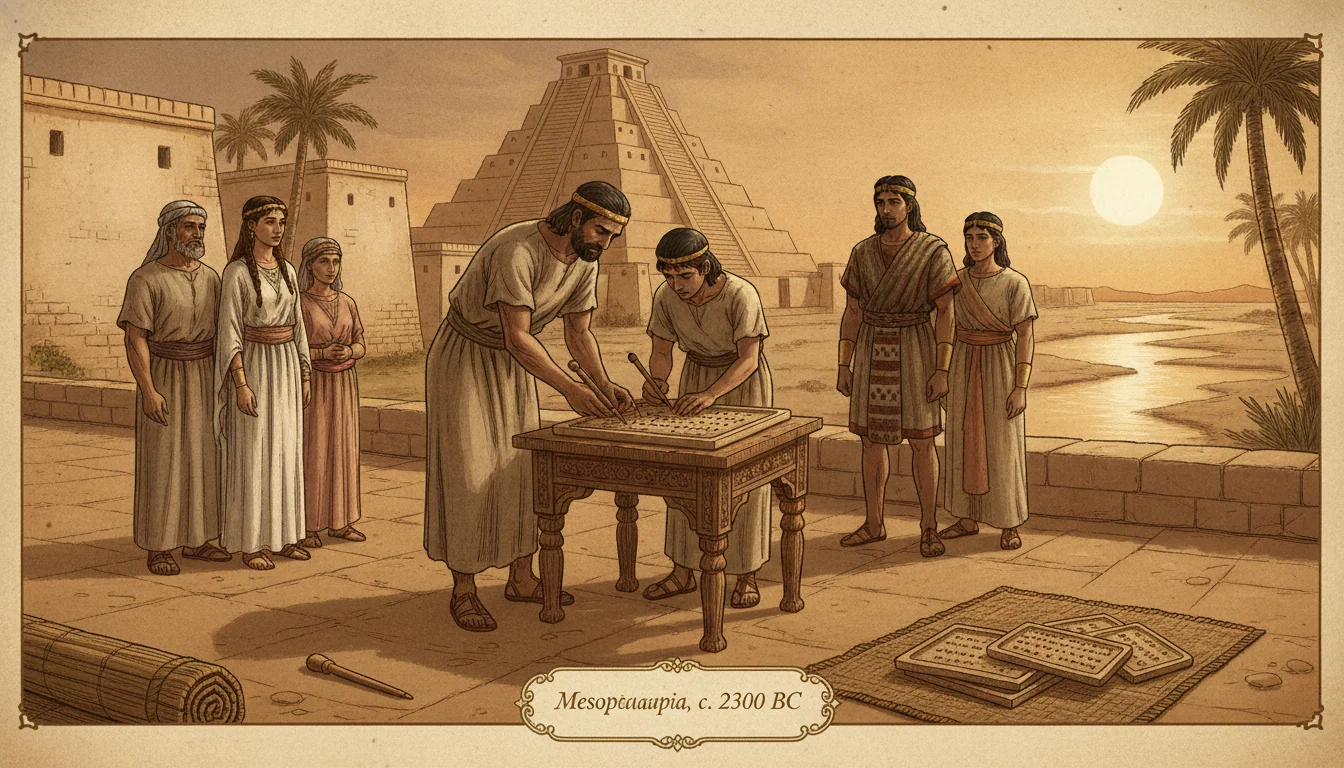
Quick answer: Marriage was not invented at one known moment. The earliest surviving written contracts discussed here come from late-third-millennium BCE Mesopotamia, where marriage regulated property, inheritance, and family obligations. Romantic love became the dominant Western ideal much later.
The popular image of a traditional wedding is ancient: the white dress, the church ceremony, the exchange of rings, the vows spoken in the presence of clergy. Peel those elements back one by one and you find that none of them are particularly old. White wedding dresses became fashionable in Western Europe after Queen Victoria wore one in 1840, overriding centuries in which brides wore the best dress they owned in whatever color that happened to be. Church ceremony was not required for a valid Christian marriage until the Council of Trent in 1563. The wedding ring predates Christianity, but its specific romantic symbolism is medieval at the earliest.
The origins of marriage as an institution, the social and legal arrangement by which two people establish a publicly recognized domestic partnership, are genuinely ancient. The reasons it was invented have almost nothing to do with love.
The Sumerian property contract
The oldest written marriage contracts we have come from Mesopotamia, in cuneiform texts dating from roughly the late third millennium BCE. Sumerian marriage documents record the terms of an agreement between families: the bride price paid by the groom's family to the bride's, the dowry contributed by the bride's family, the rights and property each party brings into the household, and the terms under which the marriage can be dissolved.
These are not romantic documents. They are property contracts with the same legal structure as contracts for land sale, debt repayment, or commercial partnership. They are witnessed and recorded precisely because they matter: a marriage in third-millennium Sumer transfers significant assets between families, establishes inheritance rights for any children born in the union, and creates obligations that courts must be able to adjudicate.
The Code of Ur-Nammu, from roughly 2100 BCE, and the Code of Hammurabi from around 1750 BCE, both contain marriage law. Hammurabi's code specifies the conditions under which a husband can divorce a wife (he can; she generally cannot unless he is abusive), what happens to property if she dies childless (it returns to her family), and what happens to a man who falsely accuses his wife of adultery. The law is detailed because the stakes are high. Property, inheritance, and political alliance are all on the line.
What is entirely absent from these documents is romantic sentiment. The question of whether the parties like each other is not a legal consideration. The question of whether the parties' families have aligned interests is.
Egypt and the companionate exception
Ancient Egyptian marriage practice stands somewhat apart from the Mesopotamian model. Egyptian written sources, particularly from the New Kingdom period (roughly 1550 to 1070 BCE), include love poetry that describes courtship with genuine emotional warmth and occasionally reads as distinctly modern in tone. Egyptian women had substantially more legal standing than their Mesopotamian counterparts; they could own property, conduct business independently, and file for divorce on grounds of incompatibility.
Egyptian marriage does not appear to have required any religious ceremony. Two adults declaring their intention to live together, with a household established and property transferred, constituted a valid marriage for most legal purposes. This practical approach coexisted with a genuine cultural acknowledgment that people chose their spouses based on affection, not merely parental negotiation.
The Egyptian example shows that recognizing love as a valid element of marriage is not the exclusive invention of modernity. But recognizing it as an element is different from making it the primary basis. Even in Egypt, property and family considerations structured most marriages, particularly among the elites whose documents survive.
Roman marriage and the fine print
Roman law elaborated marriage into a framework of exceptional sophistication, much of which survives in the legal traditions of medieval and modern Europe. (For a broader look at how that society organized daily life, see visiting Ancient Rome in 44 BC.)
Classical Roman marriage took two principal forms. Cum manu marriage - "with hand" - transferred the wife from her father's legal authority into her husband's. She became, legally, closer to his daughter than to a separate adult person: she could not own property independently, her legal actions required his authority, and she was subordinate to his patria potestas. This form was common in the early Republic and gradually declined through the late Republic and Empire.
Sine manu marriage - "without hand" - kept the wife under her father's legal authority, or, if her father was dead, gave her a degree of legal independence that made her significantly freer than women under cum manu arrangements. She could own property. She could conduct business. She could, under certain conditions, divorce. This form became increasingly common through the imperial period.
Roman weddings involved a written contract, witnessed by ten citizens, the joining of hands (the dextrarum iunctio), the sacrifice or offering to household gods, and the wearing of the saffron veil (the flammeum) by the bride. The ceremony was civic, not religious in a priestly sense. There was no requirement for a priest or magistrate to officiate. The legal validity rested on the consent of the parties and the witnesses, not on any religious authority.
Roman divorce was correspondingly simple: either party could end the marriage by declaring their intention and withdrawing from the shared household. Property was divided according to the terms of the original contract.
The Church's slow takeover
Christianity inherited the Roman legal framework for marriage and initially changed very little about its civil structure. The early Church taught that marriage was honorable, that it should be lifelong, and that adultery was a serious sin. It did not, for centuries, insist on a church ceremony or priestly involvement.
What the Church did insist on was the theology: that marriage was a union ordained by God, that the consent of the parties was its essential foundation (not parental arrangement alone), and increasingly that it carried a sacramental significance. Pope Alexander III in the 12th century definitively established consent as the key to marriage validity - a development that was more radical than it sounds, because it undercut the presumption that parents could simply arrange their children's marriages without the children's agreement.
The Council of Trent in 1563 finally required that a valid Catholic marriage must be performed in the presence of a priest and two witnesses, with the banns publicly announced beforehand. This was a response to the chaos of clandestine marriages - private verbal contracts that one party later denied, creating impossible situations for courts trying to adjudicate property and inheritance disputes. Standardizing the ceremony was also standardizing the record-keeping.
Protestant reformers, who were otherwise stripping the sacramental theology from marriage (a project that began in Reformation Wittenberg in 1517), nonetheless maintained the requirement for public ceremony. Civil marriage registration, entirely separate from religious ceremony, was established in various European jurisdictions through the 17th and 18th centuries, and became the norm through the 19th.
Love marriage as the radical invention
For most of the history of marriage as an institution, the idea that personal romantic affection should be the primary basis for spouse selection would have seemed not merely impractical but actually harmful. A marriage was too important - too much property, too many alliances, too many inheritance lines - to be left to the emotional preferences of two young people.
The shift happened in stages. Enlightenment philosophy elevated personal autonomy and individual sentiment as values. Romantic literature in the late 18th century - novels, poetry, the growing popular press - created and disseminated a new ideal of marriage as the union of two souls who had found each other through feeling. Industrialization and urbanization gave young people the economic independence to make their own choices, and took them out of the family networks where parents had arranged marriages for centuries.
Jane Austen's novels document the exact historical moment of the transition: her heroines are expected to marry well in economic terms (the Bennet sisters in Pride and Prejudice face clear financial ruin without it) but the story turns on whether they can also marry for love. The assumption that both things should be possible - that economic practicality and romantic feeling should coincide - is itself the new and radical idea.
By the late 19th century, the romantic basis for marriage was conventional wisdom in Western Europe and North America. By the 20th century it had achieved the status of obvious common sense. By the 21st it was sufficiently entrenched that its opposite - an arranged marriage without personal consent - read as a human rights issue rather than a traditional norm.
The Sumerian scribes who wrote the first marriage contracts would find this development perplexing. They understood marriage as a precise instrument for the orderly transfer of property and the establishment of legitimate heirs. The idea that its primary purpose was the satisfaction of personal feeling would have struck them as building a legal framework on a foundation made of weather.
They were not wrong about what marriage had been. They simply had no way to predict what it would eventually become, or how thoroughly the sentiment would come to seem more fundamental than the contract that was, historically, the whole point.
Quick Answers
Common questions about this topic
When was marriage invented?
Marriage as a legally documented institution appears in Sumerian records from around 2350 BCE. Earlier probable marriage customs certainly existed across human societies, but systematic written marriage contracts - recording dowry, bride price, property rights, and inheritance conditions - first appear in cuneiform texts from Mesopotamia in the third millennium BCE.
Was marriage always about love?
No. For most of recorded history, marriage was primarily about property transfer, political alliances, and the establishment of legitimate heirs. The idea that romantic love should be the basis for choosing a spouse became mainstream in Western culture only in the late 18th and 19th centuries, and remains a minority view across much of the world today.
When did the Church take over marriage?
The Catholic Church gradually asserted control over marriage as a sacrament through the medieval period, but did not require a priest to officiate at a wedding until the Council of Trent in 1563. Before that, a valid Christian marriage could be made by simple verbal consent between the parties. The requirement for church ceremony and registration is therefore a post-Reformation development.
Where does the wedding ring come from?
Wedding rings were used in ancient Egypt as early as 3000 BCE, typically made from plant materials. The Romans wore iron rings, transitioning later to gold. The Roman practice of wearing the ring on the fourth finger of the left hand was justified by the theory of the vena amoris, a vein supposedly running directly from that finger to the heart. The anatomical claim is false; the tradition persisted anyway.

Ask the Inventors Themselves
Chat with the people who were there when familiar things began.
Create your free account →No card required. Some figures and features require a paid plan.
Join the HistorIQly Club
Get smarter about the past.
Weekly stories, deep dives, and exclusive content straight to your inbox.