Origins: Who Actually Invented Vaccination
The history of vaccination did not start with Jenner. The real story runs from 17th-century China through the Ottoman Empire to a scandal-causing English aristocrat.
Read Wikipedia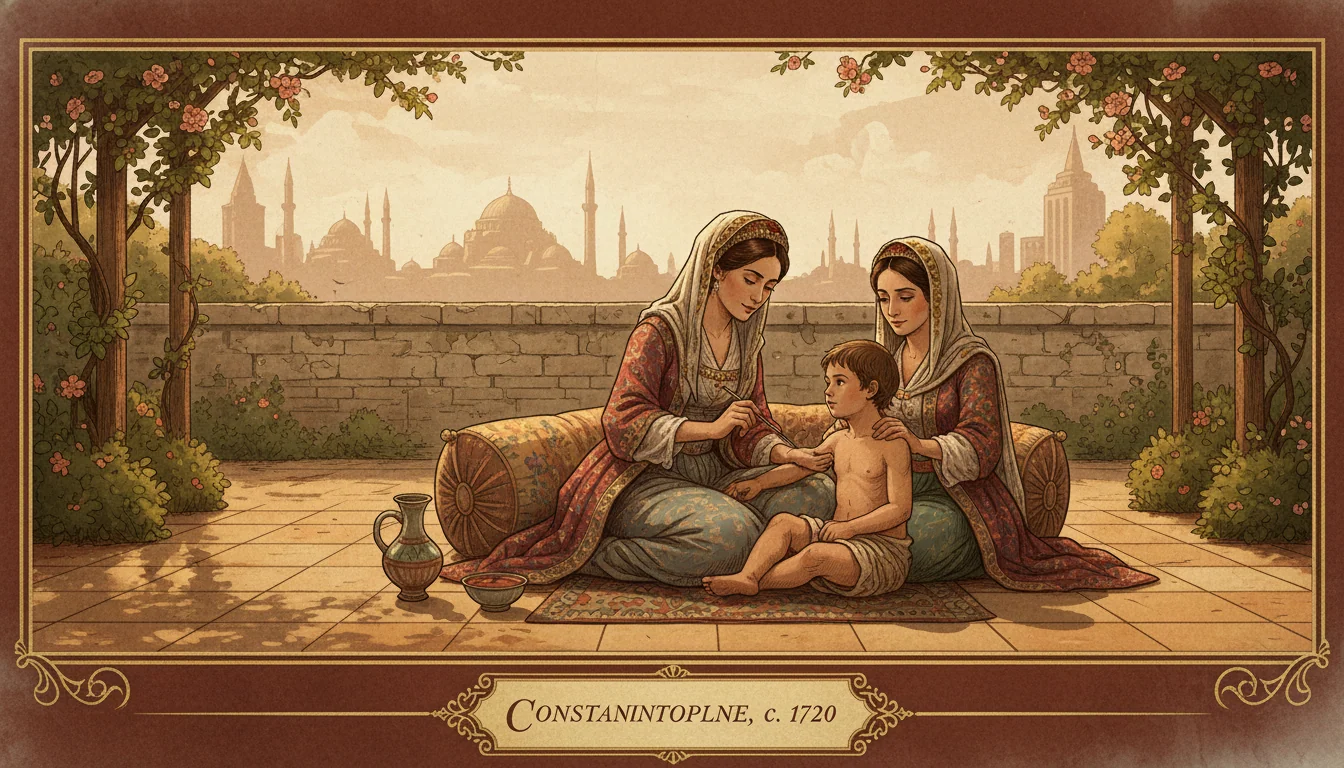
The story that gets told in most secondary school classrooms runs as follows: Edward Jenner, a country doctor in Gloucestershire, observed that milkmaids who contracted cowpox never seemed to catch smallpox. In May 1796 he tested this observation by inoculating an eight-year-old boy named James Phipps with matter from a cowpox lesion on the hand of a milkmaid named Sarah Nelmes. Six weeks later he exposed the boy to smallpox. Phipps did not get sick. Jenner published his results in 1798, coined the word "vaccination" from the Latin "vacca" for cow, and launched the era of modern immunology.
All of that is true. But the history of vaccination does not start there.
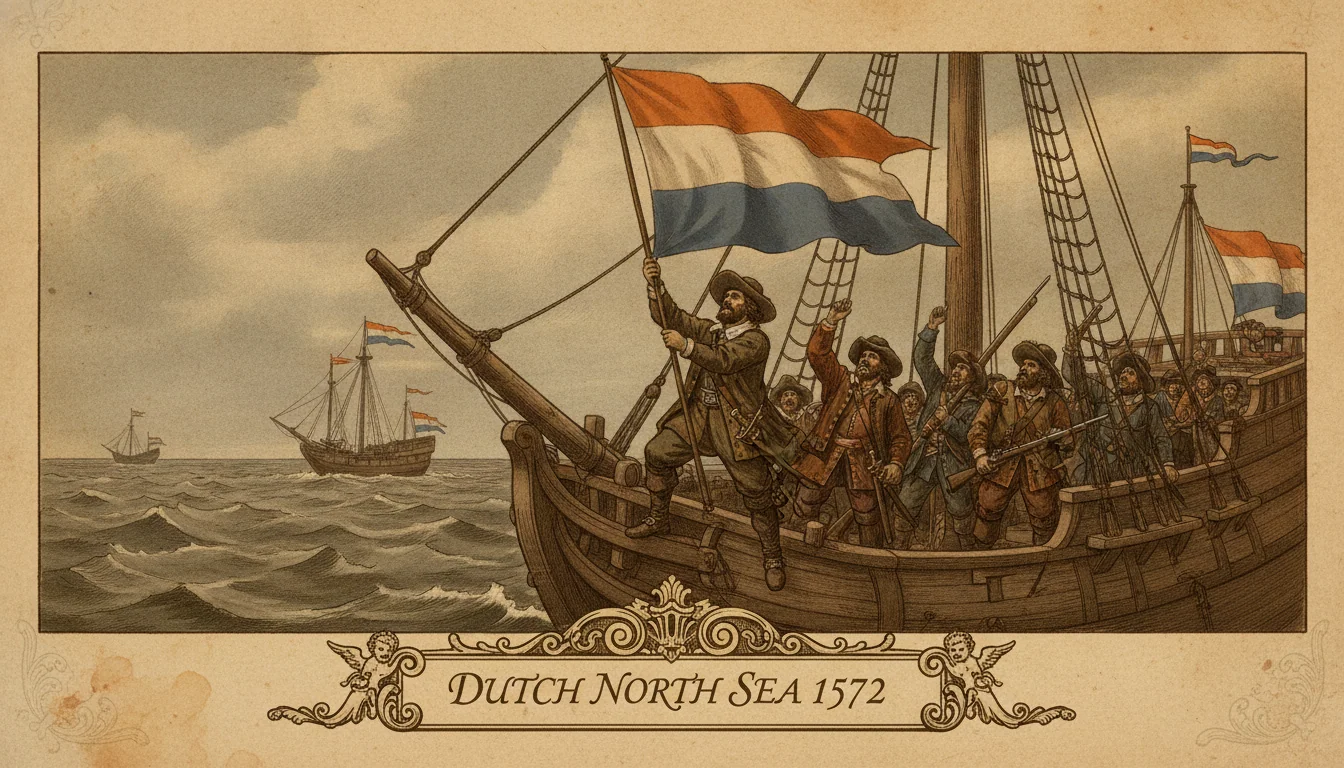
By the time Jenner scratched cowpox material into James Phipps' arm on a May afternoon in Berkeley, Gloucestershire, deliberate smallpox inoculation had been practiced in China for well over a century, had been the subject of controlled trials in London for seventy-five years, and had been introduced to the English-speaking world by a woman who is barely mentioned in most accounts of vaccination's origins.
China: the first inoculations
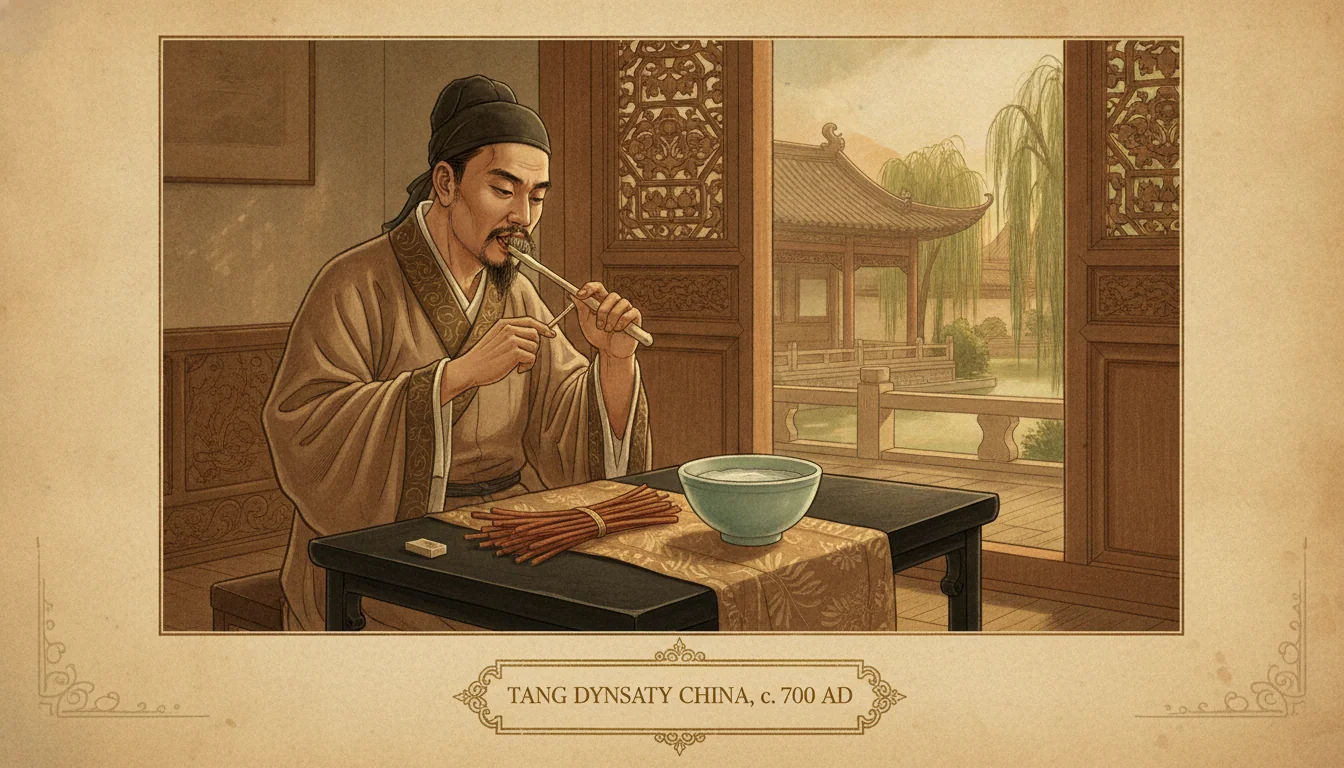
The earliest credible documentation of deliberate smallpox inoculation places the practice in China in the early decades of the 17th century, with strong circumstantial evidence suggesting it was already established by the late 16th century in certain regions. The method involved collecting the dried scabs of smallpox pustules from a mild case, grinding them to powder, and either insufflating the powder through a silver tube into the nostril or rubbing it into a small cut on the arm.
The logic was sound: exposure to a mild form of the disease, or material from a mild case, typically produced a limited infection that conferred lasting immunity without the death rate of natural exposure. The technique was not without risk - some patients developed full-blown smallpox from the procedure - but it was demonstrably better than the alternative of waiting for the next epidemic and hoping for the best.
The Kangxi Emperor, who ruled from 1661 to 1722, had his own children inoculated and is recorded as a strong advocate for the practice. Imperial favor was not incidental to how the technique spread through Chinese elite society. By the early 18th century, inoculation was established practice in Beijing and in several provinces, with specialist practitioners, sometimes women, who moved between households offering the service.
How and whether this Chinese practice influenced Ottoman and European development is a genuinely open historical question. Overland trade and diplomatic contact between China and the western Islamic world was continuous across this period, and the possibility of transmission is real. No single document records the transfer, but the chronology - China first, Ottoman practice documented shortly after - is suggestive.
Ottoman variolation and the women who practiced it
By the early 18th century, smallpox inoculation was established in Istanbul and the surrounding regions under the name the Ottomans used, "purchase of the smallpox," with practitioners who were typically older women, sometimes Greek or other Christian minorities, who made a living performing the procedure for payment.
The Ottoman method used fresh material from mild cases rather than dried powder: a scratch made on the recipient's arm or leg, a small amount of matter from a mild pustule introduced into the wound, and a period of careful observation afterward. Most recipients developed a mild localized infection and then recovered with immunity. A minority developed serious disease. The procedure was understood as a calculated risk, and Ottoman practice had developed rough protocols for selecting mild donor cases and timing the procedure to seasons when the recipient's constitution was considered most robust.
Lady Mary Wortley Montagu arrived in Istanbul in 1716 as the wife of the British ambassador Edward Wortley Montagu. She had survived smallpox herself in 1715, which had left her face permanently scarred and had killed her brother. She understood precisely what was at stake.
Montagu observed variolation being practiced in Istanbul, described it in detail in letters home, and in March 1718 arranged for her five-year-old son Charles to be inoculated by the embassy surgeon. She watched the procedure herself. He recovered without complication.
On her return to England in 1721, a smallpox epidemic was underway in London. Montagu had her four-year-old daughter inoculated - the first person to undergo the procedure in England - and began an active campaign to promote the practice to the English medical establishment, the court, and anyone else who would listen.
The Newgate trial and the Royal family
Montagu's advocacy ran immediately into institutional resistance. English physicians were skeptical of a procedure developed outside the European medical tradition, especially one associated with the practices of women and non-professionals. The Royal College of Physicians was cautious. The church raised objections based on the premise that deliberately inducing disease violated providential order.
The breakthrough came through an unlikely route: condemned prisoners. In August 1721, with the epidemic still spreading, Caroline of Brandenburg-Ansbach - the wife of the future George II and a woman of genuine intellectual curiosity - arranged for a controlled trial at Newgate Prison. Six prisoners under sentence of death were offered their freedom in exchange for submitting to inoculation. All six survived and were pardoned. The trial was then extended to eleven orphaned children. They also survived.
Caroline proceeded to have her own children inoculated, and the public visibility of the royal children emerging healthy from the procedure did more to spread acceptance in England than any formal medical endorsement. Within a decade variolation was established practice in England, and from England it spread to the American colonies, where Cotton Mather and Zabdiel Boylston promoted it in Boston during the 1721 epidemic, facing violent opposition and a bomb thrown through Mather's window.
Jenner's breakthrough
Edward Jenner's contribution to this lineage was technically specific and genuinely novel. The folk belief among Gloucestershire dairy workers that cowpox protected against smallpox was old and widespread - Jenner documented that he had heard it from farmers as a young physician. But folk belief required testing.
On May 14, 1796, Jenner inoculated eight-year-old James Phipps with matter from a cowpox lesion on the hand of Sarah Nelmes, a milkmaid who had recently contracted the disease from a cow named Blossom. Phipps developed a mild localized infection and recovered. On July 1, 1796, Jenner exposed Phipps to fresh smallpox material. Phipps showed no response.
The result confirmed what the folk tradition had suggested and that the medical tradition had not formally investigated: that cowpox, Variolae vaccinae, conferred cross-protection against Variola major, the smallpox virus, without itself causing the disease. This was genuinely new. Variolation used the actual pathogen. Vaccination used a related but far milder organism that happened to train the immune system to recognize smallpox.
Jenner submitted his paper to the Royal Society, which declined to publish it. He published privately in 1798 under the title "An Inquiry into the Causes and Effects of the Variolae Vaccinae." Within a year it had been translated into German, French, Spanish, and Dutch. Within five years vaccination programs were underway across Europe and in the United States.
The word and the resistance
The word "vaccination" - from "Variolae vaccinae," Jenner's Latin term for cowpox, itself from "vacca," cow - entered the language in the years immediately after his 1798 publication. It replaced the older "inoculation" and "variolation" and eventually became the generic term for all immunization procedures, a linguistic legacy of one man's work with one milkmaid in one English county.
Resistance was immediate, organized, and occasionally violent. Anti-vaccination leagues formed in Britain in the mid-19th century, opposing the compulsory vaccination laws passed by Parliament in 1840 and strengthened in 1853. Cartoons depicting people growing bovine features after vaccination circulated widely. Religious objections, class objections to government compulsion, and the entirely reasonable observation that some vaccine batches were contaminated and dangerous, all fed sustained opposition.
None of this prevented vaccination from becoming the dominant tool of public health. Napoleon had his armies vaccinated. The British colonial administration made vaccination a condition of service in India. The United States established a national vaccine program in 1813.
The endgame of all this, from the 17th-century Chinese practitioners blowing dried scab powder through silver tubes to Jenner's careful trials with a cooperative boy and a willing milkmaid, was certified by the World Health Organization on May 8, 1980: smallpox was eradicated. The only human disease ever fully eliminated by deliberate human action. The last natural case had occurred in Somalia in October 1977.
The Gloucestershire cow's lesion that Sarah Nelmes carried on her hand in 1796 was the final critical link in a chain that had been built across three continents over two centuries. Jenner gets the name on the chain. He did not forge it alone.
For another medical breakthrough with a similarly complicated origin story, see the history of anesthesia.
Quick Answers
Common questions about this topic
Did Edward Jenner invent vaccination?
Jenner invented vaccination in its specific technical sense - using cowpox material to confer immunity against smallpox - and his 1796 experiment and 1798 publication were pivotal in making the practice systematic and global. But the broader concept of deliberately inducing immunity against smallpox was at least 150 years older than Jenner, documented in China from the early 1600s and in the Ottoman Empire by the early 1700s. Jenner built on that tradition while making a genuinely novel discovery about cross-species immunity.
What is variolation and how is it different from vaccination?
Variolation uses actual smallpox material - dried scabs, pus from mild cases - introduced into a healthy person to provoke a controlled infection and subsequent immunity. It was effective but carried real risk of inducing a full-blown and potentially fatal case. Vaccination, as Jenner developed it, uses cowpox (Variolae vaccinae), a related but far milder virus that confers cross-protection against smallpox without the risk of genuine smallpox infection. The word 'vaccination' comes from 'vacca,' the Latin word for cow.
Who was Lady Mary Wortley Montagu and why does she matter?
Lady Mary Wortley Montagu (1689-1762) was an English aristocrat and writer who accompanied her husband, the British ambassador to the Ottoman court, to Istanbul in 1716. She observed variolation being practiced there, had her young son inoculated in 1718, and on her return to England became its most forceful champion. She arranged the Newgate Prison trial in 1721 that demonstrated variolation's safety to a skeptical English medical establishment and had her daughter inoculated during a London epidemic. Her advocacy introduced the practice to the English-speaking world decades before Jenner.
When was smallpox finally eradicated?
The World Health Organization certified the global eradication of smallpox on May 8, 1980, following a decade-long intensified vaccination campaign that targeted outbreaks wherever they occurred. The last known natural case was Ali Maow Maalin in Somalia in October 1977. Smallpox remains the only human infectious disease to have been fully eradicated through vaccination.

Ask the Inventors Themselves
Chat with the people who were there when familiar things began.
Create your free account →No card required. Talk to anyone in history with 8 free credits a day. Some features require a paid plan.
Join the HistorIQly Club
Get smarter about the past.
Weekly stories, deep dives, and exclusive content straight to your inbox.