Queen Christina's Abdication: The Monarch Who Walked Away From a Throne
Crowned as a child, raised as a prince, and secretly Catholic in Lutheran Sweden, Queen Christina gave up her throne in 1654. What actually happened at her court, and what was gossip.
Read Wikipedia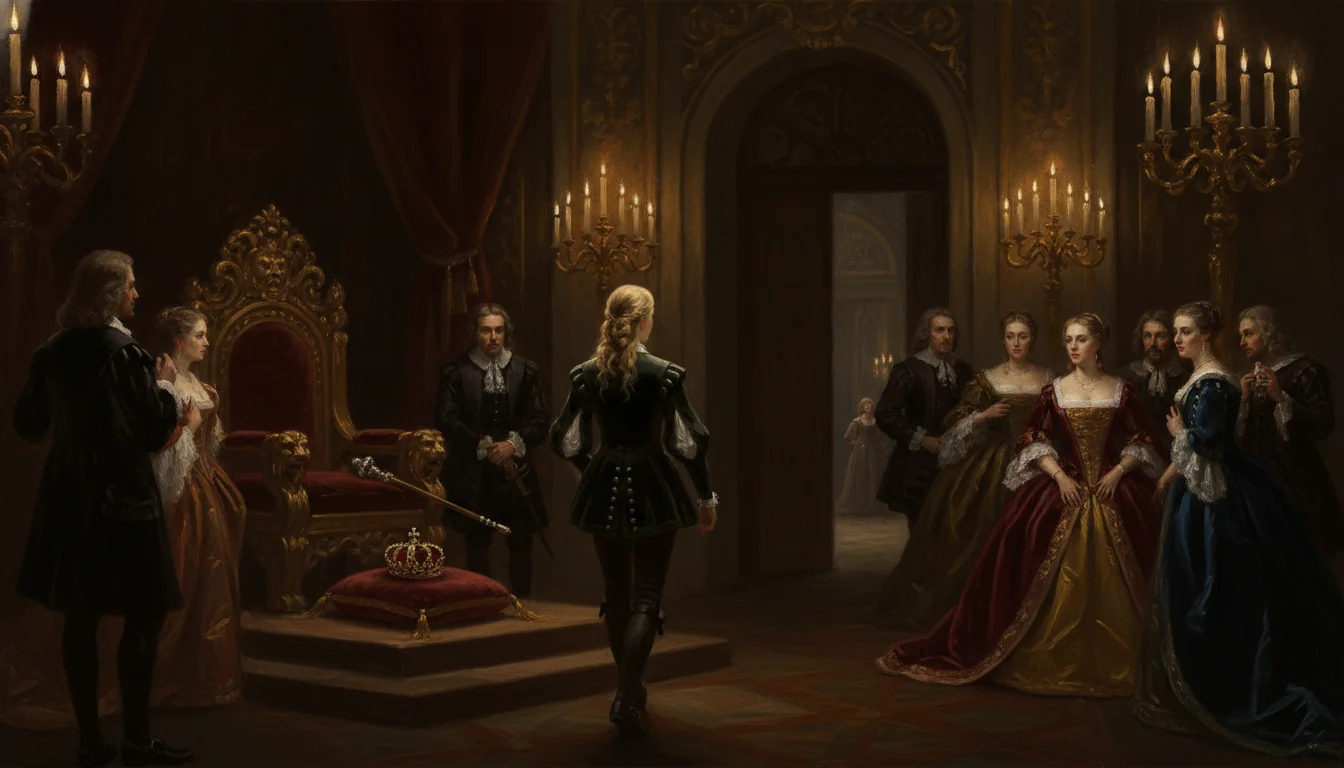
Christina became queen of Sweden at six years old, when her father, the celebrated warrior-king Gustavus Adolphus, died on the battlefield at Lutzen in 1632. By the time she was thirty, she had been formally crowned monarch of a Baltic power at its military height, secretly converted to the faith her country had gone to war against, and voluntarily handed the throne to her cousin rather than marry a man she had no interest in marrying. Sweden's court had never seen anything like her, and it would not see anything like her again.
The court and the stakes
Gustavus Adolphus left no son, and Swedish law of the period allowed a daughter to inherit the crown, though the practical business of ruling fell to a council of regents during Christina's minority. Crucially, Gustavus Adolphus had insisted his only child be educated as though she were a prince rather than a princess: tutored in Latin, Greek, philosophy, theology, and statecraft, trained in riding and hunting, and raised with the explicit expectation that she would one day govern in her own right rather than serve as a dynastic bargaining chip.
Sweden in the 1630s and 1640s was a major European power, deeply invested in the Protestant cause during the Thirty Years' War that had killed Christina's own father. The stakes surrounding her rule were not abstract: a Lutheran nobility and clergy expected their monarch to embody and defend the Protestant settlement that had cost the kingdom so much blood and treasure, and expected, eventually, an heir to secure the succession.
The players
Christina was formally crowned in her own right in 1650, having governed with increasing independence from her council for several years beforehand. Her chancellor, Axel Oxenstierna, who had run the kingdom through her minority, remained a powerful and sometimes frustrated presence as the young queen asserted control that increasingly diverged from his own priorities. Christina's chosen heir was her cousin, Charles Gustav, whom she publicly designated as her successor rather than accept the marriage proposals directed at her by various suitors across Europe.
Her intellectual court became genuinely remarkable by the standards of the age. Christina corresponded with and eventually hosted the French philosopher Rene Descartes in Stockholm, insisting on early-morning lessons that, according to several biographers, contributed to the illness that killed him within months of his arrival in the harsh Swedish winter of 1649 to 1650, though the exact medical cause of his death remains disputed among historians. She drew scholars, musicians, and artists to her court on a scale unusual for a northern European kingdom, spending heavily on a cultural program that some in her own government viewed as an extravagance the treasury could ill afford.
The scandal, step by step
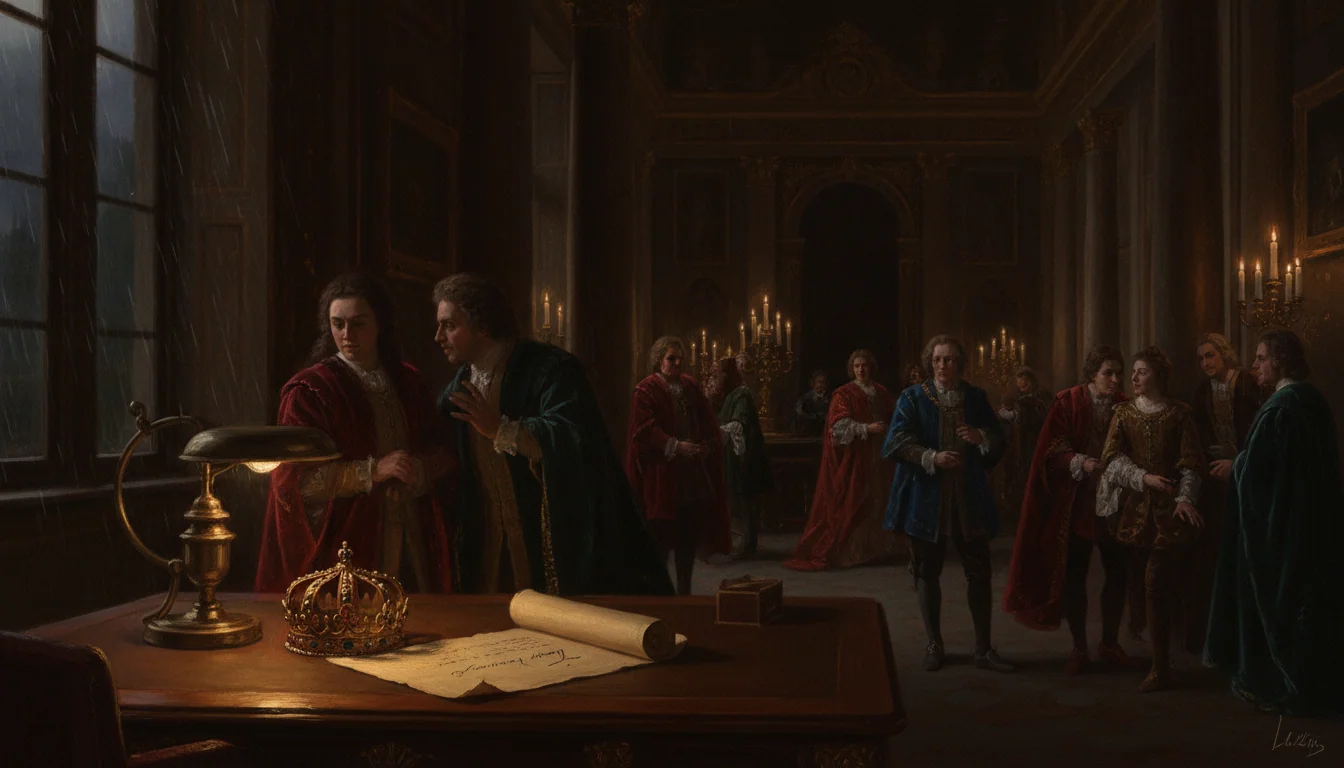
The central scandal of Christina's reign was not a single dramatic incident but a slow accumulation of decisions that put her on a collision course with her own kingdom's religious and dynastic expectations. She resisted pressure to marry throughout her twenties, reportedly telling advisors she found the prospect of marriage personally distasteful, and formally secured Charles Gustav's status as her designated heir specifically so the succession would not depend on her producing a child.
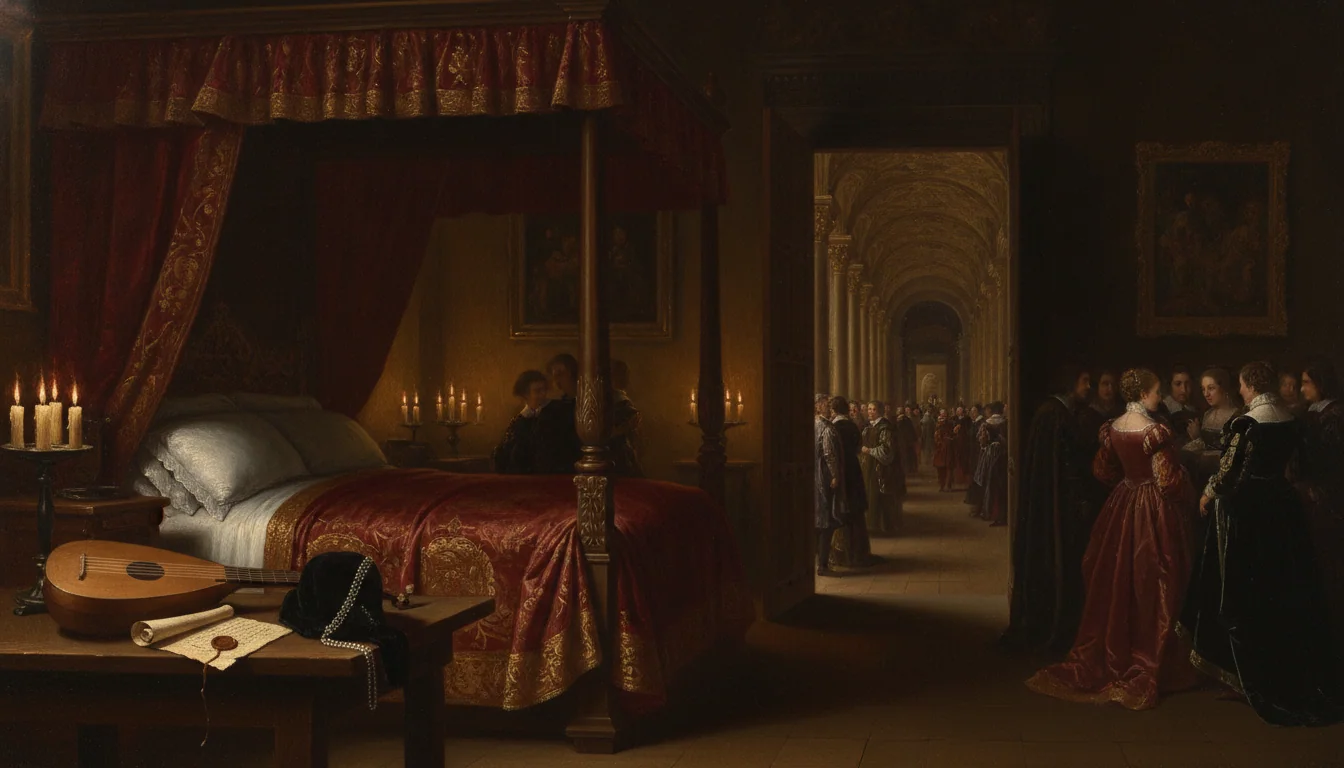
More seriously, Christina had, according to her own later accounts and the historical consensus, begun seriously exploring Catholic theology years before her abdication, corresponding secretly with Catholic clergy and intellectuals at a time when Catholicism was effectively illegal for a Swedish subject to practice, let alone for the monarch to consider. Sweden's identity as a Protestant power was central to its role in European politics; a Catholic-leaning monarch was, in the plainest terms available to her contemporaries, close to unthinkable.
In June 1654, Christina formally abdicated in favor of Charles Gustav, who became Charles X Gustav. She negotiated a substantial personal pension and retained certain honors and properties, then left Sweden almost immediately, traveling in male clothing for at least part of the journey, according to several contemporary accounts, before formally and publicly converting to Catholicism in a ceremony at Innsbruck later that same year, well outside Swedish territory and well beyond the reach of Lutheran authority.
The gossip vs the record
Popular legend, then and since, has tended to frame Christina's abdication as driven primarily by romantic or personal restlessness, and later retellings have leaned heavily on rumors about her private relationships, particularly with her lady-in-waiting Ebba Sparre, to whom Christina wrote affectionate letters that some later biographers have read as evidence of a romantic attachment. The surviving letters are genuinely warm and unusually intimate by the formal conventions of royal correspondence, but historians disagree on how far that evidence supports specific claims about her private life, and contemporaries at the time focused far more on her religious conversion and refusal to marry than on any particular romantic rumor.
What the documented record supports clearly is the religious motive: Christina's own later writings and the accounts of Catholic clergy who corresponded with her describe a genuine, years-long theological journey that predated and substantially explains the political crisis of her abdication, rather than religion serving merely as convenient cover for some other private motive. The gossip that she was simply eccentric or unstable, a characterization repeated by some contemporaries hostile to her independence, does not hold up well against the sustained intellectual seriousness of her later life in Rome, where she became a significant patron of the arts and sciences and a fixture of papal court life for over three decades.
The fallout
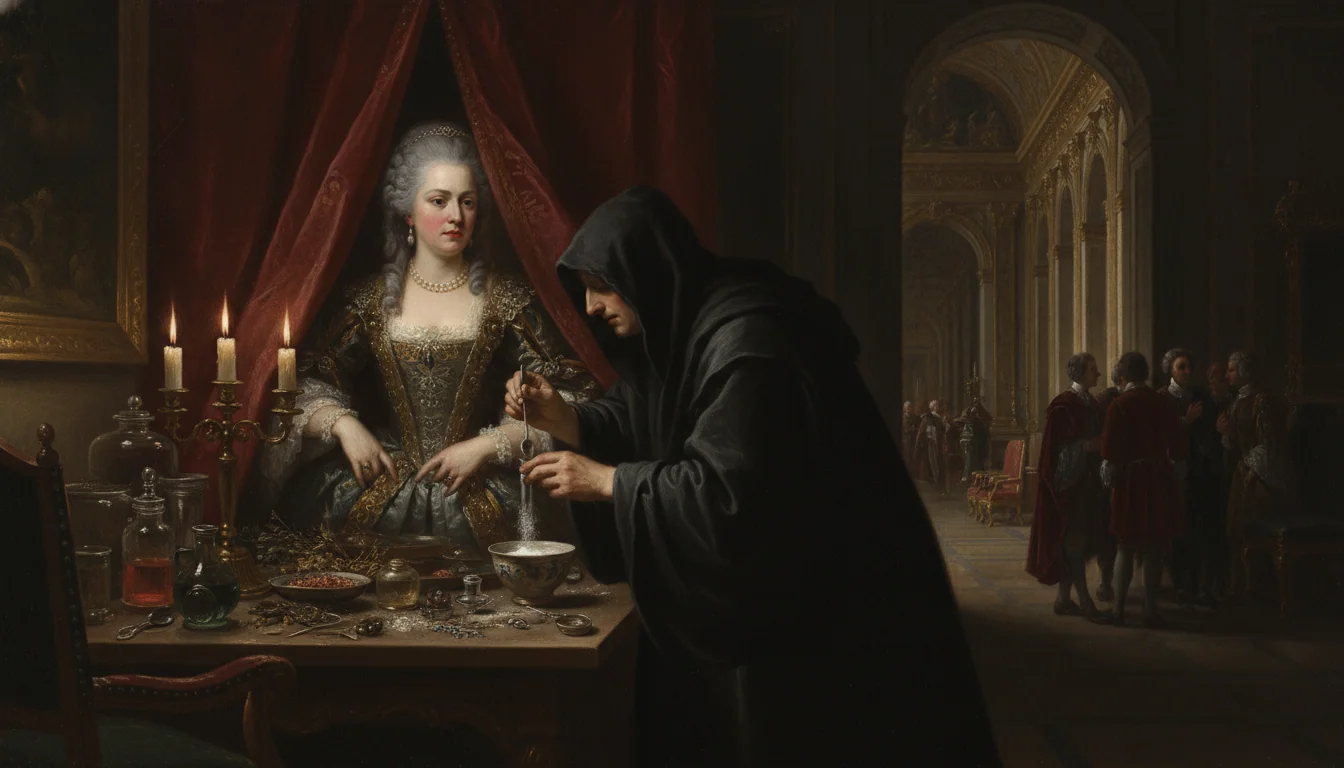
Christina's later years in Rome were not free of controversy. In 1657, while staying as a guest of the French crown at the palace of Fontainebleau, she ordered the killing of her former equerry, the Marchese Gian Rinaldo Monaldeschi, accusing him of betraying confidential correspondence to her enemies. Her own retainers killed Monaldeschi inside the French residence itself, an act that scandalized the French court even though Christina, who had retained royal status and certain sovereign privileges after her abdication, claimed the right to try and execute her own household servant under what she considered her continuing sovereign authority. The killing badly damaged her reputation across Europe and strained her relationship with the French court for years afterward.
Despite the Monaldeschi affair, Christina remained an influential figure in Rome until her death in 1689, a significant patron of music, art, and scholarship whose palazzo became a center of intellectual life in the city. She is buried in the grottoes beneath St. Peter's Basilica, one of only a small number of women, and the only Swedish monarch, granted that distinction, a resting place that reflects how thoroughly Rome, and the Catholic Church whose faith had cost her a throne, ultimately came to claim her as one of their own.
Life in Rome after the throne
Christina's arrival in Rome in late 1655 was treated by the papacy as a genuine propaganda triumph: a reigning northern European monarch publicly converting to Catholicism and relocating to the seat of the Church was exactly the kind of high-profile validation the Counter-Reformation papacy wanted to publicize, and Pope Alexander VII staged an elaborate formal entry into the city in her honor. Christina, however, did not settle easily into the role of grateful convert that the papacy may have hoped for. She continued to read widely in philosophy and science that some churchmen considered suspect, maintained an independent household with her own court of scholars and musicians, and reportedly clashed more than once with papal officials over the degree of personal autonomy she expected to retain despite having given up a crown specifically, in part, to practice the faith the Church represented.
Her Roman palazzo, the Palazzo Riario on the Tiber, became one of the most significant salons in 17th-century Europe, hosting composers, philosophers, and scientists, and she is credited as an early and important patron of the composer Alessandro Scarlatti and other musicians working in Rome during the period. She helped found the Arcadian Academy's intellectual circles that would formally organize after her death in her honor, and her personal library and art collection, built up over decades in Rome, were considered among the most significant private collections in Europe by the time of her death.
A reign historians still argue over
Modern historians remain divided on how to weigh Christina's reign and abdication. Some emphasize her genuine intellectual seriousness and read the abdication as an act of considerable personal courage, a monarch choosing conscience and self-determination over a throne at a moment when abdication was almost unheard of among reigning European monarchs. Others note that her actual governance during her active reign was uneven, marked by heavy spending on court culture that strained Swedish finances and by a level of political disengagement from routine administration that left much of the practical business of government to her council even before she formally stepped down. Both readings draw on the same well-documented record; they differ mainly in how much weight to give the queen's inner life versus the kingdom's practical governance, a tension that has kept Christina a subject of active biographical and historical debate for more than three centuries after her death.
Quick Answers
Common questions about this topic
Why did Queen Christina abdicate?
Christina abdicated in June 1654 after years of tension with the Swedish nobility and Lutheran clergy over her secret conversion to Catholicism, her refusal to marry and produce an heir, and her increasingly independent rule. She formally stepped down in favor of her cousin, who became Charles X Gustav, and left Sweden shortly afterward.
Did Queen Christina really dress as a man?
Christina was raised and educated like a prince at her father's instruction and was known throughout her life for unconventional dress, blunt manners, and a documented disinterest in typical feminine court roles of the period. Contemporary accounts describe her wearing practical, masculine-cut riding clothes at times, though the popular image of her habitually cross-dressing at court is likely an exaggeration of a more general reputation for gender-nonconforming behavior.
Did Christina order a murder?
Yes, and it is documented. In 1657, while a guest of the French crown at Fontainebleau, Christina ordered the killing of her former equerry, the Marchese Monaldeschi, after accusing him of betraying her confidence. The killing, carried out by her own retainers inside a French royal residence, scandalized the French court even though Christina claimed sovereign authority to try and execute her own subject.
Where is Queen Christina buried?
Christina died in Rome in 1689 and is buried in the grottoes beneath St. Peter's Basilica, one of only a small number of women, and the only Swedish monarch, given that honor.

Summon the Court
Chat with the monarchs and courtiers at the heart of the scandal.
Create your free account →No card required. Talk to anyone in history with 8 free credits a day. Some features require a paid plan.
Join the HistorIQly Club
Get smarter about the past.
Weekly stories, deep dives, and exclusive content straight to your inbox.