The Disappearance of Sneha Anne Philip: A 9/11 Mystery With No Grave
Sneha Anne Philip vanished the night before 9/11. The Manhattan doctor's name is on the 9/11 memorial - but her family disputed it, and the real case was never properly solved.
Read Wikipedia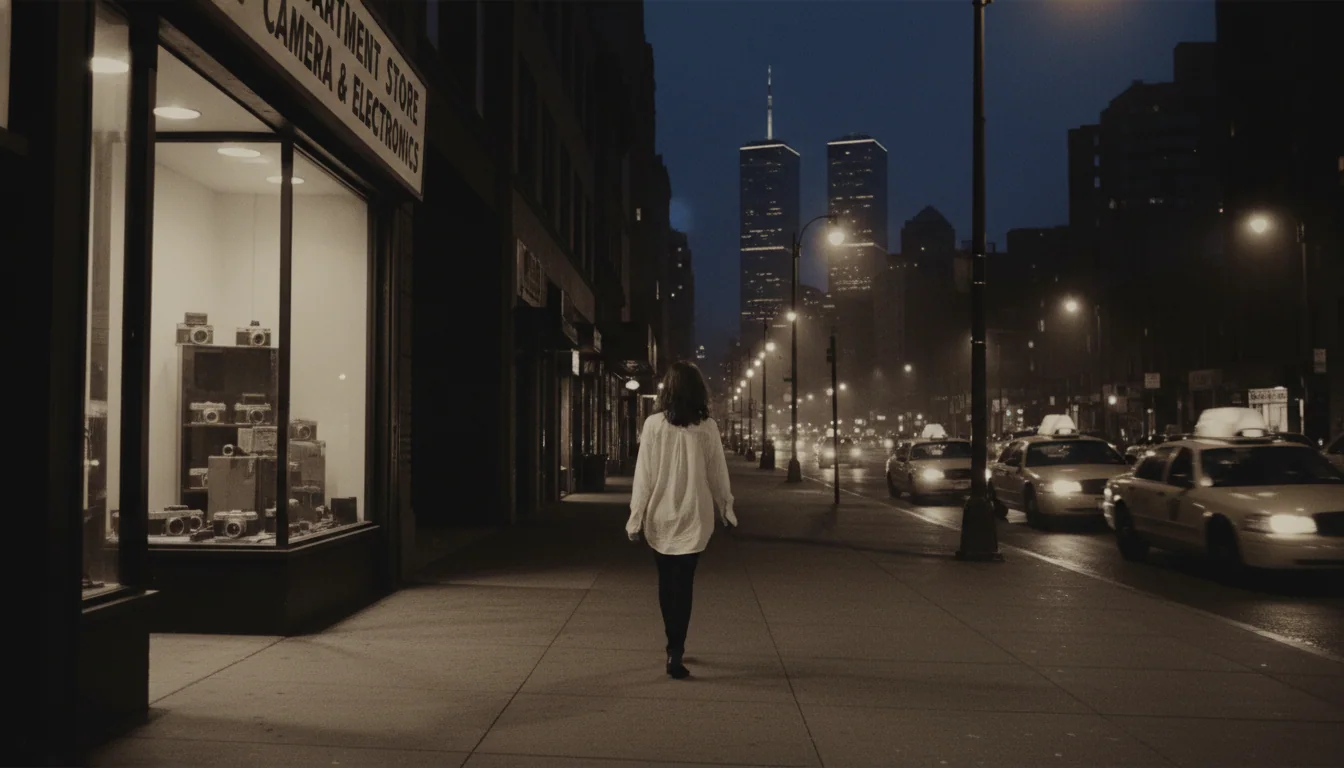
On the morning of September 12, 2001, while lower Manhattan was still shrouded in smoke and the city's hospitals were staging for casualties that never fully arrived, a man named Ron Charatan called the police to report that his wife was missing.
He had last seen Sneha Anne Philip the previous afternoon. She had left their apartment at 2 Gold Street - a building two blocks from the World Trade Center - and had not come home.
The timing, the location, and the chaos that followed turned what might have been a straightforward missing-persons case into one of the most contested disappearances in American legal history.
The last known image
What investigators had was a single segment of surveillance footage from Lord and Taylor department store on 59th Street, retrieved and reviewed in the weeks after 9/11. The camera recorded Sneha Anne Philip, 31 years old, walking through the store on the evening of September 10, 2001, around 11:30 p.m.
The footage showed her stopping in a lingerie section, appearing to examine items, and then leaving the store. She was wearing a white shirt and dark pants. After the camera exit, there was no further confirmed sighting of her anywhere.
She did not make any credit card purchases after that recording. No ATM withdrawals. No phone calls. No trace.
Her husband Ron Charatan, also a physician, told investigators she had been experiencing depression and stress. The couple's marriage had been troubled in the months leading up to her disappearance. She had been suspended from her hospital position in April 2001 following allegations related to drug access. She had a prior shoplifting arrest. According to some reports, she had been drinking more heavily in the summer of 2001. The picture that emerged was of a woman under considerable strain.
The 9/11 problem
Had Sneha Philip disappeared on any other night in American history, the investigation would have proceeded differently. But September 10 meant that when her husband reported her missing, New York City was in the middle of the largest emergency response in its history. The missing-persons infrastructure was overwhelmed with thousands of families posting flyers for people lost in the towers. In that atmosphere, one missing doctor on the eve of the attacks was barely a footnote.
Crucially, the proximity of her home to the World Trade Center opened a door. The 9/11 missing-persons process allowed families to file death certificates without remains if there was a reasonable basis to believe the person had been at the site. Charatan filed such a claim.
Her family - her mother and brother - pushed back immediately. They did not believe she had died at the World Trade Center. They believed she had walked away from her life. Her brother, Abraham Philip, pointed out that she had struggled with personal problems and that the timing of her disappearance relative to 9/11 was, in their view, a coincidence exploited by her husband.
The distinction mattered financially. Charatan would inherit her estate if she was declared dead in the attacks. A voluntary disappearance or an unrelated death would change that picture.
The legal fight
The case moved through the New York court system for the better part of a decade. In 2004, a Manhattan judge refused to declare her a 9/11 victim and instead found that the evidence supported a presumption that she had died before the attacks - meaning she could not be included on the federal Victim Compensation Fund roster. That ruling went against Charatan.
In 2011, however, a New York appeals court reversed the finding. The court concluded that there was a reasonable basis to infer she had responded to the World Trade Center as a physician - noting that she was trained to run toward emergencies and lived less than three minutes' walk from Ground Zero. The ruling called her a Good Samaritan who likely died helping victims of the collapse. Her name was added to the 9/11 memorial.
Her family never accepted the verdict.
What the evidence actually shows
The problem with the Good Samaritan theory is that it relies entirely on inference. The last confirmed footage shows Sneha Philip leaving a midtown department store around 11:30 p.m. on September 10. The attacks began at 8:46 a.m. the following morning. That is a gap of approximately nine hours in lower Manhattan.
If she had been at or near the World Trade Center during the collapse, investigators would reasonably expect at least one of the following to exist: a cell phone record placing her in the area, a witness sighting, a transit record, or physical evidence recovered from the site. None of these materialized.
Her husband initially told police he had last seen her in the late afternoon of September 10. He later adjusted the timeline. Investigators found inconsistencies in his account that they could not resolve. He was never charged with any crime.
The surveillance footage from Lord and Taylor, the clearest factual anchor in the case, shows her going nowhere near lower Manhattan. It shows her in a department store at midnight, alone, in midtown. Whatever happened to Sneha Anne Philip happened after that recording, and may have had nothing to do with September 11 at all.
The competing theories
The theories that have circulated over the years fall into three categories.
The first is the official 9/11 theory: she heard or saw the attacks, rushed to the site as a doctor, and died in the collapse or its immediate aftermath. This requires that she spent roughly nine hours between midnight and the attacks either at home or somewhere unrecorded, and then acted on impulse to help. No witness and no evidence has ever corroborated this.
The second theory is voluntary disappearance. Sneha Philip had real difficulties in her life in 2001 - professional suspensions, personal stress, a troubled marriage. People do walk away. The absence of any trace of her after the footage could indicate deliberate concealment. Her own family believed this for years, though they later shifted toward believing she may have come to harm.
The third theory is foul play unrelated to 9/11. Under this reading, she was killed or harmed on the night of September 10 by a person or persons unknown, and the chaos of September 11 erased any normal investigation that would have followed.
None of these theories has been proven. The third, in particular, has never been seriously investigated because the 9/11 framework absorbed the case before ordinary homicide procedures could run.
What remains
Sneha Anne Philip is commemorated on panel S-68 of the 9/11 memorial at Ground Zero in New York, listed alongside the nearly 3,000 people who were killed in the attacks. Her name appears there by legal decree, not confirmed fact.
She would be 56 years old now. No body was ever found. No definitive cause of death has ever been established. Her case file sits in a peculiar administrative limbo: officially resolved as a 9/11 death, practically unresolved in every way that matters.
Her family's insistence that she did not die in the towers may be right. The court's inference that she did may also be right. The footage from Lord and Taylor, a woman in a white shirt walking through a department store after midnight on one of the worst nights in American history, is simply not enough to know either way.
The 9/11 memorial was built to honor the dead and to give their families a place to grieve. In Sneha Philip's case, it may have also closed an investigation that was never properly opened.
For other disappearances where the truth remains out of reach, see our cases on Amelia Earhart's disappearance and Connie Converse.
Quick Answers
Common questions about this topic
Who was Sneha Anne Philip?
Sneha Anne Philip was a 31-year-old physician from New York City, originally from Kerala, India. She had trained in medicine and was working as a doctor in Manhattan when she disappeared. She lived with her husband, Ron Charatan, at 2 Gold Street in lower Manhattan.
When did Sneha Anne Philip disappear?
Sneha Anne Philip was last seen on surveillance footage at a department store on 59th Street on the evening of September 10, 2001 - less than 12 hours before the September 11 attacks. Ron Charatan reported her missing on September 12, the day after the attacks.
Was Sneha Anne Philip a 9/11 victim?
Officially, yes. In 2011, a New York appeals court ruled that she died in the September 11 attacks as a Good Samaritan who ran toward the World Trade Center to help. Her name appears on the 9/11 memorial. Her family, however, consistently disputed this conclusion and believed she disappeared voluntarily.
Was the 9/11 connection ever proven?
No. No physical evidence ever connected Sneha Anne Philip to the World Trade Center. No witness saw her there, no DNA match was found in the recovery effort, and the clothing she was wearing from the CCTV footage was never recovered. The 9/11 designation came through a legal inference, not confirmed evidence.

Want to Interrogate the Suspects?
Chat with historical figures and uncover the truth behind history's greatest mysteries.
Create your free account →No card required. Some figures and features require a paid plan.
Join the HistorIQly Club
Get smarter about the past.
Weekly stories, deep dives, and exclusive content straight to your inbox.